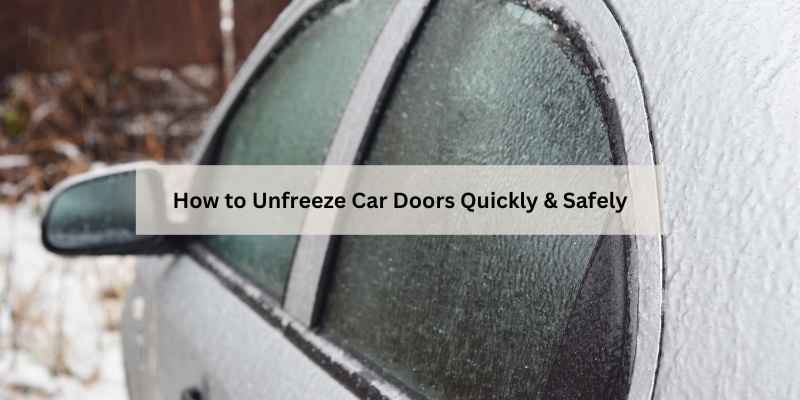
How to Unfreeze Car Doors: A Diagnostic Guide for Frozen Seals, Locks, and Handles
It’s 6:30 AM, it’s -10°F, and you’re already late. You pull the door handle, and nothing moves. You pull harder. Still nothing. The car door is frozen shut, and your coffee is getting cold. This happens to nearly every driver in cold climates at least once a winter, and the worst part is that most people make it worse by grabbing the wrong tool or pouring hot water on the paint.
The good news is that a frozen car door is rarely a mechanical failure. It’s almost always a thin layer of ice in one of three specific places: the rubber seal, the lock cylinder, or the door handle mechanism. Once you know which one is stuck, the fix takes under five minutes. This guide walks you through the diagnosis first, then the safest methods for each scenario, and finally how to keep it from happening again.

Subzero
Lock De-Icer & Lubricant, 18.5mL
- 18.5mL, of de-icer
- Used for car doors, ski racks, luggage, padlocks, home and garage doors, mailboxes and more.
- Thaws frozen locks instantly and lubricates lock cylinder
You’ll also learn what not to do, because the wrong move can crack your window glass, strip the paint, or snap the handle clean off. Let’s get your door open without turning a small problem into a costly repair.
If you want a pocket-sized backup for the worst mornings, a product like the Subzero Lock De-Icer & Lubricant is worth keeping in your coat. It’s an 18.5mL tube that thaws a frozen lock cylinder instantly and leaves a lubricant behind so the mechanism doesn’t re-freeze as quickly. It also works on padlocks, ski racks, and garage doors, so it’s not a one-trick pony.
Why Your Car Door Freezes Shut (The Three Culprits)
Ice forms in three distinct places, and each one behaves differently. Knowing which one you’re dealing with saves you from yanking on a door that isn’t going to budge.
The rubber seal. The soft weatherstripping around your door frame traps moisture. When the temperature drops below freezing, that moisture turns to ice and bonds the seal to the door panel. This is the most common cause, and it usually happens after a day of freezing rain, wet snow, or a car wash.
The lock cylinder. Moisture gets inside the keyhole and freezes the tumblers. Your key goes in, but it won’t turn. This is more common on older cars, but it can happen to any vehicle after a heavy thaw followed by a hard freeze.
The door handle. The handle itself can freeze if water gets into the linkage or the spring mechanism. You can grab it, but it won’t pull back, or it pulls back with no resistance and the door doesn’t open.
A fourth, less obvious culprit is the door latch inside the mechanism. If the latch is frozen, the handle will feel normal but the door won’t release from the striker plate. This one is trickier because it feels like the door is locked, but the lock button is clearly in the unlocked position.
The Quick Triage: Diagnose the Problem Before You Pull
Before you do anything, spend 30 seconds figuring out where the ice is. Pulling hard on a frozen door can damage the handle, the latch, or the seal itself.
- Try the lock. Insert your key and attempt to turn it. If it won’t turn, or it turns but feels gritty, the lock cylinder is frozen. Skip the door and address the lock first.
- Try the handle. If the key turns but the handle feels stiff or won’t pull, the handle linkage or spring is frozen.
- Look at the seal. Run your finger along the rubber weatherstripping. If you feel ice or see a white frost line where the seal meets the door, that’s your problem.
- Try the other doors. If the passenger door opens fine, the issue is isolated to the driver’s side. That tells you it’s moisture-related, not a central locking failure.
If the driver’s door is completely stuck and you need to get in now, go around to the passenger side or use the trunk. Many cars have a physical keyhole on the passenger door or a trunk release that doesn’t rely on the frozen mechanism. Once you’re inside, you can often reach the driver’s door latch from the inside and pop it open with a firm push from the interior panel.
How to Unfreeze a Frozen Door Seal
The seal is the easiest fix, and it’s the one you should try first because it’s the most common. Work from the top of the door down, and don’t rush.
The Alcohol and Water Spray Trick
Mix two parts isopropyl rubbing alcohol with one part water in a small spray bottle. The alcohol lowers the freezing point to well below 0°F, so it melts the ice on contact. Spray it along the entire seam where the door meets the frame, wait 20 seconds, then try the door again.
This works because alcohol doesn’t just melt the ice, it prevents the water from re-freezing immediately. Carry a small spray bottle in your winter emergency kit and you’ll have this ready before the ice even forms.
The Lukewarm Water Pour (And Why Boiling Water Is a Disaster)
Lukewarm water works if you don’t have alcohol, but it has to be under 140°F. Pour it slowly along the top edge of the door and let it run down the seal. Wait a few seconds, then try the handle.
Boiling water is a terrible idea. The temperature difference between the boiling water and the frozen glass or paint is so extreme that it causes thermal shock. That’s how you end up with a cracked windshield or a paint blister that peels off in sheets. I’ve seen it happen. The repair bill for a new windshield is over $300, and a paint touch-up is worse. Lukewarm water costs you nothing and takes the same amount of time.
The Hairdryer Method (With a Power Extension Caution)
If you have access to an outlet, a hairdryer on low heat works beautifully. Run it along the seal for two or three minutes, moving constantly so you don’t overheat one spot. The rubber seal can handle the heat, but the painted metal around it can’t, so keep the nozzle moving.
The catch is the power cord. You’ll need an extension cord rated for outdoor use, and you’ll be standing in the cold holding a hairdryer for a few minutes. It’s not the fastest method, but it’s the gentlest on the car.
How to Unfreeze a Frozen Lock Cylinder
Lock cylinders are smaller and more delicate than seals. You need to get heat or a chemical de-icer directly into the keyhole, not just on the surface.
Using a Commercial De-Icer vs. Rubbing Alcohol
A commercial de-icer like the Subzero product mentioned earlier is designed to penetrate the cylinder and displace moisture. It also leaves a lubricant film that helps the tumblers move freely. That’s a real advantage over alcohol, which evaporates quickly and leaves the cylinder dry.
If you don’t have a de-icer, dip your key in rubbing alcohol and insert it into the lock. Pull it out, dip it again, and repeat. The alcohol transfers heat from the key to the ice inside the cylinder. It takes a few tries, but it works in a pinch.
Never use a graphite powder or a silicone spray on a frozen lock. Those are for maintenance, not for thawing. You need something that melts ice, not something that just lubricates the parts.
The “Key in a Lighter” Myth (Why You Shouldn’t Do It)
Heating your key with a lighter before inserting it into the lock is a classic trick, but it’s a bad one. The heat from a lighter isn’t enough to melt the ice deep inside the cylinder, and it can damage the key’s metal or the plastic head. Worse, if the lock is plastic-lined on some newer models, you can melt the internal components.
Your key needs to be at body temperature or slightly warmer. Rub it between your palms for 30 seconds, or hold it in your armpit for a minute. That’s enough to make a difference without risking damage.
How to Unfreeze a Stuck Door Handle
A frozen handle is the most frustrating because it feels like the door is locked, but it isn’t. The ice is usually in the linkage between the handle and the latch.
Start by spraying the handle itself with a de-icer or the alcohol-water mix. Give it a minute to penetrate. Then, instead of pulling the handle outward, push it inward first. This breaks the ice seal on the handle’s pivot point. Then pull it normally.
If that doesn’t work, use a plastic trim tool or a credit card to gently work the ice out from under the handle’s edges. Don’t use a screwdriver, and don’t pry. The handle is plastic on most modern cars, and it will snap before the ice gives way.
Once the door opens, dry the handle area thoroughly with a cloth. Any leftover moisture will freeze again as soon as the temperature drops.
What NOT to Do: The Four Cardinal Sins
Every winter, people do these four things and end up with a tow bill or a body shop visit. Avoid them at all costs.
- Don’t use a torch or a heat gun. The concentrated heat will blister the paint and can crack the glass. Even a small butane torch is too hot for automotive finishes.
- Don’t pour boiling water on anything. We covered this, but it bears repeating. The thermal shock cracks glass and delaminates paint. Lukewarm water is the absolute maximum.
- Don’t yank the handle with full force. The handle, the cable, or the latch will break. A replacement handle can cost $50 to $150, and the labor is more. Pull gently, and if it doesn’t move, you haven’t fixed the ice yet.
- Don’t use a credit card to pry the door open. That trick works on a car with a broken latch, not a frozen one. You’ll snap the card, and you might scratch the paint or damage the seal.
How to Prevent Car Doors from Freezing Shut (The 10-Minute Winter Prep)
An ounce of prevention is worth a pound of cure, and this is the part most people skip. Ten minutes of prep before a cold snap saves you from a 30-minute fight in the morning.
Silicone Spray vs. Cooking Spray on Rubber Seals
Silicone spray is the right choice for rubber seals. It creates a thin, dry film that repels water and stays flexible in sub-zero temperatures. Apply it to a clean cloth and wipe it on the weatherstripping around all four doors. Don’t spray directly onto the seal, because the overspray will get on the paint.
Cooking spray like Pam works in a pinch, but it’s not ideal. It’s vegetable oil, which can degrade the rubber over time and leave a sticky residue that collects dirt. If you’re in a bind, it’s better than nothing, but silicone spray is the proper tool.
The “Dry the Seals” Rule Before You Park
This is the single most effective habit you can build. Before you shut the door for the last time at night, run a dry cloth along the entire rubber seal on the door and the frame. It takes 30 seconds per door. If the seal is dry, there’s nothing to freeze.
Also check the floor mats. Melting snow from your boots soaks into the carpet, and when the temperature drops, that moisture freezes the door latch from the inside. It’s a weird problem because the outside of the door looks perfectly clear, but the latch won’t release. Shake out your mats regularly and let the carpet dry out on warmer days.
Emergency Kit: What to Keep in Your Car for Frozen Doors
Keep these items in a small bag in your trunk or under the seat. They take up almost no space, and they’ll get you out of a jam without a trip to the store.
- A plastic ice scraper with a brush on the other end
- A travel-size bottle of commercial de-icer (the Subzero tube fits in a glovebox)
- A small spray bottle filled with 2:1 rubbing alcohol and water
- A dry microfiber cloth for wiping seals
- A pair of winter gloves that aren’t too bulky for fine motor tasks
If you’re in a region that gets freezing rain, throw in a small bottle of silicone spray as well. You can treat the seals right there in the parking lot before the rain starts.
Frequently Asked Questions (Quick Answers)
Can I use WD-40 on my car door seals?
You can, but it’s not the best choice. WD-40 is a solvent and water displacer, so it will melt the ice temporarily. However, it dries out the rubber and leaves a film that attracts dirt. Silicone spray is better for seals. WD-40 is fine for the lock cylinder in an emergency, but it’s not a long-term solution.
How long does it take for a frozen door to thaw naturally?
It depends on the temperature and the thickness of the ice. At 25°F, a light frost on the seal might thaw in 15 minutes of direct sunlight. At 10°F with a thick layer of ice, it could take hours. If you’re in a hurry, don’t wait for nature. Use the alcohol spray or a de-icer.
Will a car cover prevent my doors from freezing?
Yes, if it’s a full cover that seals around the bottom. A cover keeps the frost and freezing rain off the glass and the seals. But if you park outside and the cover gets wet, it can freeze to the car itself. That’s a different problem. A cover helps, but it’s not a guarantee, and you still need to dry the seals before putting it on.
What to Do Next Time It Happens
Now you have a plan. When the door won’t open, run the triage: check the lock, check the handle, check the seal. Pick the right fix, and give it 30 seconds to work before you pull. If you’re in a rush, the passenger door is your best friend.
Here are the essentials to remember:
- Frozen doors are almost always a seal, lock, or handle issue, not a mechanical failure.
- Use a 2:1 alcohol-water spray for quick thawing on seals and handles.
- Never pour boiling water on glass or paint, and keep any water under 140°F.
- Commercial de-icers work faster and lubricate the lock, which is worth the small cost.
- Dry the rubber seals before you park for the night, and treat them with silicone spray.
- Keep an emergency kit with a scraper, de-icer, and a spray bottle in the car all winter.
- If the driver’s door is stuck, access the car via the passenger side or trunk to avoid breaking the handle.
Take the 10 minutes to prep your seals now, and you’ll save yourself a cold, frustrating morning later. For more on keeping your locks working in winter, check out this guide on unfreezing door locks. And if you’re dealing with ice on the inside of the car, this article on water inside the cabin might help you track down the source.
Products related to this article
Sponsored / affiliate links. As an Amazon Associate I earn from qualifying purchases. I may earn additional commission from eligible campaigns.