How Wide Is A Two Car Garage Door? Standard Sizes Listed
Ever stood back and looked at your garage door, or maybe a neighbor’s, and just wondered? It’s a common thought. We see these large doors every day, but do we really know their dimensions?
Specifically, how wide is a typical garage door built for two cars? It seems like a simple question, but getting it right matters for everything from aesthetics to practical use.
This guide will break down those standard sizes. We’ll look at what’s most common in American homes. You’ll learn why there isn’t just one single answer.
We’ll cover the little details that can make a big difference. By the end, you’ll have a clear picture of garage door dimensions.
A standard two-car garage door in the US is typically 16 feet wide. However, variations exist. Some doors might be 15 feet or 17 feet wide. The exact size depends on the garage’s construction and the door model chosen. Height usually falls between 7 and 8 feet.
Understanding Standard Two-Car Garage Door Widths
So, what’s the deal with the width of a garage door for two cars? In the United States, the most common width you’ll find is 16 feet. This size is widely adopted because it offers a good balance.
It provides enough space for two standard vehicles to park comfortably side-by-side. It also fits well within typical garage construction standards.
Think about it. You need room for each car. You also need a bit of space to open their doors.
You might want to walk between them. A 16-foot door allows for this. It prevents that feeling of being cramped when you pull in.
Why 16 Feet is So Common
The 16-foot width became a standard for good reasons. Builders started using it as a common practice. This made manufacturing simpler.
Suppliers could produce doors in bulk. Homeowners could then easily find replacements or new doors. It became a sort of unspoken industry rule.
It’s also a practical choice. Most cars today, even larger SUVs, can fit through this opening. For many years, car sizes were fairly consistent.
This made the 16-foot door a safe bet for most new homes. It simplified the building process significantly.
Variations on the Standard
But here’s where it gets a little more interesting. While 16 feet is the most common, it’s not the only size. You might see garage doors that are 15 feet wide.
Sometimes, you might even find 17 feet wide doors. These variations can happen for several reasons.
The garage itself might be slightly wider or narrower than average. Custom home builds often have unique dimensions. Also, door manufacturers offer different models.
Some might have slightly different standard sizes to cater to these variations. It’s good to know these aren’t necessarily “wrong.” They are just different.
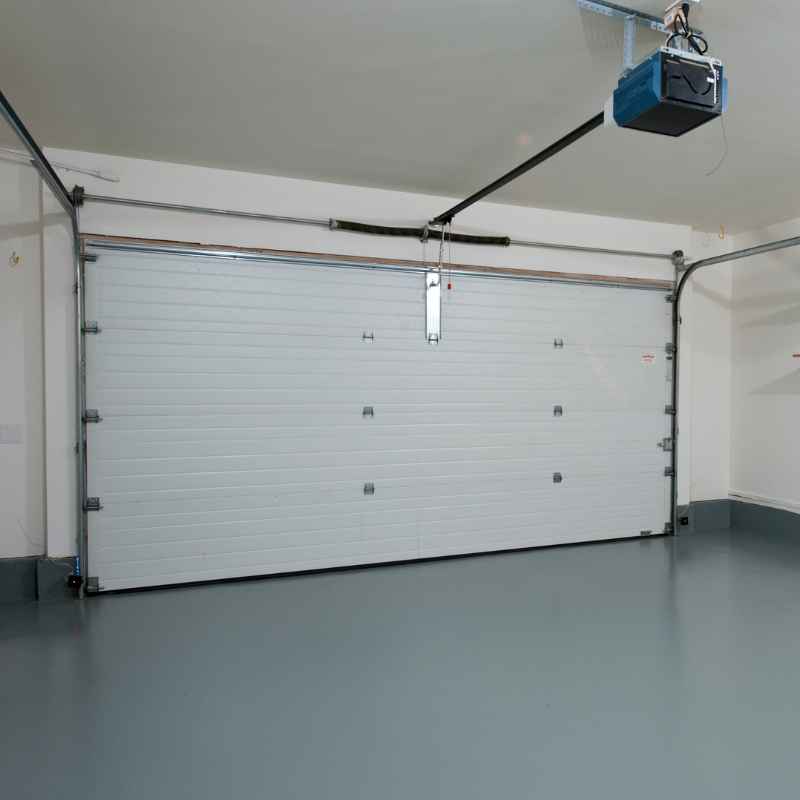
Beyond Width: Key Garage Door Dimensions
While width is a big question, it’s not the only measurement that matters. Garage doors also have a standard height. And the space around the door opening is just as important.
Let’s look at these other crucial aspects.
Standard Garage Door Height
For a two-car garage, the typical height of the door is usually between 7 and 8 feet. A 7-foot tall door is quite common. Many also opt for an 8-foot tall door.
The taller height offers more clearance. This is helpful for larger vehicles, like trucks or SUVs with roof racks.
Consider the vehicles you own or plan to own. If you have a taller vehicle, an 8-foot door is a wise choice. It prevents those frustrating moments of nearly hitting the top.
It also gives a bit more headroom inside the garage. This can be useful for storage above vehicles.
The Importance of Vertical Clearance
It’s not just about the door itself. The space above the door is critical. This is called the over-head space or headroom.
You need enough room for the door to roll up. It needs to clear the opening completely. This space is also where the tracks and springs are housed.
Manufacturers have standard requirements for this. But if your garage has a low ceiling or obstructions, like pipes or ducts, you need to measure carefully. You’ll need extra space beyond the door’s height.
This ensures smooth operation. It also keeps the door mechanism from being stressed.
Sidebar: What About Single-Car Garage Doors?
Just for comparison, a standard single-car garage door is typically 8 to 10 feet wide. This helps put the 16-foot width for two cars into perspective. It highlights how much more space is needed for two vehicles.
Garage Door Sizing Quick Facts
Most Common Two-Car Width: 16 feet
Common Heights: 7 feet or 8 feet
Side Clearance Needed: At least 4-6 inches on each side of the opening.
Overhead Space Needed: Varies by door type, often 12-18 inches above the opening.
Factors Influencing Your Garage Door Size
The “standard” sizes are great starting points. But your specific needs might require something different. Several factors can influence the actual size of a two-car garage door you end up with.
Garage Construction and Layout
The way your garage was built plays a huge role. Some garages are built to be very snug. Others are designed with extra room.
Older homes might have smaller garages. Newer homes might have larger ones to accommodate bigger vehicles.
The internal structure of the garage also matters. Are there support beams close to the sides? Is there space for the door tracks to run smoothly along the walls?
The overall dimensions of the garage bay dictate the maximum door size. You can’t fit a 20-foot door into a 17-foot opening.
Vehicle Dimensions
This is a big one. What kind of vehicles do you have? A compact car is much smaller than a large pickup truck or an extended SUV.
If you own larger vehicles, you’ll want to ensure the door is wide enough. You want to avoid scraping mirrors when parking.
Think about future vehicles too. If you anticipate buying a larger car, it’s better to plan for it now. Going from a 16-foot door to a custom 18-foot door later can be a significant expense.
It’s more cost-effective to get it right the first time.
Vehicle Size vs. Door Width
Scenario: Two Compact Cars
Each car ~6 ft wide. Total ~12 ft. A 16 ft door offers ~2 ft clearance between them and ~1 ft on each outer side.
Comfortable.
Scenario: Two SUVs
Each SUV ~6.5 ft wide. Total ~13 ft. A 16 ft door offers ~1.5 ft clearance between them and ~0.75 ft on outer sides.
Still okay, but tighter.
Scenario: One Large Truck + One Sedan
Truck ~7 ft wide, Sedan ~6 ft wide. Total ~13 ft. A 16 ft door allows ~1.5 ft between them.
Manageable.
Local Building Codes and HOA Rules
Sometimes, regulations can affect your garage door size. Local building codes might have minimum requirements for garage openings. This is often for safety reasons.
It ensures emergency services have adequate access if needed.
Homeowners Associations (HOAs) can also have rules. They might have preferences for the style, color, or even the dimensions of garage doors. This is to maintain neighborhood aesthetics.
It’s always a good idea to check these regulations before making a decision.
Measuring Your Garage Door Opening Accurately
You’ve decided to replace your garage door or build a new garage. How do you measure your opening correctly? Getting precise measurements is absolutely vital.
Even a small error can lead to a door that doesn’t fit or operate properly.
Width Measurement
Measure the opening from the inside edge of the door frame on one side to the inside edge on the other. Do this at the very top, middle, and bottom of the opening. Take the smallest measurement.
This ensures the door will fit vertically within the opening.
It’s best to measure in three spots. The opening might not be perfectly square. You want the smallest constraint.
This number will be your rough door width. You’ll then subtract a small amount for clearance. This is usually a couple of inches total.
Height Measurement
Measure the opening from the floor to the lowest point of the header beam above the opening. Again, measure in three places: left side, center, and right side. Use the smallest measurement.
This height is critical for ensuring the door can open fully without hitting anything.
Remember to account for the track system. The door rolls up and usually back along the ceiling. The physical height of the door panel itself is usually slightly less than the opening height.
This is to allow for the tracks and rollers.
Measuring Tips for Accuracy
- Use a Metal Tape Measure: They are more rigid and accurate for longer distances.
- Measure Twice, Cut Once: Always double-check your measurements.
- Account for Obstructions: Note any pipes, wires, or low beams above or beside the opening.
- Measure the Wall Surface: Sometimes the opening isn’t perfectly plumb or square.
Side and Overhead Clearance
This is where many people run into trouble. You need space on the sides for the vertical tracks. You also need space above the opening for the horizontal tracks and the torsion spring system.
This is called backroom and side room.
For a standard two-car garage door (16 ft wide), you typically need at least 4 to 6 inches of side room on each side. This is the space between the edge of the opening and any wall or obstruction. For overhead space, you generally need 12 to 18 inches.
This can vary greatly depending on the type of spring system used (torsion vs. extension).
The Role of the Door Type
Different types of garage doors have different clearance needs. Torsion spring systems, which mount on a bar above the door, usually need more overhead space. Extension springs, which run along the sides of the door tracks, might need more side room.
Manual or electric openers also have specific requirements. Always consult the manufacturer’s specifications for the door and opener you choose. This ensures everything will work together smoothly and safely.
Common Garage Door Styles and Their Dimensions
While the width and height are standard, garage doors come in many styles. The style can affect how the door looks and sometimes how it operates, but usually not the overall standard dimensions for a two-car opening.
Sectional Doors
These are the most common type. They are made of several panels hinged together. As the door opens, it bends at the hinges and rolls up overhead.
A standard 16-foot wide sectional door will have panels that fold to fit neatly.
The panel design can vary greatly. You might see raised panels, recessed panels, or carriage house styles. The material can also differ, from steel to wood to composite materials.
But fundamentally, they all operate the same way for a 16-foot opening.
Carriage House Style
These doors are designed to look like traditional barn doors. They often have decorative hardware. Despite the old-fashioned look, they are typically modern sectional doors.
They offer the aesthetic of carriage doors with the convenience of overhead operation.
Even with elaborate designs, the underlying dimensions for a two-car setup remain consistent. The width will still be around 16 feet, and the height around 7 or 8 feet. The “carriage house” aspect refers to the visual style.
Garage Door Styles at a Glance
Sectional: Most common. Panels bend to roll up. (16ft wide, 7-8ft high)
Roll-Up: Made of one solid piece that rolls around a drum. Often for commercial use but available residentially. (Standard sizes apply)
Side-Hinged (Barn Style): Doors that swing outwards. Less common for two-car garages due to space needs. (Can be custom sized)
Up-and-Over: A single panel door that tilts outwards before rolling back. Common in some regions. (Standard sizes apply)
Single vs. Double Door Openings
Some garages are designed with two separate single doors instead of one large double door. For a two-car garage, this would mean two 8-foot wide doors. Or sometimes two 9-foot wide doors if the garage is particularly wide.
This setup offers some advantages. If one door breaks, the other still works. It can also make it easier to park if your vehicles are very close together.
However, it requires more framing and potentially two separate opener systems.
When Is a Two-Car Garage Door NOT Standard?
While the 16-foot width is standard, there are times when you might need something different. This often comes down to custom needs or specific vehicle requirements.
Oversized Vehicles
If you own very large vehicles, like RVs, large campers, or very wide custom trucks, a standard 16-foot door might not be enough. You might need a door that is 18 feet or even 20 feet wide. This allows for more breathing room.
This is where custom sizing comes into play. You would work with a garage door professional to order a wider door. This often means a higher cost.
The garage structure itself might also need to be modified to accommodate the wider opening.
Custom Builds and Unique Garages
Architectural designs can also lead to non-standard garage door sizes. A custom-designed home might have a garage that’s unusually shaped or sized. The garage door needs to fit the aesthetic and functional requirements of the home.
In these cases, you’re looking at custom-made doors. These are built to your exact specifications. The process is more involved.
It requires careful planning and professional installation. But it ensures a perfect fit for your unique space.
Custom Size Considerations
Cost: Custom doors are significantly more expensive.
Lead Time: Manufacturing takes longer than off-the-shelf doors.
Structure: The garage framing may need reinforcement for wider doors.
Opener Compatibility: Ensure your chosen opener can handle the door’s size and weight.
What This Means for Your Home
Knowing the standard dimensions of a two-car garage door is helpful. It allows you to assess your current situation. It also helps when planning for future changes or renovations.
Assessing Your Current Garage
If you’re not sure about your current garage door size, measure it! Use the methods described earlier. Compare your measurements to the standard 16-foot width and 7-8 foot height.
This will tell you if you have a standard door.
Understanding your current size is crucial if you need a replacement. Ordering the wrong size is a common and frustrating mistake. It can lead to delays and extra costs.
When Is Your Door Size “Normal”?
A 16-foot wide door is the most common for two cars. Heights of 7 or 8 feet are also very normal. If your measurements fall within these ranges, you likely have a standard setup.
This makes finding replacement parts or new doors much easier.
Even if your door is 15 or 17 feet wide, it’s still within a common range. These are often found in slightly older homes or those built with a bit more spaciousness in mind. They are still considered “normal” in many contexts.
Common Scenarios & What They Mean
You have a 16ft x 7ft door: You have a very standard, common setup. Lots of options available.
You have a 16ft x 8ft door: Standard width, but taller. Good for SUVs and trucks. Still many options available.
You have a 15ft x 7ft door: Slightly narrower. May indicate an older or custom garage. Fewer standard options, but still manageable.
You have two 8ft doors: A common alternative to one double door. Each door functions independently.
When to Worry or Get Professional Help
If your measurements are significantly different from standard sizes, or if you have unusual obstructions, it’s time to call a professional. This includes issues like:
- A garage opening that’s much wider or narrower than 16 feet.
- Very limited side or overhead clearance.
- The garage walls or header beam seem weak or damaged.
- You plan to park extremely large vehicles and are unsure of clearance.
A garage door professional has the experience and tools to measure accurately. They can identify potential problems. They can also advise on the best door options for your specific situation.
They understand building codes and installation best practices.
Quick Tips for Choosing or Replacing Your Garage Door
When it comes time to select a new garage door, keep these simple tips in mind.
- Measure Everything: Don’t rely on guesswork. Measure width, height, side room, and overhead clearance.
- Know Your Vehicles: Consider the current and future vehicles you’ll park.
- Factor in Style: Choose a style that complements your home’s architecture.
- Consider Insulation: Insulated doors can improve energy efficiency.
- Think About Maintenance: Steel doors are durable. Wood doors require more upkeep.
- Get Multiple Quotes: Compare prices and services from different installers.
Frequently Asked Questions About Two-Car Garage Door Sizes
What is the absolute minimum width for a two-car garage door?
While 16 feet is standard, some garages are built narrower. A very tight fit might use a 15-foot door. However, this leaves very little room for error or opening car doors.
It’s generally not recommended for comfort or ease of use.
Can I fit two large SUVs through a 16-foot garage door?
It depends on the specific SUV models. Most standard-sized SUVs will fit, but it will be snug. You’ll have less than two feet of space between them.
If your SUVs are on the larger side, or if you have a very wide pickup truck, you might need a wider door.
How much space do I need above a 7-foot garage door?
For a 7-foot tall door, you typically need about 12 to 18 inches of overhead space. This space is for the tracks and the spring system. Torsion spring systems often require a bit more overhead space than extension springs.
What if my garage opening is not square?
If your garage opening is not perfectly square, you must use the smallest measurement for both width and height. This smallest dimension will determine the maximum size of the door that can be installed. A professional installer can often help square up an opening or advise on custom solutions.
Can I have two separate 10-foot garage doors for a two-car garage?
Yes, you can. Two 10-foot wide doors (totaling 20 feet) offer much more space than a single 16-foot door. This is a good option if you have very large vehicles or want extra room.
However, it requires more structural support and two separate garage door openers.
Is a 17-foot wide garage door common?
While 16 feet is the most common standard, 17-foot wide doors are also available from many manufacturers. They are not as common as 16-foot doors but are considered a standard size in some product lines. They offer a bit more clearance than 16 feet.
Conclusion
Understanding garage door sizes is more than just trivia. It ensures your vehicles fit. It affects your home’s look.
And it guarantees smooth operation. The standard 16-foot wide two-car garage door is a reliable benchmark. But always measure your specific opening.
Consider your vehicles and any local rules.
Whether you have a standard setup or need a custom solution, being informed is key. It saves time, money, and frustration. Now you know the typical dimensions and what to look for.
You’re ready to make the best choice for your garage.
Products related to this article
Sponsored / affiliate links. As an Amazon Associate I earn from qualifying purchases. I may earn additional commission from eligible campaigns.