How To Get Water Out Of Your Car Fast (Proven Methods)
Getting water out of your car fast is key to preventing long-term damage. Act quickly to remove standing water, dry all surfaces thoroughly, and address any lingering moisture to avoid mold and electrical issues.
Understanding Car Water Damage
Cars are not meant to be boats. Water can seep into many parts. This includes the carpets, seats, and even the dashboard.
It can also get into the engine and electrical systems. Water is a sneaky enemy for cars. It doesn’t just sit on top; it goes deep inside.
Why is this so bad? Water brings dirt and grime with it. This can clog up small spaces.
It can also lead to rust. Rust weakens metal parts over time. More importantly, water is bad for electronics.
Most car parts today have wires and computer chips. Water can short-circuit these. This leads to expensive repairs.
Cars can get water damage in different ways. Heavy rain can cause flooding. A burst pipe can flood a garage.
Even a car wash can sometimes let too much water in. Sometimes, a car might be submerged in floodwaters. Each situation needs quick action.
The goal is always to remove the water and dry everything out fast.
My Car Was Flooded: What I Did First
I remember one spring afternoon. A sudden storm hit my town hard. I had parked my car on the street.
When the rain finally stopped, I went to move it. I opened the door, and it was like a mini-lake inside. Water was sloshing around my feet.
The carpet was soaked. I could smell that damp, musty smell already. Panic started to set in.
My car, my trusty ride, was ruined. I just stood there for a moment, feeling helpless. That first feeling of dread is hard to shake.
My first thought was, “How do I get this water out now?” I ran inside and grabbed every towel I could find. I started sopping up the standing water on the floor mats and the main carpet. It felt like trying to empty the ocean with a spoon.
The towels got heavy and soaked so fast. I had to keep wringing them out and going back for more. It was a messy, tiring job.
But I knew if I didn’t start right away, the damage would get worse. That initial effort, though small, felt like a step in the right direction. It showed me that even in a bad situation, you can start to take action.
How to Get Water Out of Your Car Fast
When water fills your car, speed is your best friend. The longer water sits, the more harm it does. You need to remove it and start drying.
Here’s a step-by-step plan to tackle this problem.
Step 1: Safety First
Before you do anything, make sure it’s safe. If the water is from a flood, be aware of electrical hazards. Don’t touch anything metal if the water is still high or if there’s a chance of electrocution.
If your car is in a dangerous spot, try to move it if you can safely. If not, wait for help.
Step 2: Remove Standing Water
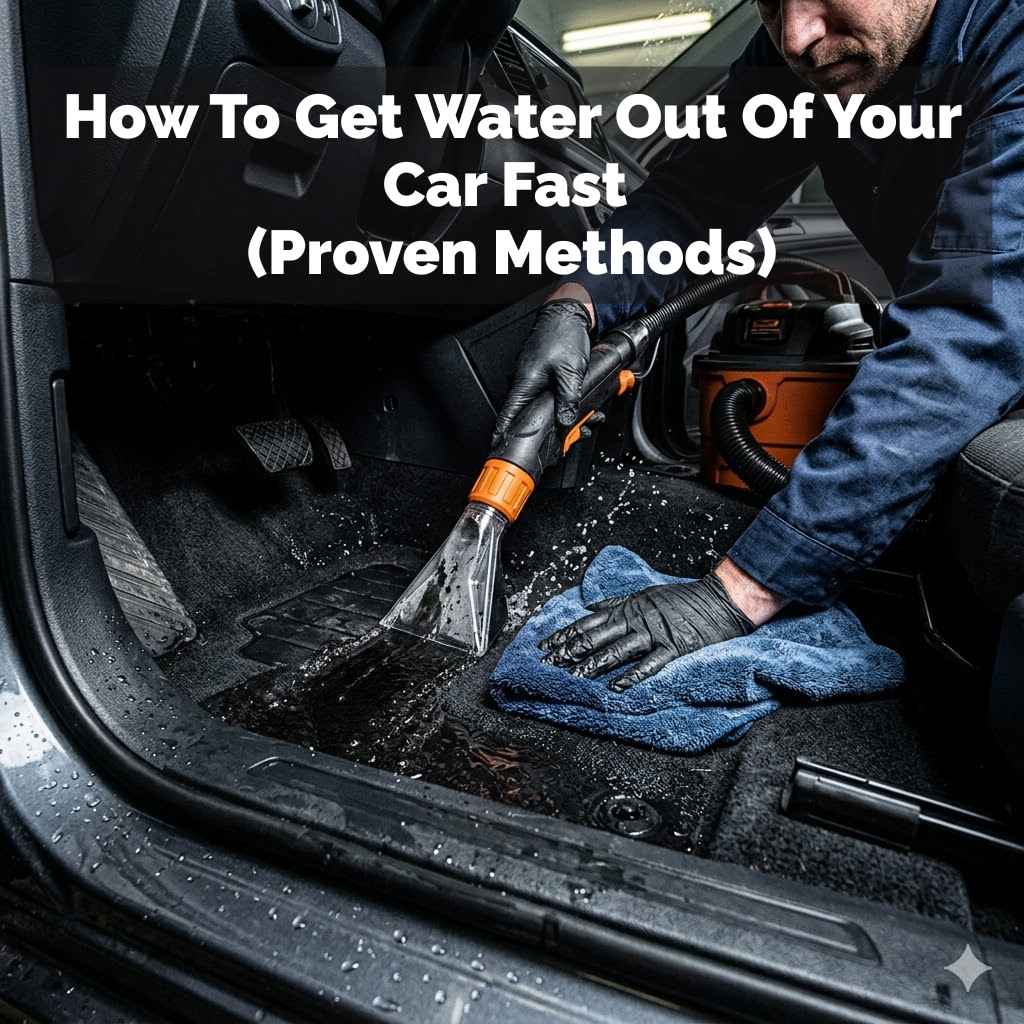
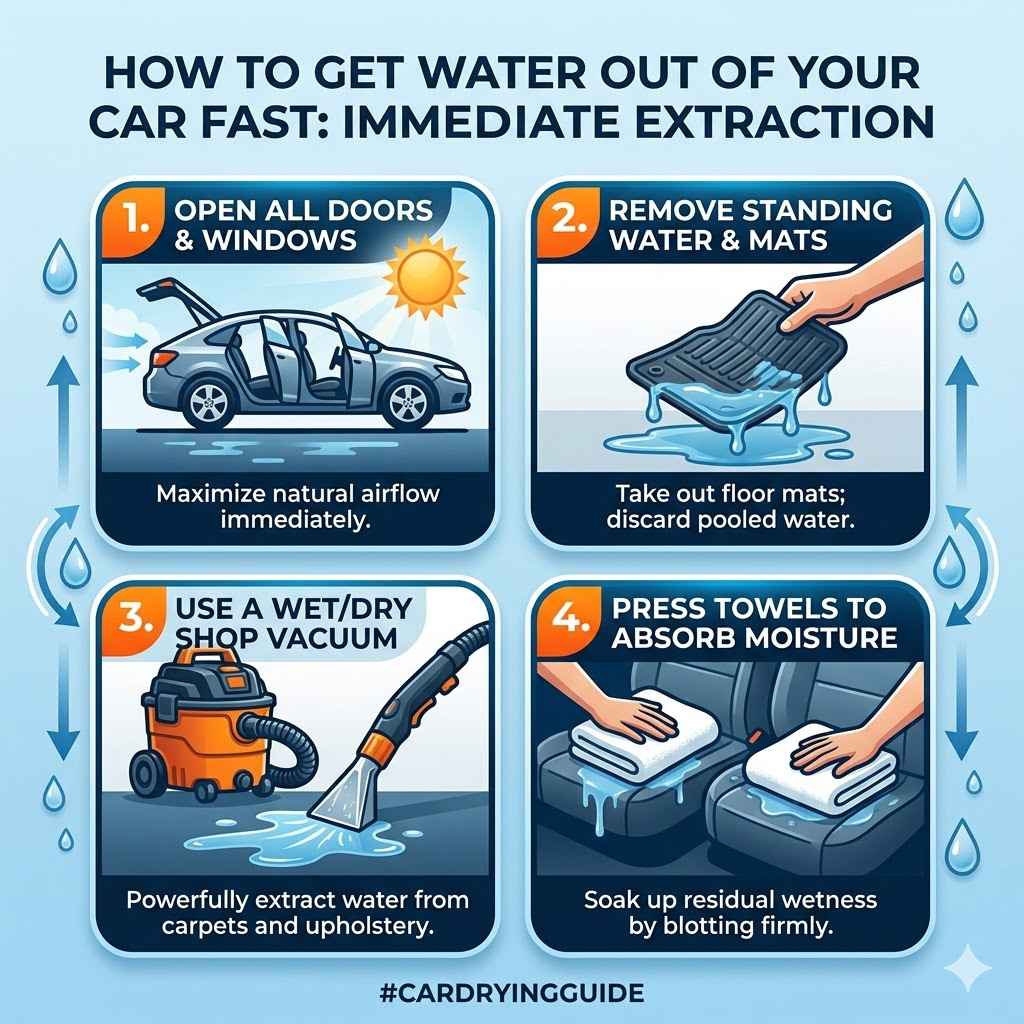
This is the most important step. You need to get the bulk of the water out. Use towels, buckets, or a wet/dry vacuum.
A wet/dry vac is best for large amounts of water. It can suck up water from the carpets and floor. If you don’t have one, use old towels.
Soak them up and wring them out outside. Keep doing this until no more water comes out when you press on the carpet.
Tip: Focus on the lowest spots first. Water pools in the footwells. Get that out before moving to other areas.
Step 3: Remove Floor Mats and Other Items
Take out all floor mats, car seats, and any other items. These trap water underneath them. They also need to dry completely.
Lay them out in the sun if possible. This helps them dry faster and prevents mold from forming on them.
Step 4: Dry the Interior Surfaces
Once the standing water is gone, you need to dry everything else. This includes seats, door panels, and the dashboard. Use clean, dry towels to wipe down all surfaces.
You want to remove as much moisture as you can.
Step 5: Air It Out
This is crucial for drying. Open all the car doors and windows. Let fresh air circulate.
If it’s sunny and warm, that’s even better. Leave them open for as long as you can. If you can park it in a dry, well-ventilated garage, that helps too.
Quick Water Removal Checklist
1. Safety Check: Ensure the area is safe. Watch for electrical risks.
2. Big Water Out: Use towels or a wet/dry vac. Get standing water gone.
3. Remove Everything: Floor mats, car seats, trash. Take them out.
4. Wipe Down: Dry all seats, doors, and dash. Use clean towels.
5. Air It Out: Open doors and windows. Let fresh air flow in.
Dealing with Dampness and Odors
Even after you remove most of the water, the car will still feel damp. This dampness can lead to bad smells and mold. You need to dry it thoroughly.
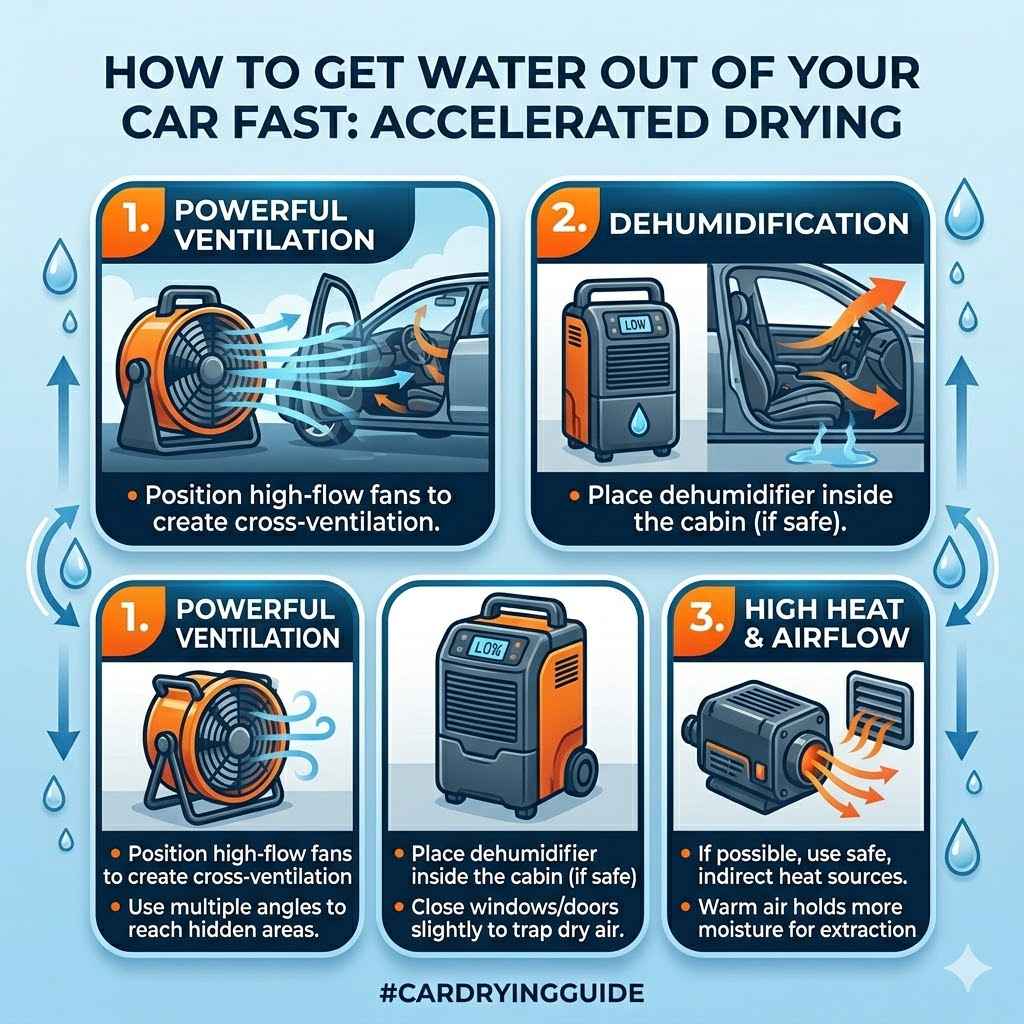
Using fans can help move air inside the car. Point them at the seats and carpets. You can also use a dehumidifier.
Place it inside the car with the doors and windows closed. This will pull moisture from the air.
To combat odors, you can use baking soda or activated charcoal. Sprinkle baking soda on the carpets and seats. Let it sit for a few hours, then vacuum it up.
These materials absorb smells. You can also buy odor absorbers at auto parts stores. They are designed to deal with dampness and musty smells.
If you smell mold, you need to treat it. Mold can be harmful to your health. Use a special mold remover for cars.
Follow the product instructions carefully. Make sure to ventilate the car well when you use it. Cleaning is key to preventing mold from growing.
It also helps keep your car smelling fresh.
Drying Your Car’s Interior: Deeper Steps
Getting the visible water out is only part of the job. The carpet and seat padding can hold a lot of water. This hidden moisture needs to be addressed.
A wet/dry vacuum is still your best friend here. You can go over the carpets multiple times. Press down hard to pull out as much water as possible.
You might need to do this for a while.
Consider renting a carpet cleaner if the car is very wet. These machines spray water and then suck it back up. Use them with cleaning solutions designed for car interiors.
Be careful not to over-wet the carpet. The goal is to clean and extract, not to add more water.
For seats, especially cloth ones, absorbent towels are key. Keep pressing and blotting until they feel less wet. Leather seats are easier to dry.
Wipe them down with a clean towel. Then use a leather conditioner. This keeps the leather from cracking after it dries.
Essential Drying Tools
Wet/Dry Vacuum: For removing standing water and deep moisture.
Absorbent Towels: Microfiber towels work best for drying surfaces.
Fans: To circulate air and speed up drying time.
Dehumidifier: Pulls moisture from the air inside the car.
Baking Soda or Charcoal: For absorbing odors and residual dampness.
Carpet Cleaner (Optional): For deep cleaning and moisture extraction.
What About the Car’s Electronics?
This is where things get tricky. Water and car electronics don’t mix well. The dashboard, radio, power windows, and sensors are all sensitive.
If water got into these systems, you might have problems.
Immediate Actions:
- Disconnect the Battery: If you can safely do so, disconnect the car battery. This prevents short circuits. Wait for the car to dry before reconnecting it.
- Check Fuses: Water can cause fuses to blow. If something isn’t working, check the fuse box. Replace any blown fuses.
- Consult a Professional: For any electronic issues, it’s best to see a mechanic. They have the tools and knowledge to diagnose and fix electrical problems. Trying to fix complex electronics yourself can cause more damage.
Common Electronic Issues:
- Dashboard warning lights staying on.
- The radio or infotainment system not working.
- Power windows and locks malfunctioning.
- The car not starting or running poorly.
The sooner you address potential electronic damage, the better. Water can corrode wires and components. This can lead to failure later on.
It’s a good idea to have an auto electrician look at your car. This is especially true if the water was deep or sat for a long time.
When to Call the Professionals
Sometimes, a DIY approach isn’t enough. If your car was submerged in deep floodwaters, professional help is usually necessary. Professional detailers have specialized equipment.
They can perform deep cleaning and drying. They also know how to address mold and mildew effectively.
Signs you need professional help:
- Deep Water: If the water level reached the dashboard or higher.
- Electrical Problems: If you notice persistent issues with your car’s electronics.
- Mold or Strong Odors: If you can’t get rid of a persistent musty smell or see mold.
- Car Submerged: If your car was underwater for an extended period.
Insurance companies often recommend professional services. They understand the complexity of water damage. A good detailer can assess the damage.
They can tell you if your car is salvageable. They can also perform services like ozone treatment. This is very effective at killing mold and odors.
Professional Water Damage Services
Deep Cleaning: Removing dirt and debris from all interior surfaces.
Advanced Drying: Using industrial fans and dehumidifiers.
Mold Remediation: Killing and removing mold and mildew spores.
Ozone Treatment: Eliminating stubborn odors.
Pest Removal: Sometimes water brings unwanted guests.
Preventing Future Water Damage
Once you’ve dealt with the water damage, you’ll want to prevent it from happening again. Awareness and simple precautions can go a long way.
1. Parking Smart:
- Avoid parking in low-lying areas known to flood.
- If you live in a flood-prone region, consider where you park during storms.
- Check weather forecasts before leaving your car parked outside for long periods.
2. Regular Checks:
- Inspect your car’s door seals and window seals. Make sure they are intact. Worn seals let water in.
- Check the condition of your car’s sunroof drains. If they get clogged, water can back up inside.
- Look at the rubber seals around your trunk. Make sure they are clean and not damaged.
3. Maintenance:
- Keep your car’s gutters and drain channels clean. Leaves and debris can block them.
- If you notice any small leaks, get them fixed quickly. Small problems can become big ones.
4. After Washing:
- Make sure your car’s drain plugs are in place. Some cars have drain plugs in the floor pan.
- After a heavy car wash, check if any water has entered the interior.
Taking these steps can save you a lot of trouble and money down the road. It’s about being proactive with your car’s care.
Real-World Scenarios and What to Do
Let’s look at a few common situations:
Scenario 1: Heavy Rainstorm
You parked your car on the street. A sudden, intense downpour occurs. Water pools on the road and seeps into your car through the doors or floor.
The water level is about an inch deep.
Action: As soon as it’s safe, use towels and a wet/dry vac to remove the standing water. Open doors and windows to air it out. Focus on drying the carpets and seats.
Monitor for any odd smells or electrical glitches.
Scenario 2: Car Wash Mishap
You go through an automatic car wash. Afterward, you notice the floor on the passenger side is damp. It’s not a lot of water, but it’s noticeable.
Action: This might be from a bad seal or a loose drain plug. Remove the floor mat. Blot up the dampness with towels.
Leave the door open for a few hours to air dry. Check the door seals for damage. Ensure all drain plugs are in place.
Scenario 3: Minor Flood in Garage
A pipe bursts in your garage. Your car is parked there, and the water level reaches the bottom of the doors.
Action: This is similar to the heavy rainstorm. Remove standing water immediately with a wet/dry vac. Dry all interior surfaces.
Pay close attention to the carpets, as they will hold a lot of moisture. Use fans and a dehumidifier if possible. Keep the car well-ventilated.
Scenario 4: Car Submerged in Flood
Your car is caught in a major flood. It is completely underwater for several hours.
Action: This is a serious situation. You will likely need professional help. Do not try to start the car.
The engine, transmission, and electronics will almost certainly be damaged. Contact your insurance company. They will guide you on the next steps.
Professional water damage restoration is essential here. This might include drying out the engine and all electrical components. It is often a total loss.
Quick Scan: Water Depth Impact
1-2 Inches: Manageable DIY. Focus on rapid drying and mold prevention.
3-6 Inches: Requires more effort. Wet/dry vac and fans are crucial. Watch electronics.
Above 1 Foot (Below Seats): Significant drying needed. Consider professional help for thoroughness.
Dashboard or Higher: High risk of severe electrical and mechanical damage. Professional assessment and likely insurance claim needed.
What This Means for Your Car’s Value
Water damage can significantly impact your car’s resale value. Even if you fix it well, potential buyers might be wary. A car that has been flooded might have hidden problems that show up later.
Disclosure is Key: If you ever sell a car that has had water damage, you should disclose it. Honesty is important. Insurance companies often brand a car as “flood-damaged.” This brand stays with the car’s title.
It makes it very hard to sell.
Professional Documentation: If you have the car professionally repaired, keep all the receipts and documentation. This can show potential buyers that the damage was addressed properly. It might help restore some of their confidence.
Act Quickly for Best Results: The faster you act to dry your car after water exposure, the better. This reduces the chance of long-term damage like rust and electrical failure. It also minimizes the risk of mold, which is hard to remove and devalues the car.
When Is It Normal to Have a Little Water?
Sometimes, a tiny bit of water in your car is not a big deal. This is usually due to normal use.
- Rainy Days: When you get out of your car on a wet day, you might track in a small amount of water. This usually dries quickly on the floor mats.
- Spills: A spilled drink can wet the carpet a bit. Again, this is usually a small amount.
- Washing: Sometimes, a little water can drip into the car when you’re washing it.
The key difference is the amount and speed of drying. If a small amount of water dries within a day or two and there are no lingering smells, it’s probably fine. The problem arises when water sits for a long time, or there’s a large amount of it.
When Should You Worry About Water in Your Car?
You should worry if:
- The water level is more than a trace amount.
- The water doesn’t dry up quickly.
- You start to smell a musty or moldy odor.
- You notice any strange behavior from your car’s electronics.
- The water came from a flood or a significant leak.
These signs suggest that water has penetrated deeper than the surface. It could be affecting the car’s structure, electronics, or safety features. In these cases, it’s best to get it checked out.
Simple Checks You Can Do
After water exposure, you can do a few quick checks:
- Carpet Feel: Get on your hands and knees and feel the carpet everywhere, especially under the seats. Is it still damp or spongy?
- Under Floor Mats: Lift all floor mats and check the carpet underneath.
- Door and Window Seals: Look for any cracks or gaps in the rubber seals.
- Smell Test: Take a deep breath inside the car. Do you detect any musty or moldy smells?
- Electronic Functionality: Test your windows, locks, radio, and dashboard lights.
These simple checks can help you assess the situation and decide if you need to take further action.
My Experience with a Leaky Sunroof
Years ago, I bought a used car with a sunroof. I loved having it. One summer, we had some really heavy rain.
The next morning, I got in my car and noticed a damp spot on the passenger side headliner. It was spreading. Then I saw it pooling a bit on the floor.
I realized the sunroof drain tubes must be clogged. Water was backing up and dripping inside. I felt that familiar sinking feeling.
It wasn’t a flood, but it was water damage.
I went online and found out how common this is. I learned that sunroofs have small tubes to let water escape. These tubes can get blocked by leaves and dirt.
I managed to find the drain holes. I used a long, thin wire and some compressed air to clear them out. It took a while.
Afterward, I spent days drying the interior with towels and fans. I also used baking soda to get rid of the damp smell. It was a lot of work, but I managed to fix it without a mechanic.
It taught me to check those little drain holes regularly!
Dealing with Odor: More Than Just a Bad Smell
The smell of mildew and mold is more than just unpleasant. It can be a sign of a serious problem. Mold spores can spread throughout the car.
They can get into the ventilation system. Breathing these spores can cause health issues. That’s why tackling odors is as important as drying the water.
If drying and baking soda don’t work, consider activated charcoal. You can buy charcoal bags designed for cars. Place them under the seats.
They are very good at absorbing smells and moisture. For very stubborn odors, ozone treatment is often used by professionals. Ozone is a gas that can kill mold and bacteria.
It’s a powerful tool, but it needs to be done carefully. It’s best left to professionals.
Odor Removal Strategies
Ventilation: Open doors and windows whenever possible.
Absorbents: Baking soda or activated charcoal bags.
Cleaning: Use mild soap and water or specialized cleaners for upholstery.
Professional Treatment: Ozone shock treatment for severe odors.
Frequently Asked Questions About Car Water Damage
How long does it take for a car to dry after water damage?
It depends on the amount of water and the drying methods used. A car with a little dampness might dry in a day or two with good ventilation. A car with significant water could take days or even weeks to dry completely.
Using fans and dehumidifiers speeds up the process.
Can I drive my car if it has water damage?
If the water level was low and it’s mostly dry, you might be able to drive it cautiously. However, if water got into critical systems like the engine, transmission, or electronics, driving it could cause severe damage. It’s best to have it inspected by a mechanic before driving.
Is water damage covered by car insurance?
Comprehensive insurance coverage often covers flood damage. However, it depends on your specific policy. If you have liability-only insurance, it might not be covered.
Always check your policy details or call your insurance provider to understand your coverage.
What are the signs of mold in a car?
The most common sign is a persistent musty or damp smell. You might also see fuzzy growth on upholstery, carpets, or headliners. Mold can be black, green, white, or even pink.
If you suspect mold, it’s important to address it quickly.
Can I remove water from my car using just towels?
For very minor dampness, towels can help. But for any significant amount of water, towels alone are not enough. They soak up quickly and become saturated.
A wet/dry vacuum is much more effective for removing standing water and deep moisture from carpets.
How do I prevent my car’s floor from getting wet in heavy rain?
Ensure your door and window seals are in good condition. Keep sunroof drains clear. Avoid parking in areas prone to flooding.
If you notice leaks, get them repaired promptly. Regular checks can prevent small issues from becoming big problems.
Conclusion: Taking Action Against Water Woes
Dealing with water in your car is a challenge. It requires quick thinking and action. By understanding how water affects your car and using the right methods to dry it out, you can prevent serious damage.
Remember to prioritize safety, remove standing water fast, and dry everything thoroughly. Don’t forget to tackle any lingering odors. With careful attention and prompt action, you can help save your car from water-related troubles.
Products related to this article
Sponsored / affiliate links. As an Amazon Associate I earn from qualifying purchases. I may earn additional commission from eligible campaigns.