Does Car Insurance Cover Natural Disasters? Find Out Now
Car insurance coverage for natural disasters depends on the type of coverage you have. Comprehensive coverage typically protects against non-collision damage from events like floods, hail, windstorms, and falling objects. Standard liability or collision coverage alone usually does not cover these types of events.
Understanding Your Auto Insurance Policy
When we talk about car insurance, it’s not just one big blanket of protection. There are different parts, or coverages, that do different jobs. Think of it like building a house.
You need a strong foundation, walls, and a roof. Each part is essential but serves a unique purpose.
The most basic coverage, often called liability insurance, is usually what’s required by law. This helps pay for damage or injuries you cause to other people if you’re in an accident. It doesn’t cover your own car’s damage at all.
So, if a tree falls on your car during a storm, your liability coverage won’t touch it.
Then there’s collision coverage. This helps pay to repair or
This is where comprehensive coverage becomes the star player for natural disasters. Think of comprehensive coverage as your “catch-all” for damage that isn’t from a crash. It’s designed to cover things that happen to your car when you’re not even driving it, or when the damage isn’t a result of you hitting something.
So, does car insurance cover natural disasters? The short answer is: it depends on whether you have comprehensive coverage. If you do, then yes, it likely will cover many types of natural disasters.
Key Types of Coverage and Natural Disasters
Comprehensive Coverage: This is your go-to for many natural disasters.
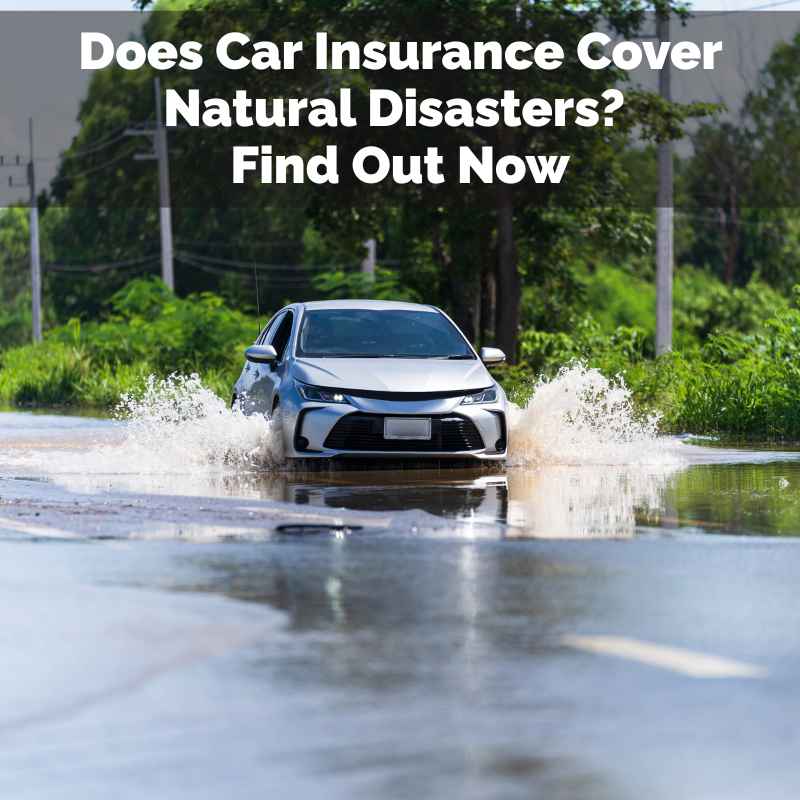
- Floods: If your car is submerged in water from a hurricane, heavy rain, or overflowing river, comprehensive usually covers it.
- Hail: Those annoying dents from hailstones? Comprehensive covers them.
- Windstorms: Damage from strong winds, like a tree branch falling on your car, is typically included.
- Falling Objects: This includes things like tree branches, rocks, or even debris from a storm.
- Fire: Wildfires or other accidental fires.
- Vandalism & Theft: Though not natural disasters, these are also covered under comprehensive.
Collision Coverage: Generally does NOT cover natural disasters unless a collision is directly caused by the event (e.g., you swerve to avoid a fallen tree and hit something).
Liability Coverage: Does NOT cover damage to your own vehicle from natural disasters.
My Car, A Boat? The Flood Experience
I remember a few years back, we had this insane hurricane. The news kept talking about it for days. I thought I was being smart, parking my car on a slightly higher street a few blocks away from my house, thinking it would be safe.
I’d always heard floods were bad, but I guess I didn’t truly grasp how bad until that week.
Waking up the next morning was surreal. The street looked like a slow-moving river. My little sedan, the one I relied on for everything, was sitting with its tires completely submerged.
Water was up to the door handles. Panic started to bubble up. My first thought wasn’t about the car’s value, but the sheer helplessness of it all.
It felt like a huge, expensive toy that was just ruined.
When the waters finally receded, the mess was unbelievable. Mud was everywhere. The car wouldn’t start, of course.
That’s when the real worry set in. Was my insurance going to cover this? I didn’t have full coverage, just what was required by the bank that held my loan.
It was a frantic call to my agent, explaining the situation with my voice shaking a little. Thankfully, I had elected to add comprehensive coverage a year prior, remembering a small hailstorm that had chipped my windshield. This decision, which I had almost skipped to save a few bucks, suddenly felt like the smartest thing I’d ever done.
The process wasn’t instant, and there were deductibles to pay, but knowing that this massive repair or replacement was taken care of was a huge weight off my shoulders. It taught me that those extra coverages, while costing a bit more each month, can be a lifesaver when disaster strikes.
What Happens During a Flood?
When a flood hits, water doesn’t just sit on the surface. It can rise quickly. For cars, this means water can get into places it really shouldn’t be.
It can seep in through door seals, window cracks, or even small openings you wouldn’t notice.
Once water gets inside, it can damage many parts. The engine is a huge concern. If water gets into the engine through the air intake, it can cause “hydro-locking.” This means the engine can’t compress the water like it does air, and this can bend or break internal parts like the connecting rods.
That’s often a death sentence for an engine.
The electrical system is also very vulnerable. Modern cars have miles of wiring and many sensitive electronic control units (ECUs). Water can corrode these components, cause short circuits, and lead to all sorts of weird and expensive problems that might not show up right away.
Think of your car’s computer system – water is its enemy.
Even the interior suffers. Seats, carpets, and foam padding absorb water. This leads to mold and mildew growth, which is not only smelly but also a health hazard.
The smell can be very hard to get rid of, even after drying.
The transmission and brakes can also be affected by water. Water can get into the transmission fluid or brake fluid, reducing their effectiveness. Rust can also start forming quickly on metal parts, like the brake rotors.
Because of all these potential issues, even if a car seems to have dried out, flood damage can cause long-term problems. This is why insurance adjusters are very thorough when assessing flood-damaged vehicles. Sometimes, a car is deemed a “total loss” because the cost to repair all the potential damage is more than the car is worth.
Flood Damage: What to Look For
Visual Clues:
- Water lines on the exterior body panels or door jams.
- Mud or silt residue on the car’s exterior or interior.
- Damp or discolored carpeting and upholstery.
- Rust forming on metal parts under the dashboard or in the engine bay.
Sensory Clues:
- A persistent musty or moldy smell inside the car.
- The smell of mildew or stagnant water.
Functional Clues:
- Car won’t start or starts but runs poorly.
- Warning lights on the dashboard that weren’t there before.
- Malfunctions with electrical components like windows, radio, or lights.
- Brakes feel spongy or less effective.
Hail Damage: The Silent Attacker
Hailstorms can be brutal. Those frozen chunks of ice falling from the sky can do a lot of damage to your car very quickly. You might hear them hitting your car, and it can sound pretty violent.
The most obvious damage from hail is dents. Hailstones can vary in size, from small pea-sized pellets to golf balls or even larger. The bigger the hailstone, the deeper the dent.
These dents can appear all over the car’s body panels – the roof, hood, trunk lid, and doors.
Beyond dents, hail can also cause other problems. Large hailstones can crack or shatter your windshield and windows. This is a safety hazard and needs immediate attention.
If the hail is sharp-edged, it can even chip or scratch the paint on your car.
Comprehensive insurance is designed to cover these kinds of damages. When hail damages your car, you’ll typically file a claim. Your insurance company will assess the damage, often by looking at photos or having an adjuster inspect the vehicle.
Then, they’ll determine the cost of repairs.
The repair process for hail damage often involves a technique called paintless dent repair (PDR). Technicians use special tools to gently push the dents out from behind the metal panel, often without damaging the paint. This is usually the preferred method because it’s faster and preserves the original factory paint job.
If the paint is chipped or scratched, or the dents are too severe, traditional bodywork and repainting might be necessary.
Hail Damage Repair Options
Paintless Dent Repair (PDR):
- When it’s used: For dents that haven’t damaged the paint.
- How it works: Technicians access the backside of the panel and use specialized tools to massage the metal back into its original shape.
- Benefits: Faster, cheaper, preserves original paint, often requires no painting.
Traditional Body Repair:
- When it’s used: For dents where the paint is cracked, chipped, or the metal is stretched.
- How it works: Involves filling dents, sanding, priming, and repainting the damaged panels.
- Considerations: Can be more time-consuming and costly. May result in a slight difference in paint color if not matched perfectly.
Wind and Storm Damage: More Than Just the Wind
When we think of windstorms, we often picture trees swaying violently or shingles blowing off roofs. But for cars, wind damage can come in a few forms, and it’s often the flying debris that causes the most significant problems.
A strong gust of wind can pick up objects that shouldn’t be airborne. Think of trampolines flying through the air, patio furniture, branches, or even signs. If these objects hit your car, they can cause serious damage.
A lightweight object might just scratch the paint or cause a small dent. A heavier object, like a large tree branch or a piece of metal, can crush body panels, break windows, or even compromise the structural integrity of the vehicle.
Sometimes, the wind itself can cause damage if the car is unstable. For instance, if your car is parked on a slope and a strong wind causes it to roll, it could lead to a collision with another object. However, the primary concern with wind is usually the objects it carries.
Comprehensive coverage is key here too. If a tree branch falls on your car because of high winds, or if debris from a construction site (that was made airborne by the wind) smashes into your vehicle, comprehensive insurance should cover the repairs. This also includes damage from tornadoes and hurricanes, which are extreme forms of windstorms.
It’s important to note that insurance companies look at the cause of the damage. If a tree branch fell because the tree was dead and poorly maintained (an issue of neglect), there could be questions. But if it fell due to a severe, unexpected storm, it’s typically covered as an act of nature.
Quick Scan: Windstorm Damage
| Cause | Type of Damage | Likely Coverage |
| Flying Debris (e.g., tree branch, sign) | Dents, broken windows, scraped paint, structural damage | Comprehensive |
| Tornado/Hurricane Winds | Extreme structural damage, impact from multiple objects | Comprehensive |
| Car rolling due to wind on a slope | Collision with stationary objects | Collision (if no comprehensive) |
What About Earthquakes and Volcanic Eruptions?
These are less common in many parts of the U.S., but they are also natural disasters. Do they fall under typical auto insurance policies?
Generally, damage from earthquakes and volcanic eruptions is NOT covered by standard comprehensive auto insurance. These events are usually excluded from policies.
Why the exclusion? These events can cause widespread, simultaneous damage across large areas, leading to massive claim volumes that are very difficult for insurance companies to predict and manage financially. They are considered catastrophic events with a high risk of mass destruction.
To get coverage for earthquake damage to your car, you would typically need to purchase a separate earthquake insurance policy or a specific endorsement for it. These are not common for vehicles but might be available in very high-risk areas. Similarly, volcanic eruption coverage might require a special endorsement.
This is a good reminder to always read your policy documents carefully and ask your insurance agent about specific exclusions, especially if you live in an area prone to these types of natural events.
The Deductible: Your Share of the Cost
When you file a claim for damage covered by comprehensive or collision insurance, you’ll almost always have a deductible. This is the amount of money you agree to pay out of pocket before your insurance company starts paying for the rest of the covered damages.
For example, if you have a $500 deductible and your car sustains $3,000 worth of hail damage, you would pay the first $500, and your insurance company would pay the remaining $2,500.
The amount of your deductible affects your premium (the amount you pay for insurance). Choosing a higher deductible usually means a lower monthly premium, but it also means you’ll have to pay more if you need to file a claim. Conversely, a lower deductible means a higher premium but less out-of-pocket cost during a claim.
When dealing with natural disaster claims, especially widespread ones like a major flood or hurricane, insurance companies might have different procedures. Sometimes, there can be delays in getting repairs done because repair shops are overwhelmed with work. It’s good to be patient and communicate with your insurer.
Understanding Your Deductible
What it is: The amount you pay first before insurance pays.
How it works: Applied per claim. For example, a $1,000 repair with a $500 deductible means you pay $500, insurance pays $500.
Impact on Premium: Higher deductible = Lower premium. Lower deductible = Higher premium.
Considerations: Choose a deductible you can afford to pay if you need to file a claim.
When Is It Normal vs. When to Worry?
It’s completely normal for your car to get dirty or scratched from everyday driving. A few minor paint chips from road debris or a small scuff mark in a parking lot are usually just part of car ownership.
However, you should worry and consider filing a claim when damage is significant and directly caused by a natural disaster event. This includes:
- Major Dents: Hailstones the size of golf balls or larger causing multiple deep dents.
- Cracked or Broken Glass: Windshields or windows shattered by hail or flying debris.
- Submerged Vehicle: Any part of your car, especially the engine or interior, flooded with water.
- Significant Body Damage: Large trees or heavy objects falling on your car, crushing panels or roofs.
- Compromised Systems: Electrical issues or engine problems that appear after a severe storm or flood.
If you’re unsure whether the damage warrants a claim, you can always call your insurance agent or company. They can advise you based on the specifics of your policy and the damage you’re seeing.
Important Note: Filing too many claims, even if they are legitimate, can sometimes lead to higher premiums or even non-renewal of your policy. Insurance companies look at your claims history. For very minor cosmetic damage, like a few small dents that don’t affect the car’s function, it might be wise to pay for the repairs yourself to avoid impacting your insurance standing.
My Personal Tip: Document Everything
After my flood experience, I learned a crucial lesson: take pictures and videos. Before the water even rose high, I managed to grab my phone and walk around my car, documenting its condition. I took pictures of the tires, the doors, the windows, and even the street around it.
When the water receded, I took more pictures of the mud, the water lines, and the state of the car.
This visual evidence was invaluable when I spoke to my insurance adjuster. It showed them the extent of the damage and the conditions it was exposed to. It made the claims process smoother and helped me articulate exactly what happened.
So, if you’re in an area facing a severe weather threat, take a few minutes to document your car’s condition. It could save you a lot of hassle later.
Quick Fixes & Tips for Natural Disaster Preparedness
While insurance is there for when the worst happens, there are things you can do to prepare and potentially minimize damage:
- Park Smart: If a major storm is predicted, try to park your car in a covered garage or on higher ground if you live in a flood-prone area. Avoid parking under large, old trees.
- Review Your Policy Annually: Make sure you understand what’s covered. Are you sure you have comprehensive? What’s your deductible?
- Know Your Agent: Have your insurance agent’s contact information readily available.
- Keep Records: Store copies of your insurance policy, photos of your car, and any repair records in a safe place, ideally accessible online or off-site.
- Consider Windshield Protection: Some policies offer separate coverage for glass damage, sometimes with a lower or no deductible.
Essential Document Checklist
Policy Documents:
- Current auto insurance policy details.
- Agent’s contact information.
Vehicle Records:
- Photos/videos of your car’s condition (before and after damage).
- Previous repair receipts.
- Vehicle identification number (VIN).
Claim Information:
- Date and time of the incident.
- Detailed description of what happened.
- Police report number (if applicable).
Frequent Questions About Car Insurance and Natural Disasters
Does my standard car insurance cover flood damage?
Standard liability or collision insurance typically does not cover flood damage. You need comprehensive coverage on your policy to have flood damage paid for by your insurance.
How much does comprehensive coverage cost?
The cost varies greatly based on your location, vehicle, driving history, and deductible. It’s usually a significant portion of your premium, but it’s vital for protecting your car from non-collision events like natural disasters.
What if my car is totaled by a natural disaster?
If the cost to repair your car exceeds its actual cash value (ACV), your insurance company will declare it a total loss. They will then pay you the ACV of the car, minus your deductible. This is why having comprehensive coverage is so important for significant damage.
Can I drive my car after it has been in a flood?
It is generally not recommended. Floodwater can cause severe damage to the engine, electrical systems, and other critical components. Driving a flood-damaged car can be dangerous and may cause further, more costly damage.
It’s best to have it inspected by a qualified mechanic and your insurance adjuster first.
Does car insurance cover damage from fallen trees during a storm?
Yes, if you have comprehensive coverage. Damage caused by a tree falling onto your car due to wind, a storm, or other natural forces is typically covered. This falls under the “falling objects” clause.
What if my car is damaged by wildfire smoke or ash?
Damage directly caused by wildfire, such as fire damage or ash accumulation that causes paint damage, is generally covered under comprehensive insurance. If the ash causes a collision by reducing visibility, collision coverage might apply to the resulting crash.
Final Thoughts on Nature’s Fury and Your Car
It’s a tough situation when nature unleashes its power on our belongings. Understanding that your car insurance, specifically comprehensive coverage, is your shield against many natural disasters is crucial. It’s not just about a piece of paper; it’s about the peace of mind that comes from knowing you have protection when the unexpected happens.
Products related to this article
Sponsored / affiliate links. As an Amazon Associate I earn from qualifying purchases. I may earn additional commission from eligible campaigns.