Why Automotive Technology Matters for the Future of Mobility
Automotive technology matters because it decides whether vehicles are safer, use less energy, and leave the plant with consistent build quality at scale. The chain runs from crash software and battery management to automated production systems. Ignore it, and the cost shows up as more crashes, shorter EV range, uneven quality, and slower manufacturing. This guide explains how safety tech, EV efficiency, and data-driven production shape the next generation of vehicles.
How Cars Get Safer, Cheaper, and More Consistent



Automotive technology matters because, in practice, the future of mobility depends on three things at once: safer vehicles, lower energy use, and manufacturing that can repeat the same result consistently. The technology behind the car is the system that decides whether those goals hold up in daily use and high-volume production.
Consumer-facing gains are easy to notice. Better braking, better crash avoidance, longer range, fewer corrosion problems, cleaner paint, tighter panel fit, and fewer rattles all depend on systems manufacturers control long before a vehicle reaches a driveway.
Safety, efficiency, and scale are linked
A vehicle can look advanced and still fail in the factory. If a battery pack is heavy, range suffers. If a coating is uneven, corrosion risk rises. If inspection data is inconsistent, defects slip through. Automotive technology matters because it turns design intent into repeatable output.
Technology is not only software
Software gets attention, but materials engineering, measurement tools, automation, and coatings often decide whether the software’s promise survives production. A car with strong code but poor process control still leaves the plant with avoidable defects.
| Technology | Safety impact | Efficiency impact | Manufacturing quality impact | Risk or failure mode |
|---|---|---|---|---|
| Advanced driver-assistance systems | High | Low | Medium | Sensor misreadings, calibration drift |
| Battery management and power electronics | Medium | High | Medium | Thermal imbalance, range loss |
| Lightweighting and new alloys | Medium | High | Medium | Join quality, repair complexity, finish defects |
| Machine vision and 3D inspection | High | Medium | High | Poor stage correlation, false pass or false fail |
| Automated coating and paint control | Low | Medium | High | Orange peel, roping, corrosion exposure |
How does automotive technology improve safety?
Automotive technology improves safety by detecting risk earlier, reducing variation, and helping factories catch defects before vehicles reach the road. Sensors, software, and inspection systems support safer braking, better crash avoidance, and more consistent build quality, which matters because many safety problems start in production, not on the street.
Safety starts before the vehicle moves
Factory inspection affects road safety because structural gaps, poor welds, battery assembly issues, or missed coating defects can create weak points. Better process control reduces the chance that the finished vehicle carries hidden problems into service.
Repeatability matters as much as feature count
Two vehicles can carry the same safety hardware and still perform differently if calibration, assembly, or sensor alignment varies. That is why measurement systems matter: they help confirm that the intended design is the design that leaves the plant.
How does vehicle technology affect electric vehicle range?
Vehicle technology affects electric vehicle range by changing how much energy the car needs to move. Mass reduction, better aerodynamics, efficient motors, and smarter battery control all lower demand. Lightweighting is one of the clearest levers because every kilogram removed reduces the energy required for acceleration and climbing.
Lightweighting is a direct range lever
Range improves when the battery does less work. That is why lightweighting matters in EV design: less mass usually means better mileage in both city and highway use, and it can let engineers reach a target range with a smaller battery pack.
Tradeoffs are real
Lightweight structures can create joining, repair, and finishing challenges. Thin panels may dent more easily. Mixed materials can complicate bonding and corrosion control. A lighter car is not automatically a better car unless manufacturing quality stays under control.
What automotive technologies will shape future cars?

Future cars will be shaped by a combination of lightweight materials, automation, advanced sensing, and tighter measurement control. The most important technologies are not isolated. They work together: new materials reduce mass, automation improves repeatability, and measurement systems verify that the parts and finishes still meet spec.
New materials need new inspection methods
Carbon fiber, aluminum, advanced steel grades, plastics, and coated substrates behave differently. That means visual checks alone are not enough. Manufacturers need data that can compare roughness, coating build, and surface condition across stages.
Automation only helps when it is measurable
Automated production can reduce variation, but only if the output is checked with repeatable tools. A factory that cannot quantify finish quality, adhesion risk, or surface geometry will still struggle with scrap and rework.
Say your plant switches a hood panel from stamped steel to a lighter alloy. The part saves mass, but the first batch shows paint texture variation near the edges. That kind of change is common when materials change faster than inspection methods.
What are the biggest challenges with modern vehicle finishes?
The biggest challenges are customer perception, corrosion protection, and cost control. Automotive paint and coatings matter because finish quality is one of the first things buyers notice, but coatings also protect metal, plastic, and composite surfaces from wear and environmental damage. Paint and related finishes can also account for a meaningful share of production cost.
Microstructures shape the final look
Microstructures in the substrate or coating can affect adhesion, gloss, and smoothness. When they are out of control, visible problems such as orange peel or roping can appear. Those defects are not cosmetic trivia; they can trigger rework, delay shipment, and weaken brand perception.
Coating defects have real cost
Bad finish quality increases labor, material waste, and inspection time. Corrosion failures add warranty exposure later. A surface that passes visually but fails long-term protection is an expensive mistake.
How do manufacturers predict paint and surface quality?
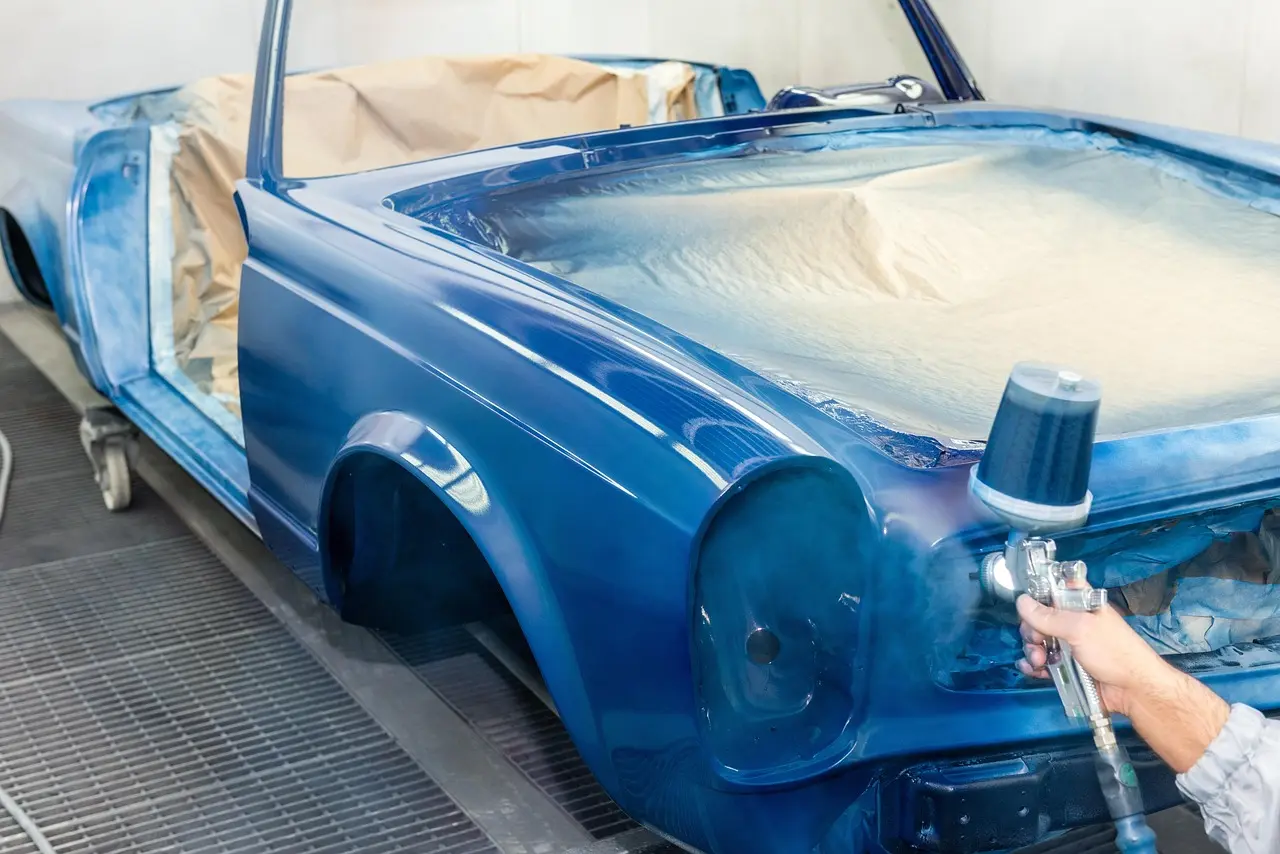
Manufacturers predict paint and surface quality by measuring surface roughness and coating condition with repeatable 3D tools instead of relying on visual checks alone. Surface roughness measurement is non-destructive and can work on bare metal, plastic, primed, and painted surfaces, which makes it useful across the production chain.
Why 3D measurement matters
Traditional 2D profiles capture only a narrow slice of a surface. 3D measurement gives a fuller view of texture, waviness, and local defects, so teams can compare surfaces more reliably and track where a process changes.
Portable tools help in hard-to-reach places
A 3D microscope or surface gauge can be portable and usable on vertical or upside-down surfaces. That matters on vehicle bodies, subassemblies, and coated parts where the surface cannot always be brought to a bench. An extensive field of view also helps operators catch texture patterns that a tiny spot check might miss.
Inspection should begin early
E-coating and priming are ideal stages for inspection because they create an opportunity for rework before later layers hide the problem. Correlation across stages matters too: roughness on raw metal should relate to behavior after primer and final paint, or the process may be drifting in ways visual checks will miss.
- Measure the raw substrate with a repeatable 3D method.
- Check whether the same area carries forward after e-coat or primer.
- Compare the finish after paint against the earlier surface map.
- Flag areas where roughness, adhesion risk, or gloss loss diverge.
- Use the data to correct the process before full release.
What advanced automotive technology can solve in production
Advanced automotive technology can solve variation, late defect discovery, poor process correlation, and weak quality feedback loops. It also helps factories separate a real process problem from harmless variation, which reduces scrap and unnecessary rework.
Suppose a primed door skin looks acceptable under lights but later shows orange peel after topcoat. If the plant has earlier roughness data, it can trace the issue to the substrate, the primer, or the spray step instead of guessing after final assembly.
Frequently asked questions
Why does automotive technology matter for the future?
Automotive technology matters because future mobility depends on safer vehicles, better energy use, and higher manufacturing consistency. Those outcomes come from systems such as sensing, software, materials engineering, inspection, and automation. Without them, vehicles can be harder to scale, less efficient, and more variable in quality.
Why are sensors and measurement tools important in car manufacturing?
Sensors and measurement tools make quality repeatable. They help manufacturers detect variation in surface texture, coating thickness, alignment, and assembly condition before defects spread downstream. In car manufacturing, repeatable data beats visual judgment when the goal is consistent output at scale.
Products related to this article
Sponsored / affiliate links. As an Amazon Associate I earn from qualifying purchases. I may earn additional commission from eligible campaigns.