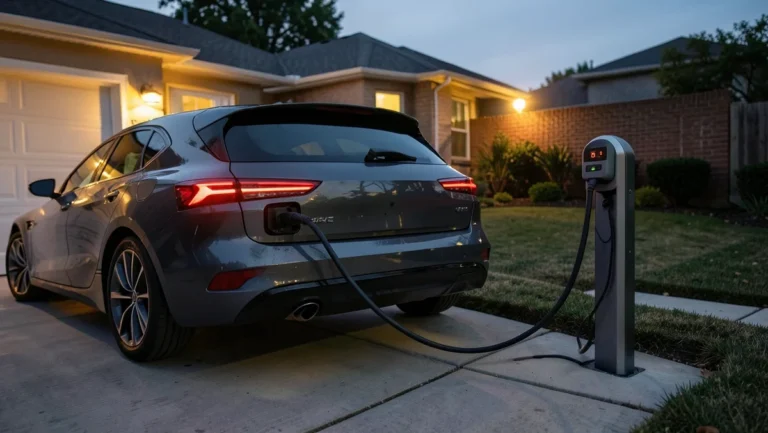
Rear View Camera Review: Is It Worth It?
Yes, a rear view camera is worth it for daily reversing, tight parking, or older cars, and worth paying for a good wired setup if the total price makes sense. A poorly aimed or flaky system can hide obstacles, drain trust, and still leave you without a clear view after a bump. This guide covers when it pays off, which specs matter, typical install costs, and where failure risk changes the answer.
Verdict

For most drivers, the buy/no-buy answer comes down to use case first. If you park in crowded lots, back into streets, tow a trailer, or drive a vehicle with poor rear visibility, the gain is real. If your vehicle already has strong OEM parking sensors or a 360 camera, the camera may be redundant unless you want a recording system or better rearward visibility.
Specs at a glance
| Spec | What matters in use | Why it matters |
|---|---|---|
| Viewing angle | Wide-angle lens, often around 150° to 170° | More coverage of lanes, curbs, and close obstacles; too wide can add distortion |
| Video resolution | Market range from 720p to 4K | Higher resolution can help with plate readability and low-light clarity, but lens quality and exposure matter too |
| Night vision | Infrared or low-light tuning | Useful in parking lots, at dusk, and in early morning reverse lighting conditions |
| Installation type | Wired or wireless; hardwired parking mode if you want surveillance | Wired is usually steadier; wireless can make install easier but may add lag or interference risk |
| Mounting style | License plate mount, surface-mounted, flush-mounted, or mirror-integrated display | Mounting affects visibility, appearance, and install complexity |
| Parking mode | Motion detection, time-lapse recording, 24H surveillance | Needs a hardwire setup for parked monitoring |
| Common use | Rearward visibility and reverse-gear activation | Helps with parking and blind-spot reduction, and minor collision avoidance |
Who it
A rear view camera is most valuable when rear visibility is poor or the cost of a low-speed mistake is high. Older cars without a factory camera, city drivers who parallel park, teen drivers who need more reverse confidence, SUVs with a high tailgate, and trucks or tow rigs all tend to benefit more than a sedan with a strong factory camera.
It is also worth considering if you want better rearward visibility while reversing. That said, a rear camera is not the same as a rear dash cam or mirror dash cam. A backup camera helps you see behind the vehicle while reversing; a dash cam records driving, and a mirror dash cam may combine a display with recording.
Older cars without factory cameras
On an older car, an aftermarket rear camera can deliver the biggest jump in convenience because there is no OEM system to replace. The tradeoff is install burden. You may need trim removal, a display, power routing, and a cleaner mounting plan than a basic plug-and-play unit.
Say your sedan has no factory camera and a small rear window. A license plate camera with a wired display can make daily parking easier, but a poorly routed cable or bad angle can erase the benefit. The install has to be as thoughtful as the camera itself.
City parking, teen drivers, SUVs, trucks, and towing
City parking rewards a camera because it helps judge curbs, poles, and cross traffic while backing out. Teen drivers often benefit from the extra reference point. SUVs and trucks usually gain the most because rearward sightlines are naturally worse, and towing adds blind spots that mirrors cannot fully solve.
For trailers, rear camera value rises if the lens can cover the hitch area and the system gives a clear reverse view without lag. If your vehicle already has parking sensors, the camera may still help visually, but it is not automatically a must-buy.
Rear view camera decision matrix
This table weighs use case, installation burden, and failure risk instead of judging by price alone. A simple camera can be a strong buy in one vehicle and a weak buy in another.
| Scenario | Safety gain | Install difficulty | Evidence value | Total cost | Recommendation |
|---|---|---|---|---|---|
| Older car | High | Medium to high | Medium | Low to medium | Buy if you lack OEM camera tech |
| City parking | High | Medium | Low to medium | Low to medium | Buy |
| Teen driver | High | Medium | Low | Low to medium | Buy |
| SUV | High | Medium | Low to medium | Medium | Buy |
| Truck | High | Medium to high | Medium | Medium to high | Buy if rear visibility is poor |
| Night driving | Medium to high | Medium | Low | Medium | Buy if low-light use is common |
| Towing | High | High | Medium | Medium to high | Buy only if the system fits the trailer setup |
A common first-timer mistake is treating every camera as the same. A $23.99 unit can be enough for basic reversing, while a more complex wireless or display-based setup can cost far more once you add wiring and installation labor.
- Pick the vehicle use case first.
- Decide whether you need a simple reverse camera or a recording system.
- Check whether your car already has OEM sensors or a 360 camera.
- Estimate camera price, display price, wiring, and install labor together.
- Choose the mounting style that fits the rear end and trim layout.
What works well?
A rear view camera works best at its core job: rearward visibility. It reduces blind spots directly behind the vehicle, helps with parking assistance, and makes reverse-gear activation less stressful in tight spaces. The practical gain is simple. You see what mirrors miss.
Viewing angle matters a lot. A wide-angle lens in the 150° to 170° range can cover lanes and curbs that a narrow lens may miss. The tradeoff is distortion. Wider views can make distance look farther away than it is, so the image should be used as a guide, not as the only reference.
Resolution and night use
Resolution in this category ranges from 720p to 1080p, and many competitor listings treat 1080p as a practical baseline. Higher resolution can help with license plate readability, but only if the sensor, exposure, and lens are also decent. A sharp image that is too noisy at night is still a weak camera.
Low-light performance matters for parking lots, evening departures, and early-morning commuting. Many systems include parking guidelines and night vision, and some use infrared or low-light tuning. Reverse lighting conditions can help the camera see better, but they do not fix a dirty lens or a poor mounting angle.
Parking assistance and evidence use
For everyday reversing, the best camera is the one that gives a stable picture quickly and does not distract. For recording use, the bar is higher. A rear dash cam or mirror dash cam can help document a rear-end collision or hit-and-run, but usable footage is not guaranteed if the lens is dirty, the angle is wrong, or the system is not recording when parked.
Parking mode can add value if the system supports motion detection, time-lapse recording, or 24H surveillance. Those features normally require a hardwire setup, because a camera that only powers on in reverse will not keep recording while the car is parked.
What does not work well?
The biggest failure points are wireless lag, interference, glare, condensation, dirty lenses, and bad mounting angles. Wireless systems are attractive because they make installation easier, but they can be less predictable than wired systems if the signal path is noisy or the vehicle is long.
Condensation and grime can ruin a rear camera in a way spec sheets do not mention. A lens mounted low near road spray may need cleaning often. If the camera sits too high, too low, or off-center, the image can mislead you about curb distance and bumper clearance.
Wireless versus wired
Wireless systems are often chosen for easier installation, especially on trucks, RVs, campers, and trailers. Wired systems usually make more sense when you want a steadier image and fewer signal worries. If the camera will support parking mode, a hardwired setup is usually part of the plan either way.
Suppose a truck owner wants a rear camera for a trailer but also expects a recording function while parked. A wireless camera may reduce cable work, but the parked-recording requirement can complicate the install. In that case, a wired or hardwired design may be the better buy.
Mounting style and install burden
Mounting style changes both look and labor. License plate mounts are often the easiest. Surface-mounted and flush-mounted setups can look cleaner, but they usually need more careful placement. Mirror-integrated display systems change the cabin layout and may require more setup than a plain external camera.
Competitor reviews often stop at “wireless versus wired,” but vehicle type matters more than that headline suggests. A sedan with simple trim may be a straightforward DIY job. An older SUV with tighter interior panels, or a vehicle that needs hardwiring for parking mode, can push the job into professional-install territory.
Alternatives
The prices below are examples and can change over time.

eRapta ERT01 HD Backup Camera is the low-cost, wired option in this set at $22.99. It uses a 149° view and a license plate mount, which makes it a practical fit for a basic reverse-camera setup on a car, SUV, or pickup. The drawback is clear: you still need compatible display hardware and a clean wired install.
Garmin BC™ 50 is the wireless choice here at $199.99. Garmin says it pairs wirelessly with compatible navigators, offers a 50-foot range, and uses a 160-degree view. That makes it more appealing for longer vehicles or trailer use. The drawback is compatibility; check the manufacturer’s listing for your model before buying.

AUTO-VOX 2 Solar Wireless Backup Camera System sits at $219.99 and adds a 7.2” 1080P monitor with dual cameras. The no-drill wireless setup cuts installation hassle, and the split-screen display helps with wider rear and trailer views. The tradeoff is complexity: more parts usually mean more setup decisions and more things to troubleshoot.
Cost breakdown
Cost is more than the camera sticker price. A rear camera can cost as low as $23.99, while other systems fall in the $50 to $200 range before labor. Add the display if the camera does not include one, plus wiring, mounts, and professional installation if the vehicle is trim-heavy or the wiring route is awkward.
That is why a $100 camera can become a $300 install once display, cabling, and labor are included. A lower-cost unit can still be the better purchase if the vehicle is simple and the features match the use case. Paying more only makes sense when you are buying better fit, not just a bigger spec sheet.
Should you buy it?
Buy a rear view camera if you reverse often, park in tight spaces, drive a larger vehicle, or need better visibility behind an older car. It is also a strong fit if you want basic rearward visibility and are willing to accept that image quality depends on mounting, power, and cleanliness.
Skip or wait if your vehicle already has strong OEM parking sensors or a 360 camera and you do not need recording. Also wait if the only appealing option is a wireless system that will be hard to place cleanly, or if you expect parking mode without hardwiring. The right system is the one that matches the vehicle, not the one with the biggest resolution number.
Frequently asked questions
Is a rear view camera worth it for my car?
It usually is if you back up often, park in tight places, or drive a vehicle with poor rear visibility. The value drops if your car already has strong factory sensors or a 360 camera. In that case, a rear camera may be more of a convenience add-on than a necessity.
What does a rear view camera do for safety?
It gives you a clearer view behind the vehicle, which helps reduce blind spots and minor reversing mistakes. That can matter for pedestrians, cars, posts, and curbs. It does not replace mirror checks or a careful backup routine, and it will not stop every low-speed impact.
Can a rear view camera be installed on an older car?
Yes. Aftermarket systems are common for older cars without factory cameras. The main issue is install complexity, not compatibility alone. You may need a display, a power source, and trim removal, so the total job can be more involved than the camera price suggests.
How much does a rear view camera cost to install?
Cost depends on the camera, the display, wiring, and labor. A rear camera can cost as low as $23.99, and many systems fall in the $50 to $200 range. Professional labor can add roughly $100 to $300 or more, depending on the vehicle and wiring, so a clean wired install can push the total much higher once accessories are included.
Should I choose a wireless or wired rear view camera?
Choose wired if you want steadier video and fewer signal concerns. Choose wireless if installation simplicity matters more and the vehicle suits that layout. For trailer setups and longer vehicles, wireless can be convenient, but compatibility and signal quality should be checked before buying.
Can a rear view camera record incidents for insurance claims?
A rear view camera is primarily for reversing, while a rear dash cam or mirror dash cam is the better fit for recording incidents. If the system supports parking mode, motion detection, or time-lapse recording, it can help document events, but it is helpful evidence, not a guarantee of usable footage in every incident.
Products related to this article
Sponsored / affiliate links. As an Amazon Associate I earn from qualifying purchases. I may earn additional commission from eligible campaigns.
 Car Backup Camera Rear View Camera 12-LED Night Vision Waterproof Reverse Camera 120° Wide View Angel Parking Camera for Universal Cars, Vehicles, Trucks, RV, Vans, SUV, Trailer, Pickup
 Edinstry Car Backup Camera,HD Night Vision Rear View Camera, License Plate Camera with 9 LED Lights Rear Camera, Wide View Angle, IP69K Waterproof Reverse Vehicle Camera for Cars, SUV, Trucks