Best Electric Car Jacks: Top Picks for Heavy-Duty Vehicles
For SUVs and pickups, a 3-ton electric jack kit is often a starting point; 5 tons is commonly used for three-quarter-ton and one-ton trucks, and the jack should be checked to ensure it clears your vehicle’s minimum lift height plus the jack-point height. A jack that is too small, too short, or unable to run from your power source can leave you stuck on the shoulder. This guide compares electric jack kits by GVWR, lift range, power format, and roadside use so you can match the tool to your vehicle class.
Why 5-ton kits matter for heavy vehicles
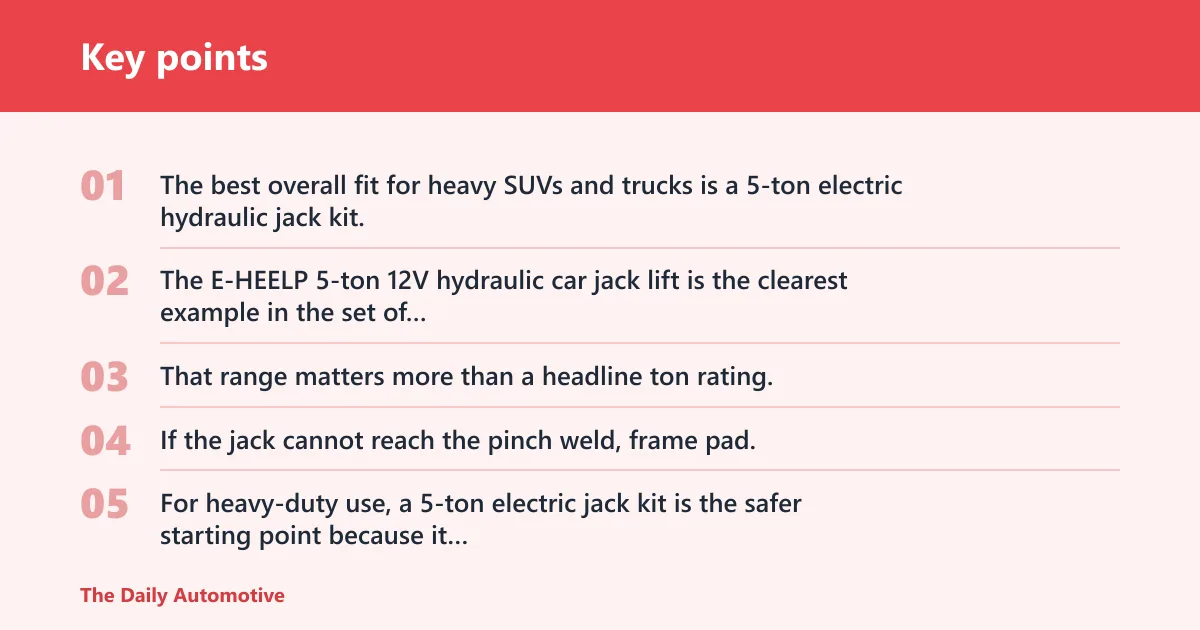


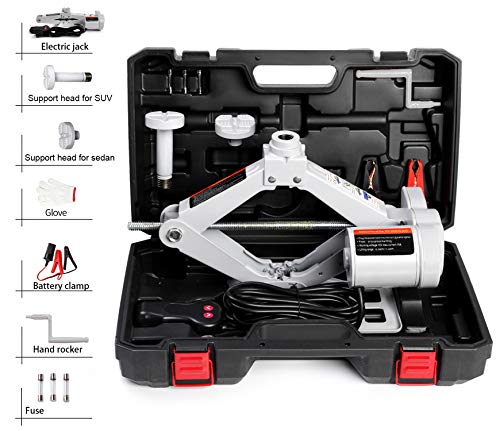
The best overall fit for heavy SUVs and trucks is a 5-ton electric hydraulic jack kit, especially one with a 12V power source, overload protection, and a lift range that reaches the factory jack point from a flat tire. The E-HEELP 5-ton 12V hydraulic car jack lift is the clearest example in the set of sourced specs, with a lifting range of 6.1 to 17.7 inches.
That range matters more than a headline ton rating. If the jack cannot reach the pinch weld, frame pad, or axle-point height specified by the manufacturer, the capacity rating does not help you at the roadside.
Top pick for SUVs and pickups
For heavy-duty use, a 5-ton electric jack kit is the safer starting point because it fits heavier SUVs and trucks, and competing pages consistently position 5-ton kits for that job. One QuickTechTools listing pairs a VEVOR 5-ton electric car jack with an inflator pump, which is the kind of roadside-ready bundle that suits large-vehicle tire changes.
Look for the kit format that matches your storage space and your power access. A larger case can be annoying in a smaller cargo area, but the extra reach and included tools often matter more for full-size SUVs and pickups.
Quick picks by vehicle class
Choose by vehicle class first, then by lift range and power source. That keeps you from buying a jack that looks strong on paper but misses the factory lift point or your emergency setup.
- Full-size SUVs and heavy pickups: 5-ton electric hydraulic jack with 12V power, a lift range around 6.1 to 17.7 inches, and overload protection.
- Midsize SUVs and heavier crossovers: 3-ton kit if the manufacturer’s lift point sits within the jack’s range, or 5-ton if the vehicle is especially tall or heavy.
- Compact SUVs and sedans: 3-ton electric car jack with a smaller footprint and remote-control convenience.
- Roadside emergency kit: 12V plug-in kit with a lug-nut impact wrench, a tire inflator, and a storage case that fits the cargo area.
What the quick picks mean in practice
The 3-ton class is the lighter-duty option. It fits sedans and smaller SUVs better, and listings often pair it with dual lifting heads or a safety circuit. Cars Techie also lists a cordless 18V electric car jack, which adds portability but changes the charging and runtime equation.
The 5-ton class is the heavy-duty choice. QuickTechTools highlights 5-ton electric car jack kits for heavy-duty vehicles, and NuvioPick lists both a 3-ton electric car jack and a 5-ton electric car jack kit. That spread is useful because it shows how sharply the kit classes split by vehicle size and use case.
5-ton electric jack kits
A 5-ton kit is the better match when you are dealing with heavier SUVs, pickups, and repeated roadside use. It is the category to favor when the vehicle is tall, the wheel well sits high, or you want more margin between the load and the jack’s stated capacity.
What the bundled tools usually add
Many 5-ton kits are reported to bundle an electric impact wrench, a tire inflator, and sometimes LED lighting. The impact wrench reduces manual effort on lug nuts, with torque figures commonly listed in N·m. The inflator adds real value after a flat because it lets you reinflate before you leave the shoulder.
Accessory bundles can also include gloves, fuses, and extra adapters. Check whether those items are spare parts or merely convenience items. A second inflator nozzle is nice; a replacement fuse can be more useful when the kit draws power directly from the vehicle.
When the larger case makes sense
Choose the larger 5-ton case when the vehicle is large enough to justify it, or when you want one kit to handle multiple vehicles in the family. A common first-timer mistake is buying a compact jack for a full-size SUV because the box looks tidy, then discovering the jack point is too high for the lift range.
Suppose a three-row SUV has a higher rocker profile and a loaded cargo area. If the jack barely reaches the lift point on a flat tire, the job becomes slower and less forgiving. A kit with more lift range and a stronger power path gives you more margin.
3-ton electric jack kits
A 3-ton electric car jack is the better buy for lighter vehicles, smaller SUVs, and tighter storage. It is usually smaller, easier to stow, and more convenient if you expect occasional tire changes rather than frequent heavy-duty work.
Remote control and compact kit tradeoffs
Remote control convenience is one reason shoppers choose this class. The tradeoff is simple: less bulk and easier storage usually mean less reserve for heavy vehicles. That works only if your vehicle’s manufacturer lift points and minimum lifting height stay comfortably within the jack’s range.
Cars Techie’s 3-ton and 5-ton split, plus NuvioPick’s 3-ton listing, shows the market’s main fork. If you do not need the larger footprint of a 5-ton kit, the smaller unit is easier to carry and easier to live with in a daily driver.
When a smaller kit is the better buy
Pick the 3-ton class when your vehicle is a sedan, hatchback, compact crossover, or smaller SUV, and when you want something that stays out of the way in the cargo area. It is also the better choice if your roadside kit needs to be light enough for regular storage changes.
Which power source do you need?
Most electric jack kits for roadside use run on 12V power from a cigarette lighter socket or direct battery hookup. That makes them useful away from mains power, but it also means the vehicle battery becomes part of the plan. If the battery is weak, the jack and impact wrench may both suffer.
12V cigarette lighter versus direct battery hookup
A cigarette lighter plug is convenient because it is quick to set up, but it may be limited by the socket’s current draw and fuse rating. A direct battery hookup is often the stronger option when the kit needs more current or when the cigarette lighter circuit is not rated for the load.
The tradeoff is storage and setup time. The plug-in path is cleaner, while a battery clip setup is often more flexible for heavy-duty jobs. Before you buy, confirm how the kit is powered and whether the cable length reaches the wheel you need to service.
What to check before you rely on the battery
Check the vehicle’s 12V socket fuse, the battery condition, and whether the kit includes alligator clips or only a plug. A kit can be perfectly capable on paper and still be inconvenient if the cable is too short or the battery is already strained.
How to choose the right jack
Choose from the manufacturer’s designated lift points first, then check minimum lifting capacity, lift range, and power source. Do not size the jack from rough curb-weight guesses alone. Front-corner load can vary from vehicle to vehicle, and the correct lift point matters more than a casual estimate.
Manufacturer lift points and minimum lifting capacity
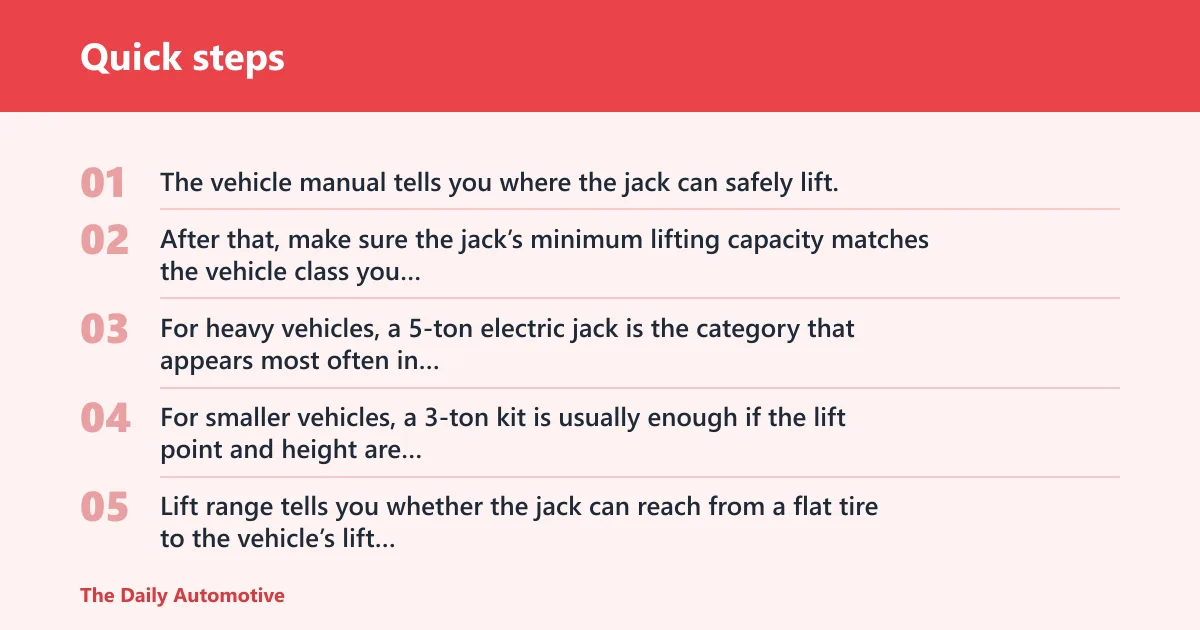
The vehicle manual tells you where the jack can safely lift. That is the starting line. After that, make sure the jack’s minimum lifting capacity matches the vehicle class you are servicing, especially if the vehicle is a heavy SUV or truck with a high front end.
For heavy vehicles, a 5-ton electric jack is the category that appears most often in comparison pages and is the more realistic match for full-size SUVs and trucks. For smaller vehicles, a 3-ton kit is usually enough if the lift point and height are compatible.
Lift range and jack-point clearance
Lift range tells you whether the jack can reach from a flat tire to the vehicle’s lift point. The E-HEELP kit’s 6.1 to 17.7 inches range is the clearest sourced example here, and Cars Techie lists a 5-ton jack with a 5.9 to 17.7 inch range. Those figures matter because the jack must both fit under the vehicle and rise high enough to remove the wheel.
On a low sedan, too much minimum height can be a problem. On a tall SUV or truck, not enough maximum height can be the problem. Either way, the number that matters is the one that clears your actual jack point from the flat-tire stance.
Safety shutoff, overload protection, and stability
Look for safety shutoff or overload protection when the listing includes it, but do not assume every kit has the same protection system. The point is to reduce the chance of over-lifting, motor strain, or circuit damage. Safety features help, but they do not replace correct setup.
Never work under a vehicle supported only by an electric jack. Use jack stands before any work underneath. The jack is for lifting; the stands are for support.
Impact wrench, inflator, and accessory value
An electric impact wrench saves time on lug nuts and reduces manual effort. A built-in tire inflator helps reinflate after a flat, and some kits include a real-time pressure display. That combination is especially useful in a roadside bundle, where speed and simplicity matter more than bench-top versatility.
Do not pay for accessories you will never use. If the kit is going to live in the cargo area for emergencies, the inflator and wrench are more defensible than extra novelty add-ons. If the kit is for occasional garage tire rotations, a smaller box may matter more.
Two common setup mistakes
Say your truck is on a soft shoulder, and the jack sits on gravel that shifts under load. The jack can lean, the lift point can move, and the job becomes unsafe. A stable, flat lifting surface is not optional.
Suppose a sedan tire is flat, but the jack saddle is centered a little off the pinch weld. The jack can slip before the wheel clears the ground. A correct lift point matters as much as the rating on the box.
Electric jack decision table
This table maps vehicle class, lift height, power source, and use case to the jack category that fits best. It is a shortcut, not a substitute for the vehicle manual.
| Vehicle type | GVWR band | Lift-height need | Power source | Use case | Right jack category |
|---|---|---|---|---|---|
| Sedan or hatchback | Lower | Lower clearance, short rise | 12V cigarette lighter or battery hookup | Occasional tire change | 3-ton electric jack |
| Compact SUV | Moderate | Moderate clearance, enough reach to factory lift point | 12V plug-in preferred for roadside kits | Roadside flat or basic maintenance | 3-ton electric jack kit |
| Midsize SUV or MPV | Moderate to higher | Lift range near 6.1 to 17.7 inches | 12V with direct battery backup preferred | Family vehicle emergency kit | 3-ton or 5-ton depending on lift-point height |
| Full-size SUV | Higher | Higher jack-point height and more lift margin | 12V battery hookup or power kit with a stronger current path | Roadside tire change and seasonal swaps | 5-ton electric hydraulic jack |
| Three-quarter-ton pickup | High | High lift and better reserve capacity | Direct battery hookup often preferred | Heavy-duty roadside use | 5-ton electric jack kit |
| One-ton truck | Highest in this group | High lift, taller chassis, larger margin needed | Direct battery hookup preferred | Heavier-duty roadside or maintenance use | 5-ton electric jack kit |
Electric car jacks checklist
Use this checklist before you lift on the shoulder. Each item addresses a common failure case that buyers often skip.
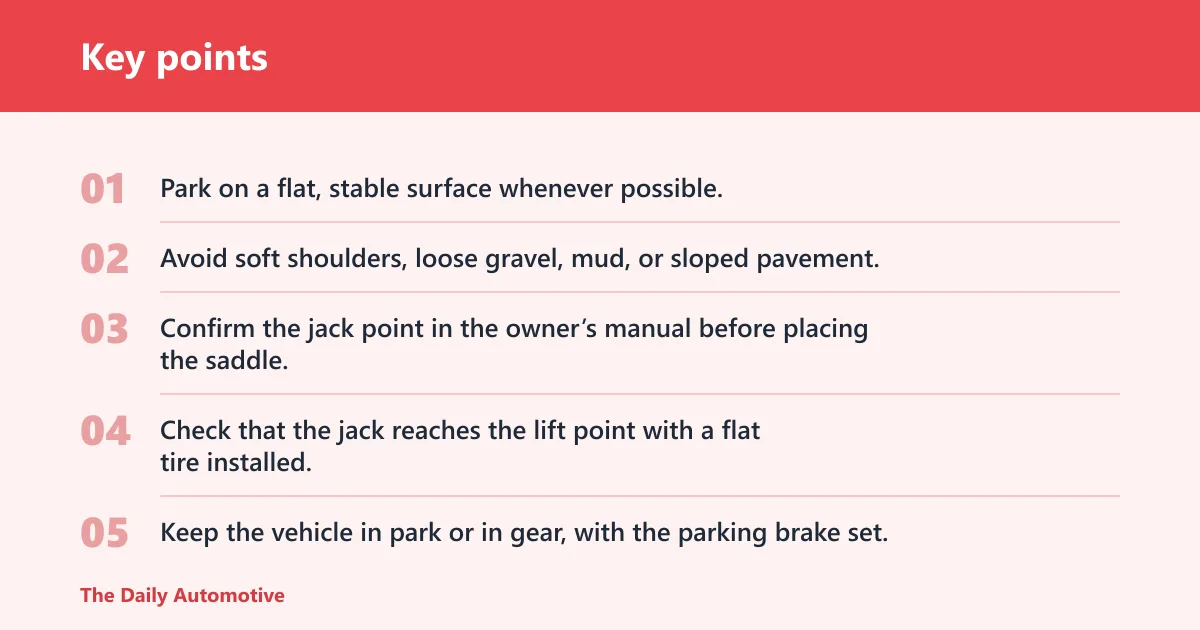
- Park on a flat, stable surface whenever possible.
- Avoid soft shoulders, loose gravel, mud, or sloped pavement.
- Confirm the jack point in the owner’s manual before placing the saddle.
- Check that the jack reaches the lift point with a flat tire installed.
- Keep the vehicle in park or in gear, with the parking brake set.
- Chock the opposite wheel if the surface allows it.
- Use jack stands before any work under the vehicle.
- Verify that the power cable reaches the battery or socket without strain.
- Stop if the jack begins to tilt, bind, or sink into the surface.
Frequently asked questions
What is the best electric car jack for SUVs and trucks?
A 5-ton electric hydraulic jack is often a practical starting point for many heavy SUVs and trucks, especially when the kit runs on 12V and includes overload protection. The E-HEELP 5-ton 12V hydraulic car jack lift, with a 6.1 to 17.7 inches range, is the clearest fit among the sourced examples for taller vehicles.
How much weight capacity do I need for an electric car jack?
Match capacity to the vehicle class and the manufacturer’s lift points, not to a rough curb-weight guess. A 3-ton kit suits lighter cars and smaller SUVs, while a 5-ton kit is the better match for heavier SUVs and trucks. The jack must still clear the lift point at full extension.
Are 3-ton or 5-ton electric jacks better for heavy-duty vehicles?
For heavy-duty vehicles, 5-ton electric jacks are the better fit because they provide more reserve capacity and are repeatedly positioned for heavy SUVs and trucks. A 3-ton unit is better reserved for lighter vehicles, smaller SUVs, or users who need a smaller storage footprint.
Do electric car jack kits include an impact wrench and inflator?
Many kits include both, but not all. The QuickTechTools page shows a VEVOR 5-ton electric car jack with an inflator pump, and many competing kits bundle an electric impact wrench as well. Check the listing closely, because bundled tools, gloves, LED lights, and spare fuses vary from kit to kit.
Can I use an electric car jack on a flat tire roadside?
Yes, if the ground is flat, stable, and firm enough for the jack and if the kit is powered correctly from the vehicle’s 12V system or battery. Do not use it on soft shoulders, uneven pavement, or loose gravel. Jack stands are still required before any work under the vehicle.
What safety features should I look for in an electric hydraulic jack?
Look for safety shutoff, overload protection, and a stable saddle design, but treat those as support features rather than guarantees. The real safety checks are correct lift-point placement, a stable surface, and using jack stands before you work underneath the vehicle.
Will an electric car jack work from my cigarette lighter or battery?
Usually, yes, because many kits use 12V power from a cigarette lighter socket or direct battery hookup. The better choice depends on the kit’s current draw and cable length. If you expect to service a heavier vehicle, a direct battery connection is often the more dependable option.
How high does an electric car jack lift a truck or SUV?
That depends on the kit, but the sourced examples give a useful range. The E-HEELP kit lifts from 6.1 to 17.7 inches, and a Cars Techie 5-ton listing shows 5.9 to 17.7 inches. Those numbers matter only if they clear your truck or SUV’s factory lift point from a flat tire.
Products related to this article
Sponsored / affiliate links. As an Amazon Associate I earn from qualifying purchases. I may earn additional commission from eligible campaigns.