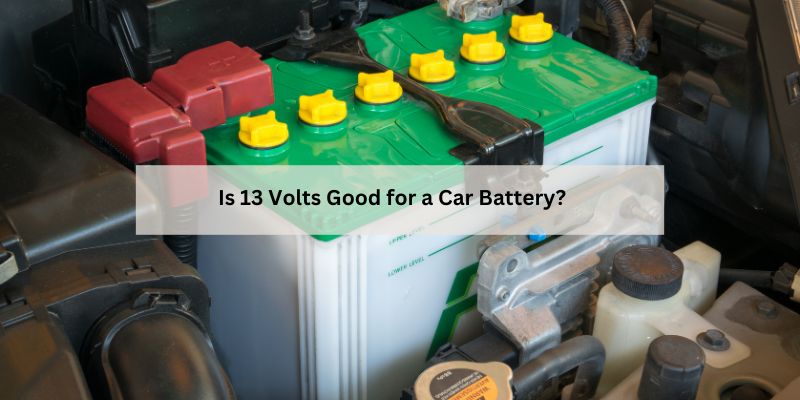
Is 13 Volts Good for a Car Battery?
Hey there! If you’ve ever popped the hood of your car to check the battery and wondered, “Is 13 volts good for a car battery?” you’re not alone. I’ve been there, staring at a multimeter, trying to figure out if my car’s battery was up to snuff.
Over the years, I’ve spent plenty of time tinkering with cars and learning about batteries—sometimes the hard way, like when my old sedan wouldn’t start on a cold morning. In this article, I’ll break down what 13 volts means for your car battery, how to check it, and what to do if things aren’t looking right. Whether you’re a car newbie or a seasoned driver, I’ll keep it simple and share my experiences to help you out. Let’s dive in and get your battery questions answered!
What Does Voltage Tell You About a Car Battery?
Your car battery’s voltage is like its pulse—it tells you how healthy it is. Voltage measures the electrical potential the battery can provide to start your car and power its systems. I learned this when I first got a multimeter to check my battery after it kept dying. Most car batteries are 12-volt systems, but the actual voltage changes depending on whether the car is running or not.
When I check my battery, I’m looking for clues about its charge and condition. A low voltage might mean the battery is weak, while a high voltage could indicate overcharging. Knowing what’s normal helps you catch problems before you’re stuck with a dead car.
Is 13 Volts Good for a Car Battery?
So, is 13 volts good? It depends on the situation. I’ve tested enough batteries to know the answer isn’t always straightforward. Here’s the deal:
When your car is off, a healthy, fully charged battery should read around 12.6 to 12.8 volts. I checked my SUV’s battery last week, and it was sitting at 12.7 volts—perfect. If you’re seeing 13 volts with the engine off, it’s a bit high, but not necessarily a problem. It could mean the battery was recently charged or there’s a small issue with the charging system.
When the engine is running, 13 volts is actually normal. The alternator charges the battery, pushing the voltage to 13.5 to 14.5 volts. I’ve seen my car hit 13.8 volts while idling, which is right in the sweet spot. If you’re getting 13 volts while the car is running, your battery and alternator are likely doing fine.
Anything below 12.4 volts with the engine off or below 13 volts with the engine running could mean trouble. Let’s explore why.
How to Check Your Car Battery’s Voltage
Checking your battery’s voltage is easier than it sounds. I started doing it myself after paying a mechanic to tell me what I could’ve figured out with a $20 tool. Here’s how I do it:
- Get a Multimeter: I bought a basic digital multimeter from an auto parts store. It’s simple to use and costs $15-$30.
- Turn Off the Car: Make sure the engine is off and all electronics (lights, radio) are off. I learned to double-check this after getting wonky readings once.
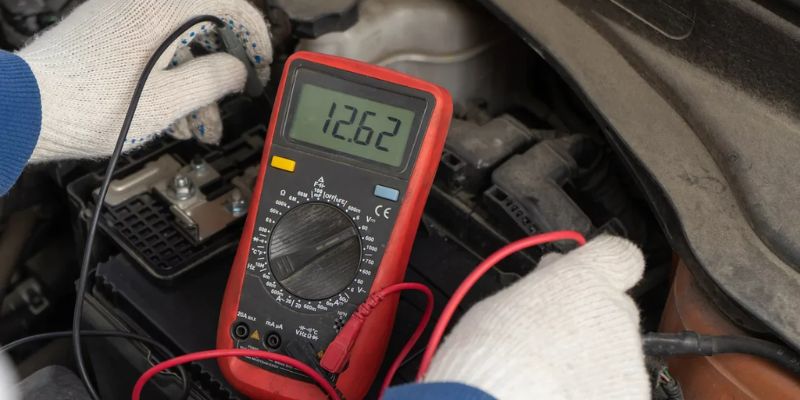
- Connect the Multimeter: Set it to DC voltage (20V range). Attach the red probe to the battery’s positive (+) terminal and the black probe to the negative (-) terminal.
- Read the Voltage: Note the number. I usually write it down to compare later.
- Test with Engine Running: Start the car and check the voltage again. This shows what the alternator is doing.
I check my battery every few months, especially before winter. It’s saved me from being stranded more than once.
What Different Voltage Readings Mean
Understanding what your multimeter is telling you is key. Here’s what I’ve learned from testing batteries over the years:
- 12.6-12.8 Volts (Engine Off): This is a fully charged battery. My sedan’s battery reads 12.7 volts when it’s in good shape.
- 12.4-12.5 Volts (Engine Off): The battery is about 75% charged. It’s still okay, but might need charging soon. I saw this on my truck after leaving the lights on overnight.
- 12.0-12.3 Volts (Engine Off): The battery is low, around 50% or less. I had to jump-start my car when it hit 12.1 volts.
- Below 12.0 Volts (Engine Off): The battery is nearly dead. I’ve had batteries at 11.8 volts that wouldn’t start the car.
- 13.5-14.5 Volts (Engine Running): The alternator is charging properly. My SUV stays around 13.8 volts when running.
- Below 13 Volts (Engine Running): The alternator might not be charging enough. I had this issue once, and it turned out to be a failing alternator.
- Above 14.8 Volts (Engine Running): Overcharging can damage the battery. I saw 15 volts once due to a bad voltage regulator.
If you’re seeing 13 volts, check whether the engine is on or off to know if it’s normal.
Why Your Battery Might Show 13 Volts
If you’re getting 13 volts, there are a few reasons why. Here’s what I’ve come across:
Recent Charging
If you just drove or used a battery charger, the battery might show 13 volts even with the engine off. This is called a “surface charge.” I noticed this after charging my battery overnight—it read 13.2 volts but dropped to 12.7 after sitting for a few hours. To get an accurate reading, turn on the headlights for a minute to remove the surface charge, then test again.
Charging System Issues
With the engine running, 13 volts is fine, but it’s on the lower end. I had a car where the voltage stayed at 13.1 volts while running, and it turned out the alternator was starting to fail. If it’s consistently below 13.5 volts, get the alternator checked.
Battery Age
Older batteries can show weird readings. My five-year-old battery sometimes read 13 volts when off because it wasn’t holding a charge properly. Most batteries last 3-5 years, so if yours is older, it might be time for a replacement.
Temperature Effects
Cold weather can lower voltage, while hot weather can raise it slightly. I noticed my battery read 13 volts in summer but dropped to 12.6 in winter. Extreme temperatures affect how the battery performs, so keep that in mind.
Common Battery Problems
Low or high voltage can point to bigger issues. Here are the problems I’ve dealt with:
Weak or Dead Battery
If the voltage is below 12.4 volts with the engine off, the battery is weak. I had a battery die at 11.9 volts, and it wouldn’t start my car. Charging it helped, but it was a sign the battery was on its last legs.
Alternator Issues
If the voltage is below 13 volts with the engine running, the alternator might not be charging properly. I had an alternator fail, and the voltage was stuck at 12.8 volts even when driving. Replacing it cost about $300.
Parasitic Drain
Sometimes, electronics like a radio or alarm stay on and drain the battery. I found this in my old car when the voltage dropped overnight. A mechanic traced it to a faulty glovebox light.
Corroded Terminals
Corrosion on battery terminals can mess with voltage readings. I’ve cleaned mine with a wire brush and baking soda solution when I saw white, crusty buildup. It’s an easy fix that can improve performance.
How to Maintain Your Car Battery
Keeping your battery healthy prevents voltage issues. Here’s what I do:
- Check Voltage Regularly: I test every few months with a multimeter. It’s quick and catches problems early.
- Clean Terminals: I scrub corrosion off with a brush and apply petroleum jelly to prevent buildup.
- Avoid Short Trips: Short drives don’t let the battery recharge fully. I try to take longer drives once a week.
- Secure the Battery: A loose battery can get damaged. I check the hold-down clamp to make sure it’s tight.
- Use a Trickle Charger: In winter, I use a trickle charger to keep the battery topped off if I’m not driving much.
These habits have helped my batteries last longer, sometimes up to six years.
When to Replace Your Battery
If your battery’s voltage is consistently low, it might be time for a new one. I replace mine when:
- Voltage Drops Below 12.0 Volts: If it’s below 12 volts after charging, the battery’s done. I had to replace one at 11.8 volts.
- It’s Over 4-5 Years Old: Most batteries don’t last much longer than that. My oldest one made it to five years before it started failing.
- Slow Cranking: If the engine turns over slowly, like it’s struggling, the battery’s weak. I noticed this before my last replacement.
- Frequent Jump-Starts: If you’re jumping your car often, it’s time for a new battery. I learned this after three jumps in a month.
A new battery costs $100-$200, but it’s cheaper than a tow.
Comparing Battery Voltage Scenarios
Here’s a table I put together to summarize what voltage readings mean based on my experience:
| Condition | Voltage (Engine Off) | Voltage (Engine Running) | What It Means | Action Needed |
|---|---|---|---|---|
| Fully Charged | 12.6-12.8 volts | 13.5-14.5 volts | The battery can’t hold charge | None, keep monitoring |
| Partially Charged | 12.4-12.5 volts | 13.5-14.5 volts | The battery is weak, alternator may be failing | Charge battery, check alternator |
| Low Charge | 12.0-12.3 volts | 13.0-13.4 volts | Test the alternator and voltage regulator | Charge or replace battery, test alternator |
| Dead Battery | Below 12.0 volts | Below 13.0 volts | Test the alternator and voltage regulator | Replace battery, check alternator |
| Overcharging | 13.0+ volts | Above 14.8 volts | Possible charging system issue | Test alternator and voltage regulator |
This table helps me decide what to do when I check my battery.
How to Charge a Car Battery
If your battery’s voltage is low, charging it might help. Here’s how I do it:
- Get a Charger: I use a smart charger that stops when the battery’s full. It cost me $50 and works great.
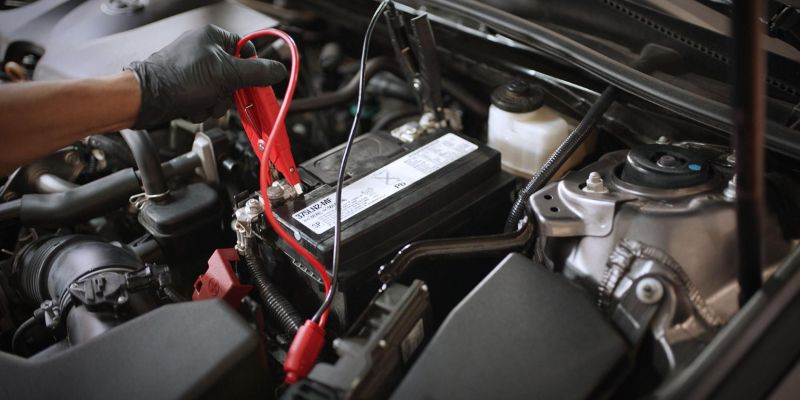
- Connect Safely: Attach the red clip to the positive terminal and the black to the negative. I do this with the car off.
- Set the Charger: Choose the right setting (usually 12V, 2-10 amps). My charger has an automatic mode that’s foolproof.
- Let It Charge: It takes 4-12 hours to fully charge. I check the voltage afterward to make sure it’s around 12.6 volts.
- Test Again: If the voltage drops quickly after charging, the battery’s bad. I had to replace one that wouldn’t hold a charge.
Always charge in a well-ventilated area—I learned this after smelling battery fumes in my garage.
When to See a Mechanic
Sometimes, you need a pro. I take my car to a mechanic if:
- Voltage Is Inconsistent: If it’s 13 volts one day and 11.5 the next, something’s wrong. I had a loose alternator belt cause this once.
- Warning Lights: A battery or check engine light on the dashboard is a red flag. I ignored one and ended up with a $400 repair.
- Alternator Issues: If the voltage is low while running, the alternator or regulator might need fixing. I paid $300 to replace mine.
- Persistent Problems: If charging doesn’t help, a mechanic can test the battery and system thoroughly.
A good mechanic can save you from bigger headaches down the road.
My Personal Experience
I’ve dealt with my fair share of battery issues. My old sedan’s battery kept reading 12.2 volts, and it died on me during a road trip. After that, I got serious about checking voltage regularly. Now, I keep a multimeter in my garage and test my SUV’s battery every few months. Last summer, I caught a 12.3-volt reading early and charged it before it became a problem. Knowing what 13 volts means—good when running, a bit high when off—has helped me stay on top of things.
Conclusion
So, is 13 volts good for a car battery? It’s a solid number if your engine is running, showing the alternator is doing its job. But if you’re seeing 13 volts with the engine off, it might just be a surface charge or a sign of an issue. By checking your battery’s voltage and understanding what the numbers mean, you can catch problems early and avoid being stranded. I’ve learned that a little maintenance, like regular voltage checks and cleaning terminals, goes a long way. Keep a multimeter handy, follow the tips I’ve shared, and your battery will keep your car humming along. Got more questions? Check out the FAQs below for quick answers!
FAQs
Is 13 volts okay when my car is off?
It’s a bit high. It could be a surface charge from recent driving or charging. Turn on the headlights for a minute, then recheck. It should drop to 12.6-12.8 volts if healthy.
What’s a normal voltage when the car is running?
I usually see 13.5-14.5 volts when the engine’s on. My SUV reads 13.8 volts, which means the alternator is charging fine.
How often should I check my battery’s voltage?
I check mine every 3-4 months, especially before winter or long trips. It’s quick and helps catch issues early.
Can a low voltage damage my car?
Yes, if it’s too low, like below 12 volts, it can strain the alternator or leave you stranded. I had to replace a battery that kept dropping to 11.8 volts.
How do I know if my alternator is bad?
If the voltage is below 13 volts with the engine running, like 12.8 volts in my old car, the alternator might be failing. Get it tested at a shop.
Can I charge my battery myself?
Absolutely. I use a smart charger at home. Just connect it properly and let it run for a few hours. Always charge in a ventilated area.