Best Car Battery for Long Life: We Compared
The NOCO Boost Plus GB40 is a solid long-life emergency buy if you want a 1,000-amp compact jump starter that can sit in a glovebox for months and still be ready, provided you recharge it every 3 to 6 months. Skip those storage checks and it can be flat when a weak battery leaves you stranded in the cold. This review covers retention, cold-weather readiness, case durability, and the failure points that matter years later.
Quick comparison
| Product | Badge | Best for | Price | ||
|---|---|---|---|---|---|
 |
NOCO Boost GB40 12V 1000A UltraSafe Portable Lithium JumpNOCO | Our pick | 1000A · UltraSafe · Portable | $99.95
Price as of 18 Oct 2026
|
View |
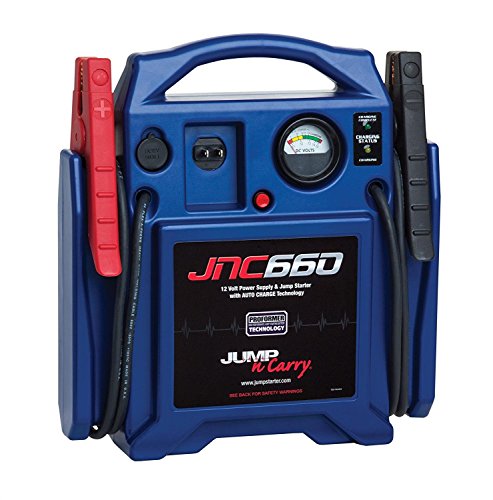 |
Clore Automotive Jump-N-Carry JNC660 1700 Peak Amp 12 VoltClore Automotive | Also great | 1700 Peak Amp · 12 Volt · Blue | $126.02
Price as of 18 Oct 2026
|
View |
The GB40 sits near the top for compact emergency use because it combines small size, a 24 Wh lithium-ion pack, and enough output for many 12-volt passenger vehicles. Larger jump starters can handle more repeated rescues and bigger engines, but they are harder to store and usually less convenient to keep ready in a glovebox.
How we chose
This review prioritizes storage readiness, not only cranking power. That means charge retention, cold-weather range, fitment around modern battery bays, and the chance that the unit still works after months of sitting.
We also weighed beginner safety, accessory cost, and the cases where a compact jump starter falls short: repeated rescue use, larger engines, deeply discharged batteries, and cramped jump points.
Finally, we looked at published specifications and review data, including measured battery capacity versus claimed capacity. That matters because emergency gear often fails on the edges, not on day one.

NOCO Boost Plus GB40: best for glovebox storage
The GB40 is for drivers who want a compact emergency tool that can live in the car. NOCO rates it at 1,000 peak amps, with support for gas engines up to 6.0 liters and diesel engines up to 3.0 liters, plus a 24 Wh internal lithium-ion battery and IP65 resistance.
Its strongest case is readiness. Lithium-ion jump starter packs can hold charge for months, which makes them well suited to roadside emergencies and trunk storage, as long as you keep a recharge cadence. NOCO lists up to 20 jump starts per full charge, but real-world output falls faster with cold weather, repeated rescue use, and poor battery condition.
The main drawback is the same thing that makes it convenient: it is compact. The 2.4-pound unit is glovebox-friendly, yet it is still a small jump starter with small-solution limits. It is not the right pick for frequent towing work, repeated dead-battery rescues, or larger diesel needs outside its rating.
What the specs mean in daily use
The headline numbers are useful only if they match your use case. A 1,000-amp compact pack is a practical fit for many 12-volt cars, crossovers, and smaller trucks, but the advertised engine coverage does not erase weak battery health, sulfation, or a vehicle that needs multiple restart attempts in one week.
The battery itself is the point of the purchase. A 24 Wh lithium-ion pack is small enough to keep in a car yet large enough to support emergency use if it is topped off on schedule. GearLab measured battery capacity at 15.57 Wh, which is a reminder that measured capacity and claimed capacity are not the same thing, and actual output is lower than brochure language suggests.
Compact form factor and clamp design
The GB40’s appeal is partly physical. Its small footprint makes it easier to store in a glovebox, under a seat, or in a cargo pocket than bulkier units. That matters when you want the tool to stay in the vehicle instead of sitting on a garage shelf.
The precision clamps use a wide jaw opening and a detachable heavy-duty design. That helps on many battery posts, but modern vehicles can be awkward. Hidden terminals, battery sensor posts, and cramped fuse-box jump points can make access harder than the jump starter itself.
USB charging, flashlight, and protection
The GB40 includes USB output for charging a phone, and Automoblog says it has a 100-lumen flashlight. That is enough for emergency use, not campsite lighting.
Automoblog also says the enclosure has an IP65 rating. Combined with NOCO’s UltraSafe technology, which includes spark-proof connection behavior, reverse polarity protection, and connection-sense safety behavior, the GB40 is beginner-friendly as long as you still follow the clamp sequence on the label.
Will the GB40 still work for your car?
For many small sedans and midsize SUVs, yes. For a half-ton truck, diesel, or a battery that is deeply discharged or sulfated, the answer gets less certain fast. The GB40 is best when the battery is weak, not when the vehicle has an underlying charging or battery-health problem.
Small sedan and midsize SUV use
A healthy but dead 12-volt battery in a small sedan is the GB40’s easiest job. The same is usually true for a midsize SUV, especially if the engine is gas and the battery is not ancient. Those are the cases where compact jump starters tend to earn their keep.
Suppose a four-cylinder sedan sits overnight in 20°F weather and cranks slowly in the morning. The GB40 is the kind of tool that should be ready for that scenario if it has been kept charged. The same logic applies to a crossover with a battery that was drained by an interior light or accessories left on.
Half-ton truck and diesel limits
The GB40 is rated for gas engines up to 6.0 liters and diesel up to 3.0 liters, but ratings are not guarantees. Bigger displacement, higher compression, and winter oil thickening all raise the demand on the pack. A half-ton truck with a tired battery may still start, but repeated tries are where compact units start to struggle.
For diesel, the margin is narrower. Cold glow-plug demand, larger starting loads, and older batteries can push a small jump starter past its practical comfort zone even when the engine size is technically within rating.
Deep-discharge and sulfation cases
There is a real difference between a healthy battery that has been left on, a deeply discharged battery, and a failing battery that will not recover. The GB40 is most reliable for the first category, less certain for the second, and often a poor answer for the third.
A sulfated battery can accept very little useful charge and may need replacement instead of rescue. In that situation, a jump starter may only buy you one start or none at all. If the car needs a jump every few days, the battery problem is bigger than the emergency tool.
Winter temperature and storage space
The operating temperature range is -4°F to 122°F, which means the unit is built for winter emergency conditions, not equal performance in every winter scenario. Storage readiness and cranking performance are different things. A pack can sit in a cold car and still be within spec, yet deliver less usable punch when asked to start a hard engine.
Cold reduces lithium-ion output and increases engine demand at the same time. That double hit is why a compact jump starter should be treated as a backup, not a substitute for a healthy battery and charging system.
GB40 decision matrix
This matrix is for storage-ready emergency use, not for diagnosing a failing charging system. If your vehicle falls near the lower edge of a row, move up one size if you want more margin.
| Vehicle type | Engine size | Battery condition | Winter temperature | Storage space | Recommended choice |
|---|---|---|---|---|---|
| Small sedan | Up to 4.0L gas | Healthy but dead | Above 0°F | Glovebox or under-seat space | GB40 is a strong fit |
| Midsize SUV | 4.0L to 6.0L gas | Healthy but dead | Down to -4°F | Glovebox, cargo cubby, or console bin | GB40 is reasonable, with less margin in cold |
| Half-ton truck | 5.0L to 6.0L gas | Weak or aging battery | Below 20°F | Seat storage or truck storage compartment | Larger jump starter is safer |
| Diesel | Up to 3.0L diesel | Healthy but dead | Near -4°F | Any compact storage spot | GB40 only for light-duty diesel cases |
| Deep-discharge emergency | Any 12-volt system | Deeply discharged or sulfated | Any winter temp | Not important | Skip compact units; battery replacement may be needed |
Is the GB40 worth it for long-term reliability?
Yes, if you treat it like a stored emergency tool and not a forget-it item. The GB40 is worth it for long-term reliability when you recharge it every 3 to 6 months, keep the clamps and cable set in good shape, and do not expect it to rescue a failing battery forever.
Recharge cadence and trunk storage
Long-term readiness depends on cadence. A lithium-ion jump starter battery is a better fit for emergency roadside use than old-style lead-acid packs because it holds charge for months, but it still needs attention. If it lives in a trunk through hot summers and cold winters, check it on a schedule rather than waiting for a no-start event.
Picture a car that spends weekdays in a garage and weekends in a driveway. The unit may still be ready after several months, but that is not the same as permanent readiness. Trunk heat, repeated partial discharges, and forgotten flashlight use all shorten its margin.
Wall charger and accessory cost
The charging cable is USB-based, but a wall charger is not always included. That matters to total ownership cost. If you need to buy a suitable charger separately, the real cost is higher than the sticker price of the jump starter alone.
Case wear also matters. A compact emergency tool that rides in a vehicle can collect dirt, cable stress, and clamp scuffs over time. None of that is dramatic, but it affects whether the unit remains easy to grab and use when the battery is flat.
Battery life expectations over time
GearLab lists the recharge time as 3 hours. That is fast enough for a home top-off after use, but it also means the unit is best managed as a maintained emergency battery, not a device you expect to run flat and stay forgotten until next year.
Measured battery capacity below the claimed figure is normal in consumer electronics. The practical question is whether the remaining output still matches your vehicle and your temperature. For a compact jump starter, that margin is what separates useful from unreliable.
What are the main downsides of the NOCO GB40?
The biggest downsides are capacity margin, fitment limits, and the need to keep it charged. It is not the best choice for repeated rescue use, large diesel loads, or vehicles with awkward jump points. The wall charger may also add to total cost if it is not bundled.
Where compact size becomes a limit
The GB40’s glovebox-friendly design is useful, but compact size always trades away reserve. That trade is harmless when you are jump-starting a well-maintained sedan once a year. It matters more when the battery is old, the engine is large, or the weather is very cold.
Another weak point is access. If the battery sits under a cover, the terminals are buried near a sensor, or the car expects a remote jump point under the hood, clamp fit can become the limiting factor rather than peak amps.
Ownership cost and replacement cycle expectations
Most buyers focus on the launch price and ignore the rest. Over time, the cost picture can include a separate wall charger, a case that wears, and eventual replacement once the pack no longer holds charge well enough for emergency use.
That does not make the GB40 expensive by itself. It does mean long-term ownership is better viewed as a maintenance item. Recharge it, inspect the cable set, and plan for replacement on the same logic you would use for any stored lithium-ion emergency tool.
How many jump starts can the NOCO GB40 hold per charge?
NOCO lists up to 20 jump starts per full charge, but that number is a best-case claim. In practice, repeated rescue use, cold weather, larger engines, and poorly maintained batteries all reduce how far one charge goes. One or two starts is the more realistic planning mindset for difficult roadside situations.
Practical output versus advertised output
A jump starter’s printed capacity is only part of the story. Measured battery capacity can come in lower than claimed capacity, and the usable output at the clamps is lower again after conversion losses and cold-weather drag. That is why the same unit can look generous on paper and modest in a real breakdown.
A common first-timer mistake is to assume the number on the box equals the number of rescue attempts in every condition. It does not. A warm, healthy sedan battery and a cold, half-dead truck battery are not the same load.
Will the GB40 start a V6, SUV, or truck engine?
Often yes for a V6 or midsize SUV, and sometimes for a half-ton truck, but only if the battery is otherwise healthy and the situation is not extreme. The GB40 is rated for gas engines up to 6.0 liters, yet cold weather, repeated cranks, and weak batteries can push it to the edge.
Fitment and cable access in modern vehicles
Many modern vehicles do not present obvious battery posts. Instead, you may be dealing with remote jump points, cover panels, or a battery sensor mounted close to the terminal. The GB40’s precision clamps help, but they do not remove the need to inspect where the connection is supposed to go.
If the clamps cannot reach cleanly, the issue is not the jump starter’s advertised power. It is physical access. In those cases, a larger unit is not always the answer either; a different cable layout or proper battery service may matter more.
How does the GB40 perform in cold weather?
The GB40 is rated down to -4°F (-20°C), so it is suitable for winter emergency conditions. That does not mean it cranks every engine with the same ease in every freeze. Cold raises starting load and lowers lithium-ion performance at the same time, which narrows the margin.
Storage performance versus cranking performance
Storage performance is about whether the unit still has charge after sitting in the car. Cranking performance is about whether it can deliver enough current on a cold morning. Those are different problems, and winter exposes both at once.
If the vehicle is parked outdoors and the battery is already weak, the smartest expectation is cautious. The GB40 should be viewed as emergency insurance, not a fix for a battery that is already on its last season.
Does the GB40 include a wall charger or just a USB cable?
The GB40 uses USB charging, and the package may include a USB charging cable, but a wall charger is not always included. That means some buyers need an extra adapter to recharge it from household power rather than a computer port or vehicle USB source.
That detail matters because recharge convenience affects readiness. If the unit is hard to top off, people tend to leave it partially charged. That is the wrong habit for something you plan to store in a car for months.
Is the GB40 safe for beginners to use on a dead battery?
Yes. The GB40 is designed to be beginner-friendly, thanks to UltraSafe behavior that includes spark-proof connection handling and reverse polarity protection. The clamps are still live equipment, so you should connect them exactly as directed, but the safety system lowers the chance of a simple mistake.
Connection sequence and beginner caution
Beginners should still check the battery type and condition before clamping on. The GB40 is compatible with 12-volt lead-acid vehicle batteries, including wet cell, gel, maintenance-free, and AGM types. It is not a cure for every dead-battery situation, and it should not be used as a substitute for basic diagnosis.
If the battery is swollen, leaking, or obviously damaged, stop there. Safety gear can handle normal roadside no-starts. It should not be used to force a compromised battery back into service.
What is the battery capacity and recharge time of the NOCO GB40?
The GB40 has a 24 Wh lithium-ion battery, and GearLab lists the recharge time as 3 hours. That combination makes it easy to top off after use and practical for glovebox storage, but it also means the unit should be kept on a regular charge schedule if you want long-term readiness.
Which one should you buy?
Buy the GB40 if you want a compact emergency jump starter for a sedan, crossover, or light truck and value storage readiness over raw reserve. Choose a larger unit if you expect repeated rescue use, winter diesel starts, or a vehicle that lives at the edge of its battery limits.
If your car has difficult jump-point access or a chronic battery problem, skip the compact approach and fix the underlying issue first. A jump starter is a backup tool, not a substitute for a failing battery or charging system.
Frequently asked questions
Is the NOCO Boost Plus GB40 worth it for long-term reliability?
Yes, if you treat it as a maintained emergency device. The GB40’s lithium-ion pack can hold charge for months, but long-term reliability depends on recharge cadence, storage temperature, and whether you keep the cables and clamps in usable condition. It is a good fit for glovebox storage.
Products related to this article
Sponsored / affiliate links. As an Amazon Associate I earn from qualifying purchases. I may earn additional commission from eligible campaigns.