Is 3S Going To Kill A 7.4V Rc Car? Here’S The Real Answer
This is a topic that can seem confusing. There’s a lot of technical talk about voltage, cells, and what different “S” ratings mean. Your RC car is a fun investment, and you want to take care of it.
You’re probably wondering if you can just pop in a 3S and see what happens, or if you need to do more research. We’ll break it all down in simple terms.
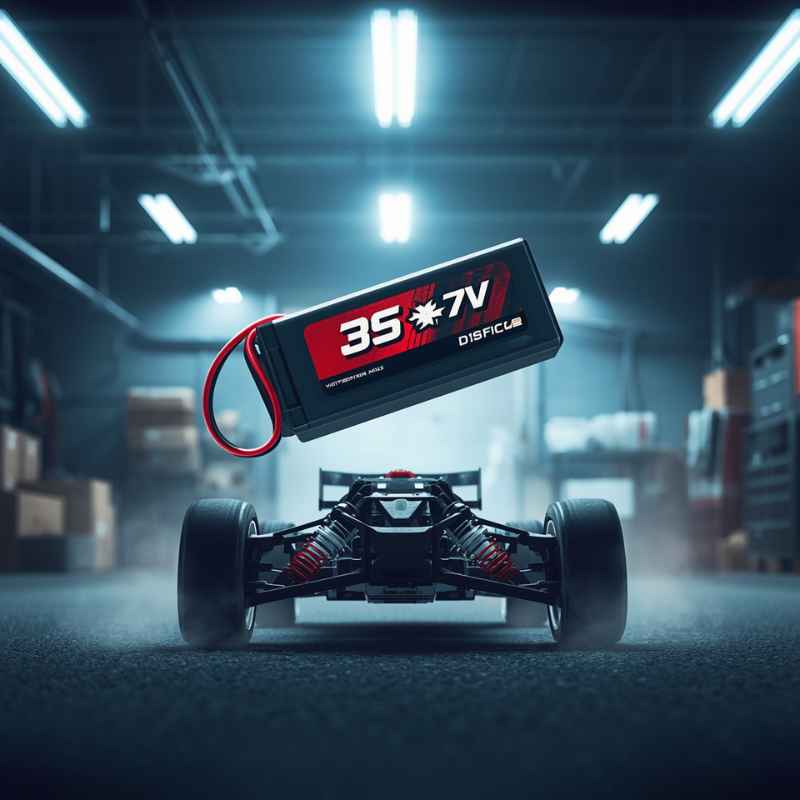
You’re asking if a 3S (11.1V) LiPo battery will damage a 7.4V (2S) RC car. The answer depends on the car’s components, especially the electronic speed controller (ESC) and motor. Many 7.4V cars are not designed for the higher voltage of 3S batteries and can overheat or break. Always check your car’s specifications.
Understanding Battery Voltage: What Does 3S and 7.4V Really Mean?
Let’s start with the basics. When you see “7.4V” or “3S” for LiPo batteries, it’s about the voltage. This voltage is like the pressure pushing electricity through your car’s circuits.
Higher voltage means more electrical pressure.
A “7.4V” battery is typically a 2S battery. “S” stands for “series,” and it means the battery has two cells linked together. Each LiPo cell has a nominal voltage of 3.7V.
So, 2 cells in series give you 3.7V + 3.7V = 7.4V. This is why we call it a 2S battery.
A “3S” battery has three cells linked in series. That means 3.7V + 3.7V + 3.7V = 11.1V. This is a significantly higher voltage than a 7.4V battery.
Think of it like turning up the water pressure in your hose. More pressure can make the water spray further and faster.
For RC cars, this higher voltage translates to more power. More power can mean higher speeds and quicker acceleration. It’s the main reason people consider upgrading their batteries.
But just like too much water pressure can burst a weak hose, too much voltage can damage a car’s electronics.
The Core Components: ESC and Motor
The most important parts of your RC car when it comes to battery voltage are the Electronic Speed Controller (ESC) and the motor. These are the workhorses that make your car move.
The ESC is like the car’s brain. It takes power from the battery and controls how much power goes to the motor. It tells the motor when to speed up, slow down, or go backward.
Most ESCs have a maximum voltage rating. This rating tells you the highest voltage they can safely handle.
The motor is what actually spins the wheels. Motors also have limits. They can overheat if they are pushed too hard or too fast for too long.
Running a motor at too high a voltage can cause it to overheat very quickly and burn out.
When you put a 3S battery (11.1V) into a car designed for a 2S battery (7.4V), you are sending much more electrical pressure to the ESC and motor than they are built to handle. This is where the risk comes in.
My Own Scare with a “Too Much Power” Moment
I remember it clearly. I had just bought a new, mid-range 2WD RC buggy. It came with a 7.4V battery, and it was fun, but I saw others with faster cars.
I’d heard whispers about 3S batteries making cars fly. So, I thought, “Why not try it?”
I had a spare 3S battery lying around from another project. It was the same physical size, so I figured it would fit. I plugged it in, feeling a rush of excitement.
The car leaped forward with incredible speed, way faster than before. For about thirty seconds, it was amazing. I was laughing, doing donuts.
Then, I noticed something strange. The car felt sluggish. The motor made a weird buzzing noise.
I could smell a faint, acrid scent. I immediately cut the throttle and picked up the car. The ESC was incredibly hot to the touch, almost too hot to hold.
The motor felt warm too, but the ESC was the main problem.
I let it cool down. Later, I looked up the car’s manual and the ESC’s specifications. Sure enough, the ESC was only rated for 2S batteries.
It had a warning sticker about maximum voltage. My excitement had cost me. The ESC had overheated and was likely damaged, maybe even fried.
It was a hard lesson in respecting the limits of my RC gear.
Common Components and Their Voltage Limits
Understanding what’s inside helps a lot.
ESC (Electronic Speed Controller): This is the part that breaks most often with too much voltage. It has tiny electronic parts that can fry. Look for a label on the ESC itself, or check the car’s manual.
It will usually say something like “Input Voltage: 7.4V MAX” or “2S LiPo Compatible.”
Motor: Brushless motors can sometimes handle a bit more voltage than brushed ones. But they still have limits. Pushing them too hard with a 3S battery makes them spin much faster than designed.
This causes extra heat and wear. A motor that gets too hot can have its magnets weaken or its internal wires melt.
Receiver: This part tells the steering and throttle what to do. It usually gets power from the ESC. If the ESC is overloaded and sends bad power, the receiver can also be affected.
This might mean jerky steering or no throttle control at all.
Why Some 7.4V Cars Might Survive a 3S Battery
Now, you might be thinking, “But I’ve seen people do it!” And sometimes, yes, a car might seem to work with a 3S battery. There are a few reasons why this might happen, but it’s still risky.
Some RC cars are built with more robust electronics than others. The manufacturer might use an ESC that is rated for 3S but comes with a 7.4V battery to keep the price down or the speed manageable for beginners. This is less common but does happen.
Another reason is that the car might be able to handle the 3S battery for a very short time or at low throttle. If you only lightly tap the throttle, the ESC and motor won’t be pushed to their absolute limit immediately. But the moment you give it full throttle, especially for more than a few seconds, you’re asking for trouble.
Sometimes, people upgrade the ESC and motor specifically to handle 3S power. They don’t just swap the battery; they change the whole power system. This is the correct way to go faster.
Think of it like putting a fire hose nozzle on a garden hose. The water pressure from the street might be too high for the thin garden hose. It might not burst right away, but it’s under a lot of stress.
If you blast it at full power, it’s likely to split or leak.
What Does Your RC Car’s Manual Say?
The absolute best place to find out if your 7.4V RC car can handle a 3S battery is in its user manual. Manufacturers include these specifications for a reason. They tell you the recommended and maximum battery types.
If the manual says “7.4V LiPo” or “2S LiPo recommended,” it means the car’s electronics were designed and tested for that voltage. It does not mean they were designed for 3S. Trying to use a 3S battery in a car that explicitly states 2S is like ignoring the “Do Not Enter” sign.
Don’t have the manual anymore? Most manufacturers have PDF versions of their manuals available for download on their websites. A quick search for your car’s model number and “manual PDF” should help you find it.
It’s worth the few minutes to check.
If you can’t find any specific information, it’s safest to assume the car is designed for 7.4V (2S) only. Most entry-level and even many hobby-grade RC cars in the 1/10th scale and smaller size categories are meant for 2S.
The “Hidden” Risks: Not Just About Speed
It’s not just about the speed you gain. Using the wrong battery voltage can cause other problems you might not expect.
Overheating: We’ve covered this, but it’s the most common issue. Overheated ESCs and motors can fail permanently. Even if they don’t break immediately, running them hot can shorten their lifespan significantly.
Durability of Other Parts: Higher speeds mean more stress on the entire drivetrain. Gears, driveshafts, and suspension parts are designed to handle the forces of a 2S battery. When you add the power of a 3S, these parts might break more easily.
A faster car hitting a bump could cause a gear to strip or a drive shaft to snap.
Battery Drain and Safety: While not directly about damaging the car, using a 3S battery in a car not designed for it can cause the battery to discharge too quickly. Some ESCs have a low-voltage cutoff to protect the battery, but if the ESC is struggling, it might not work correctly. Draining a LiPo battery too low can damage it, and in extreme cases, cause it to become a fire hazard.
This is why checking your ESC’s settings is also important.
Inconsistent Performance: Even if it seems to work at first, the car might run erratically. The ESC might struggle to regulate the power, leading to sudden bursts of speed or complete loss of control. This can make driving frustrating and dangerous.
The Right Way to Get More Speed
If you’re looking to make your RC car faster and more powerful, simply plugging in a higher voltage battery isn’t the answer. The proper way involves upgrading the electronic components.
Upgrade the ESC: The first and most crucial upgrade is to a new ESC that is rated for the voltage you want to run. If you want to run 3S, you need an ESC that supports 3S (or higher). Make sure it’s also rated for the amperage your motor will draw.
Upgrade the Motor: Often, when you upgrade the ESC to handle 3S, you’ll also need to upgrade the motor. A motor designed for 2S might not be able to handle the heat or RPMs of a 3S setup. You’ll want a brushless motor with a higher kV rating (which relates to RPM per volt) and one that’s designed for higher voltage input.
Check the Drivetrain: With more power comes more stress. You might find that plastic gears strip or drive shafts break. Some hobbyists upgrade to metal gears or stronger drive shafts to handle the increased torque and speed.
Battery Considerations: Always use high-quality LiPo batteries with a sufficient “C” rating. The “C” rating tells you how fast the battery can safely discharge its energy. A higher C rating means it can deliver more current without overheating.
This approach is more involved and costs more money, but it’s the only way to safely and reliably increase your RC car’s performance using higher voltage batteries. It ensures that all the parts are working together as they should, without pushing anything beyond its limits.
What This Means for Your 7.4V RC Car
So, what’s the takeaway message for your 7.4V RC car? Unless you have confirmed through the manufacturer’s specifications that it is capable of handling 3S, you should stick to 7.4V (2S) LiPo batteries.
When it’s normal: Running your car with its original 7.4V battery, or a compatible 7.4V LiPo, is perfectly normal and safe. You’ll get good performance without risking damage.
When to worry: You should worry if you’re even considering putting a 3S battery into a car that isn’t explicitly stated to be 3S compatible. The risks of damaging the ESC, motor, or other components are very high.
Simple checks: Before buying any new battery, check your car’s manual. Look for markings on the ESC. If there’s any doubt, err on the side of caution and stick with 7.4V.
It’s tempting to go for that extra speed, but the cost of repairing or replacing fried electronics can be much higher than the cost of a new battery. Enjoy your RC car for what it is, or plan for thoughtful upgrades if you want more power.
Quick Tips for Battery Safety and Performance
Here are some practical tips that apply whether you’re running 2S or considering an upgrade:
- Always check battery voltage compatibility with your ESC and car manual.
- Never force a battery if it doesn’t fit easily.
- Use a LiPo-specific charger and follow charging instructions.
- Store LiPo batteries in a safe place, like a LiPo bag.
- Check battery connectors for any damage before each use.
- Monitor temperatures of your ESC and motor during runs.
- If your car is designed for 7.4V, stick with 7.4V batteries for the best balance of performance and longevity.
Frequently Asked Questions About 3S Batteries and 7.4V Cars
Will a 3S battery damage my 7.4V RC car’s motor?
Yes, it is very likely. A 3S battery (11.1V) provides significantly more voltage than a 7.4V (2S) system is designed for. This can cause the motor to spin much faster than intended, leading to overheating, internal damage, and premature failure.
Many motors also have voltage limits specified by the manufacturer.
What is the difference between 2S and 3S LiPo batteries?
The main difference is the voltage. A 2S LiPo battery has two cells connected in series, providing a nominal voltage of 7.4V. A 3S LiPo battery has three cells connected in series, providing a nominal voltage of 11.1V.
This higher voltage allows for more power and higher speeds.
Can I use a 7.4V battery in an RC car designed for 3S?
Yes, you generally can. Using a lower voltage battery (7.4V) in a car designed for a higher voltage (3S) is usually safe. The car will just run slower and with less power than it’s capable of.
It’s the other way around, using 3S in a 7.4V car, that causes problems.
How do I know if my ESC can handle a 3S battery?
Always check the label on the ESC itself or consult your RC car’s user manual. The specifications will clearly state the maximum input voltage, often listed as “Max Input Voltage” or “LiPo Cell Count” (e.g., “2S-3S LiPo Compatible”). If it only lists 2S or 7.4V, it’s not designed for 3S.
What happens if my ESC overheats?
If your ESC overheats, it can lead to a loss of power, erratic behavior, or complete failure. The internal electronic components can be damaged or destroyed by excessive heat. In severe cases, it could even cause smoke or a fire hazard.
It’s essential to keep ESCs within their operating temperature limits.
Are there any RC cars that come with 7.4V but can run 3S without upgrades?
While rare, some models might have an ESC that is rated for 3S but comes with a 2S battery to control speed and cost. This is more common in higher-end or specialty models. However, for the vast majority of 7.4V-specified cars, especially entry-level ones, you should assume they are not 3S compatible without explicit manufacturer confirmation.
Final Thoughts on Powering Your RC Adventures
Navigating the world of RC batteries and power systems can seem complex. But understanding the basic voltage differences is key. For your 7.4V RC car, sticking to 7.4V batteries is the safest and most reliable way to enjoy your hobby.
It protects your valuable equipment and ensures consistent, fun performance.
Products related to this article
Sponsored / affiliate links. As an Amazon Associate I earn from qualifying purchases. I may earn additional commission from eligible campaigns.