Is a Dodge Charger a Good First Car?
A Dodge Charger can work as a first car, but only in its mildest form. The base V6 SXT and GT trims (292 to 300 horsepower) are manageable for a new driver, while the V8 R/T (370 hp), Scat Pack (485 hp), and SRT Hellcat (707 to 807 hp) pack more power than most driving instructors recommend for anyone still building experience behind the wheel. Dodge stopped building this generation of Charger as a first car after the 2023 model year, so nearly everyone shopping for one today is buying used from the 2015-2023 model years — that’s the car this guide covers.
Why the Dodge Charger Stands Out
COMMONLY PAIRED WITH A HIGH-POWERED FIRST CAR
 |
Bouncie GPS Tracker for Vehicles – $89.99 If you do go with a more powerful Charger trim, a plug-in tracker like this lets a parent see real-time location, speed, and hard-braking alerts without riding along.
|
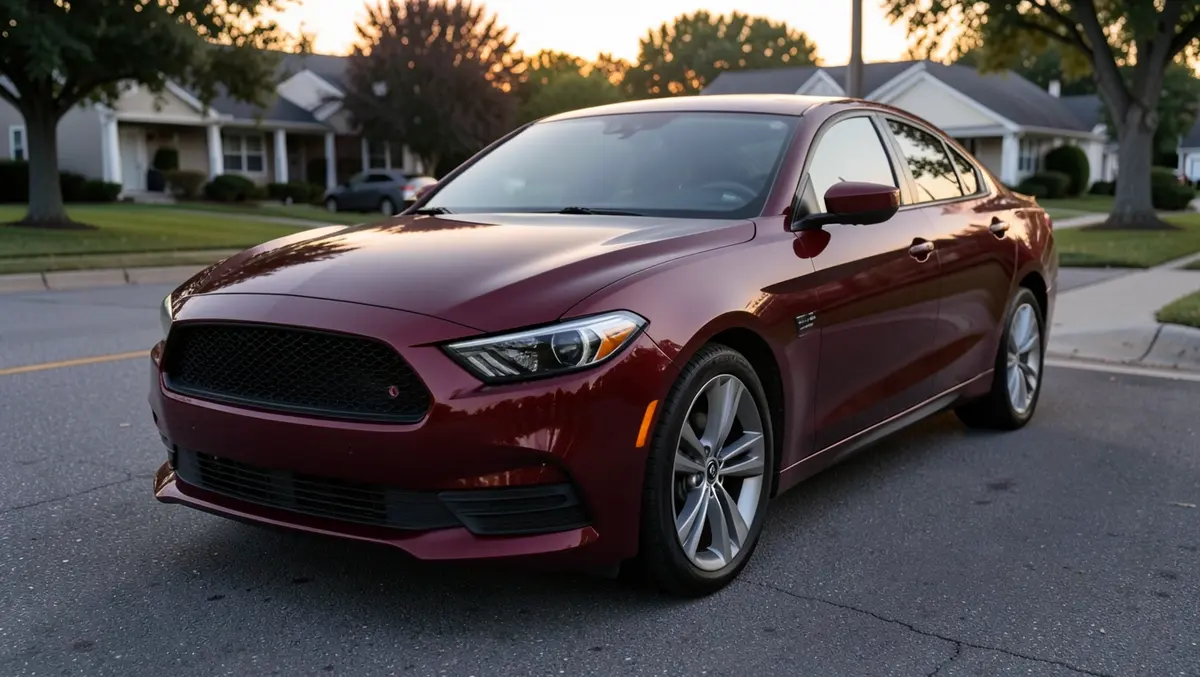
The Dodge Charger has been a fixture of American muscle-car style since the 1960s, and the version most first-car shoppers will actually find today — the seventh-generation Charger built from 2011 through 2023 — keeps that reputation alive with a wide stance, an aggressive fascia, and a full-size sedan body that looks more expensive than its used-car price tag suggests.
For a first car, that look matters less than what’s under the hood. The lineup runs from a 3.6-liter V6 in the SXT and GT trims all the way up to a supercharged 6.2-liter V8 in the SRT Hellcat, and that spread is exactly why trim choice is the real question here — not whether a Charger in general is a good first car, but which Charger.
One more thing worth knowing before you start shopping: the Charger sold new at dealerships right now is a completely different car. Dodge redesigned it for 2025-2026 as either the all-electric Charger Daytona or the twin-turbo inline-six Charger Sixpack, and neither shares an engine, body style, or price point with the V6/V8 models this guide is actually about. If you’re shopping used, you’re looking at the 2011-2023 generation below.
A first car also has to be practical, safe, and affordable on top of looking good. Here’s how the Charger stacks up on each of those.
Performance: Fun but Manageable?
Even the entry-level 3.6-liter V6 in the SXT and GT trims makes 292 to 300 horsepower — more than double the roughly 150 to 200 hp ceiling that many driving instructors and insurers consider sensible for someone in their first year behind the wheel. It’s smooth and quick rather than violent, but it’s still a lot of car for a driver who hasn’t built full instinct for how a vehicle behaves at the limit.
Move up the lineup and the case for a first-time driver gets weaker fast. The R/T’s 5.7-liter V8 makes 370 hp, the Scat Pack’s 6.4-liter V8 jumps to 485 hp, and the supercharged 6.2-liter V8 in the SRT Hellcat produces 707 hp in its standard tune and up to 807 hp in the last-call Hellcat Redeye Jailbreak Widebody. A Hellcat is not a reasonable first car under almost any circumstance — pairing that much power with inexperience is a genuinely dangerous combination, and insurers price it accordingly (more on that in the Insurance section below). If a Charger is on the table at all for a new driver, stick to a V6 SXT or GT.
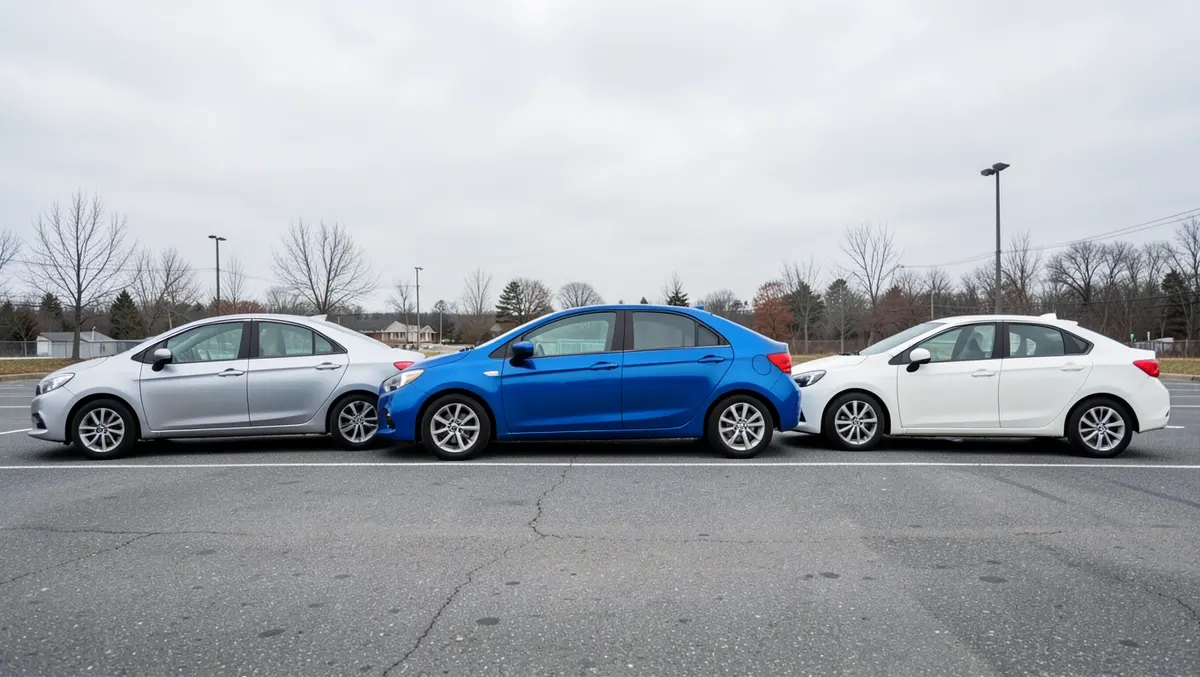
Size is the other factor. At roughly 16.5 feet long and around 4,000 pounds, the Charger is bigger and heavier than the compact sedans most new drivers start with, and that shows up most in tight parking lots and narrow streets rather than out on the open road.
Safety Features: Keeping New Drivers Protected
Safety is a central concern for any first car, and the Charger does reasonably well here without being class-leading.
Most modern Chargers (2015 and newer) come with standard safety features like:
- Multiple airbags (front, side, and curtain)
- Electronic stability control
- Anti-lock brakes
- A rearview camera
Higher trims or optional packages add blind-spot monitoring, lane-departure warning, and adaptive cruise control — worthwhile additions for a driver who’s still building awareness of what’s happening around the car.
Crash-test results are good but not class-leading. The 2023 Charger’s NHTSA overall rating is 5 stars, made up of 5 stars in the side and rollover tests and 4 stars in the frontal test specifically. The IIHS rates it “Good” in four of its five main crashworthiness tests but “Marginal” in the small-overlap front test, which has kept it out of Top Safety Pick contention every year it’s been tested — a distinction several smaller sedans, including the Camry and Civic, do earn. Its size and heavier frame can work in its favor in a crash, but that same mass and length also mean a longer stopping distance, so new drivers need to leave extra following room.
Fuel Economy: Will It Break the Bank?
Fuel costs matter for a new driver or a parent footing the bill. The Charger’s V6 models are EPA-rated at about 19 mpg city and 30 mpg highway, which trails a Honda Accord’s 33 mpg highway rating by a wide margin, though it isn’t unreasonable for a car this size and power.
Step up to a V8 and that number drops to roughly 15 mpg city and 25 mpg highway, and Dodge recommends premium fuel for the higher-output V8 trims, which adds to every fill-up. For a new driver on any kind of budget, the V6 is the only fuel-economy-sane choice.
Here’s a quick comparison of fuel economy for first-car options:
| Car Model | City MPG | Highway MPG | Approx. Annual Fuel Cost (15,000 miles) |
|---|---|---|---|
| Dodge Charger (V6) | 19 | 30 | $1,800 |
| Honda Civic | 30 | 38 | $1,200 |
| Toyota Corolla | 31 | 40 | $1,150 |
| Dodge Charger (V8) | 15 | 25 | $2,200 |
*Based on average U.S. gas prices and 15,000 miles per year.
For a teen driver, those extra dollars at the pump add up fast. If you’re set on a Charger, stick to the V6.

Cost of Ownership: Budget-Friendly or Not?
Buying a car is one part of the cost; owning it is the bigger one. For a Charger, that means factoring in purchase price, insurance, and maintenance — and insurance in particular can change the math significantly for a teen driver.
Purchase Price
Because this generation of Charger is no longer in production, the only way to get one is used. Clean examples from 2015 to 2020 typically run $15,000 to $25,000 depending on mileage, trim, and condition — a 2018 SXT with around 50,000 miles commonly lists in the high teens to low $20,000s. That’s reasonable compared to what a new Charger cost when it was still sold, but it’s still pricier than a comparable used Civic or Corolla, which can be found for under $15,000.
Insurance
Insurance is where a Charger really separates itself from a typical first car. Rate-comparison sites report that full-coverage premiums for an 18-year-old driving a Charger R/T commonly average somewhere around $500 a month — well over $6,000 a year — compared to roughly $200 to $250 a month for an adult driver in the same car. Even sticking to the V6 SXT, expect a noticeably higher premium than a comparable compact sedan simply because of the Charger’s performance reputation and higher repair costs. Shop multiple insurers before committing, and if a parent is footing part of the bill, adding a teen to an existing family policy is almost always cheaper than a standalone policy for the same car.
Insurance quotes vary a lot by state, driving record, and company, so treat any number here as a starting point rather than what you’ll actually pay — get real quotes for your specific driver before you commit to a trim. It’s also worth checking the minimum age and policy requirements in your state before you shop, since they can affect which coverage options are even available to a teen driver.
Maintenance and Repairs
V6 models are generally considered the cheaper trims to live with day to day. Routine maintenance — oil changes, tire rotations, and the like — typically runs $500 to $800 a year. Brakes and tires cost more than on a compact car simply because of the Charger’s size and power, and that gap widens further on V8 trims, where a set of performance tires alone can run well over $1,000.
Overall, the Charger’s ownership costs run higher than a typical compact car across the board — purchase price, insurance, and routine upkeep all land above a Civic or Corolla. If your budget is tight, that’s worth weighing carefully.
Interior and Comfort: A Great Place to Be?
The Charger’s interior is one of its strongest arguments as a first car. The cabin is spacious for a sedan, with generous rear legroom for carpooling friends and a genuinely large 16.5-cubic-foot trunk — more cargo room than a Civic, Corolla, or Mazda3 offers.
Base models come with a 7-inch touchscreen, Apple CarPlay, Android Auto, and Bluetooth; higher trims step up to an 8.4-inch screen and extras like heated seats. A simple, responsive infotainment system is a real safety plus for a new driver, since it cuts down on the kind of fumbling that contributes to distracted-driving crashes.
The one letdown is material quality: base-trim interiors lean on hard plastic that feels a step behind rivals like the Mazda3. It’s durable rather than upscale, which is a fair trade-off for a first car that’s going to take some abuse.
Reliability: Will It Keep Running?
Nobody wants a first car that’s always in the shop. The Dodge Charger has a decent reputation among American cars, but it isn’t bulletproof. J.D. Power scores recent model years as average for reliability, and Consumer Reports generally ranks it behind competitors like the Toyota Camry. Owner forums mention occasional electrical glitches and, in older examples, transmission issues, though nothing that stands out as a systemic problem across the board.
For a first car, the safest approach is a used Charger from 2015 or newer with a documented maintenance history, inspected by an independent mechanic before you buy. A pre-purchase inspection typically costs $100 to $200 and can catch problems a casual test drive won’t.
Is It Practical for a New Driver?
As a full-size sedan, the Charger has genuine practicality going for it — plenty of room for passengers and gear, which matters if a new driver regularly hauls friends or sports equipment. Rear-wheel drive is standard, and all-wheel drive is optional only on V6 SXT and GT trims (it was never offered on the V8 R/T, Scat Pack, or Hellcat). That means reduced traction in snow or heavy rain on most Chargers; anyone in a colder climate should either seek out an AWD V6 or budget for a dedicated set of winter tires.
The trade-off for that space is size. A car this long and wide takes more practice to parallel-park and maneuver in tight lots than a compact sedan does, and its sporty character can tempt a new driver into faster habits than they’re ready for.
Comparing the Charger to Other First Cars
To see if the Charger is the right choice, here’s how it stacks up against some popular first cars — and if you’re weighing another sporty option instead, our Mustang first-car breakdown covers the same ground for Ford’s pony car.
| Feature | Dodge Charger (SXT) | Honda Civic | Toyota Corolla | Mazda3 |
|---|---|---|---|---|
| Starting Price (Used) | $15,000-$25,000 | $12,000-$18,000 | $12,000-$18,000 | $13,000-$20,000 |
| Horsepower | 292-300 hp | 158-180 hp | 139-169 hp | 155-191 hp |
| Fuel Economy (City/Hwy) | 19/30 mpg | 30/38 mpg | 31/40 mpg | 26/35 mpg |
| Safety Rating (NHTSA)* | 5 stars | 5 stars | 5 stars | 5 stars |
| Cargo Space (cu. ft.) | 16.5 | 15.1 | 13.1 | 13.2 |
| Insurance (Teen, Annual, approx.) | ~$6,000+ | ~$2,800 | ~$2,700 | ~$2,900 |
*The Charger’s 5-star NHTSA overall rating includes a 4-star frontal-crash sub-score, and it has never earned an IIHS Top Safety Pick award (the Civic, Corolla, and Mazda3 all have in recent years).
The Charger offers more power and cargo space but lags in fuel economy, top-tier safety recognition, and insurance cost. If you want style and performance, it’s a contender. If affordability and the highest safety scores are the priority, a Civic or Corolla is the safer default.
The Verdict: Who Should (and Shouldn’t) Buy a Charger as a First Car
A Dodge Charger earns its reputation as one of the more exciting cars in this price range, and that’s exactly why it needs a clear-eyed look before it becomes somebody’s first car. It suits a mature, safety-conscious new driver who can be trusted not to lean on the throttle, and whose family has budgeted for insurance and upkeep that run noticeably above a compact sedan’s.
It’s a poor fit for a driver who’s still building basic car-control instincts, for anyone on a tight insurance or fuel budget, or for a Scat Pack or Hellcat specifically — those trims put far more power in a new driver’s hands than they need to manage. Building confidence in something smaller and less powerful first, then moving up once good habits are established, remains the lower-risk path.
Conclusion
So, is a Dodge Charger a good first car? It depends almost entirely on trim and budget. A used V6 SXT or GT offers real style, space, and a genuine legacy at a price that can undercut a new economy car — but its insurance costs, fuel economy, and crash-test standing all trail a Civic or Corolla, and anything above the V6 puts more power in a new driver’s hands than most safety guidance recommends.
If you or your teen can handle a used V6 Charger responsibly and the budget has room for its higher running costs, it’s a genuinely fun first car. If affordability or safety scores matter more than style, a compact sedan remains the lower-risk choice. Either way, get any used Charger independently inspected before you buy, and confirm actual insurance quotes for your specific driver before you commit — those numbers vary enough by state and company to make or break the decision.
FAQs
Is the Dodge Charger safe for a teen driver?
The Dodge Charger comes with standard airbags, stability control, and a rearview camera, and later model years add optional blind-spot monitoring and other driver-assist features. The 2023 model’s NHTSA overall rating is 5 stars (4 stars in the frontal test specifically), but it has never earned an IIHS Top Safety Pick because of a Marginal small-overlap front result. It’s safe enough for a teen driver in the right trim, but smaller sedans like the Honda Civic and Toyota Camry often score higher overall.
How much does it cost to maintain a Dodge Charger?
Routine maintenance on a Charger runs about $500 to $800 a year for things like oil changes and tire rotations. Repairs cost more than on a compact car because of the Charger’s size and performance parts, and that gap grows on V8 trims. Always get a used Charger inspected by an independent mechanic before buying.
Is the Dodge Charger good for winter driving?
The Charger’s standard configuration is rear-wheel drive, which can be tricky in snow or rain. All-wheel drive is available on some V6 trims (SXT and GT) but was never offered on the V8 R/T, Scat Pack, or Hellcat. If you live somewhere snowy, look for an AWD V6 or budget for a dedicated set of winter tires.
Can a new driver handle the Dodge Charger’s power?
The V6 SXT and GT make 292 to 300 horsepower, which is already more than many driving instructors recommend for a first year behind the wheel. The V8 R/T (370 hp), Scat Pack (485 hp), and SRT Hellcat (707 to 807 hp) are a much bigger step up and aren’t a good fit for a new driver. Stick to the V6 and build experience before considering anything more powerful.
How does the Charger compare to other first cars?
The Charger offers more style, power, and cargo space than a Honda Civic or Toyota Corolla, but it costs more to buy, insure, and fuel, and it doesn’t match their crash-test recognition. If performance and presence matter most, the Charger is a real contender in its V6 trims. If affordability and top safety scores matter most, a compact sedan is the safer default.
Is the new 2026 Dodge Charger the same car as the used models in this guide?
No. Dodge stopped building the V6/V8 Charger covered in this guide after the 2023 model year. The Charger sold new today is a completely redesigned car offered as the all-electric Charger Daytona or the twin-turbo inline-six Charger Sixpack, and neither shares an engine, body style, or price point with the used 2011-2023 models discussed here.
Products related to this article
Sponsored / affiliate links. As an Amazon Associate I earn from qualifying purchases. I may earn additional commission from eligible campaigns.