Is Armor All Bad for Your Car? Ingredients & Myths Explained
No, Armor All is not bad for your car when used the way the label describes. The confusion mostly traces back to the brand’s original 1970s–80s solvent-based formula, which really could dry out old vinyl — today’s water-based silicone version is chemically different. The one place it genuinely does not belong is anywhere your hands or feet make contact with a control, since a glossy finish there turns into a slip risk rather than a shine.
Quick Answer
No, Armor All is not bad for your car when used as directed on the surfaces it’s made for. Today’s formula is a water-based silicone emulsion with no petroleum distillates or alcohol — the older solvent-based mix blamed for 1970s–80s dashboard cracking. Avoid it only on the steering wheel, pedals, and glass, where a shiny finish becomes a slip hazard.

Armor All and Car Care
Armor All has been a fixture of car-care aisles since 1972, when it launched as a dashboard protectant. The lineup has since grown to include glass cleaner, wheel and tire products, leather care, and wipes, but the core promise hasn’t changed: a shiny, UV-shielded finish on interior vinyl, rubber, and plastic. Used on the surfaces it’s meant for, it’s one of the most common products in a detailer’s kit, not a hidden hazard.
What’s Actually in Armor All?
Armor All Protectant and Leather Care products are built around water, silicone emulsions, and surfactants — not solvents. The silicone forms a thin, breathable barrier that blocks UV light (the real cause of most dashboard fading and cracking) while the surfactants lift dust and grime during application. Critically, current formulas contain no alcohols or petroleum distillates, the ingredient class that made 1970s–80s automotive vinyl brittle when overused.
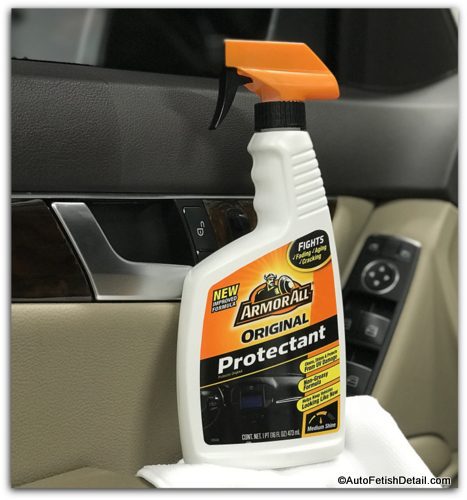
By the numbers: Armor All’s current Protectant and Leather Care lines contain surfactants and water-based silicone emulsions, with no alcohols or petroleum distillates — the ingredient class historically linked to drying and brittleness on older vinyl (Source: Armor All product FAQs, armorall.com). The one hard restriction that hasn’t changed: Original Protectant is explicitly labeled “not for use on vehicle controls including steering wheels,” because a slippery grip is a genuine safety issue, not a myth.
The Dashboard Cracking Myth: Why Armor All Got Blamed
The idea that Armor All “traps” you into reapplying forever, or that it causes cracking if you stop, is a correlation-versus-causation mix-up. People typically start using a protectant once their dashboard is already showing sun damage from years of UV exposure; when they stop using the product, the aging that was already underway simply continues, and the product gets blamed for what the sun was doing the whole time.
The myth has a real historical root, though. 1970s and 1980s dashboards were often made from a less UV-stable vinyl, and Armor All’s original formula back then leaned on solvent-based ingredients that could accelerate drying and brittleness on that older material under heavy sun exposure. Reformulated water-based silicone emulsions replaced that recipe decades ago, which is why complaints about cracking are almost always tied to pre-2000s vehicles or overuse without wiping off the excess, not the current product itself.

Where You Should Not Use Armor All
The real list of no-go surfaces is short, and it’s about grip and slipperiness, not chemical damage: the steering wheel, pedals, door handles, and glass. A slick coating on any of these turns a routine drive into a genuine safety risk, which is why Armor All’s own Original Protectant label restricts it from “vehicle controls.” Leather seats and steering wheels have their own dedicated Leather Care line for a reason — the general-purpose Protectant isn’t formulated for leather’s different fiber structure and can leave it feeling greasy rather than conditioned.
- Steering wheel — official label restriction; slipperiness is a control-loss risk, not a myth
- Pedals and floor mats — same slip-hazard logic applies underfoot
- Glass and windows — leaves a film that can streak and glare under headlights at night
- Leather seats and wheels — use the dedicated Leather Care Protectant instead of the general Protectant
Armor All’s own label instructions single out the steering wheel by name — a detail worth taking literally, since it’s the one warning on the bottle that has nothing to do with the cracking debate and everything to do with keeping your hands from slipping off the wheel mid-turn.
Our Pick: Armor All Interior Care Essentials
Armor All Streak-Free Original Protectant Spray, 28oz
The general-purpose dashboard, vinyl, and rubber protectant this article covers — water-based silicone, no petroleum distillates.
View Our Pick on Amazon
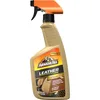 For Leather Seats/Wheels Armor All Leather Cleaner Spray, 16oz — the dedicated formula, not the general Protectant. Check on Amazon → |
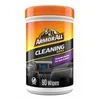 For Quick Touch-Ups Armor All Cleaning Wipes, 90-count — pre-portioned, harder to over-apply than the spray. Check on Amazon → |
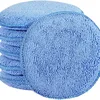 For Even Application Microfiber applicator pads — buff off excess protectant to avoid the greasy-residue complaint. Check on Amazon → |
As an Amazon Associate we earn from qualifying purchases.
Durability and Long-Term Use
Does the Shine Wear Off?
Yes — like any surface protectant, the glossy finish fades with washing, sun exposure, and time, and needs reapplying every few weeks to a couple of months depending on climate and how often the car is cleaned. That’s a maintenance cost, not damage; the underlying vinyl or plastic isn’t harmed by the shine wearing off.
Can Overuse Cause Buildup?
Applying more product without wiping off the excess can leave a sticky or greasy residue that attracts dust faster than an untreated surface would. The fix is straightforward: use a thin, even coat, buff off anything that hasn’t absorbed within a minute or two, and skip a fresh coat until the old one has actually faded rather than layering on top of it. A microfiber applicator pad makes this much easier to control than spraying and wiping with a paper towel.
Armor All vs. Alternative Cleaners
Water-based, silicone-free “natural” interior cleaners exist as an alternative and tend to leave a lower-shine, more matte finish that some owners prefer for reducing dashboard glare against the windshield. They typically cost more per ounce and need more frequent reapplication than a silicone-based protectant. Purely synthetic degreasers and all-purpose cleaners clean faster and cost less but skip the UV-protective layer entirely, so they don’t address the fading and cracking a protectant is meant to prevent in the first place.
What Owners Actually Report
The complaints that show up most often — a greasy finish, dust clinging faster than before, a strong scent, or the shine fading within days — almost all trace back to over-application rather than the product being unsafe. Owners who apply a thin coat and buff off the excess consistently report the opposite experience: a shine that lasts, no residue, and no faster dust buildup than an untreated dashboard would show anyway. If a bottle keeps leaving your surfaces greasy no matter how little you use, that’s a sign to switch to wipes, which pre-portion the product and make over-application far harder.
Making an Informed Decision
Armor All is a reasonable, well-tested choice for keeping a dashboard, door panels, and rubber trim looking newer for longer, provided you keep it off the steering wheel, pedals, glass, and leather. Read the specific product’s label — Original Protectant, Leather Care, and glass cleaner are each formulated for a different surface and aren’t interchangeable. Test any new bottle on a small, hidden patch first, apply thin coats, and buff off what doesn’t absorb within a minute or two.
Frequently Asked Questions
Does Armor All damage a car?
Armor All does not damage a car when used as directed on the surfaces it’s designed for. It protects and enhances vinyl, rubber, and plastic interior and exterior surfaces; issues like greasy residue or dust buildup almost always come from over-application, not the product itself.
What should you not use Armor All on?
Avoid the general-purpose Armor All Protectant on the steering wheel, pedals, door handles, glass, and leather — the steering wheel restriction is stated directly on the product label because a slippery grip is a safety issue. Leather needs Armor All’s dedicated Leather Care line instead.
Is Armor All bad for dashboards?
No. Armor All Protectant is specifically formulated for dashboards and provides UV protection that helps prevent the cracking and fading it’s sometimes wrongly blamed for causing.
Why do some people say Armor All is bad?
Most complaints trace back to over-application (a greasy residue that attracts dust) or to memories of the brand’s original 1970s–80s solvent-based formula, which really could dry out older vinyl. The current water-based silicone formula doesn’t contain those ingredients.
Does using Armor All mean you have to keep using it forever, or your dashboard will crack?
No — this is a correlation-versus-causation myth. People usually start using a protectant after their dashboard already shows sun damage; stopping the product doesn’t cause new cracking, it just means the UV aging that was already happening continues at its normal pace.
Has Armor All’s formula changed over the years?
Yes. Modern Armor All Protectant and Leather Care products use water-based silicone emulsions with no alcohols or petroleum distillates. The brand’s reputation for “drying out” surfaces comes from its older, solvent-based formulas from decades ago, which are no longer used.
Conclusion
Armor All isn’t bad for your car — it’s a protectant that does exactly what its label says, on the surfaces its label covers. Keep it off the steering wheel, pedals, glass, and leather, apply thin coats, and buff off the excess, and the worst-case outcome is a shine that fades in a few weeks, not a cracked dashboard. For the rest of your interior, a full DIY detailing pass and knowing what a professional detail actually includes both pair well with a protectant used correctly.
Products related to this article
Sponsored / affiliate links. As an Amazon Associate I earn from qualifying purchases. I may earn additional commission from eligible campaigns.