Best Backup Cameras for Cars (2026): We Compared
For most drivers, the best backup camera is the LeeKooLuu wired 1080p kit because it pairs a permanent hardwired signal with a 7-inch screen, night vision, and a simple license-plate-style install. Pick wired when you want the steadiest image and the fewest dropouts, or choose wireless if you care more about a faster install and less cable routing. Skip those basics and you can end up with blind spots, fuzzy night video, and parking damage that costs far more than the kit. This guide compares camera types, key specs, and installation tradeoffs for commuting, towing, older-car retrofits, and bad-weather use.
Quick comparison
| Product | Badge | Best for | Price | ||
|---|---|---|---|---|---|
 |
HD 1080P Backup Camera : Night Vision See Clearly at NightLeeKooLuu | Our pick | 1080P · 7-inch screen · Wired | $49.98
Price as of 22 Oct 2026
|
View |
 |
4K 13’’ Rear View Mirror Camera with WirelessKOUENOM | Upgrade pick | 13-inch mirror · 4K front camera · Wireless CarPlay | $159.99
Price as of 22 Oct 2026
|
View |
 |
Car Backup Camera HD Night Vision Rear View Camera LicenseGLK | Budget pick | HD night vision · 9 LEDs · License plate mount | $17.99
Price as of 22 Oct 2026
|
View |
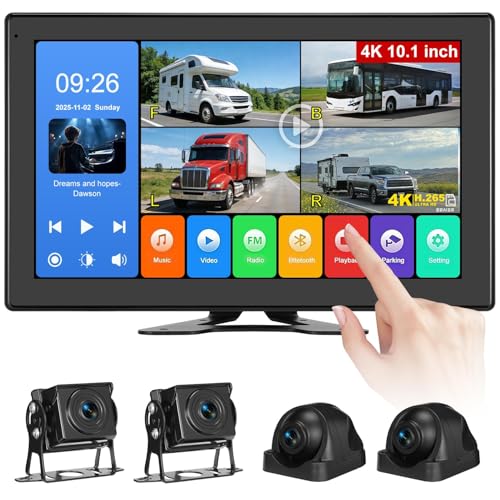 |
Venluna 10.1 Inch 4K Touch Screen Wired RV Backup CameraVenluna | Also great | 10.1-inch 4K touchscreen · 4CH DVR · Bluetooth | $139.99
Price as of 22 Oct 2026
|
View |
Since 2018, backup cameras have been mandated on all new vehicles in the U.S., but that does not help if your older car, truck, or trailer rig lacks a usable rear view. The table below sorts the main options by install effort, weather tolerance, and ownership cost, not sticker price alone.
How we chose
We compared the current lineup by install complexity, viewing clarity, weather sealing, and whether the kit fits a daily driver, tow rig, older vehicle, or flexible temporary setup. We also weighed hidden costs such as extra monitors, hardwiring parts, extension cables, and professional labor.
Specs matter most when they change what you can actually see in reverse. A wide lens can help with parking confidence, but too much width can add distortion and blur parking-line accuracy. A 1080p rear camera matters more than a flashy front sensor when you are backing into a tight spot.
Durability matters too. Rear-mounted cameras live in rain, road spray, wash bays, and winter grime, so IP67 or higher should be treated as the baseline, not a bonus. Night vision or low-light processing matters just as much if you reverse in a dark garage or on an unlit street.
Finally, we looked at who each kit suits best. A commuter wants stable video and a clean screen. A tow-vehicle owner needs hitch alignment and a wide rear view. An older-car retrofit buyer usually wants the least invasive install, even if that means accepting some wireless compromise.
HD 1080P Backup Camera: best for daily driving
This LeeKooLuu wired kit is the cleanest fit for most commuters, SUVs, and pickup drivers who want a permanent rear view without relying on a flaky wireless link. The 1080p rear camera, 7-inch screen, and 10M color night vision give it the right mix of clarity and usability for daily reversing and parking.
What stands out is the straightforward hardwired design. A wired backup camera system gives the most stable signal and is usually the better choice when you want interference-free video every time you shift into reverse. The 15-minute plug-and-play claim points to an easy path for a DIY installer, and the large display helps visibility in taller vehicles.
The drawback is obvious: wired kits take more work to route through the cabin, and that extra labor can turn into a cost if you pay for installation. It is also not the smallest cabin-friendly solution, so compact cars may prefer a mirror-style monitor instead of a dedicated 7-inch screen.
4K 13’’ Rear View Mirror Camera: best for mixed cabin tech
This KOUENOM mirror camera is best for drivers who want a reverse camera and an in-cabin tech hub in one piece of hardware. The 13-inch mirror display, 1080p rear camera, wireless CarPlay, Android Auto, and 64GB card make it appealing for commuters who want a cleaner dash and fewer separate devices.
Based on the published specs, the big advantage is convenience. A mirror display can fit better than a separate monitor, and the integrated recording and parking-monitor features add value if you want one device to do more than reverse assist. It also avoids clutter that comes with a separate screen mounted on the dash or windshield.
The drawback is tradeoff-heavy packaging. This is not a minimal backup-camera-only kit, so you are paying for front-camera recording and phone integration whether you need them or not. Mirror-style setups can also feel less natural in some vehicles, especially if the factory mirror is already small or oddly angled.
Car Backup camera HD night vision rear view camera: best for tight budgets
This GLK license-plate camera is the value pick for drivers who want to add rear visibility for as little money as possible. It is a practical match for an older sedan, compact SUV, or work truck where the goal is simple: get a clearer view behind the vehicle without spending on a large monitor package.
Its 149° wide-angle lens and 9 LED lights help with basic night use, and the no-drill license-plate mount keeps installation simple. That makes it a decent fit for first-time buyers who want a low-cost retrofit and can live with a more modest screen or display setup if they already have one.
The drawback is that the angle is narrower than many buyers now expect. A 149° lens can be perfectly usable, but it does not match the wider 170° class that helps reduce blind spots in larger vehicles. At this price, you should also expect to be more careful about glare, lens contamination, and display quality than you would with a premium kit.
Venluna 10.1 Inch 4K touch screen wired RV backup camera system: best for towing
This Venluna wired system is the strongest fit for trailers, campers, RVs, and towing-heavy pickups. The 10.1-inch touchscreen, 4-channel DVR, Bluetooth audio, and IP69K rating make it the most purpose-built option here for long vehicles and multi-angle backing tasks.
For hitch alignment and trailer work, the bigger screen matters because it is easier to judge distance and lane position when the vehicle and trailer occupy more of the frame. The 4-channel layout is useful if you want more than a simple rear feed, and the IP69K rating suggests serious weather protection for exposed rear mounting.
The drawback is cost and complexity. A system like this can require more routing, more setup time, and more cabin space than a simple license-plate kit. If you only need a camera for a small car or occasional parking help, this is more system than you need.
Which one should you buy?
If you want the cleanest everyday setup, start with the LeeKooLuu wired kit. It is the best match for a permanent install, and the wired signal is the safer bet when you care about stable video over convenience.
If you want the easiest cabin upgrade, the KOUENOM mirror camera makes the most sense because it combines display, recording, and phone integration. That is useful if you do not want a separate monitor taking up dash space.
If budget is the main constraint, the GLK camera gets you the essentials at a low entry price. Just understand that a cheaper kit often means fewer display features and less margin for error in poor light.
If you tow, back to a hitch often, or want a large screen for a tall vehicle, the Venluna system is the right use-case pick. Its bigger display and multi-camera support are more relevant to trailers than to short commuter trips.
Say your sedan spends the night in an unlit garage and you reverse into a narrow alley each morning. In that case, prioritize night vision, a 120–170 degree field of view, and a monitor you can read at a glance. A wider lens helps, but too much width can bend distance cues and make parking lines less trustworthy.
Suppose your older SUV has no factory integration and you want the least disruptive retrofit. A no-drill license-plate mount or adhesive mount can save time, but you still need to budget for routing cable through the cabin, power hookup, and any adapter needed to tie into the reverse light circuit.
Backup camera decision matrix
| Vehicle type | Install difficulty | Best camera type | Must-have specs | Common failure mode | Estimated total ownership cost buckets |
|---|---|---|---|---|---|
| Daily commuter car | Low to moderate | Wired rear camera with 5-inch to 7-inch monitor | 1080p rear camera, 120–170° view, IP67 or higher, night vision | Glare in bright sun or dirty lens after rain | Camera only: low to mid; install parts: low; optional monitor: low to mid; professional install: mid |
| SUV with family use | Moderate | Wired or high-quality wireless kit | Wide angle, clear parking lines, weather sealing, decent screen size | Distortion at the edges or lag from a weak signal | Camera only: mid; install parts: low to mid; optional monitor: mid; professional install: mid to high |
| Pickup truck | Moderate to high | Wired system with larger monitor | 1080p or better rear feed, wide angle, hitch-friendly adjustability, IP67+ | Cable routing issues or poor trailer alignment if the angle is off | Camera only: mid; install parts: mid; optional monitor: mid to high; professional install: high |
| Older car retrofit | Low to moderate | Wireless or license-plate mount | No-drill mount, simple power source, usable low-light mode | Wireless dropouts or battery charging hassle | Camera only: low; install parts: low; optional monitor: low to mid; professional install: mid |
| Trailer, RV, or tow rig | High | Wired multi-camera system | Split-screen or dual-camera support, strong weather sealing, large screen, angle adjustability | Cold-weather lag, poor connector sealing, or a screen too small for trailer work | Camera only: mid to high; install parts: mid to high; optional monitor: high; professional install: high |
Viewing angle, distortion, and parking lines
A common target range is 120–170 degrees. Rear View Safety recommends 120–130 degrees as a useful field of view, while many consumer kits stretch wider. Wider coverage reduces blind spots, but very wide lenses can warp the image and make distance judgment less precise.
That tradeoff matters when you depend on parking guidelines. A camera that looks wide on paper can still be awkward if the lines curve too much or the image makes the bumper seem farther away than it is. For towing, a slightly tighter and cleaner image may be more useful than an extreme fish-eye view.
Resolution, monitor size, and image clarity
1080p is the common benchmark because it gives enough detail to distinguish obstacles, lane markings, and some plate information at close range. Rear camera quality matters most here, because that is the view you use when backing into a space or aligning to a hitch.
Screen size affects how fast you can read the image. A mirror display fits better in many cabins, while a 5-inch or 7-inch standalone monitor can be easier to see in a truck or RV. Bigger is not automatically better if it crowds the dash or blocks sight lines.
The same source notes that 1080p displays make a real difference. That does not mean every part of the system must be 4K or overbuilt. It means the rear feed should be sharp enough that the monitor is not wasting signal quality.
Night vision and waterproofing
Night vision should be treated as essential if you reverse in dark garages, alleys, or early-morning parking lots. Infrared support or enhanced low-light processing can keep the image usable when the camera cannot rely on daylight alone.
Weather sealing matters just as much. Rear cameras sit in rain, spray, snow, and car washes, so IP67 or higher is the floor to look for. The same source says IP67 or higher waterproofing is essential, and that aligns with what exposed rear mounts need to survive.
Cold weather adds another failure mode. Moisture can cloud the lens, wiring can stiffen, and some wireless systems can lag more when temperatures drop. A clear spec sheet helps, but the mounting location and connector quality matter too.
Installation method and hidden costs
License-plate bracket and adhesive mounts are the easiest starting points, especially for older vehicles. Drilling may be needed for a cleaner flush mount, and any install that crosses the cabin usually needs cable routing from the rear to the dash or mirror.
Power source and activation method also affect cost. Popular Mechanics notes that some kits use wireless methods, and that a camera may use batteries or need hardwiring. That distinction changes whether you are buying a quick DIY accessory or a more permanent setup with extra wiring parts.
Do not ignore the add-ons. Some kits need a separate monitor. Others need adapters, extension cables, or trim tools. If a shop does the work, labor can cost more than the camera itself on a basic budget model.
Wired backup cameras: best for permanent installs
Wired backup camera systems are the better pick when you want the most stable signal and the least chance of interference. They use a hardwired connection, which is why they are common on permanent installs for commuters, SUVs, and trucks that see daily use.
That stability comes at a cost. Wired kits usually take more installation work because you must route cable through the cabin and connect power correctly. If the vehicle is a long truck or a van, the install can be time-consuming even when the kit itself is simple.
The upside is consistency. Once installed well, wired systems are less likely to suffer from dropouts, pairing problems, or wireless lag. For people who plan to keep the vehicle for years, that reliability often matters more than the initial convenience gap.
Best fit: commuters, SUVs, and trucks
For daily driving, wired systems make sense when the camera will be used every day and the vehicle is not expected to change roles. They are especially useful for drivers who want interference-free video while backing into tight parking spaces or reversing out of a busy driveway.
In a larger SUV or truck, the monitor can also be sized for better visibility. A 7-inch screen or larger helps when the driver sits farther from the dash and needs a quick read on the rear image.
What specs to prioritize
That combination gives the best chance of a clean image that still survives real weather exposure.
Look for low-light support that is described as infrared, HDR, or enhanced night mode. That matters more than a high headline resolution if the camera is unusable after sunset.
Where wired kits fail
Wired systems can fail at the installation stage, not the camera stage. Bad routing can pinch a cable, loose connectors can add noise, and a poor ground can create flicker or a blank display. They can also pick up glare if the lens sits where road spray or dirt collects quickly.
A common first-timer mistake is assuming a camera with the widest screen will automatically fix poor night visibility and tight parking spots. If the lens is contaminated or the angle is wrong, a large screen only makes the bad image easier to see.
Wireless backup cameras: best for easier DIY installs
Wireless backup camera systems are the more practical choice when you want a faster install or a temporary setup. The same source describes some kits as using wireless methods, and that can be appealing for buyers who want convenience over a full cable run.
The tradeoff is signal quality. Wireless systems can suffer interference, especially in crowded radio environments or on vehicles with long rear-to-front distances. Some also use batteries or solar power, which simplifies wiring but adds charging or placement concerns.
That said, wireless is not automatically the wrong choice. For an older car, a leased vehicle, or a temporary trailer setup, a clean installation may matter more than absolute signal stability.
Best fit: older cars and flexible installs
The same source notes that aftermarket cameras can be installed on older vehicles, and that is where wireless often makes sense. If the vehicle lacks factory integration and you do not want to open interior trim for a cable run, a wireless kit can be the least disruptive path.
It can also suit drivers who want to move the camera between vehicles or use it only seasonally. That flexibility is useful for people who tow occasionally or switch between cars and trucks.
Battery, solar, and monitor tradeoffs
A battery-powered camera avoids a long wire run, but it also creates a charging habit. Solar support can reduce that burden, though roof or rear mounting location matters if the panel does not get enough light.
Monitor choice still matters. Some wireless kits include a screen, while others rely on a mirror display or standalone monitor you buy separately. If the display is poor, the convenience of wireless will not make the picture easier to interpret.
Common signal problems
Wireless dropouts are the obvious failure mode, but lag and compression artifacts are just as annoying. If the image stutters when you shift into reverse, backing into a narrow space becomes harder, not easier.
Cold weather can make this worse. Battery output can sag, and a weak signal can become more noticeable when the vehicle is cold and the hardware is slow to wake up.
What backup camera should you buy?
Buy the LeeKooLuu wired kit if you want the best all-around balance of signal stability, 1080p clarity, and easy daily use. Buy the KOUENOM mirror system if you want a cleaner dash setup and extra cabin tech in the same unit. Buy the GLK camera if budget comes first. Buy the Venluna system if towing, trailer alignment, or a larger display is the real job.
If your priority is the shortest install, the GLK and the wireless-style approach are the most forgiving. If your priority is the clearest permanent rear view, the wired LeeKooLuu-style setup is the safer bet. Car and Driver names the Wolfbox G840S Best Overall, notes its 12.0-inch display, and calls out a built-in dashcam, but that style of premium mirror system only makes sense if you want the broader feature set, not just a reverse camera.
If you are deciding by use case rather than brand name, keep the rule simple. Daily drivers want stable video. Towing rigs want a larger screen and better angle control. Older vehicles want the least invasive install. Bad-weather drivers want the best sealing and low-light performance.
Frequently asked questions
What is the best backup camera for cars in 2026?
The best backup camera for most cars in 2026 is a wired 1080p system with a wide but not extreme field of view, strong night vision, and IP67 or better sealing. For a permanent install, that combination gives the most stable signal and the least fuss after setup.
Should I buy a wired or wireless backup camera?
Buy wired if you want the cleanest, most dependable video and do not mind routing cable through the cabin. Buy wireless if easier installation matters more, or if the vehicle is older and you want a less invasive retrofit. Neither choice is always better.
What backup camera has the best night vision?
The best night vision usually comes from a camera with infrared support or enhanced low-light processing, plus a clean lens and proper mounting angle. Rear cameras matter most for reversing, so do not chase resolution alone if the image still looks noisy in a dark garage.
What backup camera is easiest to install?
The easiest camera to install is usually a wireless or license-plate-mounted kit with no-drill hardware. Those designs reduce cabin routing and trim removal. The tradeoff is that easier install often means more attention to battery management, signal quality, or display compatibility.
Do backup cameras work well in rain and snow?
They can, if the camera is sealed properly and mounted where spray does not constantly coat the lens. Look for IP67 or higher, and expect to wipe the lens more often in winter or during road-salt season. Weather resistance is a durability requirement, not a luxury feature.
Can I add a backup camera to an older car?
Yes. The same source notes that aftermarket cameras can be installed on older vehicles. The main decision is whether you want wired stability or wireless convenience, plus whether the car needs a separate monitor, adapter, or reverse-light power connection.
Do backup cameras come with a screen?
Some do, and some do not. Mirror displays and standalone monitors are common, with screen size affecting both visibility and cabin fit. Before buying, check whether the kit includes a monitor, because the hidden cost of adding one separately can change the value equation quickly.
Products related to this article
Sponsored / affiliate links. As an Amazon Associate I earn from qualifying purchases. I may earn additional commission from eligible campaigns.
 Edinstry Car Backup Camera License Plate Camera with 9 LED Lights, HD Night Vision Rear View Camera Font & Rear Camera, Wide View Angle, IP69K Waterproof Reverse Camera for Cars,SUV,Trucks,RV
 Edinstry Car Backup Camera,HD Night Vision Rear View Camera, License Plate Camera with 9 LED Lights Rear Camera, Wide View Angle, IP69K Waterproof Reverse Vehicle Camera for Cars, SUV, Trucks