Is CarFax Not Free Anymore: Essential Truths
CarFax reports are no longer completely free. While some basic vehicle history information is accessible without payment, detailed reports with critical accident and title information typically require a purchase. Understand what you can see for free and when you’ll need to pay.
Navigating the car buying process can feel like a puzzle, and knowing a car’s history is a huge piece of that puzzle. Many folks wonder, “Is CarFax not free anymore?” It’s a common question because things change, and we all want to make smart, informed decisions when looking at a used car. You might have heard that CarFax used to offer more for free, and it’s true that their service model has evolved. Don’t worry! We’ll break down exactly what you can get without opening your wallet and when you’ll need to invest a little to get the full story. This guide will help you understand CarFax’s current offerings so you can shop for your next vehicle with confidence.
Understanding CarFax: What They Do
CarFax is like a detective for cars. They collect information about a vehicle’s past from many different places, like police reports, insurance companies, and repair shops. This information helps paint a picture of a car’s life, including any accidents, title issues (like salvage or flood damage), maintenance records, and even if it’s been used as a rental car. Their goal is to give potential buyers a better understanding of a used car’s condition and history before they make a purchase.
The Evolution of CarFax’s Free Offerings
In the past, CarFax offered more comprehensive vehicle history reports at no cost. You could often get a good amount of diagnostic information just by entering a VIN (Vehicle Identification Number). However, like many online services, CarFax has adjusted its model over time. The data they compile is valuable and requires significant resources to gather and maintain. Consequently, accessing the most crucial details that protect you from buying a problematic vehicle now typically involves a fee.
Think of it this way: getting the basic “who owned it” and “where it’s been” might still be available for free. But for the “was it in a major accident?” or “was it declared a total loss?” – the really important stuff for making a safe and sound purchase – you’ll likely need to pay for a full report. It’s all about balancing access to information with the costs of providing that information reliably.

What Can You Still See for Free on CarFax?
While the days of completely free, in-depth reports are largely over, CarFax still provides some useful information without requiring payment. This can be a good starting point:
- Basic Vehicle Information: You can usually find general details about the car, such as its make, model, year, and sometimes its trim level, just by entering the VIN.
- Limited History Alerts: CarFax often highlights certain events that are “reported” to them. This might include a notification that a car has an unrepaired recall or a basic alert about a reported accident. However, the specifics of the accident (like damage severity or where it occurred) are usually hidden.
- Title Check (Potentially Limited): Some basic checks on title status might be visible, but severe issues like “salvage,” “flood,” or “rebuilt” titles often require a paid report to confirm.
- Listing Information: If you’re looking at a car listed for sale on the CarFax platform, you might see some dealer-provided information or general vehicle specs.
It’s important to remember that these free insights offer a glimpse, not the full picture. They can help you decide if a car is even worth a deeper look before you consider purchasing a report.
When Do You Need to Pay for a CarFax Report?
The core value of CarFax lies in its detailed reports, which contain information critical for making a sound purchase decision. You’ll typically need to pay for a report to access:
- Comprehensive Accident History: This is perhaps the most crucial piece of information. A paid report will detail the severity of accidents, the type of damage sustained, and when the accidents occurred.
- Title Status and History: Identifying “branded” titles such as salvage, flood, fire, or odometer rollback is vital. These issues can significantly impact a car’s safety and value.
- Ownership History and Usage: Details on how many owners a car has had, if it was used as a police car, taxi, or rental, can be important indicators of wear and tear.
- Service Records: While not always complete, some maintenance records might be included, showing if the car has been regularly serviced.
- Reported Incidents: Beyond major accidents, a paid report might reveal smaller incidents like airbag deployment, structural damage, or if the vehicle was ever sold at auction.
CarFax offers these reports in various packages. You can often buy a single report for a specific VIN, or purchase multi-car bundles if you’re shopping around or planning to sell a car and want to provide a history report to potential buyers.
CarFax Report Pricing: What to Expect
CarFax’s pricing can vary, but here’s a general idea of what you might encounter. They aim to make it accessible, especially since the information is so important. Their most common offerings include:
Single Vehicle History Report
This is ideal if you’re looking at just one car. It provides a complete history of that specific vehicle.
Estimated Price: Typically ranges from $25 to $40 for a single report.
Multi-Vehicle Report Packages
If you’re actively shopping for a car and want to check several vehicles, these packages offer better value.
- 5-Report Package: Often around $50-$70.
- 10-Report Package: Can be in the $80-$100 range.
Prices fluctuate, and CarFax occasionally offers promotions or different tiers of reports. It’s always best to check their official website for the most up-to-date pricing.
CarFax Used Car Listings
For cars listed directly on CarFax’s platform, they often include a Vehicle History Report for free as part of the listing. This is a great perk if you find a car you like there.
Alternatives to CarFax: Are They Free?
While CarFax is the most well-known name, other services offer vehicle history reports. It’s smart to compare them to see what fits your needs and budget. Some popular alternatives include:
AutoCheck
Owned by Experian, AutoCheck is a major competitor to CarFax. They also compile vehicle history data from various sources.
- Free Offerings: Similar to CarFax, AutoCheck might offer some basic information for free, but detailed reports usually require payment.
- Pricing: Their single reports are often priced comparably to CarFax, sometimes slightly less. They also offer unlimited reports for a monthly subscription fee, which can be a good deal if you check many cars.
National Motor Vehicle Title Information System (NMVTIS) Reports
NMVTIS is a U.S. government system that collects vehicle information from states, insurance companies, and other sources. It’s designed to prevent title fraud and protect consumers. You can access reports directly from approved NMVTIS data providers.
- Cost: NMVTIS reports are generally more affordable than CarFax or AutoCheck, often costing around $5 to $10 per report.
- Data Scope: These reports are excellent for identifying title brands, odometer readings, and other critical history points. However, they might not always have the same depth of accident detail or maintenance logs as CarFax. You can find a list of approved providers on the VehicleHistory.gov website.
VINCheck by NICB
The National Insurance Crime Bureau (NICB) offers a free VINCheck tool. This tool is primarily focused on identifying vehicles that have been reported as total losses by insurance companies and those that have been stolen and not recovered.
- Cost: Free.
- Scope: It’s a great first check for major red flags but won’t provide the comprehensive history you get from a paid report. Visit the NICB VINCheck page to learn more.
Dealer-Provided Reports
Some dealerships, especially large ones, may offer their own “certified pre-owned” reports or allow you to view a CarFax or AutoCheck report for their vehicles. Always verify the source and comprehensiveness of these reports.
Why Paying for a Vehicle History Report is a Smart Investment
When you’re buying a used car, the potential cost of overlooking a hidden problem far outweighs the cost of a vehicle history report. Think of it as essential insurance for your purchase.
Key Benefits of a Paid Report:
- Avoid Costly Surprises: Discovering a major accident, flood damage, or a salvage title after you’ve bought the car can lead to significant repair bills or a drastically reduced resale value.
- Negotiating Power: If a report reveals minor issues or a history of accidents, you have concrete information to use when negotiating the price with the seller.
- Safety Assurance: Critical details about structural damage or a branded title can indicate safety concerns that are non-negotiable for responsible buyers.
- Peace of Mind: Knowing you’ve done your due diligence provides immense peace of mind. You’re making an informed decision based on facts, not just feelings.
In essence, a few dollars spent on a detailed report can save you hundreds or even thousands of dollars and a lot of headaches down the road.
Table: Comparing Vehicle History Report Services
Here’s a quick comparison to help you choose:
| Service | Typical Cost (Single Report) | Free Basic Info? | Key Strengths | Limitations |
|---|---|---|---|---|
| CarFax | $25 – $40 | Yes (Limited) | Extensive data, recognized brand, CarFax-owned listings often include reports. | Higher cost for detail. |
| AutoCheck | $25 – $35 | Yes (Limited) | Competitive pricing, unlimited subscription option, good for sports/collector cars. | Data scope might vary. |
| NMVTIS Providers | $5 – $10 | No (usually) | Affordable, official government data, excellent for title and odometer checks. | Less detail on accidents/maintenance. |
| NICB VINCheck | Free | Yes (Full Report) | Quick check for salvage/stolen vehicles. | Very limited scope. |
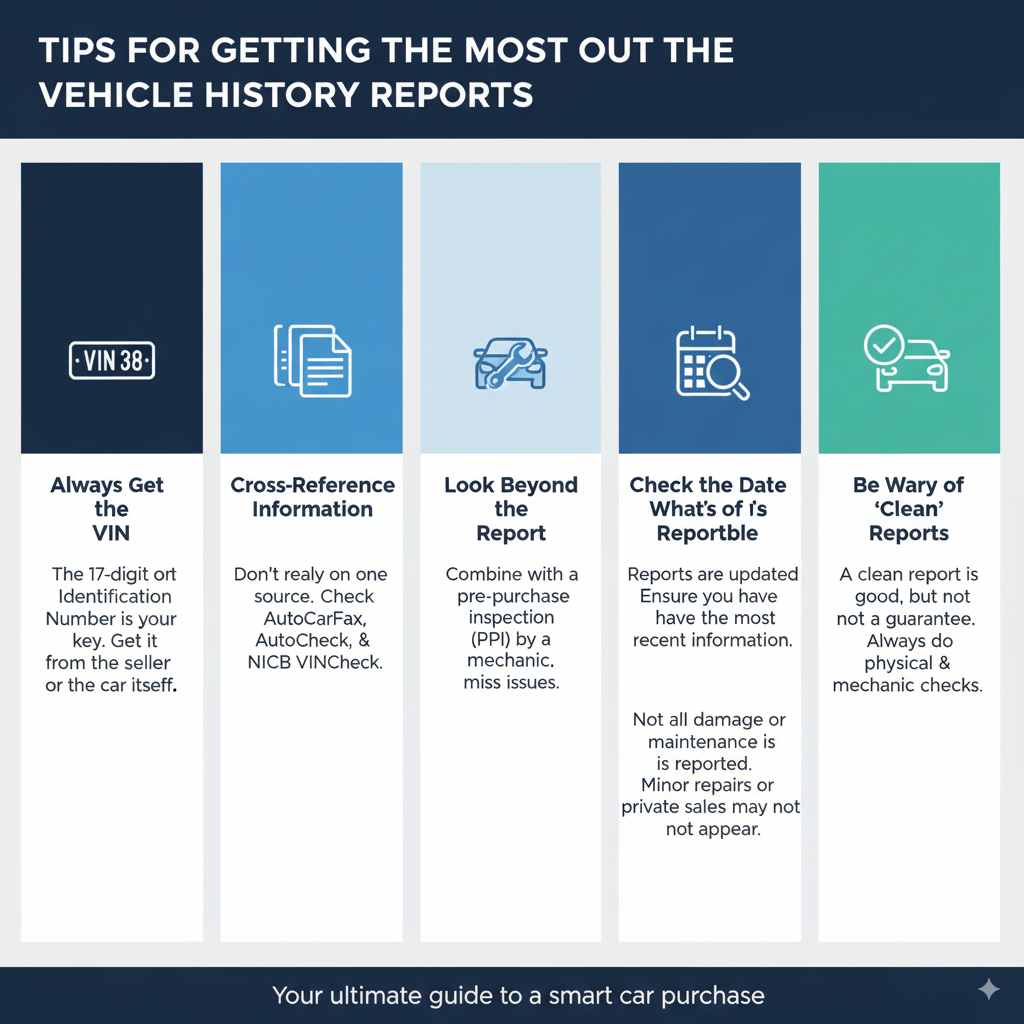
Tips for Getting the Most Out of Vehicle History Reports
Whether you’re using a free tool or a paid report, here are some tips to make your search effective:
- Always Get the VIN: The Vehicle Identification Number (VIN) is your key. Make sure you have the correct 17-digit VIN from the seller or the car itself.
- Cross-Reference Information: Don’t rely on just one source. If possible, check a VIN through CarFax, AutoCheck, and NICB VINCheck. Look for consistency or discrepancies.
- Look Beyond the Report: A history report is a tool, not a guarantee. Always combine it with a pre-purchase inspection (PPI) by a trusted mechanic. A mechanic can spot issues a report might miss, like worn-out parts or pending mechanical failures. Learn more about the importance of a PPI from resources like the Federal Trade Commission (FTC).
- Check the Date of the Report: Vehicle histories are constantly updated. An older report might not contain the most recent information.
- Understand What’s Reportable: Not all damage or maintenance is reported. Private sales, minor repairs done by individuals, or accidents where no insurance claim was filed might not appear on any report.
- Be Wary of “Clean” Reports: While good news, a clean report doesn’t automatically mean a car is perfect. Always do your physical inspection and mechanic check.
Frequently Asked Questions (FAQ)
Do I have to pay for every CarFax report?
Generally, yes. While CarFax may offer very limited basic information for free, detailed vehicle history reports that include accident history, title issues, and service records typically require payment.
How much does a CarFax report usually cost?
A single CarFax report typically costs between $25 and $40. They also offer multi-report packages that can lower the per-report cost if you need to check more than one vehicle.
Can I get a free comprehensive car history report?
While truly comprehensive reports are usually paid, you can get some free checks. The NICB VINCheck is free and alerts you to stolen vehicles or those flagged as total losses by insurance. Some dealers may also provide a free report for cars on their lot.
What information is usually included in a paid CarFax report?
Paid reports typically include details on accidents, title problems (like salvage or flood damage), odometer readings, number of owners, whether the car was used as a rental or fleet vehicle, and sometimes maintenance records.
Are CarFax and AutoCheck the same?
No, they are different companies that provide similar services. Both compile vehicle history reports using data from various sources. Their pricing, data depth, and specific offerings can differ, so it’s good to compare.
What’s the biggest reason to buy a vehicle history report?
The biggest reason is to avoid costly problems and ensure your safety. Reports can reveal significant accidents, severe title issues (like flood or salvage), or odometer tampering that could lead to major expenses or even make the car unsafe to drive.
Conclusion
So, to answer the question “Is CarFax not free anymore?” – yes, you generally can’t get a full, detailed report for free. CarFax, like many valuable services, now charges for the in-depth information that truly protects buyers. However, this doesn’t mean you’re left in the dark! You can still access basic vehicle details and alerts at no cost, and more affordable or free alternatives like NMVTIS reports and NICB VINCheck exist for specific checks.
The key takeaway is that investing a small amount in a comprehensive vehicle history report is a wise financial decision when buying a used car. It’s a crucial step in protecting yourself from hidden problems that could cost you a lot more in the long run. Combine this report with a thorough pre-purchase inspection from your mechanic, and you’ll be well on your way to making a confident and smart used car purchase. Happy car hunting!