Is Charging a Car Battery at 15 Amps Better Than 10 Amps
Many people wonder about the best way to charge their car batteries. When you’re looking at a car battery charger, you might see different amp settings, like 10 amps or 15 amps. It can be a bit confusing to know which one is right for your situation.
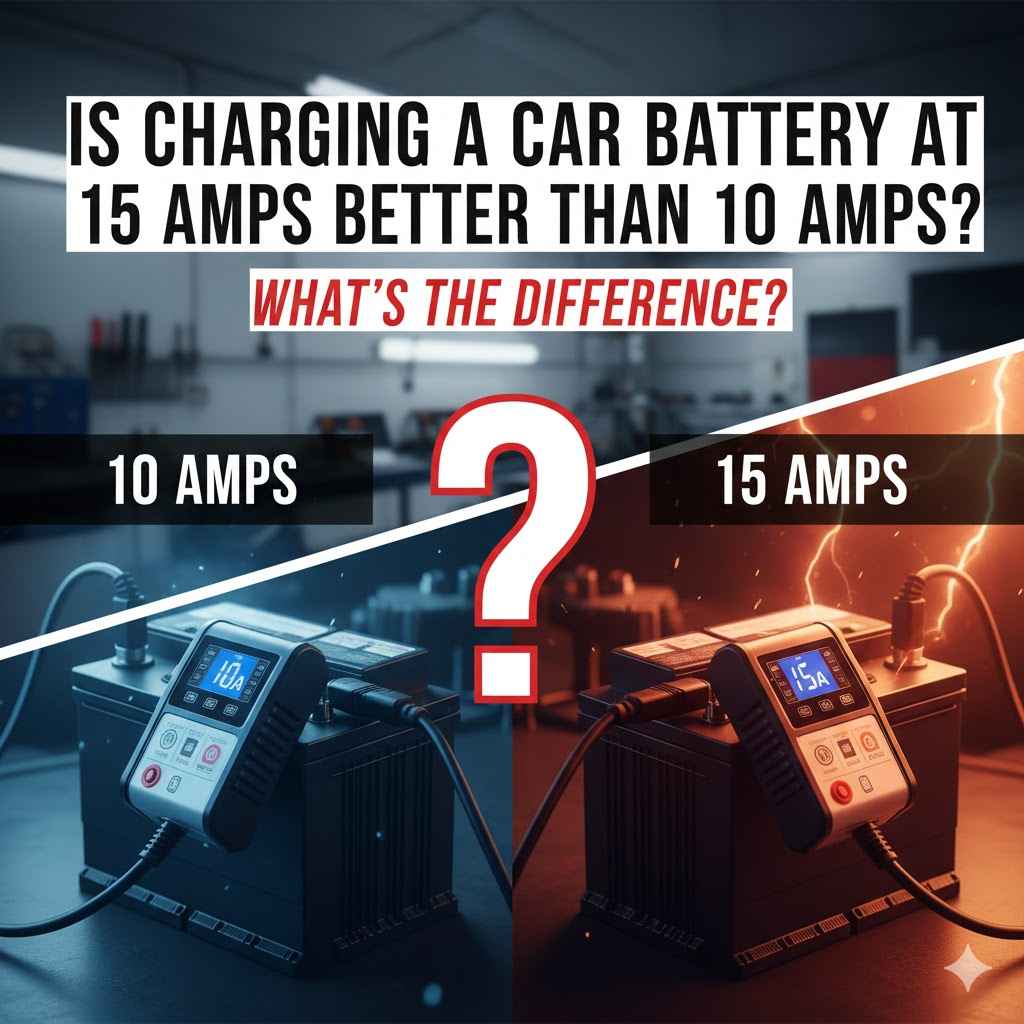
The question, Is Charging a Car Battery at 15 Amps Better Than 10?, pops up for beginners who want to keep their car running smoothly. Don’t worry, we’ll break it down simply. Let’s figure out what these numbers mean and how they affect your battery’s health, so you can make the best choice.
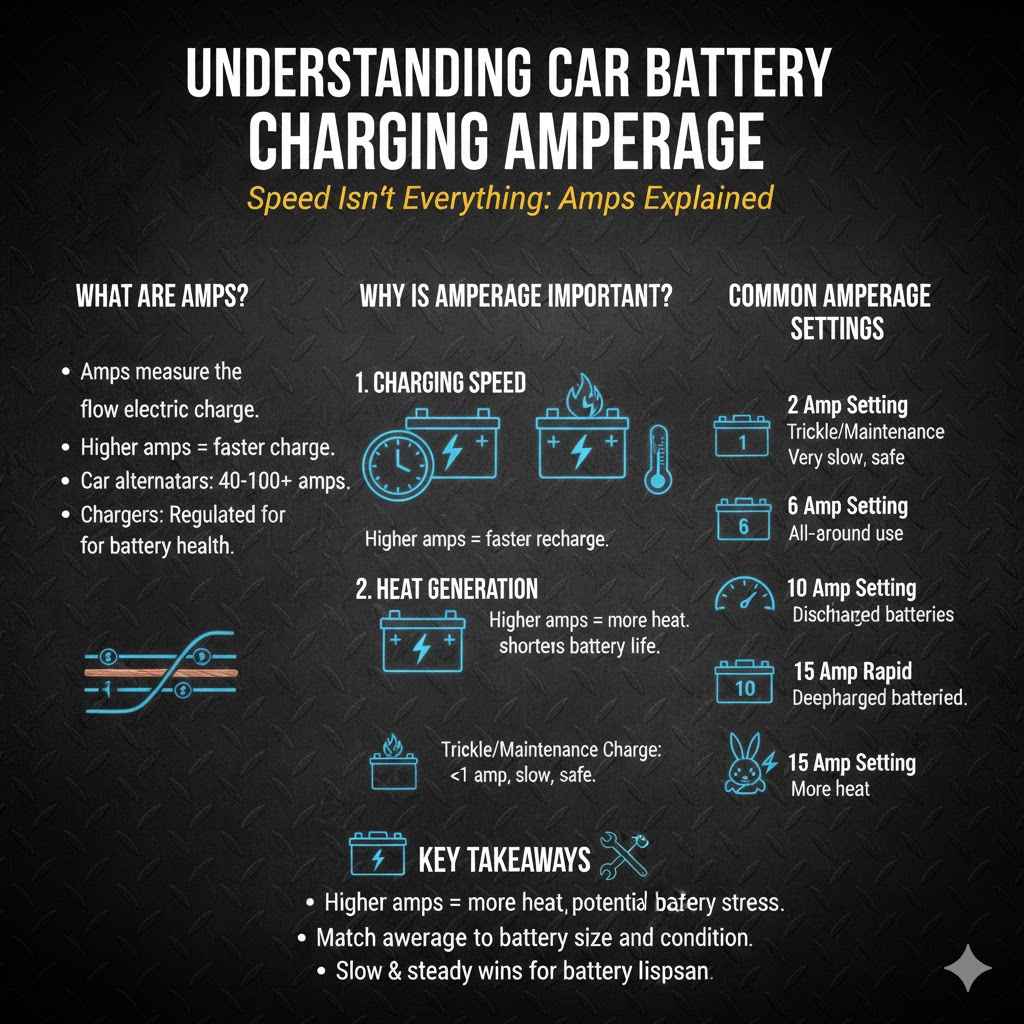
Understanding Car Battery Charging Amperage
The amperage of a battery charger refers to the rate at which electrical current is delivered to the battery. Think of amps as the “speed” of charging. A higher amp setting means more electrical current flows into the battery per hour, potentially charging it faster.
However, charging speed isn’t always the most important factor for battery health. It’s like drinking water; you can gulp it down quickly, or sip it slowly. Both get you hydrated, but the experience and impact can be different.
Understanding this basic concept is key to making informed decisions about battery care.
What Are Amps?
Amperage, or amps, measures the flow of electric charge. In simple terms, it’s the volume of electricity moving through a circuit. For car battery chargers, the amp rating tells you how much current the charger can supply.
A 10-amp charger will deliver 10 amps of current, while a 15-amp charger will deliver 15 amps. The higher the amp number, the more powerful the charge it can deliver at any given moment.
This flow is crucial because batteries store electrical energy. To recharge a battery, you need to push electricity back into it. The rate at which you do this is measured in amps.
A higher amperage means more electrons are being pushed into the battery’s chemical storage system each second, leading to a quicker replenishment of its charge.
For context, a typical car alternator, which charges the battery while the engine is running, often produces between 40 and 100 amps. This shows that car batteries are designed to handle significant current. However, the charging process itself, especially from an external charger, needs careful management.
Why Is Amperage Important for Battery Charging?
The amperage of your charger directly impacts how quickly your car battery can be recharged. A higher amperage charger can significantly reduce the time it takes to bring a depleted battery back to full power. This is especially useful in emergency situations where you need to get your car started quickly.
However, it’s not just about speed. The amperage also affects the heat generated during charging. Higher amperage can lead to more heat.
Excessive heat can degrade battery components over time, shortening its lifespan. Therefore, finding the right balance between charging speed and heat management is essential for maintaining battery health.
Some chargers offer different charging modes, often including slower, lower amperage settings. These are sometimes referred to as “trickle” or “maintenance” charges. These modes are designed to maintain a battery’s charge over long periods without overcharging or causing damage, and they operate at very low amperages, often less than 1 amp.
Common Amperage Settings on Chargers
Car battery chargers commonly come with a few different amperage settings to accommodate various charging needs and battery types. You’ll frequently see chargers with settings like 2 amps, 6 amps, 10 amps, and 15 amps. Some professional-grade chargers might offer even higher settings.
- 2 Amp Setting: This is typically used for trickle charging or maintenance. It’s a very slow and gentle charge, ideal for batteries that are not heavily discharged or for keeping a vehicle in storage topped up. It generates minimal heat and is very safe for long-term use.
- 6 Amp Setting: This is a moderate charging rate, suitable for most typical battery recharges. It’s faster than a trickle charge but still gentle enough for regular use without causing undue stress on the battery. It’s a good all-around setting for moderately discharged batteries.
- 10 Amp Setting: This is a faster charging option for when you need to replenish a more significantly discharged battery more quickly. It’s a good balance for many common scenarios, offering a noticeable speed increase over lower settings.
- 15 Amp Setting: This is one of the highest common settings for consumer chargers. It’s designed for rapid charging of deeply discharged batteries. While it can bring a battery up to a usable charge level quickly, it also generates more heat and can put more stress on the battery.
The choice of setting depends on how dead your battery is, how much time you have, and the specific type of battery you are charging. Always consult your car’s manual or battery manufacturer’s recommendations if you’re unsure.
Is Charging at 15 Amps Better Than 10 Amps?
The question of whether 15 amps is “better” than 10 amps isn’t a simple yes or no. It depends entirely on your specific situation and what you prioritize. While 15 amps can charge a battery faster, it also introduces potential risks that 10 amps might mitigate.
Understanding these trade-offs will help you decide which setting is best for your needs. It’s about choosing the right tool for the job, rather than assuming bigger is always better.
Faster Charging With 15 Amps
The most obvious advantage of using a 15-amp setting is speed. If your car battery is significantly drained and you need to get it charged quickly, a 15-amp charger will deliver power much faster than a 10-amp charger. This can be a lifesaver if you have an urgent need to start your vehicle.
For example, imagine you left your headlights on overnight, and your battery is nearly dead. Using a 10-amp charger might take many hours to bring it to a state where it can crank the engine. A 15-amp charger, however, could potentially reduce that charging time considerably, perhaps by a few hours, depending on the battery’s capacity and state of discharge.
This rapid charging is particularly beneficial for drivers who frequently experience battery drain due to accessory use or infrequent driving. It offers a quicker solution to get back on the road without waiting an extended period for a slower charge.
Potential Risks of Higher Amperage Charging
While speed is attractive, charging at 15 amps carries some inherent risks that are less pronounced with a 10-amp setting. The primary concern is heat generation. Higher amperage means more electrical energy is being pushed into the battery in a shorter time, which can cause the battery to heat up significantly.
Excessive heat is detrimental to battery health. It can accelerate the degradation of the internal components of the battery, such as the lead plates and electrolyte. Over time, this can lead to a reduced battery lifespan and decreased performance.
In extreme cases, rapid charging at high amperages can even lead to thermal runaway, a dangerous condition where the battery overheats uncontrollably.
Additionally, some older or more sensitive battery types may not be designed to handle the higher current flow of a 15-amp charge. Forcing a rapid charge into such batteries could potentially cause internal damage, even if it doesn’t lead to immediate failure. This is why using the appropriate charging rate, often specified by the battery manufacturer, is so important.
Battery Health Considerations
When thinking about battery health, a slower, more controlled charge is generally preferred. A 10-amp charge, while slower than 15 amps, is often considered a more “gentle” approach. This gentler charge allows the battery’s chemical reactions to occur more efficiently and with less stress on its internal structure.
Charging at 10 amps reduces the risk of overheating and minimizes the stress on the battery’s components. This can contribute to a longer overall lifespan for the battery compared to consistently using higher amperage charging. For routine charging of a battery that isn’t severely discharged, a 10-amp setting is often a safer and more beneficial choice for long-term battery care.
Modern batteries are designed with sophisticated chemistries, but they are still sensitive to extreme conditions. Prolonged exposure to high temperatures or rapid cycling can break down the active materials within the battery cells, leading to reduced capacity and eventual failure. A 10-amp charge helps to avoid these detrimental effects.
When to Choose 15 Amps Over 10 Amps
You should opt for the 15-amp setting primarily when you are in a situation where rapid charging is essential. This typically occurs when your car battery is deeply discharged, and you need to get your vehicle operational as soon as possible.
Consider these scenarios:
- Emergency Jump Start Assist: If your car won’t start due to a dead battery, and you need to get going quickly for an important appointment or to avoid missing a flight.
- Deeply Discharged Battery: When a battery has been drained significantly, perhaps from leaving lights on or a faulty charging system, a higher amperage can more effectively restore a usable charge in a shorter timeframe.
- Cold Weather Starting: In very cold temperatures, batteries can lose some of their power. If you’re in such conditions and need a quick boost to start your car, 15 amps might be considered.
It’s important to note that even when using 15 amps, you should monitor the battery for excessive heat. If the battery starts to feel unusually hot to the touch, it’s best to reduce the amperage or disconnect the charger temporarily to let it cool down. Always follow the charger’s instructions and any recommendations from your vehicle’s manufacturer.
When 10 Amps Is The Better Choice
In most everyday situations, a 10-amp charging setting is a more prudent and beneficial choice for maintaining your car battery’s health and longevity. It offers a good balance between reasonable charging speed and minimal stress on the battery.
Here are situations where 10 amps is usually preferred:
- Regular Top-Up Charging: If you notice your battery level is a bit low or you want to ensure it’s fully charged before a long trip, 10 amps provides a solid recharge without rushing the process.
- Moderate Discharge: For batteries that are not critically drained but could use a boost, 10 amps will effectively bring them back up without the added heat and strain of a higher setting.
- Battery Maintenance: When you are proactively maintaining your battery, perhaps during periods of less frequent driving, a 10-amp charge is sufficient to keep it healthy and ready to go.
- Protecting Battery Lifespan: If your priority is to maximize the lifespan of your car battery and prevent premature degradation, the gentler charge of 10 amps is the way to go.
Using a 10-amp setting helps to ensure that the chemical processes within the battery occur in a controlled manner, reducing the risk of damage and contributing to a longer operational life. It’s the go-to setting for many mechanics and car owners who prioritize battery longevity.
Types of Car Battery Chargers and Their Features
Car battery chargers come in various forms, each with different features and capabilities. Understanding these differences can help you choose the right charger for your needs and appreciate how amperage settings play a role. From simple manual chargers to advanced smart chargers, the technology aims to make battery maintenance easier and more effective.
Manual Chargers
Manual chargers are the most basic type. You select the amperage setting (if multiple are available) and plug it in. You are responsible for monitoring the charging process and disconnecting the charger once the battery is sufficiently charged.
These chargers often lack sophisticated safety features.
- Simplicity: They are very straightforward to use, with few buttons or settings. This can be appealing to users who prefer simple operation.
- Cost-Effective: Generally, manual chargers are less expensive than their automatic or smart counterparts.
- User Responsibility: The biggest drawback is that the user must actively monitor the charging process. Failing to disconnect the charger can lead to overcharging, which can damage the battery and even pose a safety risk.
- Limited Modes: Most manual chargers offer only a fixed charging rate or a few manual amperage selections (e.g., 2A, 10A). They typically do not have special modes for different battery types or maintenance.
A common scenario for manual chargers is a simple jump starter pack that also includes a basic charging function. You plug it in, and it charges. You then unplug it when the indicator light (if any) suggests it’s full.
Automatic/Smart Chargers
Smart chargers are designed to take the guesswork out of charging. They use microprocessors to monitor the battery’s voltage and current and adjust the charging rate accordingly. Many smart chargers offer multiple charging stages and automatic shut-off features.
- Multi-Stage Charging: Smart chargers often employ a multi-stage charging process. This typically involves a bulk charge phase (high amperage), an absorption phase (lower, constant voltage), and a float phase (trickle charge to maintain the charge). This optimizes charging speed while protecting the battery.
- Automatic Shut-off: Once the battery is fully charged, the charger will automatically stop delivering current or switch to a maintenance mode. This prevents overcharging and protects the battery.
- Battery Type Recognition: Many advanced smart chargers can detect the type of battery (e.g., lead-acid, AGM, gel) and adjust their charging profile for optimal performance and safety.
- Safety Features: They usually include built-in protection against reverse polarity, short circuits, and sparks, making them safer to use.
A user might plug in a smart charger, select their battery type, and let it run overnight. The charger handles the rest, ensuring the battery is fully and safely charged without user intervention.
Multi-Amperage Chargers
These chargers offer flexibility by allowing the user to select from a range of amperage settings. This is where the comparison between 10 amps and 15 amps becomes most relevant. A charger might have a dial or buttons to switch between, say, 2A, 10A, and 15A.
- Versatility: They cater to a wider range of charging needs. You can use a lower amperage for smaller batteries or maintenance and a higher amperage for faster charging of larger or more drained batteries.
- User Control: Provides the user with direct control over the charging rate, allowing them to tailor the charge based on their time constraints and battery condition.
- Learning Curve: While offering flexibility, it requires the user to understand which setting is appropriate for their situation. Incorrect selection can lead to slower charging than necessary or excessive heat.
- Common in Consumer Models: Many popular consumer-grade battery chargers fall into this category, offering a good balance of features and price.
A typical scenario involves a user who has a standard car battery and a motorcycle battery. They can use the lower settings for the motorcycle and the 10A or 15A settings for the car, depending on how much charge is needed.
Factors Affecting Charging Time
Several factors influence how long it takes to charge a car battery, regardless of the charger’s amperage setting. These include the battery’s capacity, its current state of charge, its age and health, and ambient temperature.
| Factor | Description | Impact on Charging Time |
|---|---|---|
| Battery Capacity (Ah) | The total amount of electrical charge a battery can store, measured in Amp-hours (Ah). | Larger capacity batteries take longer to charge. |
| State of Charge (SoC) | How much charge the battery currently holds. A deeply discharged battery needs more time. | Lower SoC means longer charging time. |
| Battery Health/Age | An older or degraded battery may not accept a charge as efficiently. | Less efficient charging can extend time needed or prevent full charge. |
| Ambient Temperature | Very cold temperatures can slow down chemical reactions in the battery, affecting charging. High temperatures can increase heat generation. | Cold can slow charging; extreme heat can require slower charging to manage heat. |
| Charger Amperage | The rate at which the charger delivers current. | Higher amperage generally means faster charging, assuming the battery can accept it. |
Understanding these variables helps to set realistic expectations for charging times. For example, a 100 Ah battery that is completely dead will take significantly longer to charge at 10 amps than a 50 Ah battery that is only half discharged.
Battery Chemistry and Charging Compatibility
Not all car batteries are created equal, and their internal chemistry dictates how they should be charged. Using the wrong charging method or amperage for a specific battery type can lead to reduced performance, shortened lifespan, or even damage. Modern vehicles often use advanced battery technologies that require specialized care.
Lead-Acid Batteries (Flooded)
These are the traditional, most common type of car battery. They are also known as wet cell batteries. They contain lead plates submerged in an electrolyte solution of sulfuric acid and water.
- Charging Characteristics: Flooded lead-acid batteries are relatively forgiving and can handle a range of charging rates. However, prolonged charging at very high amperages can lead to excessive gassing (release of hydrogen and oxygen) and water loss from the electrolyte.
- Recommended Amperage: For routine charging, a 10-amp setting is generally safe and effective. 15 amps can be used for faster charging when needed, but it’s crucial to monitor for overheating and to ensure the electrolyte levels are checked and maintained afterward. A common rule of thumb is to charge at a rate no higher than one-tenth of the battery’s capacity (e.g., 10A for a 100Ah battery) for optimal long-term health, but faster rates are permissible for quicker charging.
- Maintenance: These batteries require periodic checking and topping up of the electrolyte levels with distilled water. Charging at higher rates can accelerate water loss.
When charging a flooded lead-acid battery, you might see bubbles forming in the electrolyte during the charge, especially at higher amperages. This is normal gas evolution, but excessive bubbling indicates rapid water consumption.
Absorbent Glass Mat (AGM) Batteries
AGM batteries are a type of sealed lead-acid battery where the electrolyte is absorbed into fiberglass mats. They are known for their durability, resistance to vibration, and ability to handle higher charge and discharge rates.
- Charging Characteristics: AGM batteries are more sensitive to overcharging and heat than flooded lead-acid batteries. They generally require a more controlled charging process with specific voltage parameters.
- Recommended Amperage: Many AGM battery manufacturers recommend charging rates between 20% and 50% of the battery’s capacity. For a typical 60 Ah AGM battery, this would translate to 12A to 30A. However, most consumer chargers don’t reach these high rates. A 10-amp charge is usually safe and effective for most AGM batteries. While a 15-amp charge might be acceptable for faster charging, it’s essential to use a charger specifically designed for AGM batteries or one with an AGM charging mode to ensure correct voltage regulation and prevent damage.
- Benefits: AGM batteries are spill-proof and maintenance-free, making them a popular choice for modern vehicles, especially those with start-stop technology.
Using a charger without an AGM setting on a 15-amp charge could potentially overcharge an AGM battery, leading to reduced lifespan and performance. Always look for a charger that explicitly states it is suitable for AGM batteries.
Gel Batteries
Gel batteries are another type of sealed lead-acid battery where a gelling agent is mixed with the electrolyte, making it a gel-like substance. They are also spill-proof and maintenance-free.
- Charging Characteristics: Gel batteries are the most sensitive to overcharging and high amperages among lead-acid types. Overcharging can cause the gel to dry out, permanently damaging the battery.
- Recommended Amperage: It is strongly advised to use very low amperage settings when charging gel batteries, typically around C/10 or even lower (C representing the battery’s capacity in Ah). For a 60 Ah gel battery, this means a maximum charging rate of around 6 amps, and often much lower (e.g., 1-3 amps) is preferred for optimal longevity. A 10-amp or 15-amp charge is generally too high and could damage the battery.
- Charger Compatibility: Use a charger specifically designed for gel batteries. These chargers will have lower voltage limits and slower charging rates to protect the delicate gel structure.
If you have a gel battery, it’s critical to read the manufacturer’s recommendations carefully. Forcing a high amperage charge into a gel battery is one of the quickest ways to ruin it.
Lithium-Ion Batteries (Less Common in Standard Cars)
While not standard in most passenger cars (though becoming more common in EVs and some performance vehicles), lithium-ion batteries have different charging requirements altogether. They are significantly lighter and can hold more energy than lead-acid batteries.
- Charging Characteristics: Lithium-ion batteries use complex battery management systems (BMS) to control charging and discharging. They require precise voltage and current control.
- Recommended Amperage: The charging rate for lithium-ion batteries is highly dependent on the specific chemistry and the BMS. Consumer chargers for these are often specialized. Typically, moderate charging rates are used to prolong life, but some can accept faster charging than lead-acid types.
- BMS Importance: The BMS prevents overcharging, over-discharging, and overheating, making them inherently safer than uncontrolled charging.
If your vehicle uses a lithium-ion battery, you must use a charger specifically designed for that battery type and chemistry. Using a standard lead-acid charger would be dangerous and highly likely to damage the battery.
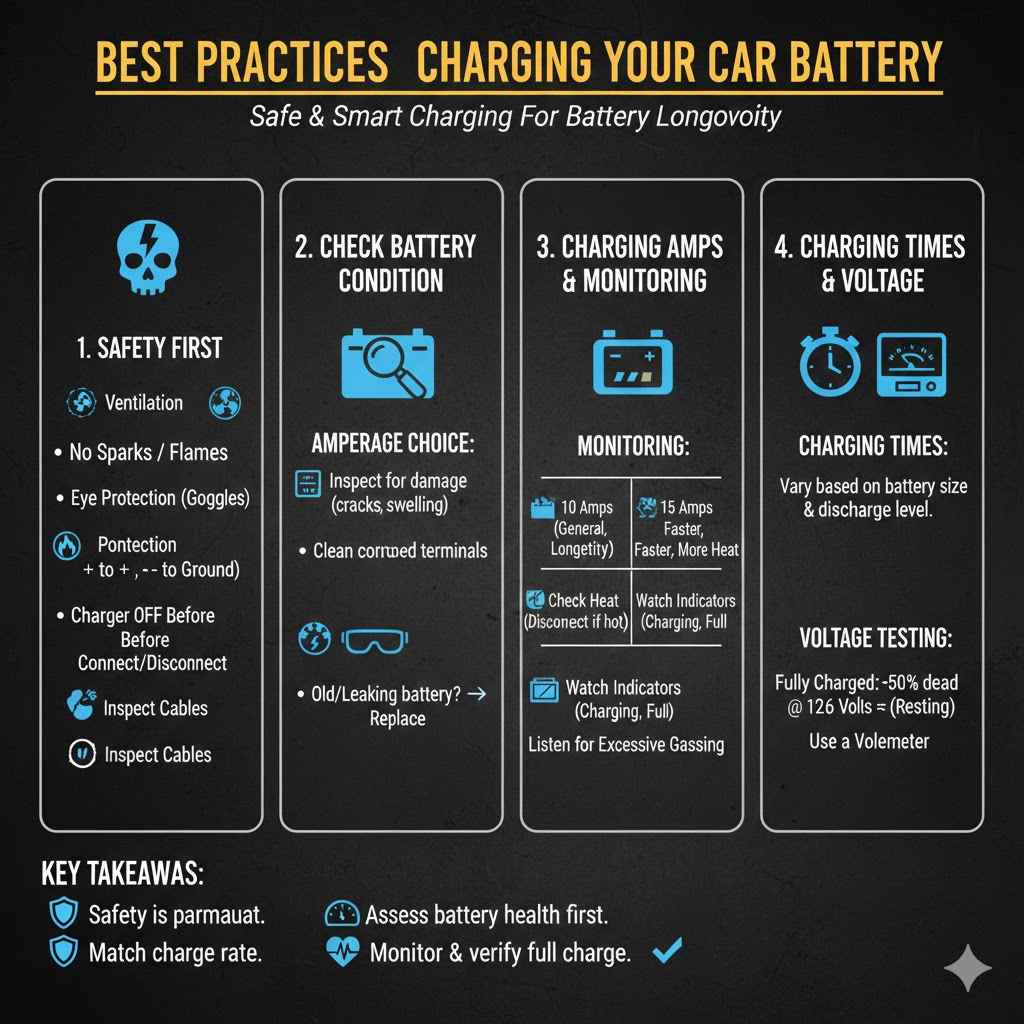
Best Practices for Charging Your Car Battery
Regardless of whether you choose 10 amps or 15 amps, following best practices ensures your battery is charged safely and efficiently, contributing to its overall health and your vehicle’s reliability.
Safety First
Car batteries contain sulfuric acid and can produce explosive hydrogen gas. Always follow these safety precautions:
- Ventilation: Charge your battery in a well-ventilated area. Avoid charging in enclosed spaces.
- No Sparks or Flames: Keep sparks, open flames, and smoking materials away from the battery.
- Eye Protection: Wear safety glasses or goggles when working with batteries.
- Correct Connections: Connect the positive (+) clamp of the charger to the positive terminal of the battery and the negative (-) clamp to a good ground point on the vehicle’s chassis, away from the battery. Ensure the charger is switched OFF before making connections.
- Disconnect Order: Turn the charger OFF before disconnecting the clamps. Disconnect the negative clamp first, then the positive clamp.
- Charger Condition: Ensure the charger and its cables are in good condition, with no frayed wires or damaged clamps.
Proper safety procedures minimize the risk of personal injury and damage to your vehicle and property.
Check Battery Condition
Before charging, inspect your battery for any physical damage, such as cracks in the casing or corrosion on the terminals. Clean corroded terminals with a wire brush and a mixture of baking soda and water.
If the battery is very old, shows signs of swelling, or has leaked electrolyte, it might be nearing the end of its life and may not accept a charge properly or safely. In such cases, replacement might be a better option than trying to charge it.
Choose the Right Amperage Setting
As discussed, the choice between 10 amps and 15 amps depends on your needs. For general charging and battery longevity, 10 amps is often the preferred setting. Use 15 amps for faster charging when absolutely necessary, but always be mindful of potential heat buildup.
If your charger has specific modes for AGM or Gel batteries, use them. If not, err on the side of caution and use a lower amperage setting for these battery types.
Monitor Charging Progress
Even with smart chargers, it’s good practice to periodically check on the battery. Listen for excessive boiling sounds (gassing), and feel the battery case for excessive heat. If the battery becomes unusually hot, disconnect the charger immediately and let it cool down before resuming charging at a lower amperage.
Many chargers have indicators that show charging status (e.g., charging, fully charged, fault). Pay attention to these indicators.
Understand Charging Times
Charging times can vary significantly. A deeply discharged battery can take many hours to fully recharge, even at 15 amps. For example, a 50Ah battery that is 50% discharged (25Ah remaining) might take roughly 2.5 hours to charge at 10 amps (25Ah / 10A = 2.5 hours), assuming ideal conditions.
If it’s completely dead, it will take much longer.
Don’t rely solely on time; let the charger’s indicators or a battery voltage test determine when the battery is fully charged.
Battery Voltage Testing
A simple and effective way to check battery charge is with a voltmeter. A fully charged 12-volt lead-acid battery should read around 12.6 volts or slightly higher when at rest (engine off for several hours). As it discharges, the voltage will drop.
After charging, a voltage reading above 12.6 volts indicates a good charge.
Some chargers include a voltmeter function, or you can use a separate inexpensive digital voltmeter.
Frequently Asked Questions
Question: Can I leave a 15-amp charger connected to my car battery overnight?
Answer: It is generally not recommended to leave a manual 15-amp charger connected overnight, as it could lead to overcharging and excessive heat, potentially damaging the battery. Smart chargers with automatic shut-off or maintenance modes are designed for this purpose and are safer to leave connected.
Question: Will charging at 15 amps damage my car battery if it’s only slightly discharged?
Answer: Charging a slightly discharged battery at 15 amps could cause it to heat up unnecessarily and put stress on its components, potentially shortening its lifespan over time. A lower amperage setting like 10 amps or even a dedicated maintenance mode would be more appropriate.
Question: What is the difference between amps and volts for a car battery charger?
Answer: Amps (amperage) measure the rate of electrical current flow, which determines charging speed. Volts measure the electrical potential or pressure. Car batteries typically operate at 12 volts, and chargers deliver a slightly higher voltage (e.g., 13-14.7 volts) to push current into the battery.
Question: Is it okay to mix different types of car batteries in my vehicle?
Answer: It is generally not recommended to mix different types of car batteries (e.g., flooded lead-acid with AGM) in the same vehicle, as they have different charging requirements. This can lead to improper charging of one or both batteries and potential damage.
Question: How do I know if my car battery needs charging?
Answer: Signs your car battery may need charging include slow engine cranking, dim headlights, warning lights on the dashboard (like the battery light), and the car not starting at all. Using a voltmeter to check the battery’s voltage when the car is off is also a good indicator.
Summary
Deciding between 15 amps and 10 amps for charging your car battery depends on your needs. 15 amps offers faster charging for deeply discharged batteries when time is critical. However, 10 amps provides a gentler, safer charge that is better for long-term battery health and longevity.
Always consider your battery type and follow safety guidelines for the best results.