How to Check a Car Battery Voltage: Quick Guide
To check a car battery voltage, use a multimeter. Connect the multimeter to your car battery terminals.
A healthy battery reads 12.6-12.8 volts with the engine off, but 13.7-14.7 volts with the engine running, since the alternator is actively charging it — checking at the wrong time is the most common reason people misread a healthy battery as weak. This guide covers both readings, a full state-of-charge chart, and when a low number means charge versus replace.
Quick Answer
With the engine off, set a multimeter to DC volts, connect red to positive and black to negative — 12.6-12.8V is fully charged, below 12.4V needs charging. With the engine running, expect 13.7-14.7V; a reading in the resting range while the engine runs may mean the alternator isn’t charging.
Essential Tools For Testing
Checking car battery voltage is simple with a multimeter. Connect the multimeter to the battery terminals. A reading above 12.4 volts indicates a healthy battery.
Multimeter Basics
A multimeter is a device for measuring voltage. It has two probes. The red probe is positive, and the black probe is negative. To check a car battery, set the multimeter to voltage mode. Attach the red probe to the battery’s positive terminal. The black probe goes on the negative terminal. The screen shows the voltage of the battery. A good battery reads between 12.4 to 12.6 volts. Lower numbers mean the battery might be weak.
Safety Gear
Always wear safety goggles to protect your eyes. Gloves keep your hands safe. Batteries can leak acid. Acid can hurt skin. Use a mask to avoid breathing in harmful fumes. Ensure the area is well-lit and ventilated. This helps you see clearly. It also helps you breathe fresh air. Be careful and stay safe.

Preparing The Vehicle
First, find a safe spot to park your car. Make sure the ground is level. Set the parking brake to keep it from moving. Keep the car away from traffic. Safety is very important. A safe car makes checking the battery easy.
Turn off all car electronics. This includes the radio and lights. Also, turn off the air conditioning. Ensure the engine is not running. This helps get an accurate voltage reading. Electronics can drain the battery. So, make sure everything is off.
Best Multimeter Pick

AstroAI True RMS Auto-Ranging Digital Multimeter
The exact tool this entire guide is built around — auto-ranging means you don’t have to manually pick the right voltage range before testing.
- Best for: Reading both the 12.6-12.8V resting range and the 13.7-14.7V running range accurately
- Why we picked it: Auto-ranging removes the “wrong range” mistake this guide warns about
- Main drawback: Slightly pricier than a basic manual-range multimeter
Compare more battery-testing essentials
 Option 1 Battery Terminal Cleaner Tool Kit
|
 Option 2 ANCEL BA101 Battery & Alternator Tester
|
 Option 3 Mechanix Wear Latex Disposable Gloves Powder-Free Textured 100 Pack
|
As an Amazon Associate we earn from qualifying purchases.
Locating The Battery
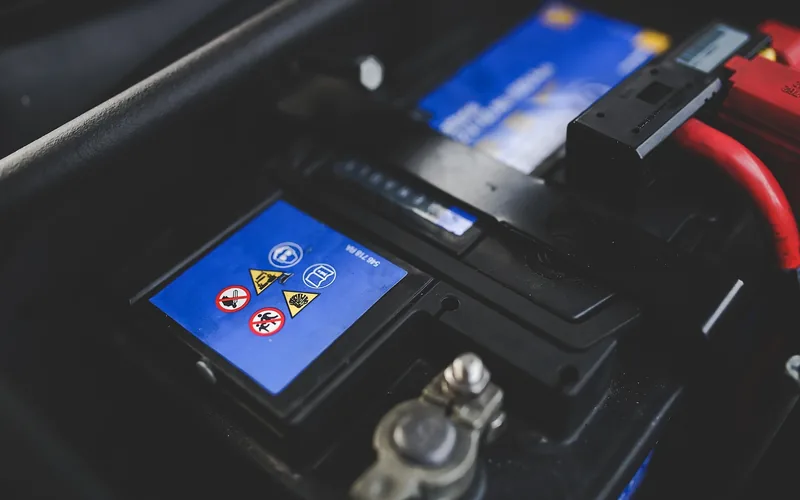
Many car batteries are found under the hood. Open the car’s hood carefully. Look for a rectangular box with two cables. This box is the battery. It usually sits near the front. Some cars may have a cover. Remove it if needed to see the battery clearly.
Some cars have batteries in the trunk or rear seats. Check the trunk floor for a cover. Lift the cover to find the battery. Rear seat batteries are less common. Look under the seat for a hidden compartment. Always ensure the car is off before checking.
Setting Up The Multimeter
First, find the voltage setting on the multimeter. Look for a symbol like a “V”. This means voltage. Choose a range above 12 volts. Most car batteries are around 12 volts. If the range is too low, the multimeter may not work. If the range is too high, readings may be less accurate.
Grab the red lead and the black lead. The red lead goes to the positive terminal. It usually has a plus sign (+). The black lead goes to the negative terminal. It usually has a minus sign (-). Ensure the leads are firmly attached. Loose leads can give wrong readings. Make sure your hands are dry when touching the battery. Wet hands can be dangerous.
Interpreting Voltage Readings
Checking a car battery voltage helps ensure your vehicle runs smoothly. Use a multimeter to measure the voltage. A healthy battery typically shows a reading between 12.4 and 12.7 volts.
Normal Voltage Range
A car battery’s normal voltage is between 12.4 and 12.6 volts. This means the battery is healthy. A reading within this range indicates a fully charged battery. It is ready to power your car.
Signs Of A Weak Battery
A battery reading below 12.4 volts shows weakness. The battery may struggle to start the car. It could die soon. Another sign is slow engine cranking. Lights may dim when the car starts. This is a sign the battery is weak. It might need a replacement.
Engine Off vs. Engine Running: Why the Number Changes
The voltage you should expect depends entirely on whether the engine is running. With the engine off and the battery rested, 12.6-12.8V is fully charged and 12.4V is the low end of healthy. With the engine running, the alternator raises the reading to 13.7-14.7V — a normal, expected jump, not a sign of overcharging on its own.
| State of Charge | Engine Off (Resting) |
|---|---|
| 100% (fully charged) | 12.6-12.8V |
| 75% | 12.4V |
| 50% | 12.2V |
| 25% | 12.0V |
| 0% (discharged) | 11.9V or lower |
📊 A healthy resting car battery reads 12.6-12.8V with the engine off, rising to 13.7-14.7V once the engine is running and the alternator is charging it. — Source: AutoNation Mobile Service, Ideal Car Battery Voltage Range
“When you start your vehicle, the voltage will briefly drop, but a healthy battery should stay above 10V, even though colder weather can cause it to dip lower.”
Troubleshooting Common Issues
- Corroded terminals can cause battery problems. Look for a white or blue powder. This is the corrosion. It can stop the battery from working well. Cleaning the terminals can help. Use a brush to scrub them clean. Wear gloves to protect your hands. Make sure the car is off before starting.
Loose connections can stop the car battery from working. Check the battery cables. They should be tight and secure. If they are loose, use a wrench to tighten them. Do not over-tighten. It can break the connection. Make sure everything is in place. This can help the battery work better.
Maintaining Battery Health
Testing the car battery voltage is important. Use a multimeter for accurate results. Set it to DC volts. Connect the red lead to the positive terminal. Connect the black lead to the negative terminal. Check the reading. A good battery shows between 12.4 to 12.7 volts. Anything lower may need attention.
Keep the battery terminals clean. Dirt can cause problems. Use a wire brush or battery cleaner. Remove any corrosion. Mix baking soda with water for a homemade cleaner. Apply it to the terminals. Let it sit for a few minutes. Rinse with clean water. Dry the area well.
When To Seek Professional Help
Car battery issues can be tricky. The car might not start or the lights may dim. If these problems happen a lot, it’s a sign. The battery might need help. A professional can check things out. They have tools to find the real issue.
Fixing it by yourself may not work. Experts know what to do. They can fix it right. So, if problems stay, get help soon.
Car batteries can be complex. Sometimes, tools are needed to check them. Not everyone has these tools at home. Professionals use special gadgets. These gadgets show what’s wrong inside the battery.
They can tell if the battery needs a charge or if it’s weak. Experts understand these tests. They can give the best advice. If the battery acts funny, let a pro check it.
Frequently Asked Questions
How To Check A Car Battery Voltage With A Multimeter?
Set the multimeter to DC voltage. Connect the red probe to the battery’s positive terminal and the black probe to the negative terminal. Check the reading; a healthy car battery should show around 12.6 volts. If the reading is below 12 volts, consider charging or replacing the battery.
How Do I Know If My Car Battery Is Low Voltage?
Check for dim headlights, slow engine cranking, or dashboard warning lights. Use a multimeter to measure voltage. Below 12.4 volts indicates low battery. Regular testing ensures optimal performance. Visit a professional if unsure.
Is 13.2 Volts Too High For A Car Battery?
13.2 volts is normal for a car battery when the engine is running. It indicates proper charging. If the engine is off, 13.2 volts might suggest a surface charge. Let the battery sit, then recheck. Consistent high voltage can indicate an overcharging issue.
Regular monitoring ensures battery health.
Is 11.9 Volts A Dead Battery?
A 11.9-volt reading suggests a battery is discharged or weak. Car batteries typically need 12.6 volts when fully charged. It may need recharging or replacement soon. Regular battery maintenance can help avoid unexpected failures.
Conclusion
Checking your car battery voltage is simple. Helps avoid unexpected breakdowns. Regular checks keep your battery healthy. Use a voltmeter for accurate readings. Follow safety precautions while testing. Wear gloves. Remove metal jewelry. Ensure your engine is off. Look for readings between 12.4 to 12.6 volts. A lower reading may mean your battery needs attention. Inspect connections for corrosion. Clean terminals if needed. Replace a weak battery promptly. Reliable battery ensures smooth rides. Saves time and stress. Keep your car ready for any journey.
Stay proactive. Your car’s battery deserves care and attention.
Products related to this article
Sponsored / affiliate links. As an Amazon Associate I earn from qualifying purchases. I may earn additional commission from eligible campaigns.