Is Flying a Plane Harder Than Driving a Car? (FAA Data)
Flying a plane is harder than driving a car overall — the FAA requires at least 40 logged flight hours for a private pilot license, while most states set no federal minimum for a driver’s license. Get the landing sequence wrong and the margin for error is measured in feet, not inches. This guide compares training hours, cockpit workload, autopilot versus cruise control, and real accident-rate data.
Flying Vs. Driving: The Great Debate
Piloting a plane requires a different skill set than driving a car. Both activities involve navigation and control, but flying demands a higher level of precision and constant instrument monitoring, and pilots must complete extensive, federally regulated training before they can fly solo. Driving, by comparison, is a skill most people pick up as teenagers with far less standardized instruction.
Safety statistics complicate a simple “flying is safer” answer — the real picture depends on whether you measure risk per hour, per trip, or per mile, which is covered in detail further down this page. What is not in dispute is that flying requires more formal skill-building than driving does, which is one reason jets and cars keep crossing over in enthusiast culture (see our look at how jet fighters influenced car culture).
The Basics Of Operating A Plane
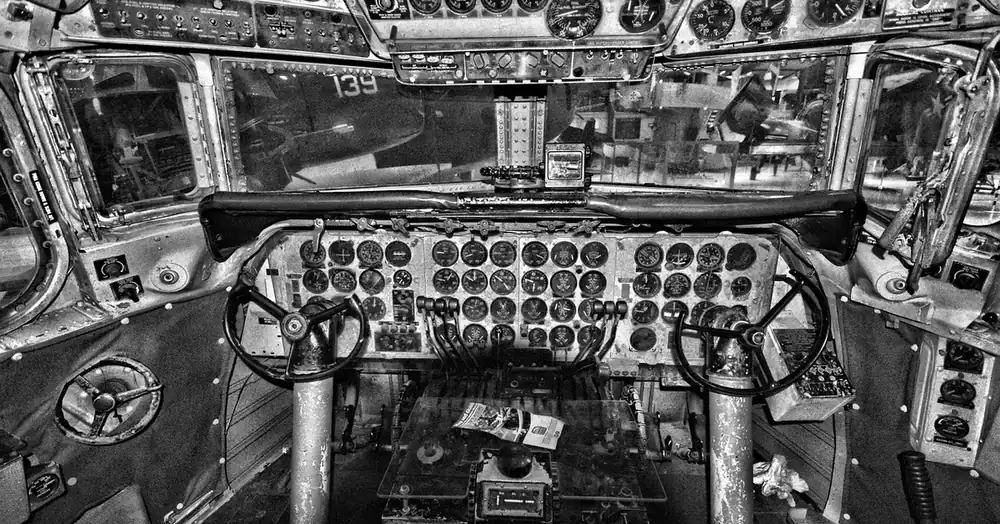
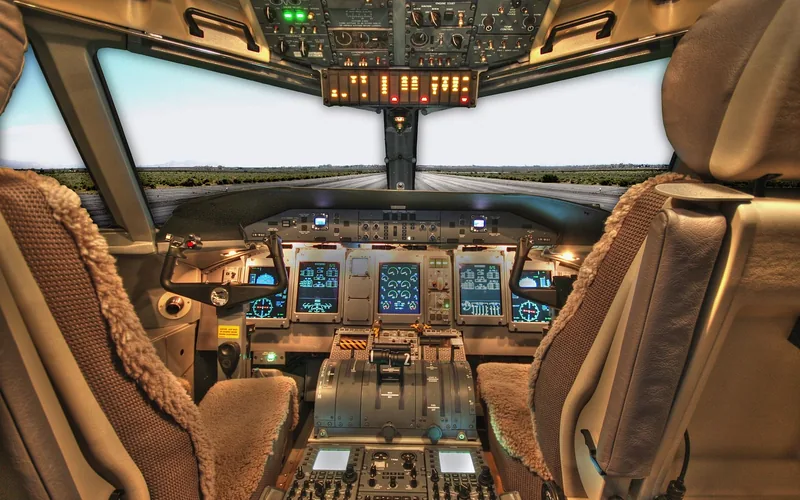
Operating a plane means understanding cockpit complexity and federal aviation regulations at the same time. A typical training aircraft cockpit has dozens of switches, gauges, and controls that a student pilot must learn to scan continuously — airspeed, altitude, heading, fuel state, and engine performance all at once. On top of that, pilots must follow FAA rules covering airspace, radio communication, and safety checklists for every single flight, not just the difficult ones.
The Fundamentals Of Driving A Car
The fundamentals of driving a car come down to control and navigation. Drivers must constantly monitor their lane position and adjust for traffic, even with cruise control engaged, since cruise control only holds speed — it does not steer or brake. By contrast, a plane in cruise flight on autopilot needs far fewer of these constant minor corrections. Most new drivers today learn on an automatic transmission first (see our guide on how to drive an automatic transmission car), which removes clutch and gear-shift timing from the list of things a beginner has to think about — there is no equivalent shortcut in flight training.

How Many Hours Does It Take To Become A Pilot vs. A Driver?
The clearest, most concrete difference between the two skills is hours of required training — and it is not close. Becoming a licensed pilot is governed by a single federal standard nationwide; becoming a licensed driver is set state by state, and in most states adults face no logged-hour requirement at all.
| Requirement | Private Pilot (FAA) | New Driver (Typical State) |
|---|---|---|
| Minimum training hours | 40 hours (Part 61) | 30–50 supervised hours (teens; varies by state) |
| Governing standard | Federal (FAA), same nationwide | State-by-state; no federal minimum |
| Adult applicants | Same 40-hour minimum applies | Most states require zero logged hours |
| Hours for real competency | 60–70 hours (national average) | No standard measure |
According to the Federal Aviation Administration, a private pilot certificate requires at least 40 total flight hours, including 20 hours of instruction and 10 hours solo, plus specific cross-country, night, and instrument time. There is no equivalent federal driving requirement — states set their own rules, and most only apply hour minimums to teen drivers, not adults.
Training And Certification
Beyond the hour count, the pilot training process and driver’s education differ in structure, not just length. Pilot training includes ground school, supervised flight training, a written FAA Knowledge Test, and a final checkride with an FAA-designated examiner before a license is issued. Driver’s education typically means a classroom or online course, a permit period, and a single road test with a state examiner — a process most people complete in a few months, compared to the average several months to a year it takes to earn a private pilot certificate.
The Role Of Technology In Operation
Automation changes the workload in both cockpits and cars, but not in the same way. Modern aircraft autopilot can hold altitude, heading, and airspeed simultaneously once a plane is trimmed for cruise flight, letting a pilot shift attention to communication and situational awareness. Car driver-assist features like adaptive cruise control and lane-keep assist help with individual tasks, but they still require the driver’s hands and eyes engaged — they are driver aids, not a substitute for active control the way autopilot can be in stable cruise flight.
“Unlike a car, an airplane in cruise flight does not require constant minor corrections if it is on autopilot. However, unquestionably flying is more complicated and demanding than driving.”
Situational Awareness In The Sky And On The Road
Both flying and driving demand situational awareness, but the sources of information differ. Pilots constantly communicate with air traffic control to track nearby aircraft and hazards, and they generally have a much greater range of visibility than a driver does. Drivers, meanwhile, must continuously monitor nearby vehicles at close range and anticipate sudden moves with far less advance warning than a pilot typically gets from ATC.
Risk And Responsibility
Flying carries a higher level of responsibility than driving in most respects. A pilot is accountable for the safety of every passenger onboard, plus anyone on the ground below, and errors during critical phases like takeoff and landing leave very little room to recover. Driving carries real risk too, but a driver’s mistakes are usually more survivable and more immediately correctable than a pilot’s.
📊 General aviation has about 9.5 fatal accidents per million flight hours, versus roughly 0.6–0.7 per million hours behind the wheel — meaning flying is statistically riskier per hour in the air. But because so few people fly compared to how many drive, total driving deaths (over 30,000 a year in the U.S.) still vastly outnumber total aviation deaths (around 400 a year). Source: NTSB General Aviation Accident Dashboard, 2012–2021
Personal Stories And Perspectives
Ask pilots and drivers directly and the answer gets more personal. Some pilots argue that flying feels easier than driving once an aircraft is trimmed and stable in cruise, since it needs fewer constant corrections than a car in traffic. Drivers counter that driving is more intuitive and requires far less formal training to start. Both viewpoints are really describing different phases of each activity — cruise flight versus stop-and-go traffic — which is why “which is harder” depends heavily on which moment you compare. If you enjoy comparing high-skill, high-stakes activities like this, our look at racing cars vs. skydiving covers a similar trade-off between skill, training, and risk.
Frequently Asked Questions
Is flying a plane as easy as driving a car?
No. According to retired airline captain John Cox, flying is unquestionably more complicated and demanding than driving, even though an airplane in cruise flight on autopilot needs fewer constant corrections than a car does. The harder parts of flying — takeoff, landing, and instrument monitoring — have no everyday driving equivalent.
How many hours does it take to become a pilot?
The FAA requires a minimum of 40 logged flight hours for a private pilot license under Part 61, including 20 hours of instruction and 10 hours solo. Most student pilots actually need 60 to 70 hours to reach real competency, according to flight schools — far more than the 30 to 50 supervised hours most states require for a teen driver’s license.
Is flying or driving more dangerous?
It depends on how you measure it. Per hour flown or driven, general aviation has a higher fatality rate than driving — about 9.5 fatal accidents per million flight hours versus roughly 0.6 to 0.7 per million hours behind the wheel. But because so few people fly compared to how many drive, driving causes far more total deaths each year: over 30,000 annually versus around 400 in general aviation, per NTSB data.
Is autopilot the same as cruise control?
No. Cruise control only holds a car’s speed steady — the driver still steers, brakes, and watches traffic. Autopilot can hold an aircraft’s altitude, heading, and speed simultaneously in cruise flight, but a pilot must still monitor instruments, communicate with air traffic control, and take over immediately if something changes.
What is the hardest part of flying a plane?
Takeoff, landing, and approach are the hardest parts of flying, not cruising. Landing alone involves managing airspeed, descent rate, wind correction, and the traffic pattern at the same time, and conditions like crosswinds or low visibility make it significantly harder. Cruise flight, once trimmed and on autopilot, requires far less constant input than driving in traffic.
Do you need a license to fly a small plane?
Yes. Even the smallest single-engine aircraft requires at least a private pilot certificate to fly legally as pilot in command, which means passing an FAA written exam, a checkride with an examiner, and logging the required flight hours. There is no equivalent to simply practicing in an empty parking lot — flight training happens with a certified instructor from the first lesson.
Conclusion
Flying a plane and driving a car both demand attention and skill, but they are not equally demanding overall. Flying requires more technical knowledge, more federally regulated training hours, and more precision during critical phases like takeoff and landing, while driving is learned faster but performed far more often, in closer quarters, with far less advance warning.
The honest answer is that flying is harder to learn and higher-stakes per hour, while driving is riskier in raw numbers simply because so many more people do it. Both deserve real respect — and real training — either way.
Products related to this article
Sponsored / affiliate links. As an Amazon Associate I earn from qualifying purchases. I may earn additional commission from eligible campaigns.
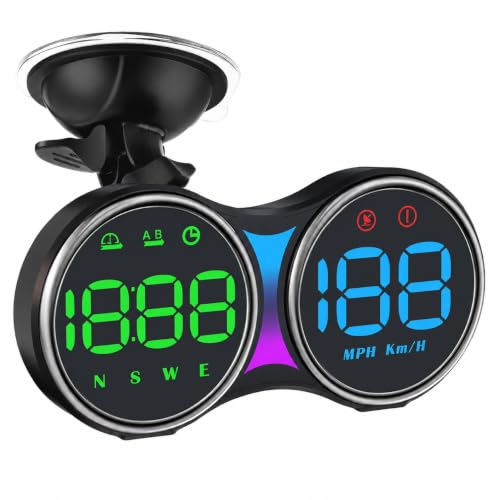 GPS Speedometer for Car, Universal MPH HUD Heads Up Display with Large Digital Screen Overspeed Alarm & Fatigue Driving Alert USB Powered Compatible with All Vehicles
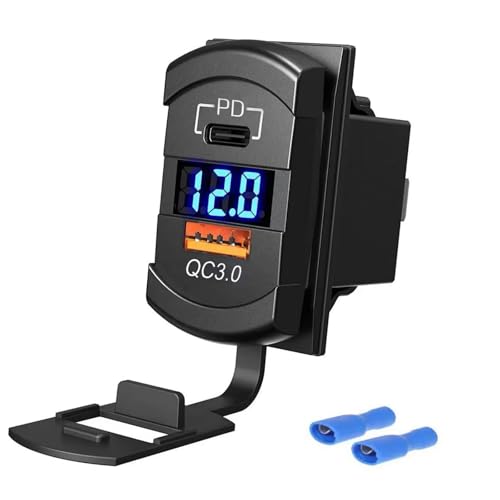 Car Charging Adapter Double USB Ports 12V 24V 36W Power with Voltages Monitor for Trucks Cars SUVs Motorcycles Fast Charging Car Adapter