How Many Cars Are in the US? 297.5 Million (2026)
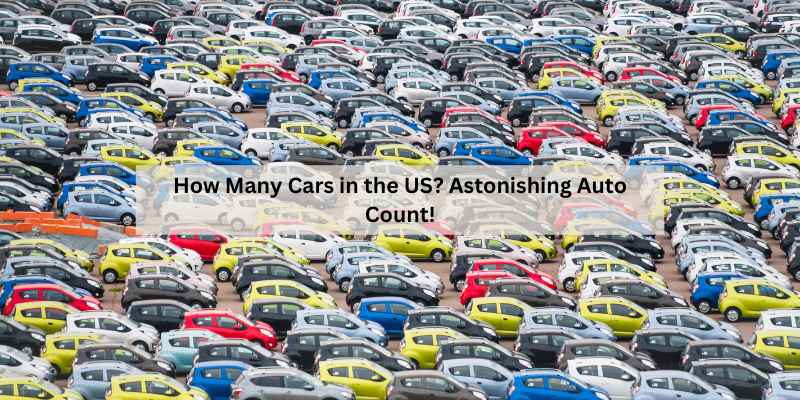
Traffic reports and dealership ads throw around big numbers, but the real figure surprises most people. There are roughly 297.5 million registered vehicles in the United States as of 2026, according to Hedges & Company’s vehicles-in-operation (VIO) data, with the Federal Highway Administration’s own records running a bit lower once you sort by exact category. That works out to nearly one vehicle for every American, spread across cars, pickup trucks, SUVs, and motorcycles.
The exact count depends on who’s counting and what gets included. Below is a breakdown of the current total, how it’s split across states and households, and how the number has changed over the past century.
How Many Registered Vehicles Are in the US in 2026?
Because “registered vehicle” can mean different things — passenger cars only, or cars plus trucks, motorcycles, and commercial vehicles — you’ll see a range of totals depending on the source. Here’s how the major counts compare:
| Source | Estimated Total | What It Includes |
|---|---|---|
| Hedges & Company (VIO, 2026) | ~297.5 million | All light, medium, and heavy-duty vehicles, including classics and pre-1982 models |
| Federal Highway Administration (Highway Statistics, latest filing) | ~284–286 million | State-reported private and commercial registrations, official government count |
| Households with at least one vehicle | ~124.5 million households | 92% of all US households own at least one car (2026) |
The gap between the two headline figures isn’t a mistake — it comes down to methodology. Hedges & Company pulls from state DMV and insurance data year-round and includes older vehicles that some state reports drop, while the FHWA’s official Highway Statistics series is published on a delay (its most recent full dataset reflects 2024 registrations) and uses stricter state-by-state reporting rules. Most industry researchers treat the true figure as somewhere in the high 280s to high 290s of millions.

Cars Per Household: How Many Vehicles Does the Average American Own?
About 92% of US households own at least one vehicle, leaving roughly 8% carless — mostly concentrated in dense cities with strong public transit. Among households that do own a car, ownership skews toward two or more vehicles rather than just one.
| Number of Vehicles Owned | Share of Car-Owning Households |
|---|---|
| One vehicle | ~33% |
| Two vehicles | ~32–37% |
| Three or more vehicles | ~15–22% |
Geography drives most of the variation. Delaware, with its small size and dense population centers, averages closer to 1.1 vehicles per household — among the lowest in the country. Montana sits at the opposite extreme, averaging 5.2 vehicles per household, reflecting long rural commutes, farm and ranch equipment, and limited public transit options across the state.
Which US States Have the Most Registered Vehicles?
Vehicle totals track population size fairly closely, so the country’s most populous states also lead the registration rankings by a wide margin.
| Rank | State | Registered Vehicles |
|---|---|---|
| 1 | California | ~31.1 million |
| 2 | Texas | ~23.5 million |
| 3 | Florida | ~19.5 million |
| 4 | Ohio | Top 5 nationally |
| 5 | Pennsylvania | Top 5 nationally |
Together, California, Texas, and Florida account for more than a quarter of every registered vehicle in the country. That’s a meaningful shift from older estimates that put New York in the top three — population growth in the Sun Belt, combined with New York’s shrinking share of national car ownership, has pushed New York well outside the top tier.

How Has the Number of Cars in the US Changed Over Time?
Car ownership in the US went from a rarity to a near-universal norm in just a few generations. In 1900, fewer than 8,000 automobiles were registered nationwide. By 1950, mass production and the postwar economic boom had pushed that number past 25 million. It crossed 230 million by 2000, and has climbed roughly 25–30% further since then.
For a full decade-by-decade breakdown of that growth — including what drove each major jump — see our companion piece on registered vehicles in the US from 1900 to 2023.
Electric Vehicles and the Changing Vehicle Count
Electric and hybrid vehicles are a growing slice of the total fleet, but they haven’t slowed overall growth — if anything, the total vehicle count keeps climbing as EVs get added on top of the existing gas-powered fleet rather than replacing it one-for-one. Average vehicle age is also rising: the typical car on US roads is now about 12.8 years old, the oldest average on record, as buyers hold onto vehicles longer amid higher new-car prices.
Ride-sharing and car-subscription services have grown too, but they haven’t meaningfully reduced total registrations — most shared vehicles are still individually registered, just used more intensively.
“Whenever we’re asked for ‘the’ number of cars in the US, we give a range instead of a single figure — anyone claiming an exact headcount down to the last vehicle is rounding more than they’re letting on. What’s clear across every credible source is the trend: the fleet keeps growing, and it’s aging as it grows.”
Frequently Asked Questions
How many cars are registered in the United States?
As of 2026, there are approximately 297.5 million registered vehicles in the United States, according to Hedges & Company’s vehicles-in-operation data. The Federal Highway Administration’s official count, which uses a narrower definition and lags by about a year, puts the figure closer to 284–286 million.
How many cars does the average American household have?
Most car-owning households in the US have two vehicles. About 33% own one car, roughly a third own two, and the remaining share own three or more. Only about 8% of US households have no vehicle at all, and that group is concentrated in cities with strong public transit.
Which state has the most registered vehicles?
California has the most registered vehicles of any US state, with roughly 31.1 million. Texas ranks second at about 23.5 million, and Florida ranks third with around 19.5 million. Together, those three states account for more than a quarter of all vehicles registered nationwide.
Is the number of cars in the US still growing?
Yes. The total vehicle count has grown almost every year for the past century, and it’s still climbing in 2026. Population growth, a rising number of multi-vehicle households, and the addition of electric vehicles on top of the existing gas-powered fleet are all contributing to continued growth rather than a plateau.
How many cars are there per person in the US?
With roughly 297.5 million registered vehicles and a US population of about 342 million, that works out to close to 0.87 vehicles per person — among the highest vehicle-to-population ratios of any large country in the world.
Why do different sources report different totals for US vehicles?
Totals vary because sources define “registered vehicle” differently and pull from different timeframes. Hedges & Company’s VIO data includes classic, pre-1982, and heavy-duty vehicles and is refreshed frequently, while the FHWA’s official Highway Statistics series only counts state-reported private and commercial registrations and is published on roughly a one-to-two-year delay.
Conclusion
The honest answer to “how many cars are in the US” is a range, not a single number: roughly 297.5 million by the most current industry estimate, or a bit under 286 million by the federal government’s own slower-moving count. Either way, the US fleet keeps growing year over year, and the typical car on the road is older than it’s ever been. For the full history behind that growth, see our 1900-2023 registered vehicle timeline, or compare the US total to the rest of the world in our global car count breakdown.
Products related to this article
Sponsored / affiliate links. As an Amazon Associate I earn from qualifying purchases. I may earn additional commission from eligible campaigns.