Is It Legal to Cover Your Car in Christmas Lights? State Laws Explained
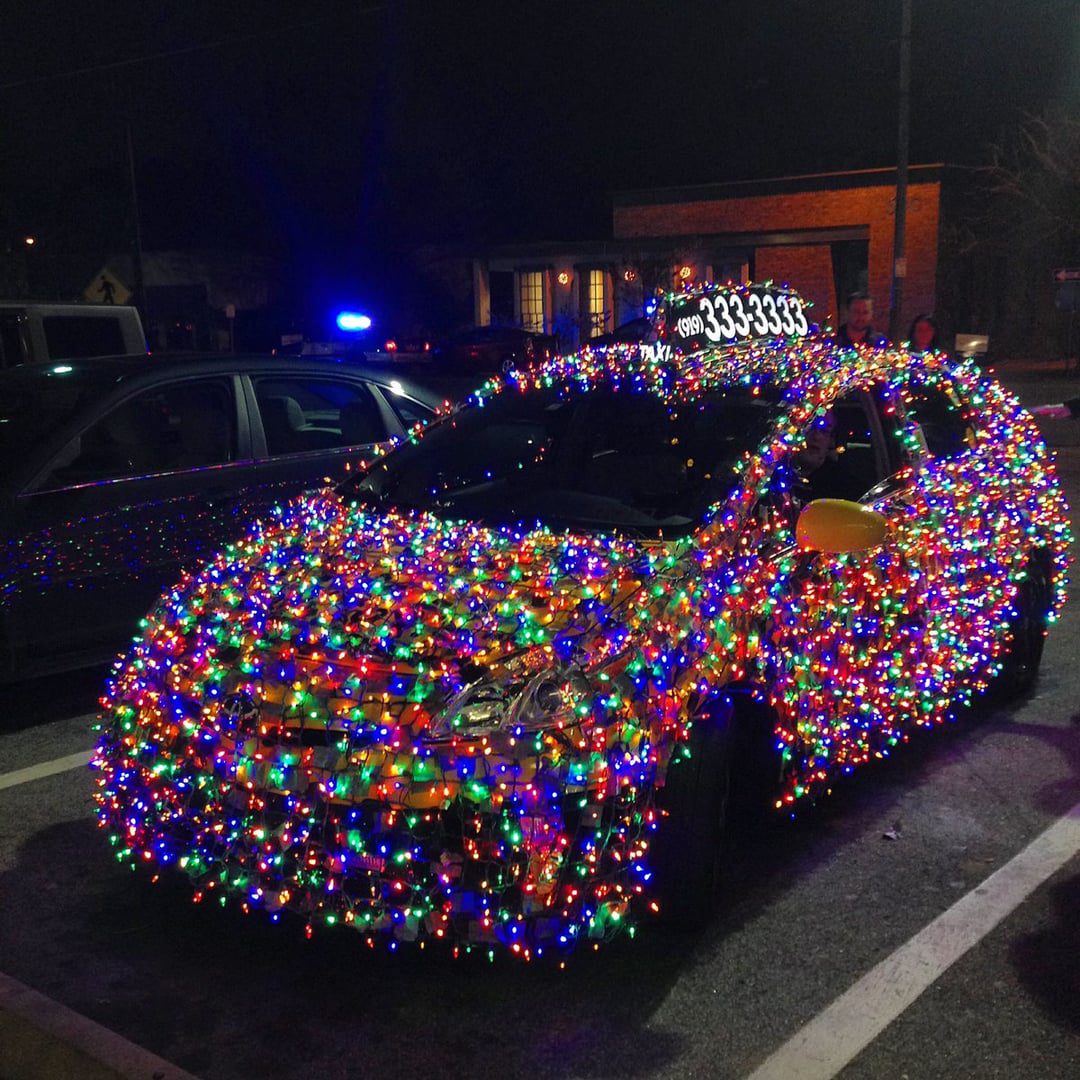
Quick answer: Decorating a parked car with Christmas lights is generally legal almost everywhere. Driving with those lights lit on public roads is a different story – most states restrict light color, flashing patterns, and anything that blocks your view or your license plate, and those rules can turn a fun display into a ticket.
Search “is it legal to cover your car in Christmas lights” and you will find confident answers on both sides. The truth depends on one detail almost every article skips: whether the car is sitting still or moving. Laws also vary a lot by state, so a rule that applies in Texas will not always apply in Maine, California, or Pennsylvania. Here is what actually matters before you plug in.
Parked Display vs. Driving With the Lights On
There is no federal or state law against decorating a car with Christmas lights while it sits in your driveway. That is a static display, not a moving vehicle, so vehicle equipment laws generally do not apply to it – the same way they do not apply to an inflatable lawn Santa.
The legal risk shows up the moment you start driving with the lights lit. At that point, your car is subject to the same vehicle lighting rules as headlights, taillights, and turn signals, and most states never wrote an exception for holiday decorations.
SAFEST WAY TO DECORATE A PARKED CAR
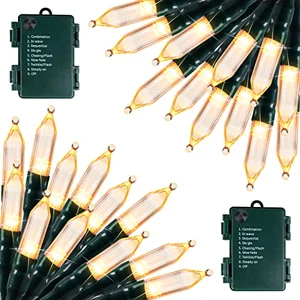 |
Brightown Battery Operated Christmas Lights, 2-Pack 18 Ft – $16.99 Runs on 3 AA batteries instead of your car’s electrical system, so there is no wiring, no battery-drain risk, and nothing to disconnect before you drive.
|
What Vehicle Lighting Laws Actually Restrict
Every state regulates the lights a vehicle can display while it is being operated on a public road. The specific wording differs, but the same handful of principles show up almost everywhere:
- Color restrictions: Red, blue, and sometimes white flashing or rotating lights are usually reserved for police, fire, and other emergency vehicles. Most states bar ordinary drivers from displaying them at all.
- No flashing or strobing: Many states specifically ban flashing lights on a vehicle in motion because they can be mistaken for an emergency vehicle or a turn signal malfunction.
- No obstruction: Lights cannot cover your license plate, headlights, taillights, turn signals, or windows, and cannot block your view of the road.
- Brightness limits: Some states cap how many high-intensity lamps can be lit on the front of a vehicle at once.
How State Laws Differ (a Few Real Examples)
There is no single nationwide “Christmas lights on cars” law, so the same display can be perfectly fine in one state and a citation waiting to happen in another. Two states with clearly documented rules:
| State | What the law restricts |
|---|---|
| Texas | Transportation Code §547.305 bars red, blue, or flashing/alternating lights on an ordinary vehicle, and §547.302 caps how many high-intensity front lamps can be lit at once. Small, steady, non-red string lights are generally tolerated as long as they do not block plates, lamps, or your view. |
| Florida | Florida Statutes bar flashing lights and red, white, or blue lights on a vehicle. Non-flashing lights in other colors are allowed as long as visibility and required equipment are not obstructed. |
Maine, California, Pennsylvania, and most other states enforce the same core ideas – no red/blue/flashing lights, no obstructed plates or lamps, no blocked view – through their own vehicle codes, even where the exact wording differs. If you are decorating in a specific state, check that state’s DMV or department of transportation site rather than assuming Texas or Florida’s rule applies to you.
Is It Legal to Drive With Christmas Lights on Your Car?
In most states, no – not if the lights are lit while you are driving. The restrictions above (color, flashing, obstruction) apply the moment the car is on a public road, whether it is Christmas Eve or any other night of the year. A car wrapped in lights for a driveway display, a holiday parade with a permit, or a slow-moving neighborhood lights tour is a very different situation from commuting to work with the same lights on.
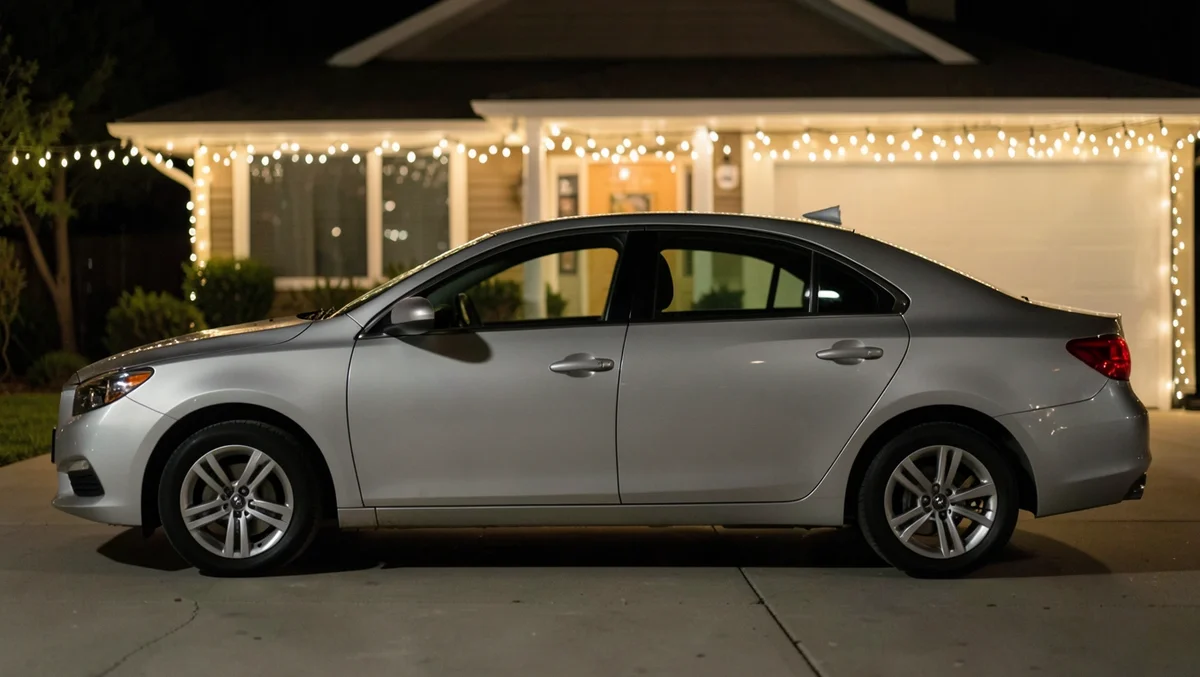
The practical takeaway: keep a fully lit-up car parked, and turn the lights off (or remove them) before you actually drive anywhere.
Battery Drain, Fire Risk, and Other Safety Concerns
Legality aside, wiring Christmas lights straight into your car’s 12-volt battery is the fastest way to end up with a dead battery on Christmas morning. String lights draw power the whole time they are lit, and a car battery is not designed to run accessories for hours on end without the engine running.
Overheated or damaged light strands are a real fire risk too, especially with older incandescent sets left outdoors in the cold. Use lights rated for outdoor use, check the wiring and connections before you hang them, and skip anything with cracked casing or exposed wire.
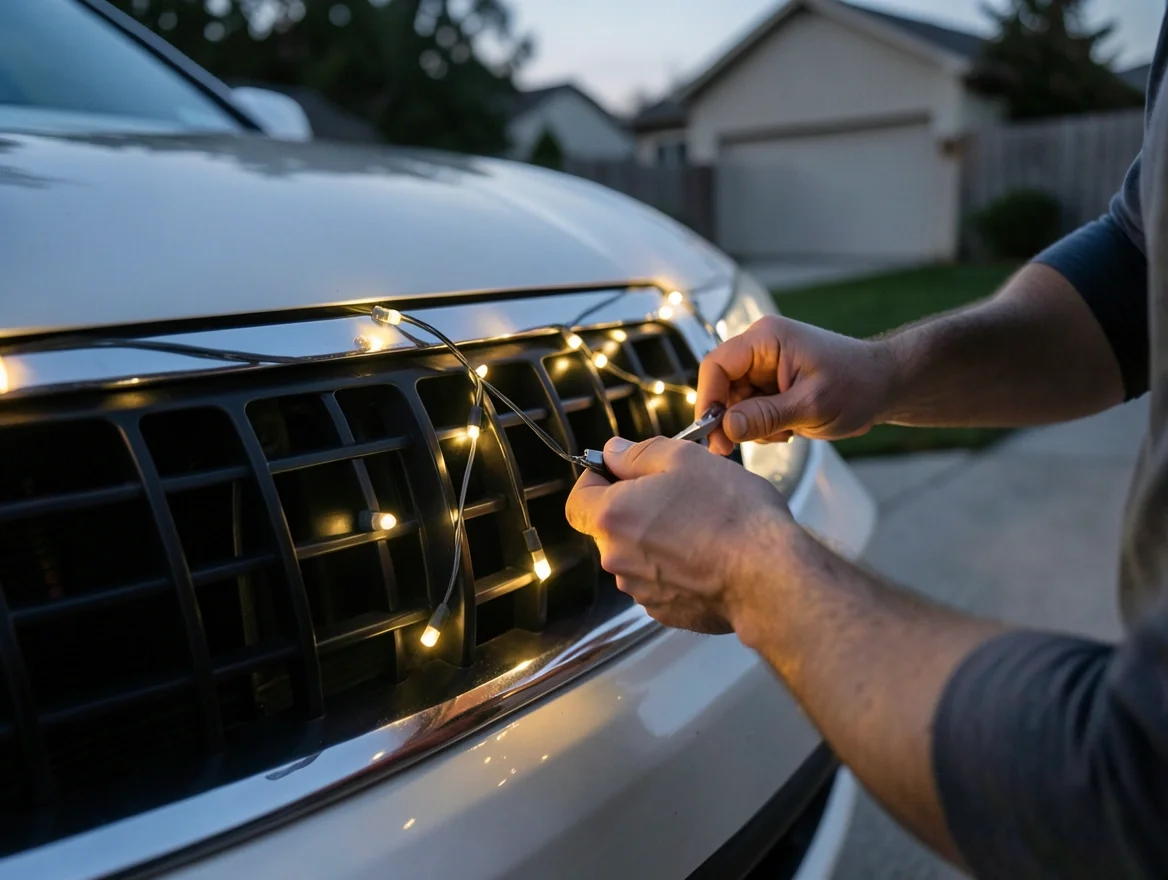
- Choose battery-operated or solar LED lights instead of anything wired to the car battery – they use a fraction of the power and cannot drain your car.
- Secure lights with clips or magnetic mounts, not tape, which can pull paint off when removed.
- Keep lights away from the exhaust, engine bay, and moving parts like wipers or fan blades.
- Never let lights cover the license plate, headlights, taillights, or your windshield view.
Insurance and Legal-Friendly Alternatives
Most auto insurance policies do not cover damage a driver causes to their own car, and that usually includes paint scuffs or electrical issues from a light display you installed yourself. If you are draping a lot of lights on a car you care about, it is worth a quick call to your insurer to confirm what is and is not covered before something goes wrong.
If you would rather skip the wiring and the legal gray areas entirely, magnetic car decorations (stars, snowflakes, wreaths) and window clings give you a festive look with zero installation risk. They go on in seconds, leave no marks, and are not subject to any of the lighting restrictions above since they do not involve lights at all.
For the broader picture on what colors and types of aftermarket lighting are legal on a car year-round – underglow, colored headlight bulbs, light bars, and more – see our guide on whether it is illegal to have lights on your car. This guide focuses specifically on holiday string-light displays; that one covers vehicle lighting law more broadly.
Frequently Asked Questions
Can You Cover a Parked Car With Christmas Lights?
Yes. There is no law against decorating a car with Christmas lights while it is parked and not being driven. Use battery-operated or solar LED lights, secure them with clips instead of tape, and keep them away from the exhaust and moving parts.
Is It Illegal to Drive With Christmas Lights on Your Car?
In most states, yes, if the lights are lit while you drive. Vehicle lighting laws that apply to headlights and turn signals also apply to decorative lights on a moving car, so red, blue, or flashing lights and anything that blocks your plate or view can result in a ticket.
Can You Get Pulled Over for Having Christmas Lights on Your Car?
Yes, if you are driving with lights that violate your state’s vehicle lighting rules – most commonly red, blue, or flashing lights, or lights that obstruct your license plate or required lamps. A parked car with lights on for display is not something an officer would pull over.
Is It Legal to Put String Lights on Your Car in Texas?
There is no Texas law that bans small string lights on a parked car. While driving, Texas Transportation Code §547.305 prohibits red, blue, or flashing/alternating lights, and §547.302 limits how many high-intensity lamps can be lit on the front of the vehicle at once. Steady, non-red lights that do not block your plate or view are generally fine.
What Colors of Car Lights Are Illegal?
Red and blue are restricted in nearly every state because they are reserved for emergency vehicles. Many states also restrict flashing or strobing lights of any color on a vehicle in motion. Steady white, warm white, or multicolor lights are generally the safest choice for a legal display.
Will Christmas Lights Drain My Car’s Battery?
They can, if you wire them directly into your car’s 12-volt battery instead of using a separate power source. Battery-operated or solar LED string lights avoid this problem entirely because they never draw from the car at all.
Conclusion
Covering a parked car in Christmas lights is festive, safe, and legal almost everywhere. The rules only kick in once you start driving with those lights lit, at which point ordinary vehicle lighting laws – no red/blue/flashing colors, no obstructed plates or view – take over. Check your specific state’s rules if you plan to drive with any lights on, use battery-powered LEDs to protect your car’s battery, and enjoy the display.
Products related to this article
Sponsored / affiliate links. As an Amazon Associate I earn from qualifying purchases. I may earn additional commission from eligible campaigns.