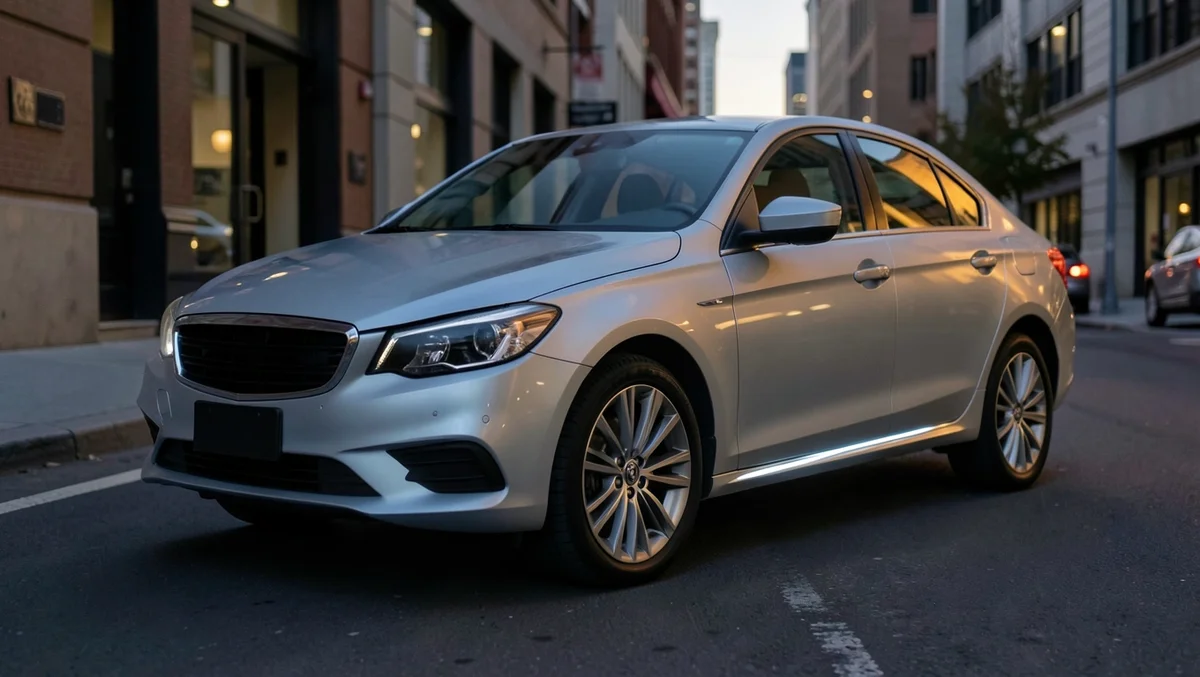
Is It Illegal to Have Lights on Your Car? Colors & State Rules
Is it illegal to have lights on your car? It depends on the color, not just whether you have them. White and amber lights on the front of your car and red lights on the back are legal in every state. Blue and red lights, flashing lights, and colorful underglow kits are a different story — eight states ban underglow outright, and the rest restrict it by color and placement.
Quick Answer
White and amber lights up front and red lights in the rear are legal nationwide under federal rule FMVSS 108. Blue, red-facing-forward, green, and flashing lights are illegal for regular drivers almost everywhere. Underglow (neon lighting under the car) is banned entirely in eight states — Connecticut, Illinois, Maine, Massachusetts, Michigan, Minnesota, Pennsylvania, and Washington — and allowed with color/brightness limits elsewhere.
Different states and countries treat car lighting differently, and a color that’s fine in one place can get you pulled over in the next. Below is what federal law actually requires, which states ban underglow, which colors are off-limits everywhere, and where LED conversion kits create a separate legal risk of their own.
What Federal Law Says About Car Lights (FMVSS 108)
Every car sold in the U.S. has to meet Federal Motor Vehicle Safety Standard 108 (FMVSS 108), the rule that governs exterior lighting. It’s the baseline every state builds its own vehicle code on top of. The core idea is simple: other drivers need to be able to tell your car’s size, direction, and intent at a glance, so certain colors are locked to certain positions.
- Front-facing lights must be white or amber — headlights, fog lights, and any auxiliary lighting visible from the front.
- Rear-facing lights must be red, matching brake lights and taillights.
- Flashing, rotating, or oscillating lights are prohibited on civilian vehicles in nearly every state, since flashing is how emergency vehicles signal an active response.
- Blue lights are reserved for law enforcement and, in some states, volunteer firefighters — not for regular drivers, in any position.
States can add rules on top of FMVSS 108, but they can’t contradict it. That’s why the color restrictions below are consistent everywhere, even though the exact fines and enforcement vary by state.
Legal in All 50 States
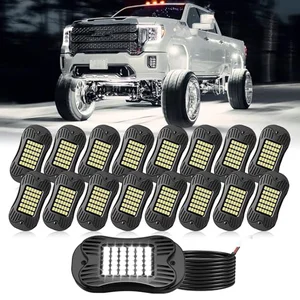 |
SHINIGHT 16 Pod White LED Rock Lights – $51.99 If you want underbody or accent lighting without the state-by-state guesswork below, pure white is the one color no state restricts.
|
Is Underglow Legal? It Depends on Your State
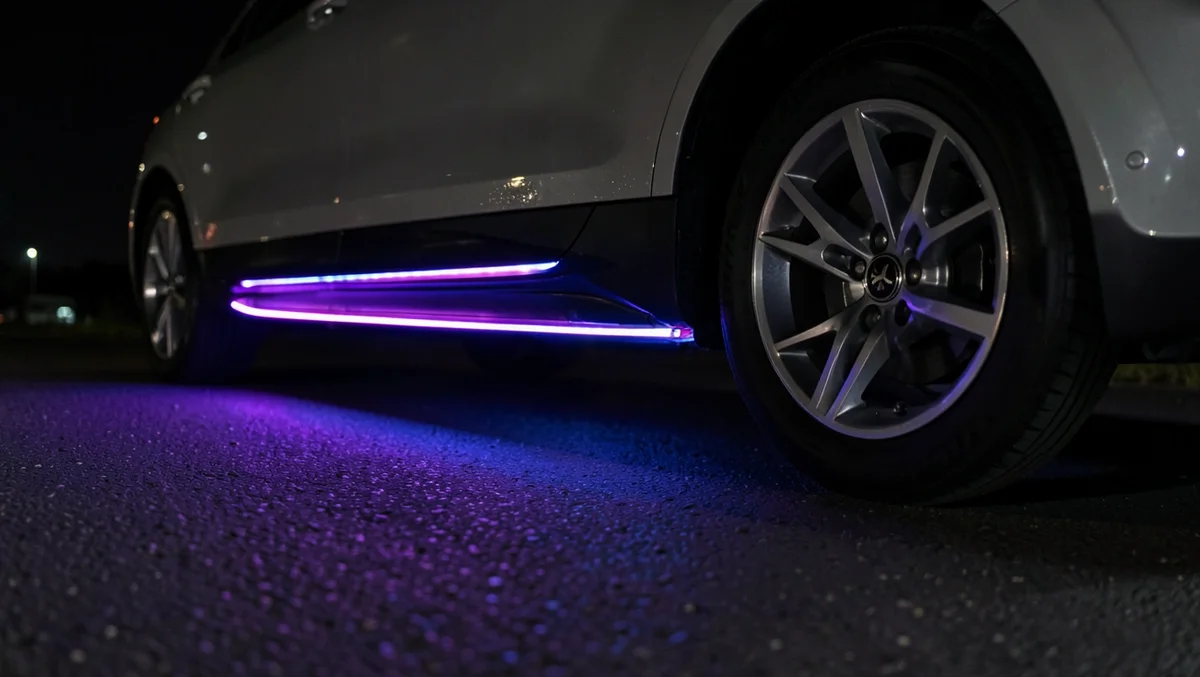
Underglow — the colored neon or LED strips mounted along the underside of a car — is legal in most states with restrictions, but a handful of states ban it by name or effectively ban it through their general lighting statutes. As of this year, Connecticut, Illinois, Maine, Massachusetts, Michigan, Minnesota, Pennsylvania, and Washington forbid underglow lighting outright.
In states that do allow it, the restrictions usually cover color, brightness, and how close the lights sit to your required headlights and taillights. A few real examples:
- California allows underglow up to 0.05 candela per square inch, and it can’t be installed within 12 inches of a required headlight or taillight.
- Arizona only allows amber or white underglow, with no glare visible to other drivers.
- New York permits underglow, but only in white, and it can’t rotate, flash, or oscillate.
If your state isn’t one of the eight bans above, that doesn’t automatically mean anything goes — check your state’s vehicle code for the specific color and brightness limits before you install anything, since the rules above are examples, not a nationwide standard.
Which Car Light Colors Are Legal?
Color, more than anything else, decides whether a given light is legal. Here’s how it breaks down for a regular passenger vehicle:
- White — legal on the front of the car (headlights, fog lights, driving lights). Legal almost anywhere else too, including underglow in most states.
- Amber/yellow — legal on the front (fog lights, turn signals) and generally the most widely accepted underglow and accent color after white.
- Red — legal only facing the rear (taillights, brake lights). Illegal facing forward in every state, since a forward-facing red light mimics a brake light in a following driver’s mirror.
- Blue — reserved for law enforcement in essentially every state. Not legal for civilian use in any position, front, rear, or underglow.
- Green — restricted or banned for civilian exterior use in most states; a few reserve it for volunteer firefighters responding to a call.
LED Headlight and Taillight Conversion Kits: A Separate Legal Risk
Underglow isn’t the only lighting mod that can get you a ticket. Aftermarket LED and HID conversion kits for headlights that were designed for halogen bulbs create their own problem, separate from color rules.
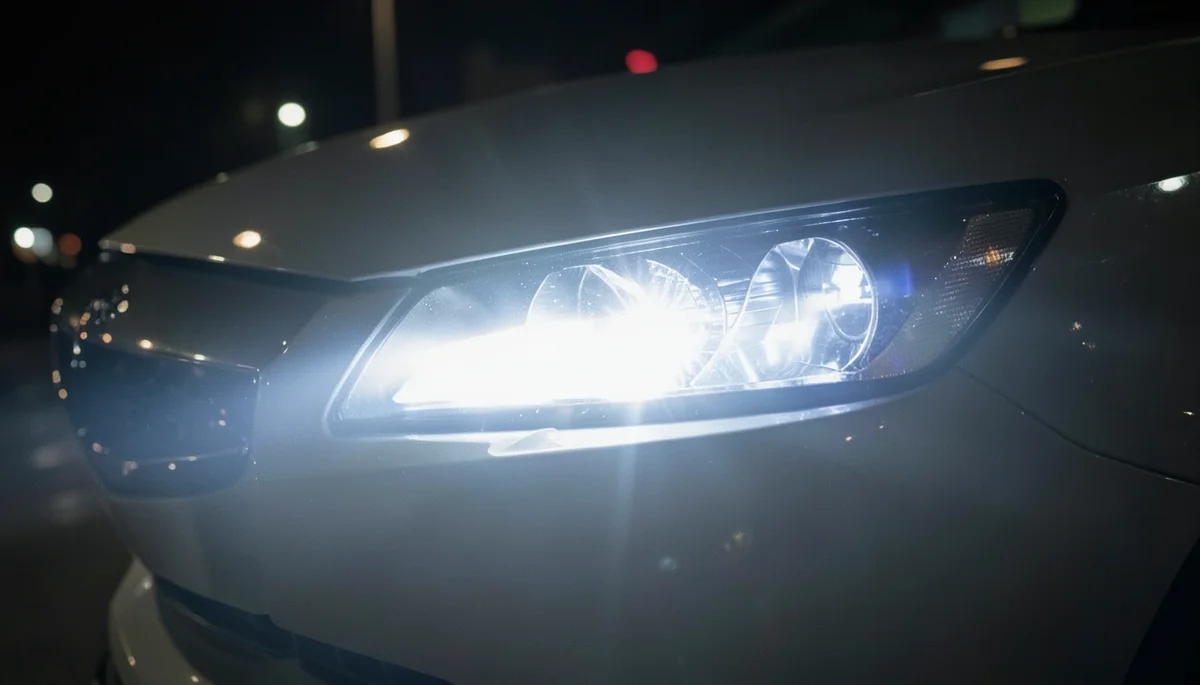
A stock halogen headlight housing has a reflector and lens shaped around the beam pattern of a halogen bulb. Dropping in a much brighter LED or HID bulb without a housing designed for it often scatters the beam instead of focusing it — which is why so many drivers get flashed or flagged down for “blinding” high beams that are technically low beams. Only kits explicitly designed and DOT-compliant for your specific headlight housing avoid this. A generic plug-and-play kit bought for brightness alone frequently isn’t, even if the bulb itself is white.
Several states now cite drivers specifically for excessive headlight glare regardless of the bulb’s color, so “it’s white, so it’s legal” isn’t a complete answer for headlight upgrades the way it is for underglow.
Reserved Colors: Why Red and Blue Are Off-Limits
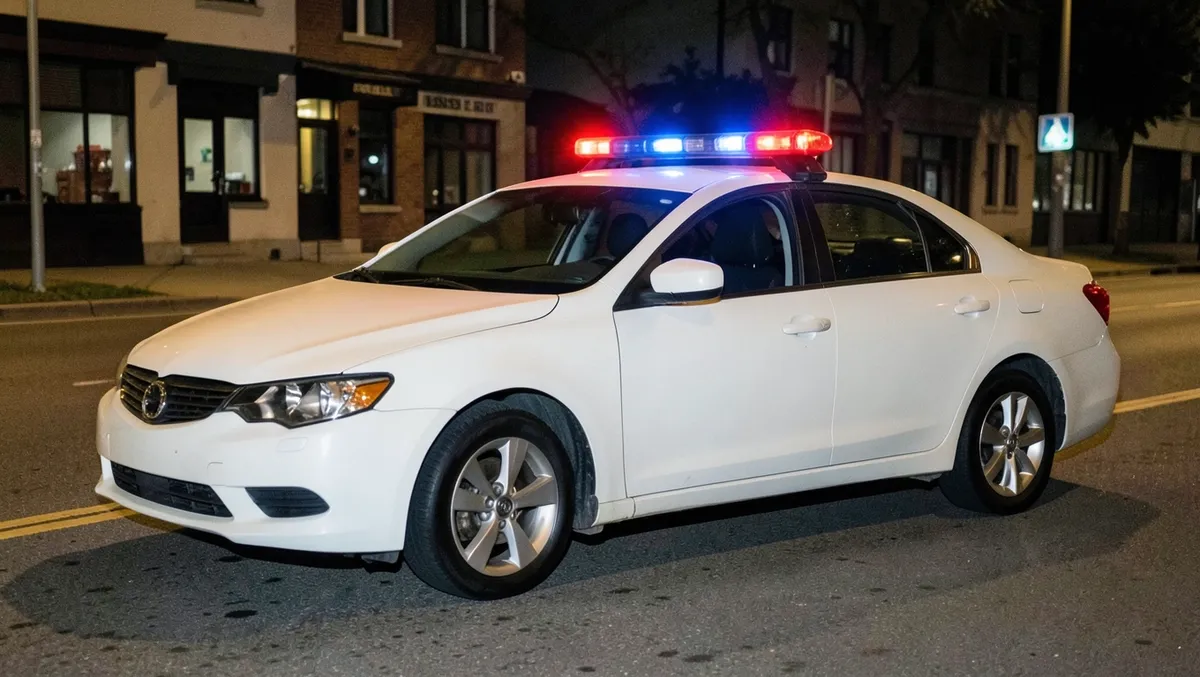
Red and blue flashing lights tell other drivers to pull over and yield right of way — that’s exactly why civilian use of them is treated more seriously than a color-code technicality. Installing red or blue flashing lights on a personal vehicle, or lights that could be mistaken for an emergency vehicle’s, is illegal in every state and can carry criminal charges in some, not just a traffic fine, especially if a driver uses them to get other cars to pull over or yield.
What About Interior Lights or Dome Lights While Driving?
Having your interior dome light on while driving isn’t illegal on its own in most states — it isn’t covered by FMVSS 108’s exterior lighting rules at all. But an officer can still pull you over if a bright interior light is distracting you or creating glare that affects your ability to see the road, generally under a state’s broader distracted- or unsafe-driving statute rather than a lighting-specific one. If you’re using an interior accent light system, keep it dim enough that it doesn’t wash out your view of your mirrors or the road ahead.
Fines and Penalties for Illegal Car Lights
Penalties vary widely by state and by what exactly you’re cited for. A minor equipment violation, like an out-of-spec underglow color in a state that allows it with restrictions, is typically a fix-it ticket or a small fine, often under $100 once corrected. Using red or blue lights, or lights that could be confused for an emergency vehicle, is treated far more seriously in most states and can mean a much larger fine, points on your license, or in some states a misdemeanor charge.
A lighting citation can also affect your insurance the same way any other moving violation can — insurers that see a ticket on your record may raise your premium at renewal. Since the specific dollar amounts are set at the state and even municipal level, check your state DMV’s vehicle code or ask a local traffic attorney for the number that applies where you drive, rather than relying on a single figure that may not match your state.
What About Holiday Lights on a Car?
Everything above covers aftermarket lighting mods you drive with — underglow, LED conversion kits, and colored accent lights. Decorating a parked car with holiday string lights for a display or a parade is a related but different question, with its own set of rules around what’s allowed while the car is actually being driven versus parked and on display. If that’s what brought you here, see our dedicated guide on whether it’s legal to cover your car in Christmas lights.
How to Add Lights to Your Car Legally
- Check your state’s vehicle code first, not a forum thread or a product listing — search “[your state] vehicle code underglow” or “[your state] auxiliary lighting law” for the actual statute.
- Default to white or amber if you want the least legal risk anywhere in the country.
- Never point red or blue lights forward, and never install flashing or rotating lights of any color.
- Keep underglow away from your required headlights and taillights — most states that restrict placement use a distance rule similar to California’s 12-inch minimum.
- Have LED or HID headlight kits installed by a shop familiar with your specific housing, or stick to kits explicitly rated for your exact headlight assembly, to avoid a glare citation even with a “legal” white bulb.
Frequently Asked Questions
Is It Illegal To Put Lights Around Your Car?
It depends on the color and your state. White and amber lights are legal almost everywhere; underglow in other colors is banned outright in eight states (Connecticut, Illinois, Maine, Massachusetts, Michigan, Minnesota, Pennsylvania, Washington) and restricted by color, brightness, or placement in the rest. Flashing, red-facing-forward, or blue lights are illegal on a civilian car in every state.
Can I Have Lights On My Car?
Yes. Every car is required to have working headlights, taillights, brake lights, and turn signals, and you can legally add extra lighting as long as it follows the same color rules: white or amber facing forward, red facing the rear, and no flashing or rotating lights. Check your specific state’s rules before adding underglow or accent lighting beyond that.
Can You Get Pulled Over For Having Your Lights On In The Car?
Yes, but it’s usually under a distracted- or unsafe-driving rule rather than a lighting-specific law. Having your interior dome or accent lights on isn’t illegal by itself, but if it’s bright enough to distract you or create glare that affects your view of the road, an officer can pull you over for it.
Can You Legally Have Police Lights On Your Car?
No. Red and blue flashing lights are reserved for law enforcement and other authorized emergency vehicles in every state. Installing them on a personal vehicle is illegal and can carry more serious penalties than a standard equipment violation, since it risks confusing other drivers about an active emergency response.
Is Underglow Illegal In My State?
Underglow is banned outright in eight states: Connecticut, Illinois, Maine, Massachusetts, Michigan, Minnesota, Pennsylvania, and Washington. In every other state it’s generally allowed but restricted by color and brightness — for example, California caps it at 0.05 candela per square inch and requires it stay 12 inches from required lights, while Arizona and New York limit the color to amber/white or white only. Always check your own state’s vehicle code, since these examples aren’t a nationwide standard.
What Color Headlights Are Legal?
White and amber are the only legal colors for forward-facing headlights and fog lights under federal FMVSS 108, which every state’s vehicle code is built on. Blue-tinted or colored headlight bulbs marketed as a style upgrade are not street legal in the U.S., even if they technically still read as mostly white.
Can I Get a Ticket for LED Headlight Bulbs?
Yes, even white LED bulbs can get you a ticket if the kit wasn’t designed for your specific headlight housing. A halogen housing’s reflector and lens are shaped around a halogen bulb’s beam pattern, so a brighter aftermarket LED bulb dropped into it often scatters light instead of focusing it, which shows up to other drivers as excessive glare. Officers can cite that as a glare or equipment violation regardless of the bulb’s color.
Conclusion
Whether lights on your car are legal comes down to color and your state, more than whether you have them at all. Stick to white and amber up front, red in the back, skip anything flashing or blue, and check your own state’s rules before installing underglow or an aftermarket LED kit. When in doubt, a properly installed, DOT-compliant lighting product and a quick look at your state’s vehicle code will keep you from turning a style upgrade into a traffic stop.
Products related to this article
Sponsored / affiliate links. As an Amazon Associate I earn from qualifying purchases. I may earn additional commission from eligible campaigns.