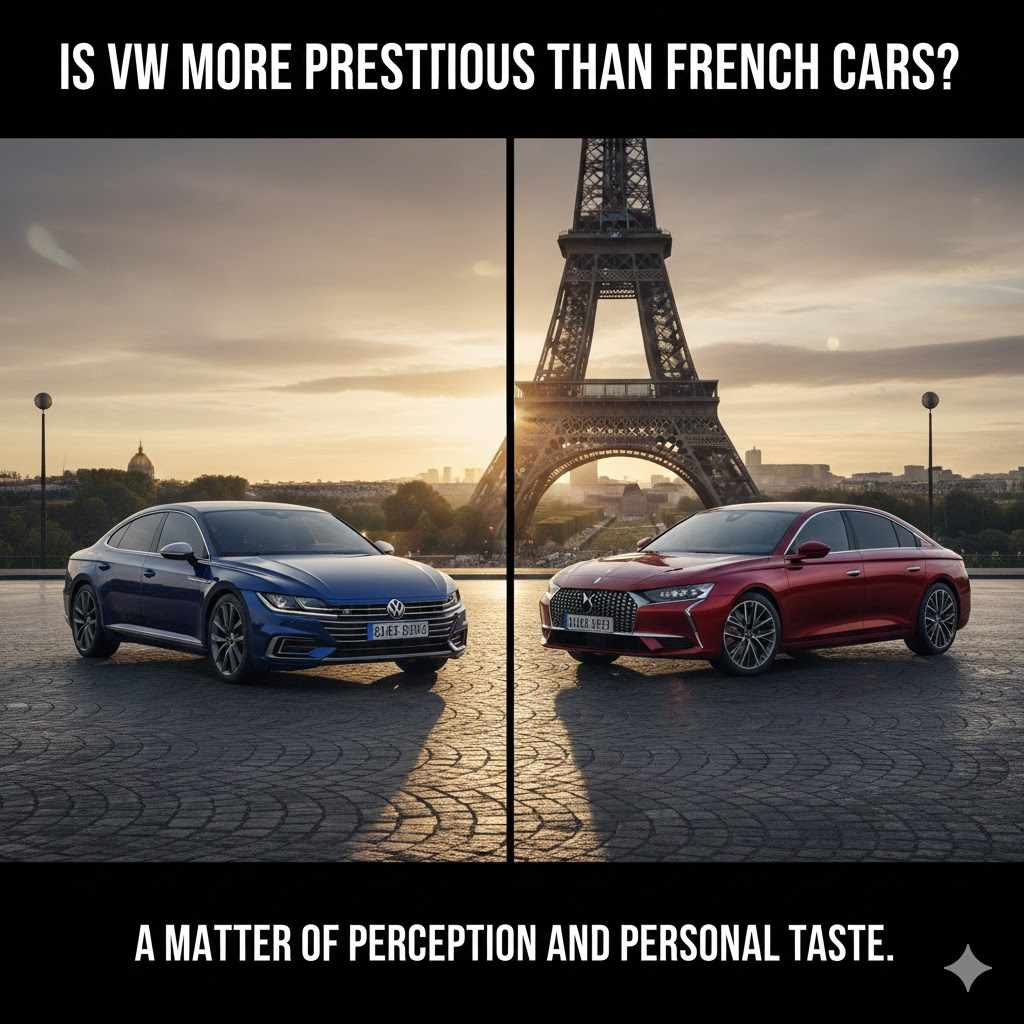
Is VW More Prestigious Than French Cars
Thinking about cars can be a bit tricky, especially when you start comparing brands. People often wonder, Is VW More Prestigious Than French Car Brands? This question pops up because different car makers have different reputations. Some people think one group is fancier than the other.
It might seem hard to figure out the answer, but we’ll make it super easy. We’ll walk through it step-by-step so you can understand it clearly. Let’s start by looking at what makes a car brand seem special.
Understanding Car Brand Prestige
Car brand prestige is all about how people feel about a car company. It’s not just about how much a car costs, but also about its history, how it’s made, and the image it has. Brands that have been around a long time and are known for quality often feel more prestigious.
Think about brands that make very special, high-performance cars, or those that have a long history in racing. These things build up a brand’s reputation over many years, and that’s what makes people think of them as high-status.
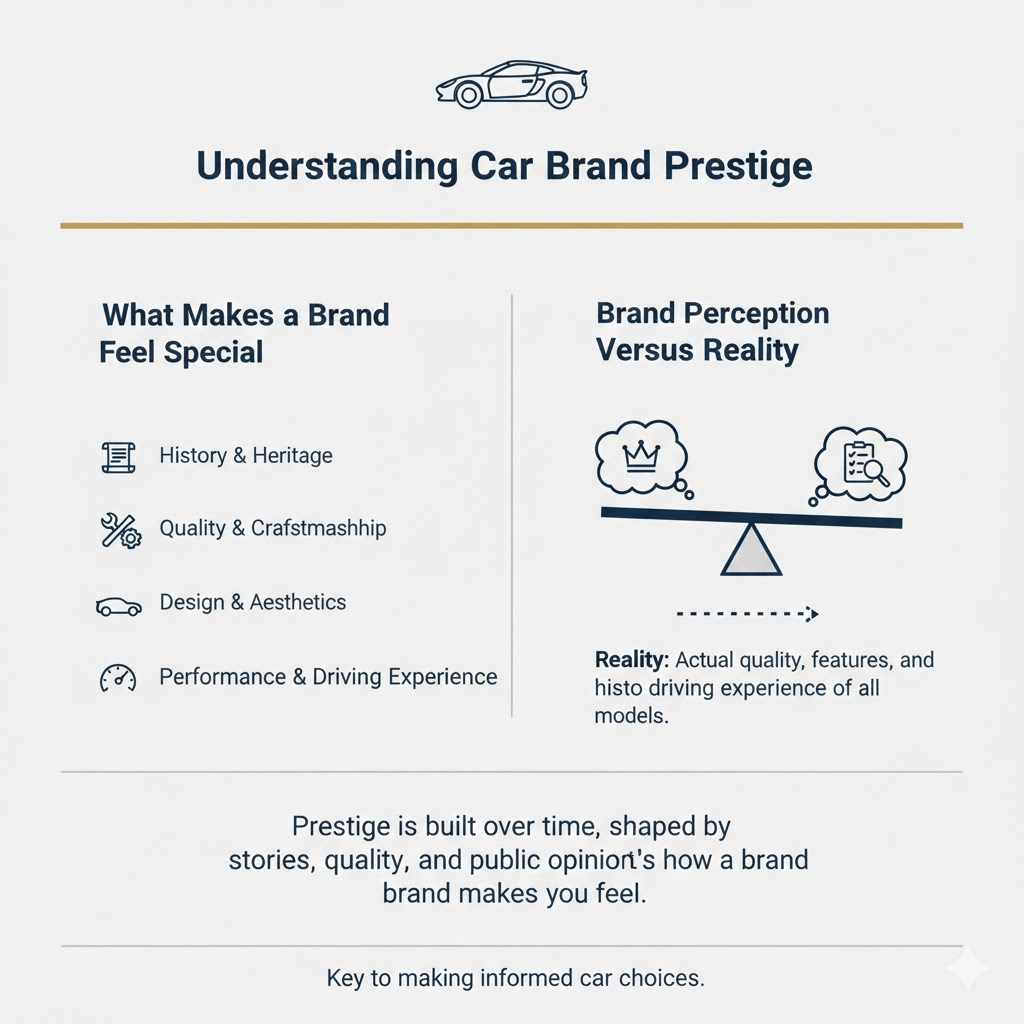
What Makes a Brand Feel Special
Several things make a car brand feel more important or high-class. One is the history and heritage of the company. Brands with a long past often have stories that make them interesting and respected.
Another big factor is the quality of the cars. When cars are built very well, use good materials, and feel solid, people notice. This makes them seem more valuable.
- The design of the cars also plays a big role. Cars that look beautiful, unique, or very modern can make a brand seem more desirable. People want to be seen driving cars that look good and turn heads.
- How the cars perform on the road matters a lot too. If a brand is known for making cars that are fast, handle great, or are very comfortable to drive, it adds to its appeal. This performance aspect can make a brand feel more exciting and capable.
- Marketing and advertising help shape a brand’s image. When car companies show their cars in fancy settings or associate them with success, it can make people feel they are more prestigious. This creates a certain lifestyle around the brand.
Brand Perception Versus Reality
It’s interesting how people think about car brands versus what the cars are actually like. Sometimes, a brand might have a great reputation for being fancy, but the cars themselves might be quite practical. Or, a brand that isn’t thought of as super fancy might actually make very high-quality cars.
This difference between what people think and what is true is important.
This perception is built over time. News, reviews, and what friends say all influence how we see a brand. It’s not always based on driving every single model.
For example, some brands might be known for their super-expensive sports cars, and people might think all their cars are like that, even their smaller, more affordable ones.
Understanding this difference helps us look at car brands more clearly. We can see if the popular ideas about a brand match the actual quality and features of their vehicles. This is key when comparing brands like VW and French car makers.
Volkswagen’s Brand Image
Volkswagen, often called VW, has built a strong reputation over many decades. It’s a German brand, and German engineering is often linked with reliability and quality. VW cars are usually seen as solid, well-built vehicles that offer good value for money.
They aren’t typically seen as ultra-luxury, but they are definitely considered a step above basic, budget cars. This middle-ground positioning has helped them appeal to a wide range of buyers looking for dependable transportation with a bit of sophistication.
German Engineering and Quality
The idea of “German engineering” is a big part of Volkswagen’s appeal. It suggests precision, durability, and advanced technology. For many years, German car brands have been known for making cars that are built to last and perform well.
This reputation means that even though VW might not be the most expensive brand, people often associate its cars with a high level of quality and craftsmanship.
This association with quality can make a brand feel more prestigious. When you buy a VW, you often feel like you are getting a car that is well-made and will serve you reliably for a long time. This sense of confidence in the product is a major factor in brand perception.
Volkswagen has consistently invested in its manufacturing processes and design, reinforcing this image. They focus on creating cars that are not only functional but also offer a comfortable and refined driving experience. This dedication to building good cars helps maintain their strong brand standing.
- Solid Build Quality: VW cars are known for feeling substantial and well put together. This means the doors feel heavy, the interior materials often feel good to the touch, and the overall construction suggests durability.
- Reliability and Longevity: While no car is perfect, VW has a reputation for producing vehicles that can last a long time with proper maintenance. This aspect of reliability contributes to its perceived value and quality.
- Technological Integration: German car brands, including VW, are often at the forefront of adopting new technologies in their vehicles. This can range from advanced safety features to infotainment systems, making their cars feel modern and sophisticated.
Volkswagen’s Place in the Market
Volkswagen occupies a unique spot in the automotive world. It’s not a luxury brand like BMW or Mercedes-Benz, but it’s also not an economy brand like some smaller manufacturers. VW aims to be a premium mainstream brand, offering cars that feel more sophisticated and well-equipped than many competitors in its price range.
This positioning allows it to attract buyers who want a step up in quality and features without paying luxury prices.
The brand’s lineup includes popular models like the Golf and Passat, which are often praised for their driving dynamics and interior refinement. These cars frequently compete with, and sometimes outperform, models from brands that are perceived as more upscale. This competitive performance helps bolster VW’s image as a maker of quality vehicles.
For example, the Volkswagen Golf has often been lauded by automotive critics for its upscale interior, comfortable ride, and engaging handling, qualities typically found in more expensive vehicles. This consistent praise helps to solidify its image as a brand that delivers more than its price tag might suggest.
French Car Brands’ Identity
French car brands like Peugeot, Renault, and Citroën have their own distinct identities. They are often associated with style, comfort, and innovation. Unlike German brands that might focus heavily on engineering and performance, French cars often prioritize design flair and a smooth, comfortable ride.
They aim to offer a different kind of driving experience, one that is perhaps more focused on the pleasure and artistry of driving.
Design and Comfort Focus
A key characteristic of French cars is their emphasis on design and comfort. Brands like Citroën, in particular, have a long history of creating vehicles with unique and often futuristic styling. These cars can stand out from the crowd with their bold lines and unconventional shapes.
Peugeot and Renault also put a strong emphasis on elegant interior design and creating a pleasant environment for occupants.
Comfort is another major selling point. French car manufacturers often tune their suspension systems to provide a very smooth and absorbent ride. This means that bumps and rough roads are often felt less inside the cabin, making long journeys more relaxing.
This focus on ride quality is a hallmark of French automotive design.
- Unique Styling: French cars often feature distinctive exterior designs that break away from conventional automotive aesthetics. This can include sleek lines, distinctive lighting signatures, and creative body shapes.
- Comfortable Interiors: The inside of a French car is often designed with occupant comfort as a top priority. This includes plush seating, thoughtful ergonomics, and a quiet cabin environment.
- Innovative Features: Historically, French brands have been pioneers in adopting certain innovative features. This might include advanced driver-assistance systems or unique interior layouts that aim to improve the user experience.
Innovation and Quirks
French car brands are also known for their unique approaches to automotive engineering and features. They often introduce innovative technologies or design elements that might not be found in other brands. While some of these innovations are brilliant, others can be seen as quirky or unconventional by different markets.
This willingness to experiment is a defining trait.
For instance, Citroën has a history of developing innovative suspension systems that prioritize ride comfort above all else, sometimes leading to a very distinctive way the car handles. Renault has also been known for its forward-thinking interior designs and unique approaches to practicality in smaller vehicles. Peugeot has been pushing the boundaries with its i-Cockpit interior design, featuring a small steering wheel and a high-mounted instrument cluster.
This spirit of innovation means that French cars can offer a refreshing change for drivers looking for something different. It also means that some features might require a slight adjustment for drivers accustomed to more traditional designs. The blend of comfort, style, and unique ideas is what gives French cars their special appeal.
Here’s a look at some specific innovations:
- Citroën’s Hydropneumatic Suspension: Developed decades ago, this advanced suspension system allowed for a remarkably smooth ride and self-leveling capabilities. It was a major innovation that set Citroën apart for decades.
- Peugeot’s i-Cockpit: This modern interior design features a compact steering wheel, a high-mounted digital instrument cluster, and a central touchscreen. The aim is to offer a more engaging and intuitive driving experience.
- Renault’s Modularity: Renault has often excelled at creating versatile interiors, especially in compact cars. Features like sliding rear seats or clever storage solutions showcase their focus on practical innovation.
Comparing VW and French Brands on Prestige
When we put Volkswagen and French car brands side-by-side to compare their prestige, we see different strengths. VW generally benefits from the strong reputation of German engineering, which many people associate with reliability, quality, and a solid build. This gives VW a consistent image of being a dependable and well-made car, which is a significant part of prestige for many buyers.
French brands, on the other hand, often lead with design and comfort. While this appeals to many, the idea of prestige can sometimes be more closely tied to performance and engineering prowess in the minds of some consumers. However, the unique style and innovation offered by French cars can also be seen as a form of prestige, appealing to those who value individuality and cutting-edge design.
Perceived Value and Status
The perceived value and status of a car brand are subjective. For some, prestige is linked to a long history of luxury or high performance. For others, it’s about sophisticated design and a comfortable, refined experience.
Volkswagen often lands in a space where it’s seen as a solid, reliable choice with a touch of sophistication, making it feel more premium than basic brands.
French brands can offer a different kind of status. A stylish Peugeot or a comfort-focused Citroën can signal an appreciation for design and a more artistic approach to motoring. This is a form of prestige that appeals to a different audience.
It’s less about overt power and more about subtle elegance and individuality.
Let’s look at how different buyers might perceive them:
- The Practical Buyer: This person might see VW as more prestigious because of its reputation for build quality and reliability. They want a car that lasts and feels solid, and VW often delivers on this.
- The Design Enthusiast: This buyer might find French cars more prestigious because of their unique styling and artistic interiors. They appreciate the flair and individuality that brands like Peugeot and Citroën offer.
- The Comfort Seeker: For someone who prioritizes a smooth ride and a relaxed driving experience, French brands might feel more luxurious and prestigious due to their emphasis on comfort features and suspension tuning.
Target Audiences and Market Positioning
Volkswagen tends to target a broad audience that values a blend of quality, practicality, and a slightly upmarket feel. Their marketing often emphasizes their German heritage and the solid engineering behind their vehicles. This positions VW as a reliable choice for families, professionals, and anyone looking for a car that feels a bit more special than a standard budget option.
French brands often aim for buyers who are drawn to style, comfort, and a bit of character. Peugeot might appeal to those who want a sporty yet comfortable hatchback, while Citroën might attract customers looking for innovative features and an exceptionally smooth ride. Renault often targets buyers seeking practical and stylish cars, especially in the supermini and compact SUV segments.
This difference in market positioning means that what one person considers prestigious might not be the same for another. For example, a buyer looking for a car that feels robust and technologically advanced might lean towards VW, while someone who values avant-garde design and a plush ride might prefer a French marque.
Here’s a simple comparison of their typical market appeal:
| Brand | Typical Appeal | Perceived Prestige Factor |
|---|---|---|
| Volkswagen | Reliability, solid engineering, good all-round quality | Dependability, German craftsmanship |
| Peugeot | Stylish design, good driving dynamics, upscale interior feel | Modern elegance, sporty flair |
| Renault | Practicality, value, stylish design in certain segments | Smart design, good use of space |
| Citroën | Comfort, innovative features, unique design | Avant-garde style, exceptional ride comfort |
Historical Context and Evolution
Over the years, both Volkswagen and French car brands have evolved significantly. Volkswagen started as the “people’s car” but has grown into a global powerhouse known for its diverse range of vehicles, from the compact Polo to larger SUVs and luxury models under its group umbrella. Its prestige has grown with its capabilities and the consistent quality of its products.
French manufacturers have also seen their own transformations. While they have maintained their focus on design and comfort, they have also worked to improve build quality and reliability perceptions. Brands like Peugeot have made considerable strides in offering more premium features and refined driving experiences, sometimes competing directly with German rivals in certain segments.
Citroën continues to push boundaries with its distinctive styling and comfort-focused technologies.
The automotive landscape is always changing. What might have been a clear distinction in prestige years ago can become more blurred as brands adapt and improve. Many of these brands now offer models that can rival each other in terms of features, quality, and driving experience.
The core identities, however, often remain, shaping how consumers perceive their prestige.
Consider the evolution of popular models:
- Volkswagen Golf: Evolving from a humble hatchback to a sophisticated all-rounder, the Golf is often seen as a benchmark for its segment, combining practicality with a premium feel.
- Peugeot 308: This model has seen significant improvements in interior design, materials, and driving dynamics, positioning it as a stylish and well-equipped alternative to German competitors.
- Citroën C4: Known for its distinctive design and emphasis on comfort, the C4 offers a unique proposition for buyers seeking something different from the mainstream.
Is VW More Prestigious Than French Car Brands?
The question of Is VW More Prestigious Than French Car Brands? doesn’t have a simple yes or no answer because prestige is perceived differently by different people. Generally, Volkswagen benefits from a stronger global perception of quality and engineering associated with German brands. This often translates into a higher baseline of prestige for VW in many markets, as reliability and solid construction are widely valued.
However, French car brands offer their own distinct form of prestige based on style, comfort, and innovation. For buyers who prioritize cutting-edge design and a luxurious ride, a high-end Peugeot or a comfort-focused Citroën could feel just as prestigious, if not more so, than a Volkswagen. It really depends on what qualities a person values most in a car brand.
Factors Influencing Prestige
Several factors contribute to a car brand’s prestige, and these can vary by region and individual preference. For VW, the strong association with German engineering is a major plus. This reputation suggests durability, safety, and advanced technology, which are all hallmarks of a prestigious brand.
VW’s consistent presence in popular segments like the Golf and Passat has also helped solidify its image as a reliable and somewhat upscale choice.
On the other hand, French brands often achieve prestige through their unique design language and focus on occupant comfort. Citroën’s bold styling and innovative suspension systems, or Peugeot’s elegant interiors and driving dynamics, can appeal to a sense of sophistication and individuality. This type of prestige is less about raw engineering and more about an artistic and experiential approach to car ownership.
Here are key prestige factors:
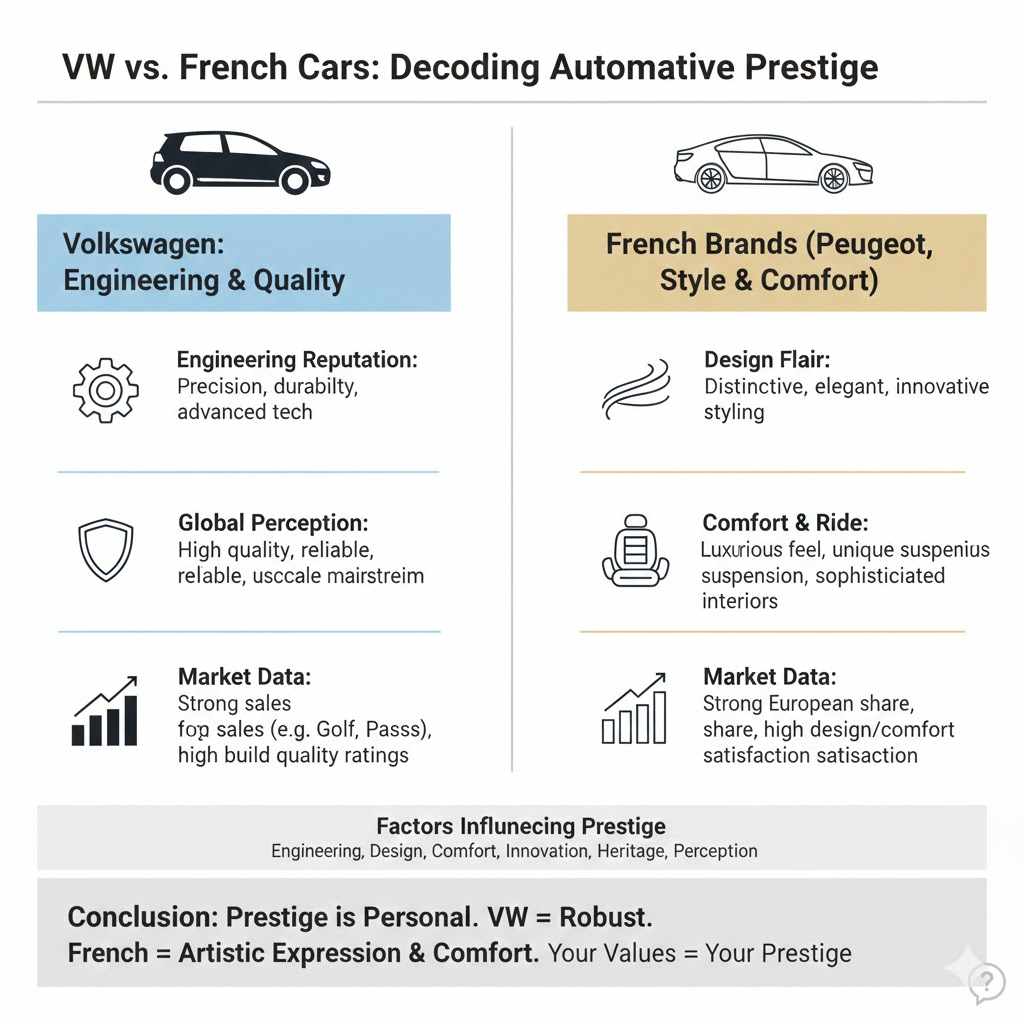
- Engineering Reputation: German brands like VW generally score high here, linked to precision and durability.
- Design Flair: French brands often excel, offering distinctive and stylish vehicles that stand out.
- Comfort and Ride Quality: This is a strong suit for French cars, providing a luxurious feel for occupants.
- Innovation and Technology: Both VW and French brands incorporate new tech, but sometimes in different ways, influencing perceived modernity.
- Brand Heritage and History: Long-standing brands often carry a weight of tradition and established quality that adds to their prestige.
Consumer Perception and Market Data
Consumer perception is a powerful driver of brand prestige. Market research and sales figures can offer insights, but they don’t always tell the whole story about how people feel. In many surveys and car reviews, VW models frequently appear with high ratings for build quality and a premium feel, placing them above many mainstream competitors.
This suggests a broadly recognized level of prestige.
French brands, while perhaps not always scoring as high on initial perception of “prestige” in a traditional sense, often win over buyers with their unique attributes. For instance, a Peugeot 508 might be praised for its elegant interior and refined ride, offering a premium experience that rivals more established premium brands in certain aspects. This demonstrates that prestige can be built on different foundations.
Looking at car reviews from automotive journalists can also be telling. They often compare cars across brands, noting where each excels. While a VW might be praised for its all-around competence, a French car might be lauded for its specific strengths in design or comfort, appealing to a different set of prestigious qualities.
Statistics can highlight market trends. For example, in some European markets, French brands hold significant market share, indicating strong consumer acceptance and loyalty, which can be a form of prestige in itself.
Consider these data points:
- Customer Satisfaction Surveys: While specific numbers vary, studies often show strong satisfaction with the driving experience and design of French cars, alongside satisfaction with VW’s reliability and build.
- Brand Value Rankings: Global brand value rankings sometimes place German brands higher overall for automotive prestige, but this can be influenced by luxury segments. Mainstream segments show a more nuanced picture.
- Sales Figures: High sales volumes for popular models like the VW Golf or Peugeot 208 suggest strong market appeal and consumer trust, which are related to perceived brand value.
Conclusion on Prestige
Ultimately, whether Volkswagen is considered more prestigious than French car brands is a matter of personal perspective. Volkswagen has a widely recognized reputation for solid engineering and dependable quality, which many consumers associate with prestige. This German heritage lends an air of seriousness and durability to the brand.
French car brands, however, cultivate prestige through different avenues: exceptional design, unique comfort, and innovative features. For those who value these attributes, French cars offer a distinct and sophisticated form of prestige. The choice often comes down to whether you prioritize engineering robustness or artistic expression and ride refinement.
Both VW and the leading French manufacturers offer compelling reasons to be considered prestigious in their own right.
Frequently Asked Questions
Question: Do French cars have a reputation for being less reliable than VW?
Answer: Historically, some French cars have faced perceptions of being less reliable than German cars, including VW. However, modern French cars have made significant improvements in quality and durability, and many now offer excellent reliability. It’s always best to check specific model reviews.
Question: Are French cars more stylish than VW cars?
Answer: Many people find French cars to be more stylish due to their unique and often bolder design language. VW cars tend to have a more conservative and classic design approach, which is also appreciated by many buyers.
Question: Is VW considered a luxury brand?
Answer: No, Volkswagen is generally not considered a luxury brand. It is positioned as a premium mainstream brand, offering higher quality and features than economy cars but below luxury brands like Audi, BMW, or Mercedes-Benz.
Question: What makes a car brand prestigious?
Answer: Prestige in car brands comes from factors like a long history, excellent build quality, advanced engineering, unique design, strong performance, exclusive features, and positive public perception over time.
Question: Which type of car offers a more comfortable ride, VW or French brands?
Answer: French car brands, particularly Citroën, are often praised for their superior ride comfort. They typically focus on advanced suspension systems that provide a very smooth and relaxed experience, often more so than VW’s generally well-tuned but firmer ride.
Summary
Is VW more prestigious than French car brands? The answer isn’t simple. VW is known for solid German engineering and quality, which many see as prestigious.
French cars earn prestige through unique style, advanced comfort, and innovative design. Your personal choice depends on what you value most – robust engineering or artistic flair and a plush ride. Both types offer a compelling experience.