Car Door Latch Guide: How It Works, Signs of Failure & Upgrades
A car door latch is the mechanism that locks a door against the vehicle’s body, using a spring-loaded rotating claw that grips a metal striker pin bolted to the door jamb. When it wears out, rusts, or breaks, the door can pop open over bumps, rattle, or refuse to latch at all — and on modern vehicles, a failing latch is treated as a safety-relevant repair, not a cosmetic one.
This guide covers how a car door latch actually works, the warning signs that yours is failing, and two real replacement paths depending on your goal: a universal bear-claw latch for a hot rod or custom build, or a vehicle-specific OEM-style latch assembly for a daily driver.
How Does a Car Door Latch Work?
Universal Upgrade Pick
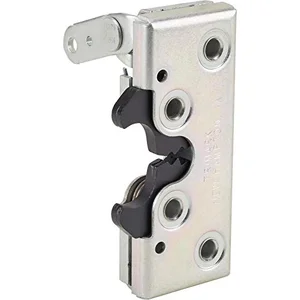 |
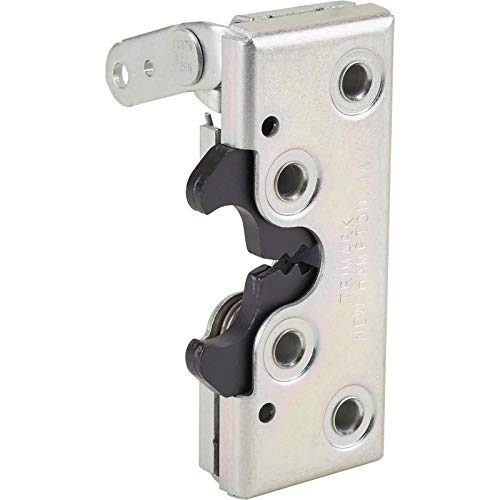
Bear Jaw Door Latch, Universal Steel, LH – $23.99 A double-catch rotary latch built to modernize hot rod and street rod doors, using the same basic mechanism explained below.
|
Most cars built since the 1960s use what’s known as a “bear-claw” or rotary latch. A curved rotor spins around the striker pin as the door closes, and a second pawl piece drops in behind it to lock the rotor in place — giving the latch two separate catch points (a “first” safety catch and a “second” full-latch position) rather than one simple hook.
On a modern daily driver, an electric actuator inside the latch housing drives the fork bolt for power locking and unlocking, and the whole assembly is wired into the key fob and door switch. On an older car or a hot rod, the same rotary latch is usually worked by a simple rod or cable connected to an interior handle or button — no electronics involved. Door latches sold in the U.S. also have to meet Federal Motor Vehicle Safety Standard 206, which sets minimum strength requirements so a door stays closed in a crash.
Signs Your Car Door Latch Is Failing
A latch rarely fails without warning. Watch for these signs:
- The door doesn’t stay fully closed — it pops open, or sits ajar, especially over bumps or when cornering.
- A door-ajar warning light stays on even after you’ve firmly closed the door.
- Rattling or clunking from inside the door when driving, which usually means the rotor and pawl are worn and no longer holding tight against the striker.
- The door won’t lock or unlock with the key fob, interior switch, or manual button on that door only.
- You have to slam the door harder than usual, or push it a second time, to get it to catch.
If your door is failing to lock but the latch itself still catches and holds the door shut, the problem is more likely a linkage, actuator, or wiring fault than the latch mechanism itself — our guide to fixing a car door that won’t lock walks through those checks step by step. If the door won’t stay closed at all, or rattles, that points to the latch or striker pin itself, which this article covers.
Universal Bear-Claw Latches for Hot Rods and Custom Builds
Many pre-war and early hot rods originally used a much simpler door latch: a spring-loaded bolt that slips into a groove on the striker plate, similar to an interior door latch on a house. It works, but it doesn’t hold up well to hard cornering or a collision. That’s why builders commonly retrofit a modern bear-claw (also called “bear jaw”) rotary latch into an older door shell — it’s the same double-catch design used on production vehicles, adapted to bolt into a car that never had one.
A universal bear-claw latch like the one above is sold as a left-hand (driver-side) or right-hand (passenger-side) unit, works with either a mechanical rod or a cable-pull release, and mounts into standard or “suicide” (rear-hinged) door installations on both steel and fiberglass door shells. Because it’s a mechanical, hand-operated latch, it’s a project for a car with no factory electric door locks — it won’t connect to a key fob or power-lock switch on its own.
Vehicle-Specific Latch Assemblies: Example for Chevy and GMC Trucks
If you’re not building a hot rod — you just have a daily-driver truck or SUV with a latch that’s worn out, rusted, or was damaged in a break-in — the fix is usually a direct OEM-style replacement latch assembly for your exact make, model, and years, not a universal bear-claw part. These assemblies bolt in as a one-for-one swap and usually include the electric lock actuator, not just the mechanical latch.
As one example, a front-left (driver-side) door latch assembly like the HHCSOP unit below is built specifically for 1985–2002 Chevrolet and GMC C/K-series trucks, S10/S15 pickups, Suburban, Blazer, and Astro/Safari vans — it is not a universal fit, and won’t work outside that model and year range. Always confirm your exact year and trim against a listing’s fitment table before ordering a vehicle-specific latch.
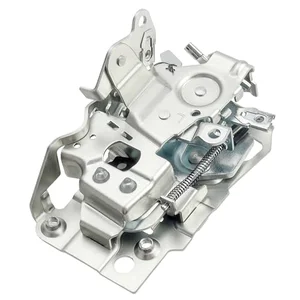
HHCSOP Front-Left Door Latch Assembly (1985–2002 Chevy/GMC) – $24.99
Fits C1500/C2500/C3500, K1500/K2500/K3500, S10/S15, Suburban, Blazer, and Astro/Safari — check your model year before buying.
Check compatibility & price on Amazon →DIY Replacement vs. Professional Repair: What It Costs
Professional door lock actuator replacement — which is the more complex, electrically-integrated repair on a modern vehicle — typically runs about $150 to $550 total, with the part itself costing roughly $120–$300 and labor billed at $60–$160 per hour for a 1–3 hour job, according to RepairPal and AutoNation Mobile Service estimates. Dealership labor rates tend to run higher than independent shops, and luxury or newer vehicles with more integrated security electronics usually cost more to fix than an older, simpler design.
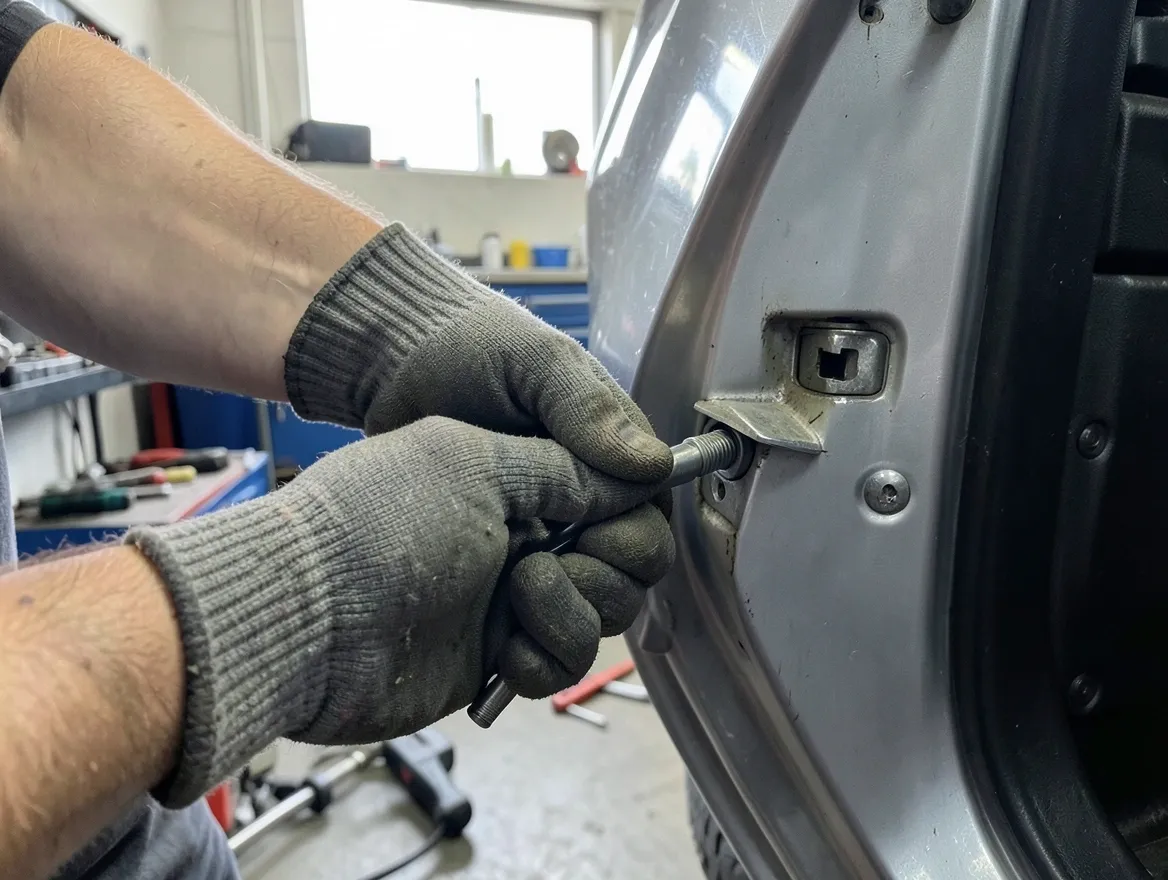
If you’re comfortable pulling a door panel yourself, the mechanical latch or assembly part alone — like either of the two above — is often available for $20–$60, and swapping it out yourself typically takes about an hour once you’ve got the door panel off and the wiring harness disconnected.
Before you start, it’s worth confirming the striker plate itself isn’t just misaligned, since that can mimic a failing latch. Our guide to adjusting a car door and striker plate covers how to check and reposition it before you assume you need a new latch.
Frequently Asked Questions
What Is a Car Door Latch?
A car door latch is the mechanical assembly inside the door that locks it against a metal striker pin bolted to the body. Most latches use a rotating claw with two catch positions, so the door can hold either partly or fully closed. It can be operated by a mechanical rod or cable, or by an electric actuator on vehicles with power locks.
How Do I Know If My Car Door Latch Is Broken?
Common signs include the door popping open or sitting ajar while driving, a door-ajar warning light that won’t turn off, rattling from inside the door, that specific door failing to lock or unlock, or needing to slam the door harder than usual to get it to catch.
Can I Replace a Car Door Latch Myself?
Yes, for most vehicles this is a DIY-friendly repair if you’re comfortable removing the door panel and disconnecting the wiring harness and linkage rods. Budget about an hour once the panel is off. Always order the exact latch assembly listed for your vehicle’s year and model, since these parts are rarely universal.
What Is a Bear-Claw (Bear Jaw) Latch Used For?
A bear-claw latch is a double-catch rotary latch, the same basic design used on production vehicles since the early 1960s. Hot rod and street rod builders retrofit them into older door shells that originally used a simpler spring-bolt latch, since the bear-claw design holds the door shut more securely during hard cornering or a collision.
Does a Universal Car Door Latch Fit Any Vehicle?
A “universal” bear-claw latch fits into a custom or aftermarket door setup based on its physical mounting pattern and release type (rod or cable), not a specific factory vehicle, which is why it’s popular for hot rods and homebuilt cars. A factory replacement latch assembly for a production vehicle, by contrast, is built for a specific make, model, and year range and is not interchangeable outside that fitment.
Conclusion
A car door latch is a simple mechanism doing an important job: keeping the door shut and, on modern vehicles, meeting a real federal safety standard while it does it. If your door pops open, rattles, or won’t catch, start by ruling out a misaligned striker plate, then decide whether you need a universal bear-claw latch for a custom build or a vehicle-specific OEM-style assembly for a daily driver — the two are not interchangeable, and getting that distinction right is the difference between a clean bolt-in fix and a part that never quite fits.
Products related to this article
Sponsored / affiliate links. As an Amazon Associate I earn from qualifying purchases. I may earn additional commission from eligible campaigns.
 Universal Mini Bear Jaw Car Door Latch Kit for Hot & Street Rods, Rod & Cable Release Compatible, Ideal for Ford Model A & T, Supports Shaved & Suicide Doors, Ensures Safety & Reliability
 Slim-Line Bear Jaw Car Door Latch Kit, Suitable for Standard/Suicide Doors, Works with Rod/Cable Mechanisms, for Steel and Fiberglass Doors, Includes Latches, Striker Pins, Cage Nuts