3 Best License Plate Holders for Cars: We Compared
For a standard US 12 x 6 plate, the best license plate holder depends on use: choose a framed, corrosion-resistant holder for daily driving, a no-drill bracket for front plates, and a slim, low-profile mount for a cleaner look. Bad hardware can rattle, rust, and crack trim, or leave you with a ticket if the plate is obscured or insecure. This guide compares those three holder types and explains which one fits each job.
Quick comparison
| Product | Badge | Best for | Price | ||
|---|---|---|---|---|---|
 |
HiSport License Plate Holder Front Bumper Relocator AdapterHiSport | Our pick | HiSport · Mercedes · No-Drill | $18.99
Price as of 25 Oct 2026
|
View |
 |
Heavy-Duty Chrome Angled License Plate Holder withTDPROMOTO | Also great | Heavy-Duty Chrome · 304 Stainless Steel · Adjustable | $29.90
Price as of 25 Oct 2026
|
View |
 |
2PCS Premium Matte Black License Plate Frames, Solidlengnoyp | Budget pick | Matte Black · 2-Piece Set · Universal | $6.98
Price as of 25 Oct 2026
|
View |
The core trade-off is simple: silicone is the best all-around daily-driver choice, a no-hole ABS front bracket solves bumper-mount problems, and a slim metal frame wins when the visual goal matters most. The right holder depends on fit to the plate, clear visibility of the state name and stickers, and the mounting method.
For most drivers, the daily-driver silicone frame wins because it handles road grime and noise well while staying forgiving on imperfect bumper surfaces. If your car needs a front plate and the bumper has no holes, the front bracket is the cleanest solution that still respects the mounting job.
How we chose
These picks are compared on four practical points: fit for a standard US 12 x 6 plate, likely legality and visibility considerations, the chance of noise or scratching, and how much install hardware is needed. The goal is not to crown a “best material” in the abstract. The goal is to match the holder to the car and the job.
Standard fit matters first. A frame can be “universal” and still be a bad match if it blocks the state name, hides stickers, or collides with a bumper contour. Front mounts and rear mounts also fail in different ways, so the comparison separates those use cases instead of lumping them together.
Mounting hardware also changes the result. Screws, nuts, screw caps, and included accessories affect rattle, paint contact, and install time. Drainage holes matter too, because pooled water can sit behind the plate even when the frame itself is advertised as weather resistant.
Silicone frame: best for daily drivers
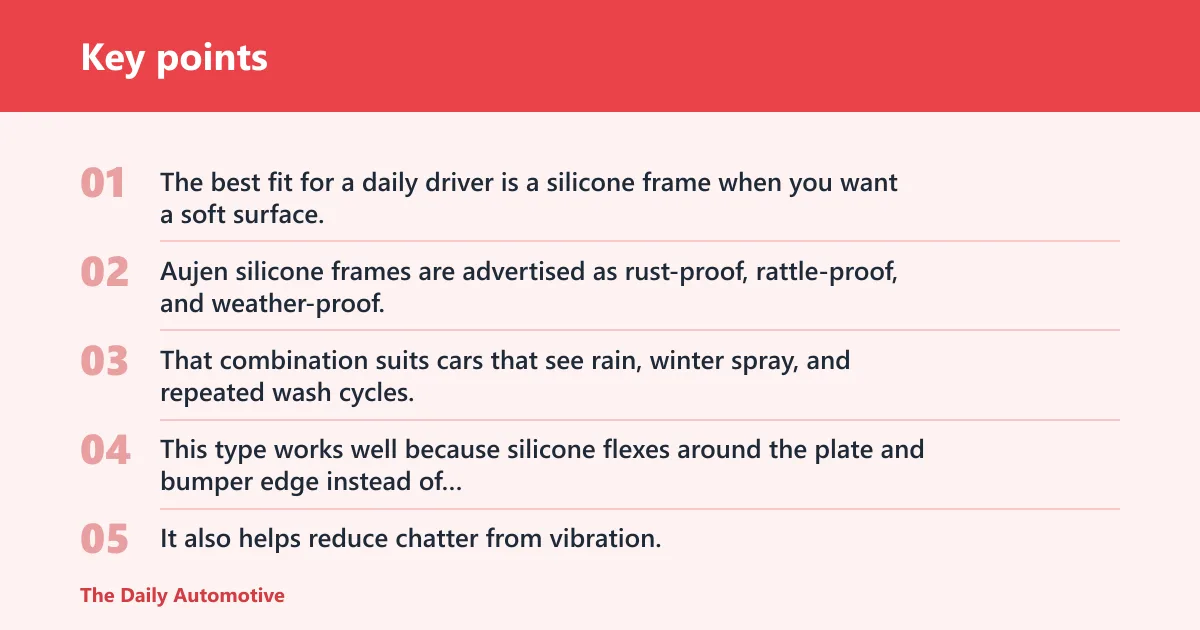
The best fit for a daily driver is a silicone frame when you want a soft surface, rust-proof hardware behavior, and less noise over rough pavement. Aujen silicone frames are advertised as rust-proof, rattle-proof, and weather-proof, and they include three drainage holes to release water. That combination suits cars that see rain, winter spray, and repeated wash cycles.
This type works well because silicone flexes around the plate and bumper edge instead of pressing hard into paint. It also helps reduce chatter from vibration, which matters on cars that spend time on rough roads or in stop-and-go use. The soft surface is friendlier to trim than bare metal edges.
The drawback is flex. Softer frames can move more under load, so a very loose installation can still buzz, and a heavily warped plate area can leave the frame sitting unevenly. Drainage holes help, but they do not prevent water pooling if mud, wax residue, or a tilted mount traps liquid behind the plate.
Picture a daily commuter with a standard rear plate and frequent rain. A silicone frame with drainage holes is the better bet than a hard, sharp-edged mount if the goal is fewer rattles and less chance of rubbing paint on a parking-lot bumper.
Drainage holes and water release
Drainage holes matter because water has to go somewhere after a storm, wash, or slushy drive. A frame that traps moisture can hold grit against the plate and hardware, which raises corrosion risk around screws and makes cleanup worse.
Even so, drainage is not magic. If the bumper recess sits deep or the lower edge of the plate is blocked by mud, water can still collect. Good drainage helps release water, it does not guarantee a completely dry pocket behind the frame.
ABS front bracket: best for no-hole bumpers
Choose a front bracket when the bumper needs a front plate but has no factory holes. BGGTMO is a front license plate mounting kit, and the product details note stainless steel screws and nuts. For drivers who cannot or do not want to drill the bumper, that makes the mounting job much more practical.
This kind of bracket exists for fitment, not decoration. It gives you a structured way to attach the front plate without improvising through the grille or leaning on unsafe adhesive shortcuts. If the car has a shaped bumper, the bracket’s job is to bridge that gap and keep the plate mounted in a readable position.
The drawback is paint contact risk. Any no-hole or no-drill setup still deserves a close look at where the bracket touches painted surfaces, because hard points can scuff finish over time if the hardware loosens. Cable-tie options can help on some cars, but they should be used only when the attachment points are secure and do not pinch trim.
Say your front bumper has no predrilled holes and the car is a leased vehicle. A front mounting kit is the sensible path because it avoids drilling, but you still need to check that the plate sits square and does not block intake openings, parking sensors, or camera views.
Hardware included versus cable ties
Included screws and nuts matter because they shorten the install path and usually reduce the chance of mixing random hardware. A complete kit also gives you a better shot at a secure plate that does not wander or tilt after a few heat cycles.
Cable ties are a fallback, not the first choice for every car. They can work on certain bumper shapes, but they are less tidy and can look temporary if they are not trimmed cleanly. On trucks, trailers, and odd front ends, the right bracket or adapter usually beats a quick tie-on solution.
Paint-friendly cautions
Any metal-on-paint contact deserves caution. A bracket that sits too tight can mark finish, and a bracket that sits too loose can buzz. Check the back side of the mount, the edge of the bumper, and any contact point where a screw cap or washer could rub.
The safest no-hole setup is the one that supports the plate without crushing the bumper skin. If the mount relies on a lot of bending force, it may hold at first and still become a squeak or scratch problem later.
Aluminum frame: best for a cleaner look
A slim aluminum frame suits buyers who want a neater, lighter visual profile without going full chrome or bulky trim. Lengnoyp frames use matte black aluminum and resist rust and fading, and My Road News describes this style as a minimalist front and rear option. The rounded-edge format also helps keep the border from looking sharp.
This is the right pick when the plate should look finished, but still stay low-key. A slim border can preserve much of the plate face while avoiding the heavy visual weight of thicker metal frames. For rear mounting on standard plates, that balance often works better than a big decorative surround.
The drawback is rigidity. Aluminum can dent or bend if the screws are over-tightened, and a very thin frame may still transmit vibration if the hardware is loose. It also depends on careful fit; if the bumper or plate recess is irregular, the border can look slightly off-center even when installed correctly.
A common first-timer mistake is tightening metal hardware until the frame bites into the plate edge. That can leave marks, especially on painted or coated surfaces, and it defeats the point of buying a cleaner-looking frame in the first place.
Visibility checks for state name and stickers
A cleaner frame still has to stay out of the way of state name text and registration stickers. Local regulations vary, but the practical rule is the same: do not cover any required label, and do not frame the plate so tightly that the corners or top band become hard to read.
If your state places inspection stickers or registration decals near the plate edge, measure before you buy. A slim border is only an advantage when it leaves the full plate face visible.
License plate holder decision matrix
| Use case | Material | Fit risk | Legal visibility risk | Rattle risk | Install difficulty | Best pick | Avoid if |
|---|---|---|---|---|---|---|---|
| Daily driver | Silicone with drainage holes | Low on standard 12 x 6 plates; higher on warped bumper recesses | Low if the frame leaves state name and stickers visible | Low when hardware is snug; medium if the plate is loose | Easy to moderate | Aujen silicone frame | Avoid if the bumper opening is so odd that the frame must be forced into shape |
| Front bumper without holes | ABS front bracket | Medium; depends on bumper shape and mounting points | Medium if the bracket blocks a sensor, grille, or edge of the plate | Medium if the bracket flexes or hardware loosens | Moderate | BGGTMO front mount kit | Avoid if the bumper has no safe contact points or the car uses active aero, sensors, or a very curved nose |
| Style-first buyer | Matte black aluminum | Low on flat, standard mounts; medium on curved or recessed bumpers | Medium if the slim border overlaps state text or stickers | Low to medium depending on screw tension | Easy | Lengnoyp aluminum frame | Avoid if you want maximum forgiveness against paint contact or frequent curbside bumps |
This table is the fastest way to separate use cases. The daily driver wants softness and water release. The no-hole front bumper wants mounting structure. The style-first buyer wants a neat border and can accept more attention to fit.
Avoid if notes in plain terms
If your car has a very curved bumper, a trailer tongue, a truck nose, or a nonstandard plate, do not buy on appearance alone. Those setups need the holder to match the mounting surface first. Otherwise, you end up trading a clean look for a crooked plate, loose hardware, or blocked visibility.
What should you buy?
If you want the safest default choice for most cars, buy the silicone frame. It gives you the best balance of weather management, noise control, and paint-friendliness for a standard rear plate or a simple front mount. That is why it is the best overall pick for most drivers.
If the front bumper has no holes, buy the front license plate mounting kit instead. A no-drill bracket is the right tool when the car needs a front plate and you do not want to make permanent changes.
If looks matter most and your plate area is flat enough, choose the matte black aluminum frame. It gives the cleanest low-profile look of the three, but it asks for more care during install so it does not contact paint or obscure plate details.
For value, multi-packs help more on rear plates than single kits do. A two-pack aluminum frame can lower cost per vehicle if you have two cars or want a spare, while a single front bracket usually makes more sense because the front mount is a one-car, one-job purchase. The right value question is not “cheapest frame.” It is “which holder matches the mounting job without extra parts.”
Choose the silicone frame if you drive year-round, park outdoors, or want fewer vibration issues. Choose the front bracket if your bumper lacks holes and you need a legal front plate solution. Choose the slim aluminum frame if the car already has a proper mount and you care most about a tidy, restrained look.
Choose Aujen silicone if… / Choose BGGTMO if… / Choose Lengnoyp if…
Choose Aujen silicone if you want the best daily-driver balance, need drainage holes for water release, or want a frame that is less likely to chatter against the body. It also makes sense if rust and weather exposure are your main concerns and you want a softer surface around the plate.
Choose BGGTMO if the front bumper has no holes and you need a front license plate solution that includes stainless steel screws and nuts. It is the best fit when drilling is off the table and you need the plate secured without a messy improvised mount.
Choose Lengnoyp if you want a matte black, minimal frame for a standard plate and you can inspect fit carefully. It is the cleaner visual option, but it is not the best choice if you expect rough contact, odd bumper geometry, or frequent hardware abuse.
Frequently asked questions
What is the best license plate holder for cars?
For most cars, a silicone holder is the best all-around choice because it helps with noise, weather exposure, and paint safety while still fitting a standard 12 x 6 plate. If the car needs a front mount without bumper holes, a no-drill bracket is the correct answer instead.
Are silicone license plate frames better than metal?
Silicone is usually better for daily use when you care about reduced rattling, softer contact, and water release through drainage holes. Metal can look cleaner and feel more rigid, but it can also dent, scratch, or transfer vibration more easily if the fit is off.
Will a license plate frame fit a standard US plate?
Most frames are made for a standard US 12 x 6 plate, but you should still check the plate recess, screw spacing, and whether the frame leaves all required text visible. Fit is not only about size. Front and rear mounting points can change how the frame sits.
Can I install a front license plate holder without holes in the bumper?
Yes. A front license plate mounting kit is made for that job. It is the right option when you need a front plate but do not want to drill the bumper. The main cautions are bumper shape, sensor clearance, and avoiding paint contact from the hardware.
How do I keep a license plate frame from rattling?
Start with snug hardware, the correct screws and nuts, and a frame that matches the plate shape. Screw caps can help keep things tidy, but the key is even pressure and no loose edges. If the frame still rattles, the fit is likely wrong or the mount flexes too much.
Will a license plate frame cover my state name or stickers?
It can, which is why legality matters. Check the plate before buying and make sure the frame does not hide the state name, registration stickers, or any required markings. Local rules vary, but the safest choice is always a holder that leaves the plate fully readable.
Is a side-opening license plate frame worth it?
Yes, if you want easier installation and less chance of scratching the plate during setup. A side-opening design can make the job simpler on a tight bumper, but it is only worth it if the frame still holds the plate securely and does not block visibility.
What license plate holder is best for rust and weather resistance?
A silicone frame is the safest daily choice for weather exposure, while matte black aluminum and stainless steel also resist rust well when the fit is correct. The best pick depends on your goal: silicone for soft contact and drainage, metal for a cleaner look, and a front bracket only when the car needs one.
Products related to this article
Sponsored / affiliate links. As an Amazon Associate I earn from qualifying purchases. I may earn additional commission from eligible campaigns.