Best Plastic Glue for Car Repairs (2026): We Compared
For most DIY car plastic repairs, choose 3M Plastic and Emblem Adhesive for trim, badges, and light cosmetic fixes, and J-B Weld Plastic Bonder for cracked or load-bearing parts. Pick the wrong glue and a loose emblem, peeling trim, or weak repair can fail again in heat, cold, or car-wash spray. This guide compares both picks and gives you a simple damage-based decision path.
Quick comparison
| Product | Badge | Best for | Price | ||
|---|---|---|---|---|---|
 |
J-B Weld 8237 PlasticWeld Plastic Repair Epoxy Putty – 2 oz.J-B Weld | Our pick | 2 oz · 600 PSI · Two-Part Putty | $9.99
Price as of 24 Oct 2026
|
View |
 |
LOCBONDSO Super Glue with Filler, 7s Instant Gap-FillingLOCBONDSO | Also great | 10ml · 7s Bond · Gap-Filling Kit | $9.99
Price as of 24 Oct 2026
|
View |
The short version is simple. Use 3M for visible repairs that need a clean finish. Use J-B Weld when the plastic is cracked, stressed, or uneven and strength matters more than invisibility.
That split covers the two most common DIY jobs on automotive plastic: cosmetic trim and emblem work on one side, structural patching on the other.
How we chose
This comparison is built around repair severity, not brand loyalty. The main filters were bond type, working time versus cure time, visibility after cure, sandability and paintability, and how each adhesive behaves on flexible, painted, or textured plastic.
We also weighed failure risk. A glue that grabs fast can still fail on a vibrating bumper tab. A stronger adhesive can still be wrong if the repaired area must stay invisible.
Automotive plastic includes ABS, polycarbonate, acrylic, and composites. Those materials see heat, vibration, moisture, UV, and detergent, so the bond has to match the part, not just the crack.
Plastic glue decision matrix
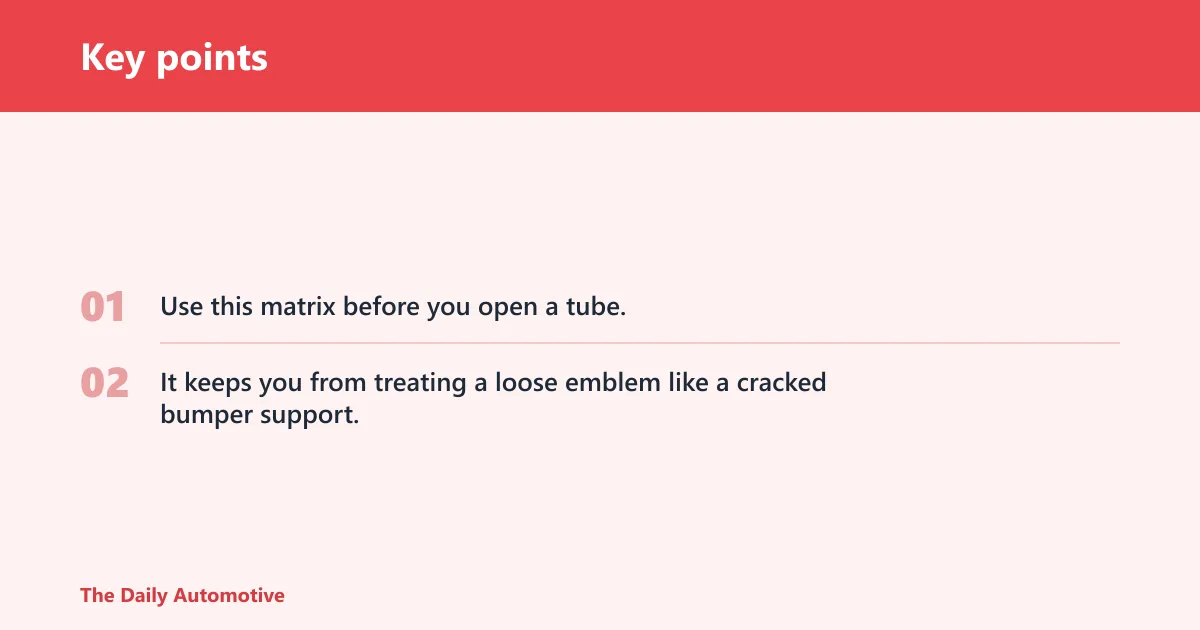
| Damage type | Plastic movement | Visibility | Recommended glue type | Prep level | Clamp time | Failure risk | Avoid this if |
|---|---|---|---|---|---|---|---|
| Loose emblem on painted exterior panel | Very low | High | Clear-drying trim and emblem adhesive | Clean, degrease, light abrasion if safe | About 15 minutes set time | Low if the surface is clean | Avoid this if the badge mount is cracked or the panel flexes a lot. |
| Cracked bumper tab or stressed trim tab | Medium to high | Low to medium | Two-part urethane adhesive | Clean, degrease, roughen, dry fit | Hold or clamp until set; full cure can take 24-30 hours | Medium if the part keeps flexing | Avoid this if the plastic is polypropylene and you have not confirmed compatibility. |
| Tight-fitting rigid interior clip | Low | Low | Cyanoacrylate super glue | Clean, degrease, precise fit | Seconds-fast grab | High on vibration or flex | Avoid this if the joint is load-bearing, painted, or likely to move. |
| Uneven crack with missing edge material | Low to medium | Medium | Epoxy putty | Clean, roughen, shape while workable | Clamp as needed while shaping | Medium if the part must stay flexible | Avoid this if the repair needs a thin, nearly invisible bond line. |
| Painted or textured surface where finish matters | Varies | Very high | Clear trim adhesive or structural urethane, chosen by damage | High; masking, cleaning, and careful application | Depends on adhesive | High if squeeze-out shows or sanding is needed | Avoid this if cleanup will scar the texture or lift paint. |
Use this matrix before you open a tube. It keeps you from treating a loose emblem like a cracked bumper support, or a flexing tab like a rigid interior clip.
3M Plastic and Emblem Adhesive: best for trim and emblems
3M Plastic and Emblem Adhesive is the better pick for visible trim, badges, and other cosmetic repairs where the bond line should disappear. It is made for automotive plastics and emblems, dries clear, and is set up for a permanent bond with fast set time around 15 minutes.
That matters on parts people see every day. A grille badge, body-side molding, or small trim strip needs a clean finish more than raw gap-filling strength, especially if the surface is painted or textured.
The drawback is simple: it is not the right choice for a cracked, flexing, or load-bearing plastic part. If the emblem base is broken or the trim mount is stressed, a cosmetic adhesive can let go again when vibration or temperature swings start working on it.
Where it fits best
Use it for loose emblems, light exterior trim, small interior appliqués, and other parts where the plastic is already aligned and the joint gap is tiny. It is also the cleaner choice when the repair must stay discreet after cure.
It is less forgiving than a gap-filling structural adhesive. If the part has a wide crack, distorted edge, or missing material, the bond will look neat only until the joint starts to move.
J-B Weld Plastic Bonder: best for stronger repairs
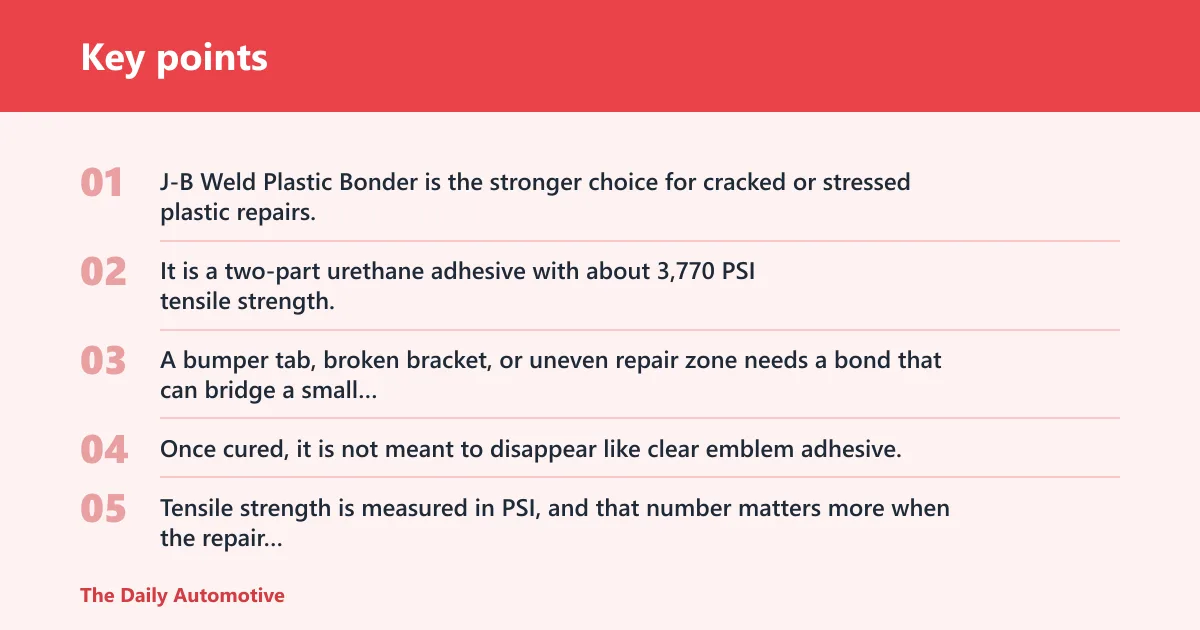
J-B Weld Plastic Bonder is the stronger choice for cracked or stressed plastic repairs. It is a two-part urethane adhesive with about 3,770 PSI tensile strength, sets in about 15 minutes, and is gap-filling, sandable, and paintable after cure.
That profile suits more demanding jobs. A bumper tab, broken bracket, or uneven repair zone needs a bond that can bridge a small gap and stay together when the part flexes, heats up, or gets hit with vibration.
The drawback is cleanup and finish work. Once cured, it is not meant to disappear like clear emblem adhesive, and the mix-and-apply process asks for more control than a simple squeeze tube.
Why PSI matters here
Tensile strength is measured in PSI, and that number matters more when the repair carries stress. A cosmetic badge repair does not need the same load rating as a cracked support point or a plastic panel with repeated flex.
The 3,770 PSI figure gives this adhesive a real structural edge over instant-bond products. It does not make every plastic part repairable, but it does move the adhesive into the range where stronger automotive repairs make sense.
What it is good
Because it can be sanded and painted after cure, it is useful when the repair area will be refinished. That makes it a better fit than clear trim glue for bumper repairs, broken tabs, and uneven plastic joints that need shaping after bonding.
What glue works best on plastic car parts?
The best glue depends on the part, not the label on the tube. For trim, emblems, and other visible cosmetic pieces, a clear-drying automotive adhesive is usually the right call. For cracked, flexing, or uneven parts, a two-part urethane adhesive is the better fit because it handles stress more reliably.
Automotive plastic is not one category. ABS, polycarbonate, acrylic, and composites do not all behave the same, and polypropylene is especially difficult without the right prep or compatibility check. Heat, vibration, moisture, and UV can all weaken the wrong bond.
Match the glue to the failure mode
If the part is loose but otherwise intact, focus on adhesion and appearance. If the part is cracked, misaligned, or under tension, focus on gap filling and flexibility. If the plastic is painted or textured, the bond has to survive the finish as well as the stress.
A common first-timer mistake is using super glue on a flexible bumper tab because it grabs in seconds. That can feel promising at first, then turn into a brittle joint that snaps again the moment the panel moves.
Should you use super glue or 2-part epoxy on car plastic?
For most car plastic repairs, use the two-part option over super glue. Cyanoacrylate super glue is best for tight-fitting rigid parts with almost no gap, but it cures brittle and offers very little working time. Two-part urethane adhesive is usually better for stressed repairs because it is more flexible and far more forgiving.
Epoxy putty sits between them as a practical middle ground. It can fill gaps, be shaped, sanded, and drilled, which helps on uneven joints or missing material. It is not the best choice for every flexible part, but it is more adaptable than super glue when the crack is not clean.
Where super glue fails
Super glue is fast. That is its biggest advantage and its biggest limit. On a rigid, tightly fitted interior clip, it may be enough. On a part that flexes, vibrates, or sits in sun and heat, the cured bond can become brittle and fail.
It also leaves little room for adjustment. Once it bites, alignment errors are hard to correct. If the part needs fine positioning or a small gap fill, a two-part adhesive is the safer choice.
How do I stop plastic glue from failing on car parts?
Failure usually starts before the adhesive goes on. Clean the part, remove grease and road film, dry it fully, and lightly roughen the bond area when the surface allows it. Then match the glue to the plastic type, the amount of movement, and whether the finish must stay invisible.
Do not expect cure time and full strength to be the same thing. Some automotive adhesives set in about 15 minutes, but full cure can take 24 to 30 hours depending on temperature. That difference matters if you reinstall the part too soon.
Prep and use steps
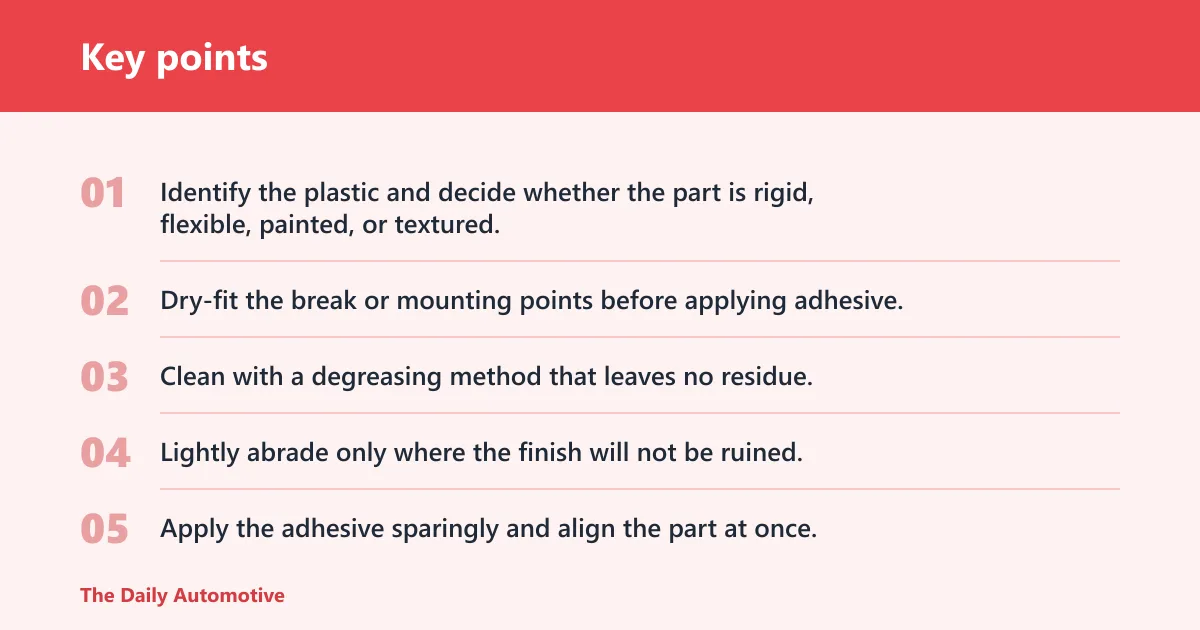
- Identify the plastic and decide whether the part is rigid, flexible, painted, or textured.
- Dry-fit the break or mounting points before applying adhesive.
- Clean with a degreasing method that leaves no residue.
- Lightly abrade only where the finish will not be ruined.
- Apply the adhesive sparingly and align the part at once.
- Clamp or hold for the recommended set window.
- Let the bond reach full cure before loading, washing, or painting.
Suppose a loose exterior badge sits on a painted hatch and the old foam tape has failed. A clear-setting emblem adhesive makes sense because visibility matters and movement is low. Now suppose the bumper tab behind it is cracked and the panel flexes every time the hatch closes. That needs a stronger structural repair, not the same glue.
Cost-per-repair also matters. Small tubes can look cheap but run out fast on larger trim jobs or repeated fixes. Coverage is part of value, especially if you are repairing multiple clips, tabs, or a long strip of molding.
Which one should you buy?
Choose 3M Plastic and Emblem Adhesive if the repair is cosmetic, visible, and already aligned. It is the better fit for emblems, trim strips, and clean exterior or interior bonds where you want a clear finish and fast set time around 15 minutes.
Choose J-B Weld Plastic Bonder if the part is cracked, stressed, uneven, or needs gap filling. Its two-part urethane formula, 3,770 PSI tensile strength, sandability, and paintability make it the better structural repair choice.
If the part is rigid and perfectly fitted, super glue can work in a narrow set of cases. If the joint is uneven, epoxy putty can bridge and shape where neither clear trim adhesive nor thin CA glue is a good match. For polypropylene, verify compatibility first; many adhesives struggle there without special prep.
For interior plastic, go by visibility and load. A small decorative piece can take a cosmetic adhesive. A cracked console tab, seat-back trim mount, or vent support usually needs the stronger route.
Choose 3M plastic and emblem adhesive if…
Choose 3M if the part is an emblem, badge, molding, or other visible trim piece that needs a clean look after cure. Choose it if the plastic is already flush, the gap is tiny, and the repair sits on a surface where clear drying matters more than sanding or shaping.
Choose J-B Weld if the part is cracked, stressed, uneven, or likely to flex under load. Choose J-B Weld if the repair may need sanding, painting, or gap filling after cure. Do not choose a cosmetic adhesive when the part is failing because of movement, vibration, or heat.
Frequently asked questions
What’s the best glue for plastic
There is no single best glue for every plastic part. For visible trim and emblems, a clear automotive adhesive is usually the best fit. For stressed or cracked parts, a two-part urethane adhesive is better because it handles movement and gap filling more reliably than a fast super glue.
What is the best glue for plastic?
The best glue depends on the job. On car plastic, a cosmetic adhesive works for neat trim repairs, while a structural two-part adhesive works for cracks, tabs, and load-bearing pieces. If the repair must stay invisible, finish quality matters as much as bond strength.
Which glue is strongest for plastic car parts?
Among the options covered here, the strongest choice for stressed repairs is J-B Weld Plastic Bonder, with about 3,770 PSI tensile strength. That strength matters on structural plastic more than on trim. It is still not ideal for every plastic, especially if the part is highly flexible.
What glue is best for interior car plastic?
Interior car plastic often needs a cleaner finish than exterior repairs, so the best glue depends on what the part does. Decorative trim can use a clear adhesive. Broken mounts, tabs, and stressed clips are better served by a stronger two-part adhesive that can be sanded or painted.
What glue should I use for plastic trim and emblems?
Use 3M Plastic and Emblem Adhesive for plastic trim and emblems when the pieces are clean, aligned, and mostly cosmetic. Its clear drying finish is the main reason to choose it. If the trim is cracked or flexing, move to a stronger structural adhesive instead.
Products related to this article
Sponsored / affiliate links. As an Amazon Associate I earn from qualifying purchases. I may earn additional commission from eligible campaigns.