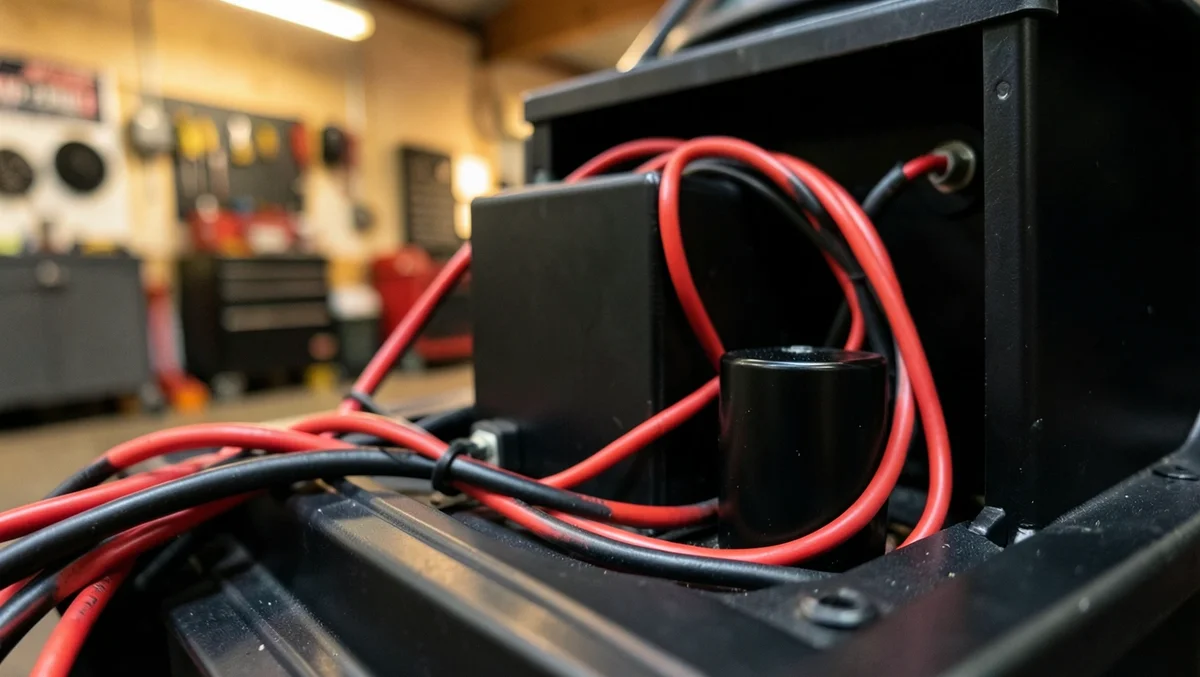
Lightning Cap for Car Audio: Do You Really Need One?
A “lightning cap” is the colloquial name car audio enthusiasts use for a stiffening capacitor — a large capacitor wired between an amplifier and the battery to buffer sudden power draws during heavy bass. It is not a magic power source. It stores a small amount of energy and releases it instantly during bass hits, which can stop dimming headlights and voltage sag — but only after your wiring and grounds are already up to the job.
What Is a Lightning Cap for Car Audio?
BEST FOR HIGH-POWER BASS SYSTEMS
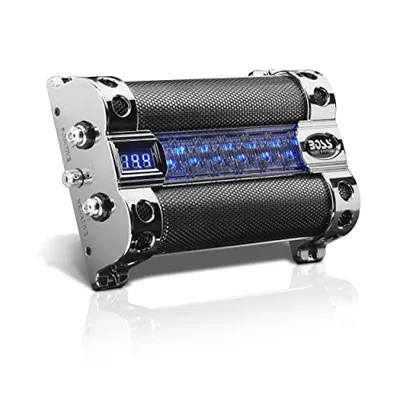 |
BOSS Audio Systems CAP8 8-Farad Capacitor – $79.99 The 8-Farad capacity below is the largest of the three we cover, sized for multi-amp systems pushing 6,000–8,000 watts RMS combined.
|
A stiffening capacitor is a passive electrical component — not a computer chip, not a second battery, and not related to Apple’s Lightning connector, despite the similar-sounding name. It gets the “lightning” nickname mostly from the LED light strip or lightning-bolt-style voltage readout that many car audio capacitor brands build into the housing, not from any technical standard.
It is also easy to confuse with a car radio capacitor, which is a completely different, much smaller part built into the head unit itself to hold your station presets and clock when the ignition is off. The capacitor this article covers is a large external unit, usually mounted near an amplifier, whose job is to smooth out voltage during loud bass — not to save your radio settings.
How a Stiffening Capacitor Actually Works
When a subwoofer amplifier hits a deep bass note, it can briefly demand far more current than your car’s charging system can supply through the wiring at that exact instant. That momentary shortfall is what causes headlights to dim or interior lights to flicker in time with the bass — the voltage at the amp is sagging, even if the battery itself is fine.
A capacitor mounted close to the amp acts like a tiny, extremely fast-reacting reservoir. It charges up between bass hits and discharges instantly the moment demand spikes, filling in the gap before the rest of the electrical system can respond. This is important to understand honestly: a capacitor does not create extra power, and it does not store nearly as much total energy as your car battery. A typical 1-Farad capacitor holds roughly 80 joules at 12.6 volts — a fraction of a watt-hour — while a car battery holds several hundred watt-hours. The capacitor’s advantage isn’t capacity, it’s speed: it can dump that small amount of energy in milliseconds, far faster than a battery or alternator can react through several feet of wire.
Do You Actually Need One? The Big 3 vs. Capacitor vs. Second Battery
Car audio forums have argued about capacitors for years, and the honest answer sits in the middle: a capacitor is not a magic fix for a weak electrical system, but it is a legitimate tool once the basics are already in place.
When a Capacitor Actually Helps
If your grounds and power wiring are already sized correctly for your amplifier and you still see brief dimming or hear an amp’s protection circuit kick in only on the loudest, deepest bass notes, a properly sized capacitor placed close to the amp can smooth that specific moment out. It is a precision tool for a specific symptom, not a general-purpose upgrade.
When to Skip It and Do the Big 3 Instead
The “Big 3” upgrade — running heavier-gauge wire for the battery-to-chassis ground, engine-to-chassis ground, and battery-to-alternator positive — fixes the root cause of most dimming and voltage-sag complaints, because it lets more current flow to the amp in the first place. If you have not done this yet, do it before buying a capacitor. It typically costs about the same as a mid-size capacitor and, according to installers who have compared both, more reliably solves headlight dimming than a capacitor alone, since a capacitor cannot supply current your wiring physically cannot deliver to it.
Capacitor vs. a Second Battery
A capacitor and a second battery solve different problems. A capacitor reacts in milliseconds but holds almost no reserve energy, so it only helps while the engine is running and the alternator is actively recharging it between bass hits. A second battery, wired through an isolator, stores far more usable energy and is the right choice if you play loud music with the engine off — something a capacitor cannot do at all, since it drains down in seconds with no engine running to refill it. If that describes how you listen, read our full breakdown on whether you need a battery isolator for car audio before choosing between the two.
How to Size a Capacitor for Your Amplifier
The long-standing rule of thumb among installers is about 1 Farad of capacitance for every 1,000 watts RMS your amplifier (or combined amplifiers) draws. There is no real electrical penalty for going larger — some installers run 2 to 3 Farads per 1,000 watts RMS and see a bit more benefit, at the cost of a bigger, heavier, more expensive unit. As a starting point:
- A single amplifier rated around 500–1,500 watts RMS is usually well matched to a 1–2 Farad capacitor.
- A 2,000–3,500 watt RMS system fits the 3.5–5 Farad range.
- Multi-amp systems pushing 6,000+ watts RMS combined are better matched to an 8-Farad (or larger) unit like the one reviewed below.
Undersizing a capacitor for a large system means it will not meaningfully help; oversizing simply costs more and takes up more space — it will not hurt your electrical system.
Installing a Capacitor Safely
Mount the capacitor as close to the amplifier as your install allows, and splice it into the amp’s positive power wire using cable of the same gauge already run to the amp. The one step installers stress most: a fully discharged capacitor connected directly to a live 12-volt system can pull a large inrush current strong enough to blow a fuse or throw a visible spark at the terminal. Most capacitors on the market include a built-in pre-charge resistor, bulb, or push-button charging circuit for exactly this reason — always let the capacitor charge through that circuit first, and connect the ground wire last.
Three Capacitors Worth Considering
Here is a closer, honest look at three real capacitors we cover on this page. If you want a full ranked buyer’s guide across a wider price range, see our roundup of the best capacitors for car audio instead — this page focuses on what a capacitor actually does and whether you need one before you shop.
BOSS Audio Systems CAP8 — 8 Farad
The largest of the three units here, the CAP8 is aimed at multi-amp systems where several thousand watts RMS are on tap. It includes a reverse-polarity warning tone and a low-battery-voltage LED, both genuinely useful for catching a wiring mistake before it damages an amplifier.
Pros
- 8-Farad capacity suits large, multi-amp systems
- Reverse-polarity warning tone flags a wiring error
- Low-voltage LED gives a quick visual health check
Cons
- Bulky and heavy — plan real mounting space before buying
- Overkill for a single small amplifier under 1,000 watts RMS
Audiobank 3.5 Farad Capacitor
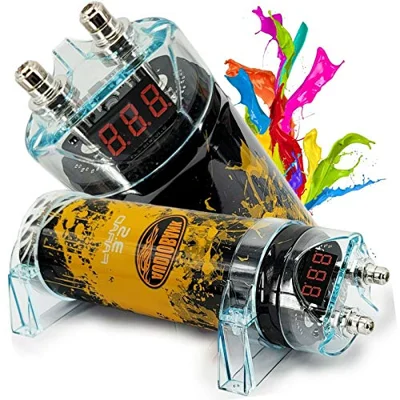
A mid-size option that fits the roughly 2,000–3,500 watt RMS range covered above. It carries a digital 3-digit voltage display so you can check system voltage at a glance without a separate multimeter.
Pros
- 3.5-Farad capacity fits mid-power systems
- Digital voltage display built in
- Chrome-plated battery posts
Cons
- Stock has run limited at times — check current availability before ordering
- Confirm your amp’s actual RMS wattage before sizing to this unit
Audobank AB-5.0 — 5 Farad
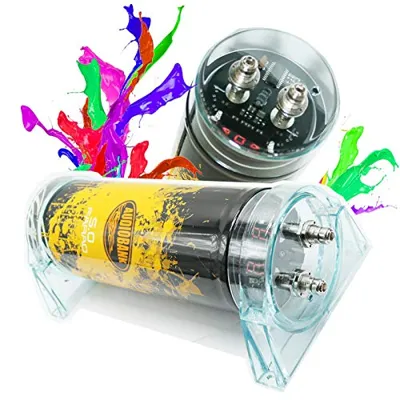
Sized between the other two, the AB-5.0 is a reasonable match for a single higher-power amp or a smaller multi-amp setup that does not need the full 8 Farads of the CAP8.
Pros
- 5-Farad capacity for larger single-amp or modest multi-amp setups
- Digital voltage display for quick monitoring
- Chrome-plated battery post
Cons
- Larger than needed for smaller single-amp systems
- Like any capacitor, it will not fix a system with undersized wiring or grounds
Frequently Asked Questions
What Is a Lightning Cap for Car Audio?
“Lightning cap” is a colloquial name for a car audio stiffening capacitor — a large capacitor wired between an amplifier and the battery. It is not related to Apple’s Lightning connector or to a radio’s small memory-backup capacitor. Its job is to hold a short-term charge close to the amp so it can respond instantly during bass hits, when current demand spikes faster than the alternator and wiring can supply it.
Do I Actually Need a Capacitor for My Car Audio System?
Only if your lights dim or your amp’s protection light flashes during heavy bass, and only after you have already upgraded your grounds and power wiring (the Big 3). A capacitor cannot add power your electrical system does not have; it only smooths out the power that is already there. For most single-amp setups, a properly sized Big 3 upgrade fixes voltage sag more effectively for a similar cost.
What Size Capacitor Do I Need for My Amp?
The long-standing rule of thumb is about 1 Farad of capacitance for every 1,000 watts RMS the amplifier draws, though many installers use 2 to 3 Farads per 1,000 watts for a bit more benefit with no real electrical downside besides cost and size. A single 1,000–1,500-watt RMS amp is usually well served by a 1–2 Farad cap, while a multi-amp system pushing 6,000+ watts RMS is a better match for something like the 8-Farad option reviewed above.
Is a Capacitor Better Than a Second Battery for Car Audio?
They solve different problems. A capacitor discharges its stored energy in a fraction of a second, so it suits short bass transients while the engine is running and the alternator can recharge it. A second battery, paired with an isolator, stores far more usable energy and is the only real option if you play music for extended periods with the engine off. See our guide on whether you need a battery isolator for car audio for that comparison in more depth.
Can a Capacitor Damage My Car Battery or Electrical System?
A correctly installed capacitor will not damage your battery. The real risk is at installation: connecting a fully discharged capacitor directly to a live system can draw a large inrush current that blows a fuse or arcs at the terminal. Most capacitors include a built-in pre-charge resistor or bulb for this reason — always let it charge through that circuit before making the final connection.
How Do I Install a Car Audio Capacitor Safely?
Mount the capacitor as close to the amplifier as your installation allows, then splice it into the amp’s positive power wire using the same gauge cable already run to the amp. Let the capacitor pre-charge through its resistor, bulb, or a dedicated switch before connecting it directly to the battery-fed wire, and always connect the ground wire last to avoid a spark at the terminal.
The Bottom Line
A lightning cap — really a stiffening capacitor — is a legitimate, narrow-purpose tool: it smooths the brief voltage sag that happens during hard bass hits by discharging stored energy faster than a battery or alternator can react. It is not an extra energy source, it will not fix an undersized electrical system on its own, and for many drivers a Big 3 wiring upgrade solves dimming lights more reliably for similar money. If your grounds and power wiring are already solid and you still see the lights flicker on deep bass, a correctly sized capacitor — like the subwoofer setups above call for — is a reasonable, honest fix.
Products related to this article
Sponsored / affiliate links. As an Amazon Associate I earn from qualifying purchases. I may earn additional commission from eligible campaigns.