Mirror Tape for Cars: Types, How to Apply It, and How to Remove It
Mirror tape for cars is a double-sided foam or VHB (Very High Bond) automotive tape used to reattach side mirror housings, trim, moldings, and emblems to a car body without screws or clips. It is not the same product as the adhesive used to remount an interior rearview mirror to the windshield, and it is not the decorative chrome or vinyl tape some people use to dress up a mirror cap — those are three different products, and mixing them up is the most common mistake buyers make.
This guide breaks down the three products that all get called “mirror tape,” how strong the real automotive-grade tape actually is, how to apply it so it holds, and how to remove it later without stripping paint.
What Is Mirror Tape for Cars?
“Mirror tape” is a catch-all term, and it usually means one of three different products depending on what you’re actually trying to fix:
| Product Type | What It Is For | Typical Cure Time |
|---|---|---|
| Exterior automotive attachment tape (VHB foam tape) | Side mirror housing shells, body trim, moldings, badges, emblems | 50% strength in 20 minutes, full strength in 72 hours |
| Interior rearview mirror mount adhesive | Reattaching the windshield-mounted mirror button/stem | Often heat- or UV-cured; different chemistry than exterior tape |
| Decorative vinyl or chrome tape | Cosmetic trim accents on a mirror cap or body line | Not structural; adheres in minutes but is not load-bearing |
If your side mirror housing popped off its base or a piece of trim near the mirror is loose, you want the first type: a double-sided VHB foam automotive tape. If your entire rearview mirror fell off the windshield, that is a separate repair — see our guide on how to fix a popped-out or stuck car mirror for the windshield-mount process, since VHB exterior tape is not designed for that bond.
Trusted Exterior Mirror & Trim Tape
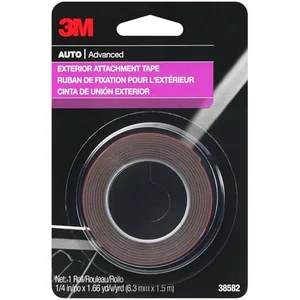 |
3M Auto Exterior Attachment Tape (38582) – $6.91 This is 3M’s own automotive-grade VHB foam tape, built specifically for side mirror housings, trim, moldings, and badges — the exact use case most people mean by “mirror tape.”
|
How Strong Is Automotive Mirror Tape?
Automotive VHB (Very High Bond) tape does not reach full strength the moment you press it on. According to 3M’s own technical guidance, the bond builds gradually at room temperature:
- About 50% of ultimate strength after 20 minutes
- About 90% of ultimate strength after 24 hours
- 100% of ultimate strength after 72 hours
That means a mirror housing you tape on Monday can look and feel secure by Tuesday, but it has not reached its real hold until three days later. Avoid car washes, high-speed highway driving, or anything that puts wind load directly on the taped panel until that window has passed. Cold weather slows this process down, while mild heat (parked in the sun, or a heat gun on low from a safe distance) speeds it up.
How to Apply Mirror Tape to a Car
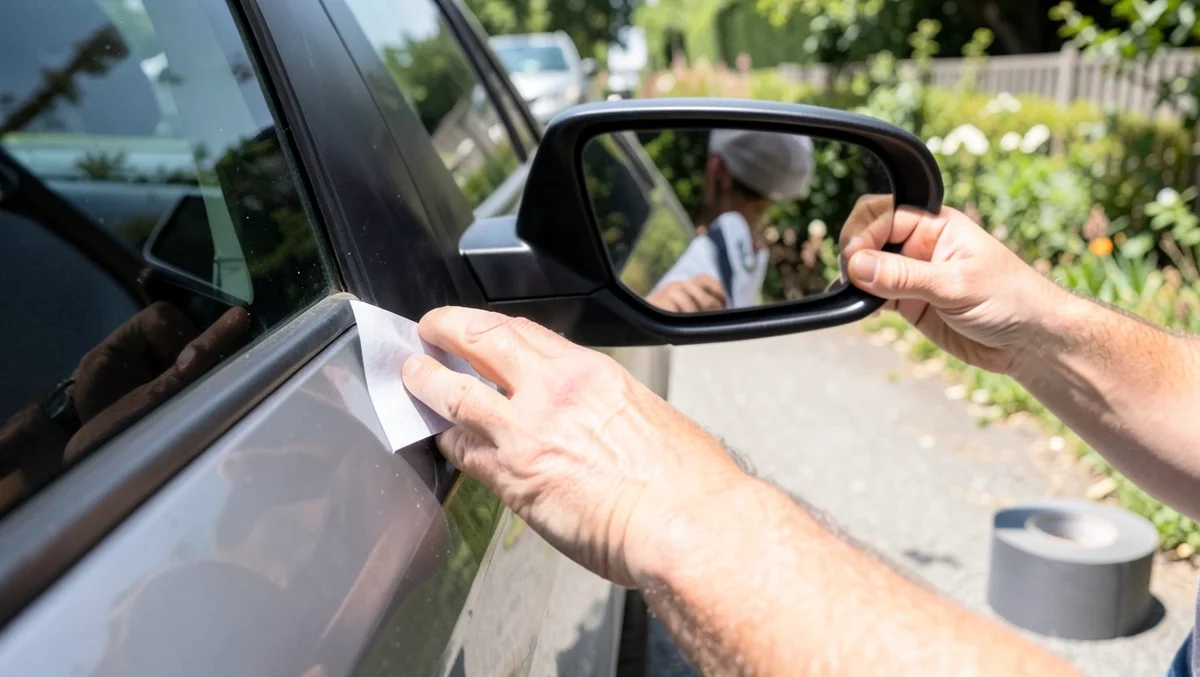
- Clean both surfaces. Wipe the mirror housing and the body panel with isopropyl alcohol, not a household glass cleaner or soapy water — residue and ammonia-based cleaners weaken the bond.
- Let it dry completely. Any moisture trapped under the tape will show up later as a soft spot or a peeling edge.
- Cut the tape to size before removing the backing. Trying to trim VHB foam tape once it is stuck to the panel usually drags the whole strip out of position.
- Position it once, then commit. Unlike paper tape, VHB foam grabs on contact and is very difficult to reposition cleanly.
- Apply firm, even pressure for 30–60 seconds. A rubber roller or the flat of your palm works better than a fingertip, which only presses a narrow line.
- Leave it alone for at least 24 hours, and avoid a car wash or highway speeds until the 72-hour mark described above.
Can You Remove Mirror Tape Without Damaging the Paint?
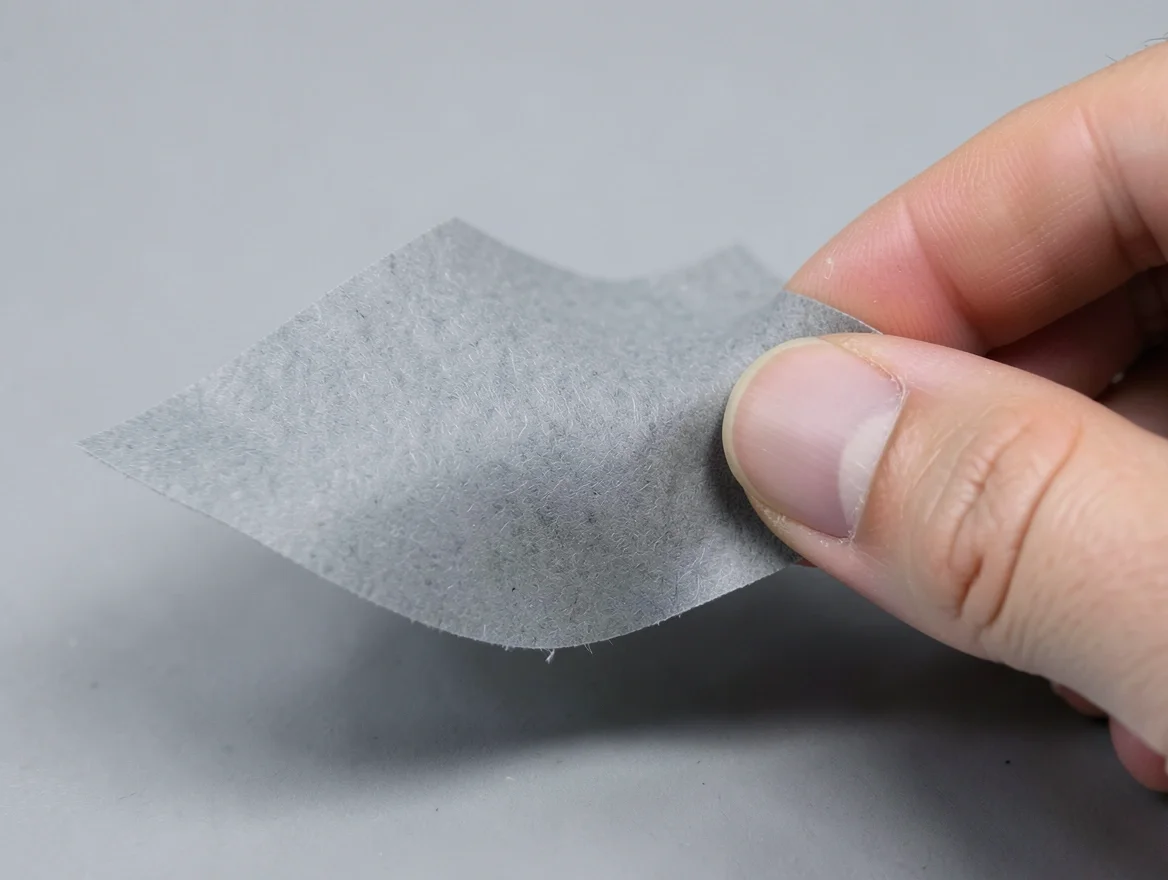
Not by simply peeling it off. VHB tape is designed to hold up to real driving loads, so pulling straight up almost always tears the foam and leaves adhesive residue behind rather than releasing cleanly. The safer method automotive techs actually use:
- Warm it first. A heat gun or hair dryer on low, held a few inches away, softens the adhesive so it releases instead of tearing.
- Pull parallel to the surface, not away from it. Working dental floss or thin fishing line back and forth under the tape, parallel to the panel, shears the bond without prying the trim piece off the car.
- Expect residue. Even done correctly, a gummy adhesive film often stays on the paint. Our guide on removing sticker and adhesive residue from a car covers safe products for that last step, since scraping it off with a blade risks scratching clear coat.
Mirror Tape vs. Liquid Adhesive vs. Epoxy: When to Use Each
Mirror tape (VHB foam tape) is the right call when you are reattaching a rigid, mostly flat mirror housing shell or trim piece to a mostly flat body panel, because the tape’s thickness fills tiny gaps between two surfaces that are not perfectly flush. It is the wrong call for a cracked mirror glass, a broken mounting arm, or an interior windshield-mounted rearview mirror, all of which need a liquid adhesive or epoxy formulated for glass-to-metal or glass-to-glass bonding instead. If you are not sure which situation you are dealing with, our full walkthrough on how to fix a side mirror on your car covers both the tape-based housing repair and the glass-replacement process side by side.
Frequently Asked Questions
Is Mirror Tape the Same as VHB Tape?
Usually, yes. “Mirror tape” is a shopper-friendly nickname for automotive VHB (Very High Bond) foam tape, the same category of double-sided tape used for trim, moldings, and emblems. It is not the same product as the adhesive used to remount an interior rearview mirror to a windshield.
How Long Does Mirror Tape Need to Cure Before Driving?
It reaches roughly 90% of its final strength after 24 hours and its full bond after about 72 hours at room temperature. You can drive after 24 hours in most cases, but avoid car washes and high highway speeds until the full 72-hour window has passed.
Will Mirror Tape Hold Up in Rain or Extreme Heat?
Automotive-grade VHB tape is formulated to be weather- and UV-resistant once it has fully cured, which is why it is used on exterior trim and moldings from the factory. Heat actually helps the bond form faster; extreme cold slows curing down but does not prevent it.
Can I Use Mirror Tape to Reattach a Rearview Mirror to the Windshield?
No. That repair uses a different product — a glass-mount adhesive or structural bonding tape designed to bond a metal button to windshield glass, often heat-cured. Exterior VHB attachment tape is not formulated or rated for that glass bond.
Does Mirror Tape Damage Car Paint When You Remove It?
Pulled straight off cold, it can tear and leave a sticky residue rather than damage the paint itself. Warming the tape first and pulling a thin line (dental floss or fishing line) parallel to the panel releases it cleanly in most cases, with only adhesive residue left to clean up afterward.
What Width of Mirror Tape Should I Buy?
Match the tape width to the flat contact area on the housing or trim piece you are bonding — 1/4 inch is common for narrow mirror housing edges and trim strips, while wider 1/2 inch to 1 inch tape suits larger, flatter panels. Buying tape narrower than the contact area wastes bonding surface; buying it wider means trimming the excess before it touches the panel.
Final Thoughts
Mirror tape for cars works well for exactly one job: bonding a rigid mirror housing shell or trim piece back onto the body using automotive-grade VHB foam tape. Clean the surfaces with isopropyl alcohol, press firmly once, and give it the full 72 hours before treating the repair as permanent. If the problem is actually a cracked mirror glass or a windshield-mounted rearview mirror that fell off, that calls for a different adhesive entirely — not mirror tape.
Products related to this article
Sponsored / affiliate links. As an Amazon Associate I earn from qualifying purchases. I may earn additional commission from eligible campaigns.