Nightmare Before Christmas Car Decals: Jack Skellington Picks
For Nightmare Before Christmas car decals, choose cut-vinyl Jack Skellington silhouettes for body panels, removable static-cling or window decals for glass, and laminated outdoor vinyl when you want longer wear. Poor sizing, weak adhesive, or the wrong finish can leave residue, peel early, or make the graphic hard to read on your car. This guide sorts the best Jack Skellington decal types by placement, durability, and lease-friendly removability.
Jack Skellington decal basics


Jack Skellington is the main character from the 1993 movie The Nightmare Before Christmas. He is the Pumpkin King, a skeleton from Halloween Town, and his black suit, thin white stripes, bat bow tie, and skull face make him easy to read even from across a parking lot.
That visual simplicity is why his art works well on cars. A clean silhouette holds up at distance, across trim lines, and on tinted glass better than a busy full-color scene, especially when you want the decal to read clearly on a moving vehicle.
Why Jack’s silhouette works on a car
The best car decals use shapes the eye can identify fast. Jack’s skull, suit outline, and bat bow tie stay legible on rear glass or a door panel because they rely on strong contrast instead of fine detail that disappears in sun glare or road dirt.
The character also fits the seasonal appeal of The Nightmare Before Christmas, the Disney Halloween-and-Christmas crossover film. That matters for buyers because many people want a decal that feels seasonal without looking cluttered on a daily driver.
What to know about branding and character art
Jack’s first appearance is in The Nightmare Before Christmas (1993). He was created by Tim Burton, Chris Sarandon provided Jack Skellington’s speaking voice, and Danny Elfman provided his singing voice. Those details matter less for fit, but they explain why the character art is so widely used in aftermarket decals.
For buying purposes, focus on the art treatment, not the lore. A silhouette cut from vinyl, a printed window graphic, and a bumper sticker all age differently on a vehicle.
What kind of decal fits your car?
The right Jack Skellington decal depends on placement. Glass needs a different product than paint, and a bumper sticker faces different wear than a rear-window graphic. Start with where it goes, then choose size, finish, and how easily you want it to come off.
Window decals versus body-panel decals
Window decals work best on rear side windows, hatch glass, and the rear window because glass usually tolerates adhesive graphics well when the surface is clean and dry. Body-panel decals can work on painted doors or quarter panels, but they need stronger prep and a finish meant for automotive paint.
Windshield use is different. Keep anything that blocks the driver’s view out of the windshield area and check local laws before placing graphics on front glass.
Bumper stickers and hatch-glass decals
Bumper stickers sit in the harshest spot. They take road spray, soap, sun, and repeated washing, so edge lift is more common there than on side glass. Hatch-glass decals split the difference: they see weather and wiper action, but they usually offer a flatter, cleaner viewing area than a curved bumper corner.
When a large graphic becomes hard to place
Large Jack Skellington decals can look good on a rear window, but size creates fit problems fast. Wipers, defroster lines, trim, third brake lights, and hatch curvature can cut through the design or trap bubbles. On compact hatchbacks, a medium decal often reads better than a huge one that has to bend around too many edges.
Jack Skellington decal buyer’s checklist
| Placement | Recommended size range | Material choice | Removability | Weather resistance | Best-use case |
|---|---|---|---|---|---|
| Rear window | 12 to 24 inches wide | Outdoor-rated window vinyl or static-cling window graphic | Moderate to high | High if laminated; moderate if static-cling | Strong visibility without covering the full glass panel |
| Side window | 6 to 16 inches wide | Window vinyl or static-cling for temporary use | High | Moderate to high | Simple silhouette that works with tint and smaller glass |
| Bumper | 4 to 10 inches wide | Outdoor-rated adhesive vinyl with laminate | Moderate | High | Small graphic that can handle wash cycles and road spray |
| Hatch glass | 10 to 20 inches wide | Outdoor-rated window vinyl | Moderate to high | High | Rear-facing art that still leaves room for wiper sweep |
| Door panel | 8 to 18 inches wide | Automotive adhesive vinyl with paint-safe adhesive | Moderate | High if properly applied | Clean body-panel look on OEM paint |
| Leased vehicle | Small to medium | Static-cling or low-tack removable window decal | High | Moderate | Lease-friendly choice with lower residue risk |
Rear window
Rear windows can handle larger Jack Skellington art than side glass, but the decal still needs room around the defroster lines and rear wiper path. A medium or large silhouette works if it leaves clear sightlines and does not sit where the wiper will catch an edge.
Side window
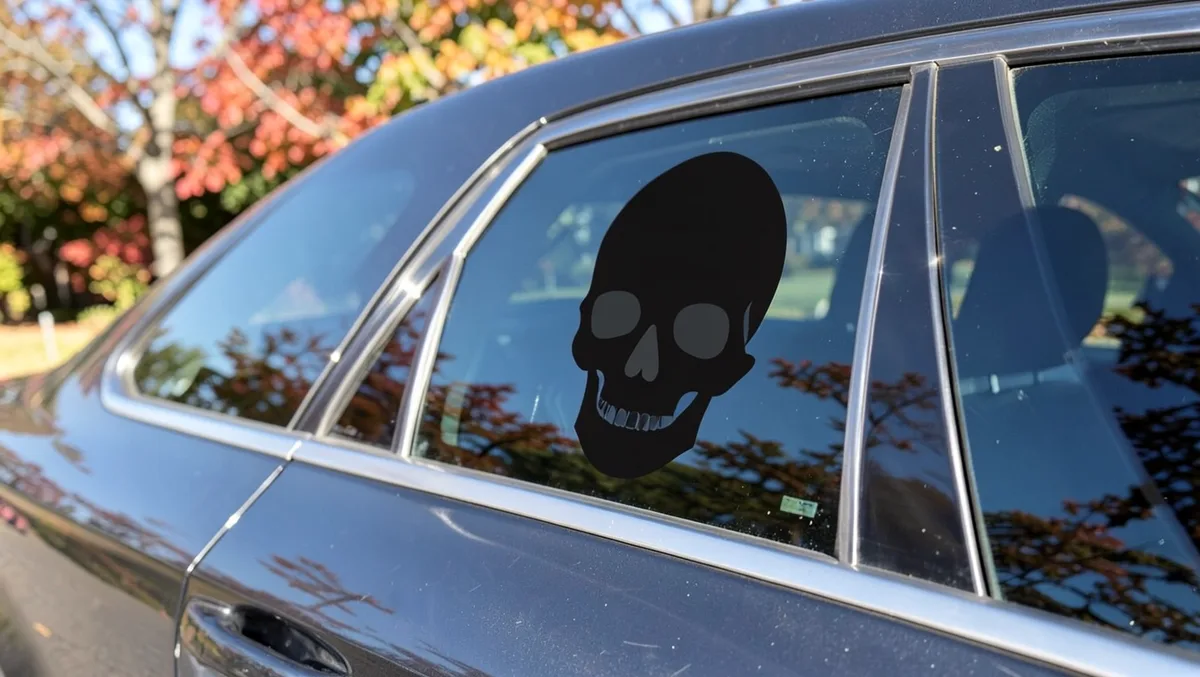
Side glass is a good place for a smaller silhouette or profile graphic. It also tends to be the easiest spot for a first decal because the shape is flatter and more predictable than a curved body panel. If the car has dark tint, a high-contrast black-on-clear or white-on-tint graphic reads best.
Bumper
A bumper decal should be small, simple, and made for exposure. Choose outdoor-rated adhesive vinyl with a laminated face if the bumper is regularly washed or sits in strong sun. Tiny details can fail here first because bumper corners invite edge lift.
Hatch glass
Hatch glass works well for a medium decal when you want rear visibility and a visible Jack Skellington profile. The main issue is curvature. The more the glass wraps, the more carefully you need to size the graphic so it lies flat without tension.
Door panel
Door panels are for buyers who want a body decal rather than a sticker on glass. Painted surfaces need a clean, dry prep and an adhesive meant for automotive finish. If the panel has a lot of contour, keep the design simple so the film does not bridge over creases.
Leased vehicle
If the car is leased, move removable window products to the top of the list. Static-cling graphics or low-tack window decals reduce the chance of residue and paint issues at turn-in. Keep body-panel decals small and removable only if the lease rules allow exterior graphics.
What size Jack Skellington decal should you buy?
Size should match placement, not fandom enthusiasm. Small decals suit narrow side glass or bumper corners, medium decals work well on hatch glass and rear side windows, and large decals make sense only when the glass area is broad enough to keep the image readable.
Small decals for subtle placement
Small decals usually fall in the 4- to 10-inch range. They suit bumper corners, quarter windows, or a lower door-panel accent. This size is also easier to remove later and less likely to conflict with trim, handles, or wiper arcs.
Medium decals for side glass and hatch use
Medium decals, often around 10 to 18 inches wide, are commonly considered a safe all-around choice. They are large enough for Jack’s skull and bow tie to read clearly, but small enough to fit most hatchbacks and SUVs without crossing into hardware or legal visibility issues.
Large decals for rear-window statements
Large decals are best for rear windows when you want the silhouette to read from a distance. They need the cleanest alignment and the most careful checking for defroster lines, rear wipers, and the driver’s rearward view. On smaller cars, a large graphic can overwhelm the glass.
Say your hatchback has a 14-inch-tall rear window with a wiper sweeping the lower third. A 16-inch decal may sound tempting, but it is more likely to collide with the sweep path than a 12-inch graphic that leaves open space around the edges.
Which material lasts outdoors?
For outdoor use, look for vinyl that is labeled for automotive or exterior application, with UV and weather resistance clearly stated by the seller. A simple cut-vinyl silhouette is usually the best fit for Jack Skellington because it keeps the design crisp and avoids print fade from sun exposure.
Outdoor-rated vinyl and UV resistance
Outdoor-rated vinyl is built to tolerate rain, heat, and washing better than craft vinyl. UV resistance matters because Jack’s high-contrast black-and-white look can lose impact if the adhesive film yellows or the print fades over time. If the product does not mention outdoor use, treat it as a short-term decal.
Single-color cut vinyl versus layered designs
Single-color cut vinyl is the cleanest option for Jack Skellington. It gives you a sharp silhouette, a faster install, and fewer edges that can lift. Multi-layer designs can look fuller, but they add seams and alignment points that are more vulnerable to dirt and washing.
Heat, rain, and car-wash exposure
Heat makes weak adhesive soften, and cold can make it less forgiving during installation. Rain itself is usually not the problem; edge lift starts when moisture works under a poor bond. Brushless washing is generally kinder than aggressive brush wash systems, but any decal lasts longer if the edges are fully pressed down and the surface was prepared correctly.
How do you apply it cleanly?
Clean application starts with the surface, not the decal. Use rubbing alcohol or panel prep on a clean, dry surface, then align the graphic with masking tape before committing it to the car. A squeegee and microfiber cloth help remove trapped air and finish the edges.
Prep the surface first
- Wash the area to remove dirt and road film.
- Dry it completely with a microfiber cloth.
- Wipe the final area with rubbing alcohol or panel prep.
- Let the surface air-dry before applying the decal.
That order matters because wax, silicone, and dust weaken adhesion. A clean, dry-prepped surface gives the adhesive the best chance to bond evenly.
Use transfer tape and masking tape alignment
Transfer tape keeps cut vinyl in one piece while you position it. Masking tape helps you hinge the decal in place so you can check centering before the adhesive touches the glass or paint. This is especially useful for Jack’s silhouette, where the face angle and bat bow tie should sit level.
Squeegee out bubbles and seal the edges
Work from the center outward with a squeegee. Firm pressure pushes air to the edge instead of trapping it under the film. After the backing comes off, press the edges again with a microfiber cloth so they do not curl early.
A common first-timer mistake is placing a medium decal on slightly damp glass. The graphic can look centered at first, then shift a few millimeters as the moisture gives way and the edge starts to lift after the first hot day.
Will a Jack Skellington decal stick to tinted windows?
Yes, in most cases. Tint does not prevent a window decal from sticking, but it can change how the image reads. A clear adhesive window decal may disappear against dark tint, while a white or light-colored silhouette usually stands out better. Static-cling products also work well on many tinted rear windows.
Check that the tint film is fully cured and that the seller says the decal is safe for glass film. On rear windows, make sure the decal does not block defroster lines or the driver’s rear view. Windshields are a different category, and local laws may restrict placement there.
Are Jack Skellington car decals removable without damaging paint?
Many are, if you choose the right material and remove it with heat. Outdoor vinyl on OEM paint is usually safer than bargain adhesive films, but removal should still be done slowly. Heat-assisted peel lowers the chance of lifting clear coat, and residue should be cleaned with a product safe for automotive finishes.
Paint safety depends on surface prep, adhesive age, sun exposure, and whether the panel was repainted. Older or aftermarket paint can behave differently from factory finish. If you are unsure, keep the decal on glass instead of paint.
Heat-assisted removal
Warm the decal gently, then lift one corner and peel back slowly at a low angle. Heat softens the adhesive so it releases more evenly. Do not rush this step, especially on a car that has sat in hot sun for months.
Residue cleanup on paint and glass
After the decal comes off, some adhesive may remain. Use a residue remover that is safe for automotive surfaces, then wipe the area clean with a microfiber cloth. Avoid scraping aggressively on paint, and do not use abrasive pads that can dull the finish.
What lease shoppers should check first
Lease-friendly buyers should look for low-tack or static-cling options first, then confirm the lease agreement allows exterior graphics. If the decal will go on paint, ask whether the vehicle must be returned free of residue or panel marks. A simple window decal is usually the safer choice for turn-in.
Frequently asked questions
What are the best Jack Skellington car decals?
The best choice is usually a cut-vinyl Jack Skellington silhouette for body panels or a removable window decal for glass. If you want longer outdoor wear, choose automotive-grade adhesive vinyl with UV resistance. For leases or temporary seasonal use, static-cling window graphics are the safest starting point.
What materials are best for outdoor car decals?
Outdoor-rated vinyl is the standard pick because it handles sun, rain, and washing better than craft film. For a Jack Skellington graphic, single-color cut vinyl often outlasts layered designs because it has fewer edges to lift. Laminated versions add protection when the decal sits on exposed glass or paint.
How do I apply a Jack Skellington decal without bubbles?
Clean the surface with soap, dry it fully, then wipe with rubbing alcohol or panel prep. Use masking tape to position the decal, apply from one side with transfer tape, and smooth it with a squeegee from the center outward. Finish by pressing the edges with a microfiber cloth.
Can I put a Nightmare Before Christmas decal on a leased car?
Usually yes, but the safest choice is a removable window decal or static-cling graphic. Avoid strong adhesive on paint unless the lease allows it and you are comfortable with residue cleanup at turn-in. Check the lease terms first, because some contracts limit exterior modifications.
Are there official Nightmare Before Christmas car decals?
Yes, official or licensed decals do exist, but the listing should clearly say Disney, The Nightmare Before Christmas, or licensed character art. If the product does not identify the source, assume it is unofficial fan art. Licensed options can still vary in material quality, so confirm the vinyl type and removability before buying.
Products related to this article
Sponsored / affiliate links. As an Amazon Associate I earn from qualifying purchases. I may earn additional commission from eligible campaigns.