P0101 Chevy Silverado Fix: Diagnose and Repair the MAF Sensor Code
Your Silverado’s check engine light comes on, and the code reader says P0101. You’re not alone. This is one of the most common codes on GM trucks, and it points to the mass airflow (MAF) sensor reporting readings the engine computer can’t trust. The frustrating part? The code doesn’t tell you if the sensor is dirty, dead, or if the problem is actually a cracked intake boot downstream.
This guide walks through a diagnose-first, replace-later approach. You’ll learn how to read live fuel trim data, inspect the intake path for splits, test the MAF with a cheap multimeter, and clean or replace parts only when the evidence points there. You’ll also get year-specific tips for 2026-2026 and 2026+ Silverados that generic guides skip.
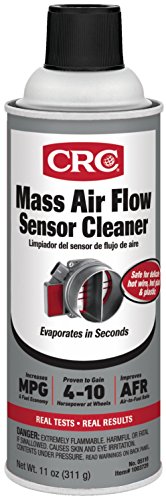
CRC
CRC Mass Air Flow Sensor Cleaner -…
- Increases Horsepower And Improves Air/Fuel Ratio And Mpg
- Plastic Safe-Dries In Seconds
- Not Voc Compliant For California & Otc
Before you buy any parts, grab a can of CRC Mass Air Flow Sensor Cleaner. It’s plastic-safe, dries in seconds, and is the cheapest way to rule out a contaminated sensor. A $10 can beats a $150 MAF replacement that fixes nothing.
What Does P0101 Mean on a Chevy Silverado?
P0101 is a diagnostic trouble code for “Mass Air Flow (MAF) Sensor Circuit Range/Performance Problem.” The engine control module (ECM) compares the MAF sensor’s reading against calculated values based on throttle position, RPM, and intake air temperature. When the difference exceeds a programmed threshold for a set time, the code sets.
This is different from P0100 (no signal) or P0102 (low frequency). P0101 means the sensor is sending a signal, but the signal is out of the expected range. The ECM doesn’t trust it.
On the Silverado 5.3L V8, this code often appears during highway cruising or after a cold start. On the Duramax diesel, it shows up under heavy load or when towing. The repair path is similar, but the root causes differ slightly.
P0101 Symptoms: What Your Truck Will Do
Symptoms vary depending on how far the MAF reading is off. Some trucks run fine, just with a light on. Others enter reduced power mode and feel like they lost half their horsepower.
- Check engine light illuminated (solid or flashing)
- Rough idle, especially when warm
- Hesitation or stumbling during acceleration
- Poor fuel economy — expect a 10-20% drop
- Reduced power mode or limp mode on Duramax models
- Hard starting after the truck sits overnight
One thing to note: these symptoms overlap with a failing throttle body or a vacuum leak. Don’t throw parts at it based on symptoms alone. You need data.
Root Causes: Why the MAF Circuit Range is Failing
Four main culprits cause P0101 on a Silverado. In order of likelihood: a dirty sensor, an intake leak, a wiring issue, or a dead MAF. Let’s break each down.
Dirty or Contaminated MAF Sensor
This is the number one cause on gas engines. The MAF sensor has a hot wire or hot film element that measures air flow. Oil from a dirty air filter, blow-by gases from the PCV system, or over-oiled aftermarket air filters coat that element. The coating insulates the wire, slowing its response. The ECM sees a lagging signal and trips P0101.
On 2026-2026 Silverados with the 5.3L, there’s a known issue with high oil consumption. The PCV system routes oil vapor into the intake, and that vapor lands on the MAF. If your truck burns a quart every 2,000 miles, expect to clean the MAF regularly.
Intake and Vacuum Leaks
A crack in the intake duct between the airbox and throttle body lets unmetered air enter. The MAF measures less air than the engine actually gets, so the ECM sees a discrepancy. The same happens with a torn intake boot, a loose clamp, or a cracked vacuum line.
On Duramax trucks, check the intercooler piping. A split silicone coupler or a loose clamp on the hot side will trigger P0101 under boost.
Wiring and Connector Issues
The MAF sensor has a 5-volt reference, a ground, a signal wire, and sometimes an intake air temperature wire. Corrosion on the pins, a broken wire in the harness, or a loose connector causes intermittent readings. On 2026+ Silverados, a known issue is poor pin fit in the MAF connector. The terminals stretch over time, causing intermittent contact.
Water intrusion is another culprit, especially if you power-wash the engine bay. The connector seals degrade, and moisture gets into the pins.
Faulty MAF Sensor or ECM Software
After 100,000 miles, the sensor itself can fail. The hot wire burns out or the internal electronics drift out of spec. Less common but possible: the ECM has a software glitch. GM has released updated calibration files for some model years. If the sensor tests fine and there are no leaks, check for TSBs (technical service bulletins) for your specific year.
Diagnose P0101 in 20 Minutes (No Scan Tool? Here’s How)
You don’t need a $2,000 scan tool to diagnose this. A basic OBD-II reader with live data, a multimeter, and your eyes will cover 90% of cases. Here’s the order to work through.
Visual Inspection of the Intake Path
Start with the cheap stuff. Open the hood and look at every inch of the intake ducting from the airbox to the throttle body. Squeeze the rubber boots. Cracks hide on the underside where you can’t see them from above.
Remove the air filter and inspect it. If it’s black with dirt or soaked with oil, replace it. Also check the MAF sensor element itself. Look through the opening — if you see a film of oil or dirt on the wire, that’s your smoking gun.
Check all vacuum lines connected to the intake manifold. A cracked line at the back of the engine is easy to miss. Use a mirror if needed.
Testing the MAF Sensor with a Multimeter
If the visual inspection is clean, test the sensor’s electrical side. Disconnect the MAF connector and check for 12 volts on the power pin and a clean ground on the ground pin, with the key on. You’ll need the pinout for your specific year, but it’s usually printed on the connector or available online.
Next, test the signal wire. With the connector plugged in and the engine running at idle, back-probe the signal wire. You should see a voltage between 0.5 and 1.5 volts at idle. Rev the engine to 3,000 RPM — the voltage should climb to 3.5-4.5 volts. If the voltage stays flat or jumps erratically, the sensor is failing.
This test doesn’t work on all models — some newer trucks use a digital frequency signal instead of analog voltage. Check your service manual first.
Using Live Data to Confirm the Diagnosis
This is the step most guides skip, and it’s the one that saves you money. Any scan tool that reads live data will show short-term fuel trim (STFT) and long-term fuel trim (LTFT).
Warm up the engine, then read the fuel trims at idle. Normal values hover near 0%, with occasional swings of ±5%. If LTFT is above +10%, the ECM is adding fuel because it sees lean conditions. That points to an intake leak or a MAF reading low. If LTFT is below -10%, the ECM is removing fuel because the mixture is rich — that points to a dirty MAF reading high.
Here’s the trick: unplug the MAF sensor while the engine idles. The ECM will default to a calculated air value. If the idle smooths out and the fuel trims normalize, the MAF is the problem. If nothing changes, the issue is elsewhere.
How to Fix P0101: Step-by-Step Repair Guide
Once you’ve confirmed the cause, here’s how to fix it. The order matters — start with the cheapest, least invasive option.
Cleaning the MAF Sensor Correctly
Cleaning is a 10-minute job. Remove the air duct from the airbox to the throttle body. The MAF sits in that duct. Unscrew the two Torx screws holding it in place and slide it out.
Spray the sensor element with CRC Mass Air Flow Sensor Cleaner. Hold the can about six inches away and apply 5-10 short bursts. Do not touch the element with anything — not a Q-tip, not a rag, not your finger. The element is fragile and any contact can damage it.
Let it dry for a few minutes. The cleaner evaporates fast, so this won’t take long. Reinstall the sensor, reconnect everything, and clear the code.
One caveat: CRC makes a specific MAF cleaner for a reason. Don’t use brake parts cleaner or carb cleaner. Those leave residues that ruin the sensor.
Replacing the MAF Sensor
If cleaning doesn’t fix it, replacement is next. You have two options: OEM (ACDelco) or aftermarket. OEM costs more but is a guaranteed fit. Aftermarket brands like Delphi, Hitachi, or Standard Motor Products are usually fine, but some cheap no-name sensors have calibration issues.
I’ve seen aftermarket MAF sensors that read 20% off out of the box. That’s a nightmare to diagnose because it throws the same P0101 code. Stick with a known brand or buy OEM from a dealer parts counter.
Removal is the same as cleaning. Unplug the connector, remove the screws, pull the sensor out, and install the new one. Clear the code and test drive.
Repairing Wiring and Sealing Leaks
If you found a cracked intake boot, replace it. A $25 part beats a $150 sensor. Check the clamps too — a loose clamp on a silicone coupler can cause the same issue.
For wiring issues, repair the damaged wire or replace the connector. On 2026+ trucks with the pin fit problem, you can sometimes bend the terminals slightly to restore tension. If the connector is corroded, replace it with a pigtail connector from the dealer.
After any repair, clear the code and verify the fix with a proper drive cycle.
Silverado-Specific Fixes: 5.3L vs. Duramax
The 5.3L gas engine and the Duramax diesel have different failure patterns. Here’s what to expect on each.
2026-2026 5.3L: The high oil consumption issue is real. GM issued a piston ring TSB for some trucks, but if yours hasn’t been fixed, the oil vapor will keep contaminating the MAF. Cleaning helps temporarily, but you’ll be doing it every 10,000 miles. If you see blue smoke on startup or oil consumption between changes, address that first. Otherwise, you’ll chase this code forever.
2026+ 5.3L: The oil consumption issue improved, but the connector pin problem appeared. If you’re getting intermittent P0101 codes that clear themselves, check the connector before anything else. Push on the connector while the engine idles — if the reading changes, you found it.
Duramax: The MAF is less likely to get oil contamination, but the intercooler piping is the weak point. Check the hot side pipe where it connects to the intake manifold. A split boot under boost will trigger P0101 and often a P0299 (turbo underboost) at the same time.
Cost to Fix P0101: DIY vs. Mechanic
Here’s what you’ll actually spend, depending on the fix.
| Repair | DIY Cost | Shop Cost (Parts + Labor) |
|---|---|---|
| MAF cleaner (CRC) | $10-15 | $50-100 (diagnostic fee + cleaning) |
| Intake boot / duct replacement | $25-60 | $150-250 |
| Aftermarket MAF sensor | $60-120 | $250-400 |
| OEM ACDelco MAF sensor | $150-250 | $350-550 |
| Wiring repair / connector replacement | $10-50 | $200-400 |
Labor rates vary, but most shops charge $100-150 per hour. A diagnostic fee alone is usually $100-150. That’s why the DIY route saves real money — you can clean the MAF and check the intake for under $20 and 30 minutes of your time.
Can You Drive with a P0101 Code?
Short answer: yes, but it’s not ideal. The truck won’t leave you stranded in most cases. The ECM will use a calculated air value and the engine will run. You’ll notice worse fuel economy and possibly reduced power.
That said, ignore it for too long and you risk bigger problems. A lean condition from an unmetered air leak can cause detonation, which damages pistons over time. A rich condition fouls spark plugs and contaminates the catalytic converter. Neither is cheap to fix.
If you must drive, keep RPMs moderate and avoid heavy loads. Get it diagnosed within a week. If the check engine light starts flashing, pull over immediately — that indicates misfires, which can destroy the catalytic converter.
Frequently Asked Questions
Can a dirty air filter cause P0101?
Yes. A heavily clogged air filter restricts airflow and changes the pressure drop across the MAF sensor. The sensor reads less air than expected, and the ECM sets P0101. Replace your air filter before touching the MAF sensor. It’s a cheap fix and a common cause on trucks driven on dusty roads.
Will a P0101 code clear itself?
Sometimes. If the condition is intermittent, the code may clear after several drive cycles without the fault recurring. But the code will come back if the root cause isn’t fixed. Clearing the code with a scan tool or battery disconnect won’t solve anything — it only resets the monitors.
Is P0101 the same as a bad MAF sensor?
Not necessarily. P0101 means the MAF reading is out of range, but the cause could be a dirty sensor, an intake leak, a wiring fault, or a failing sensor. Replacing the MAF without diagnosing first is a coin flip. You’ll save money by testing the sensor and checking for leaks before buying parts.
How long does a MAF sensor last on a Silverado?
Most last 100,000 miles or more. The failure rate depends on air filter maintenance and oil consumption. Trucks with the 5.3L oil consumption issue may need a new MAF every 50,000 miles. A clean air filter and regular MAF cleaning extend the life significantly.
Can I clean a MAF sensor with alcohol?
No. Isopropyl alcohol leaves a residue and can damage the sensor element. Use a dedicated MAF cleaner like CRC. It’s specifically formulated to evaporate without residue and is plastic-safe. Using the wrong cleaner is a common DIY mistake that turns a $15 cleaning job into a $200 replacement.
The Bottom Line
P0101 on a Chevy Silverado is rarely a catastrophic failure. It’s usually a maintenance issue — a dirty sensor, a cracked boot, or a loose connection. The fix is straightforward if you diagnose first.
- Start with a visual inspection of the intake ducting. Squeeze every boot and look for cracks.
- Clean the MAF sensor with a dedicated cleaner before replacing anything.
- Use live fuel trim data to confirm the MAF is the problem before spending money.
- On 2026-2026 5.3L trucks, check oil consumption first — it’s the root cause of recurring MAF contamination.
- On 2026+ trucks, inspect the connector pins before buying a sensor.
- Use an OEM or reputable aftermarket MAF sensor if replacement is needed. Cheap sensors cause more problems than they solve.
- Clear the code and verify the fix with a 20-minute drive cycle, including idle, cruise, and acceleration.
You can handle this in an afternoon with basic tools. And if you need to dig into other Silverado trouble codes, check out our guides on P0121 fixes or P0521 oil pressure issues for related diagnostics.
Products related to this article
Sponsored / affiliate links. As an Amazon Associate I earn from qualifying purchases. I may earn additional commission from eligible campaigns.