We Tested Plastic Spray Paint for Cars: Top 3 Picks
For most DIY car plastic repairs, the right plastic spray paint depends on the part. Use a flexible bumper coating for exterior trim and bumpers, a heat-resistant paint for engine-bay or sun-baked pieces, and a vinyl-safe coating for interior parts. Pick the wrong formula and you get peeling, cracking, weak adhesion, and a finish that looks worse than the faded plastic you started with. This guide compares the main options by use case and highlights the top three most broadly useful picks, with the other products serving as more specialized alternatives for difficult plastics or flexible interior pieces.
Best plastic spray paint for cars
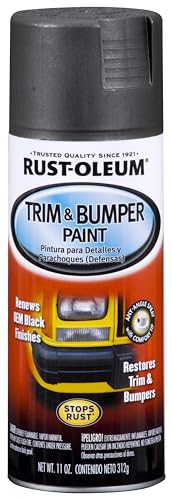


Best overall: Rust-Oleum 251574 Automotive Trim & Bumper Spray Paint is the simplest first pick for most exterior plastic because it is built for trim and bumpers, dries to the touch in about 20 minutes, covers roughly 10-15 square feet per can, and leaves a gloss black finish with a Stops Rust formula.
That makes it a practical answer for faded black exterior trim where the goal is to restore color and keep the finish from looking chalky or mismatched. It is not the right tool for every substrate, but it is the best fit for common bumper cover and exterior molding work where adhesion and weather resistance matter more than novelty.
Plastic is harder to coat than metal or wood because many automotive parts have low surface energy, flex under load, or both. A coating that looks fine on a rigid panel can peel off a bumper corner, craze on a flexible trim strip, or fail on polypropylene even though the can says “plastic.”
Why this one leads the list
Rust-Oleum 251574 leads because it answers the most common exterior problem: faded, dull, or patchy black trim that needs a durable aerosol coating without turning into a science project. For most bumper and trim jobs, the main risk is peeling from poor prep or the wrong product class, not a lack of color choices.
Use this when the part is already black and the main job is restoring uniform gloss. If the plastic is a difficult substrate such as polypropylene, jump to a dedicated plastics formula and use adhesion promoter first.
What it solves better than general enamel
General enamel can dry to a hard shell, but that stiffness is a liability on flexible parts. Trim and bumper paint is made to move a little with the substrate, which helps reduce cracking and edge lift after heat cycles and minor flexing.
It also gives a more suitable finish for exterior black plastic than a general-purpose glossy enamel that can look too bright next to surrounding trim. That matters when the goal is color match, not a fresh coat that screams “painted.”
Quick picks by use case
- Best overall for trim and bumpers: Rust-Oleum 251574 Automotive Trim & Bumper Spray Paint
- Best for difficult plastics: Rust-Oleum 248649 Automotive Paint For Plastics
- Best for heat-exposed parts: VHT High Temperature Plastic Paint
- Best for flexible interior parts: Dupli-Color Vinyl and Fabric Coating Spray
- Best black trim restoration with UV and chemical resistance: NADAMOO Automotive Black Trim Spray Paint
Plastic spray paint decision matrix
This matrix maps substrate, location, and failure risk to the safest product class. It is meant to stop the two classic mistakes: using the wrong coating on PP or PE, and using a hard finish on a part that flexes or lives in direct sun.
| Plastic type | Location | Failure risk | Safest product class | Prep step | Expected dry or handling window |
|---|---|---|---|---|---|
| ABS | Exterior trim | Fade, gloss mismatch | Trim and bumper paint | Wash, degrease, scuff, tack off | Touch dry about 20 minutes; handle after a full flash period |
| PP | Exterior bumper cover | Peel | Plastic-specific adhesion coating plus adhesion promoter | Clean thoroughly, scuff lightly, apply promoter before color | Touch dry about 20 minutes for the dedicated plastics paint |
| PE | Exterior cladding | Peel | Plastic-specific adhesion coating plus adhesion promoter | Use promoter and avoid heavy film build | Follow the can; expect slower confidence in adhesion than ABS |
| PVC | Interior or trim panel | Crack, gloss mismatch | Vinyl coating or plastics paint | Clean, scuff if allowed, remove silicone residue | Touch dry around 20 to 30 minutes depending on product |
| Fiberglass | Exterior body piece | Crack, fade | Trim paint or general automotive coating matched to finish | Sand, prime if needed, then topcoat | Varies by product; allow longer before handling painted edges |
Say your bumper cover is polypropylene and the finish has started to peel at the corners. That is not a “bad can” problem alone. It is a substrate problem first, so the safer path is a plastics-specific coating with adhesion promoter and careful prep, not another coat of general enamel.
Suppose an interior vinyl panel has gone dull and needs color, but the part still flexes every time a passenger leans on it. A flexible vinyl coating is the better fit than a hard trim paint, because a rigid film is more likely to crack or chip at stress points.
Which spray paint works on which plastic?
The short answer is that ABS and fiberglass are usually the easiest, while polypropylene and polyethylene are the hardest. PVC and interior vinyl fall in the middle, but they still need the right product class if you want the coating to stay put and keep its finish.
ABS and fiberglass
ABS is one of the more forgiving automotive plastics for coating because it usually accepts trim paint well after cleaning and scuffing. Fiberglass is also manageable, but its shape, prior repairs, and surface texture can change how the finish lays down.
For both, the main issue is often appearance, not total adhesion failure. That means gloss match, even coverage, and edge blending matter almost as much as the formula.
Polypropylene and polyethylene
Polypropylene and polyethylene are the problem children. Even products labeled for “plastic” may struggle here because these are low-surface-energy materials that resist bond formation, especially on bumper covers and exterior cladding.
Rust-Oleum 248649 Automotive Paint For Plastics is one of the clearest matches for this group because it is designed for polypropylene, polystyrene, resin, and PVC, with a 20-minute dry-to-touch claim and 8-10 square feet of coverage per can. It is the better call when the part itself is the challenge.
PVC and interior vinyl
PVC and vinyl pieces are where flexibility matters most. Dupli-Color Vinyl and Fabric Coating Spray uses a flexible self-priming formula, dries to the touch in 30 minutes, and reaches handling time in 1 hour. It is aimed at vinyl and fabric, not rigid exterior trim.
That difference matters. A coating that works on a bumper may still crack on a seat bolster, console insert, or other part that bends every time it is touched.
When primer is required
Use a plastic adhesion primer when the part is difficult, glossy, or flexible enough to challenge direct bonding. That includes many PP and PE parts, and it can also help on aged trim that has gone slick from years of heat, dressing products, or weathering.
Primer is not automatic for every part, but it is cheap insurance when the failure mode you fear most is peel. It also gives topcoats a more consistent base on repaired or uneven plastics.
Best picks for trim, bumpers, and difficult plastics
For most exterior trim and bumpers, the leading choice is Rust-Oleum 251574 because it combines a trim-and-bumper formula with a gloss black finish and a 20-minute dry-to-touch claim. It covers roughly 10-15 square feet per can, which is useful for small to medium trim jobs without constant can changes.
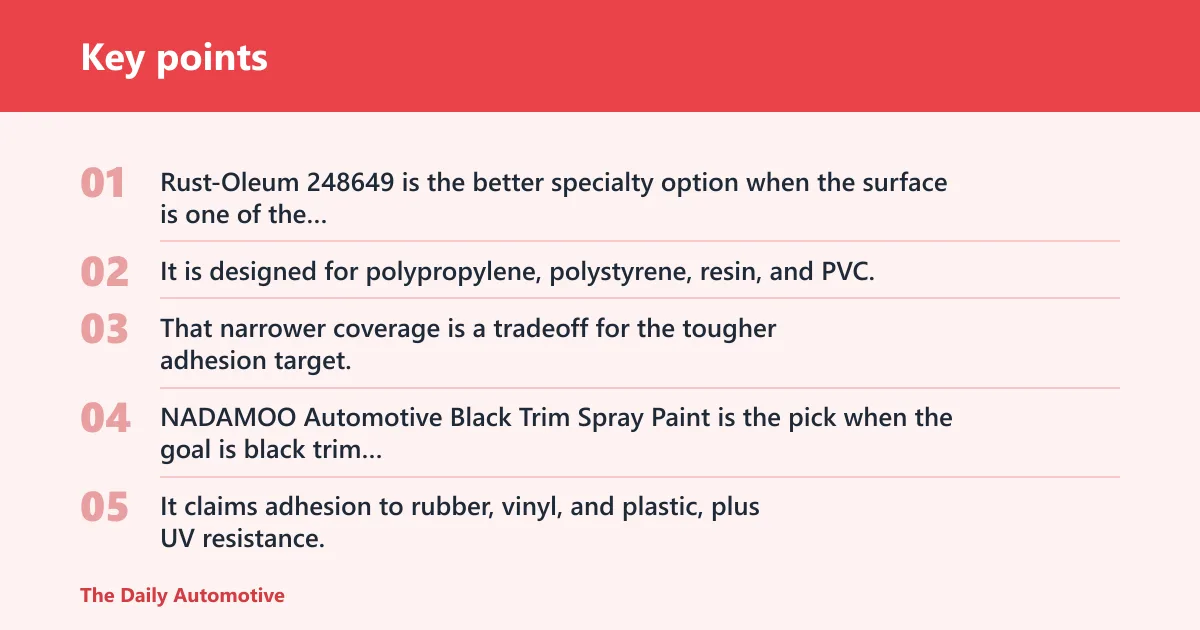
Rust-Oleum 248649 is the better specialty option when the surface is one of the difficult plastics. It is designed for polypropylene, polystyrene, resin, and PVC, dries to the touch in about 20 minutes, and covers 8-10 square feet per can. That narrower coverage is a tradeoff for the tougher adhesion target.
NADAMOO Automotive Black Trim Spray Paint is the pick when the goal is black trim restoration with a satin finish and added environmental resistance. It claims adhesion to rubber, vinyl, and plastic, plus UV resistance, chemical resistance, and an operating range of -40°F to 150°F.
Rust-Oleum 251574 automotive trim & bumper spray paint
This is the simplest all-around exterior option for black trim, bumper accents, and other visible plastic pieces that need a clean gloss black finish. The Stops Rust formula and 20-minute dry-to-touch claim make it a practical fit when you want a straightforward aerosol coating without overthinking the chemistry.
Choose it when the part is already in the trim-and-bumper category and the problem is faded color, light weathering, or a gloss mismatch from past touch-ups.
Rust-Oleum 248649 automotive paint for plastics
This is the better choice when the plastic itself is the problem, especially on PP or PVC parts. The product is designed for polypropylene, polystyrene, resin, and PVC, which makes it the safer match for many parts that resist ordinary coatings.
Use it for smaller areas where adhesion matters more than maximum coverage. If the part is large and highly flexible, a primer and careful film thickness control matter even more.
NADAMOO automotive black trim spray paint
NADAMOO is a strong pick for black trim restoration when you want satin rather than gloss. Its UV and chemical resistance claims make it a sensible exterior choice for rubber, vinyl, and plastic pieces exposed to sun, road film, and routine washing.
That satin look also helps on older trim where full gloss can expose sanding marks or uneven texture. It is a good way to restore black without making the part look freshly painted in the wrong way.
Best pick for heat and flexible parts
Use VHT High Temperature Plastic Paint for parts that live near heat or sit in an engine bay. It resists temperatures up to 200°F, dries to the touch in about 30 minutes, and can be handled in 1 hour, which makes it the most direct choice for hot plastic surfaces that need more than basic trim paint.
For flexible interior pieces, Dupli-Color Vinyl and Fabric Coating Spray is the better fit. Its flexible self-priming formula is meant for vinyl and fabric, and the 30-minute dry-to-touch time with 1-hour handling time fits interior work where cracking is the bigger concern than sun-faded gloss.
VHT high temperature plastic paint
This is the pick for engine-bay or high-heat plastic, not for everyday bumper work. Its key value is temperature resistance up to 200°F, which gives it a clear job: parts that warm up enough to challenge ordinary coatings.
Direct adhesion to automotive plastics is useful, but the real reason to choose it is the location. When heat is the stressor, a standard trim coating can become the wrong tool even if the color looks right on day one.
Dupli-Color vinyl and fabric coating spray
Choose this for interior vinyl, soft-touch panels, and other flexible pieces that need a coating that moves with the substrate. The flexible self-priming formula is the key feature here, along with resistance to cracking, peeling, or chipping.
It is not the first choice for an exterior bumper cover. It is the first choice when the surface bends, gets touched often, and must keep a soft, factory-like appearance.
When to choose a vinyl coating instead of a trim paint
Choose vinyl coating when the part flexes regularly or when the finish must stay soft-looking. Choose trim paint when the part is exterior hard plastic and the goal is restoring weathered black trim or bumper accents.
That split keeps you from using a rigid exterior formula on a flexible interior piece. It also helps avoid the common complaint that the coating looked good until the first bend.
How do you choose the right plastic paint?
Start with the substrate, then match the formula to the failure risk. If peel is the concern, use a plastics-specific coating and primer. If crack is the concern, favor a flexible trim or vinyl formula. If fade is the concern, choose a UV-resistant exterior product. If gloss mismatch is the concern, match the finish before anything else.
Adhesion and primer use
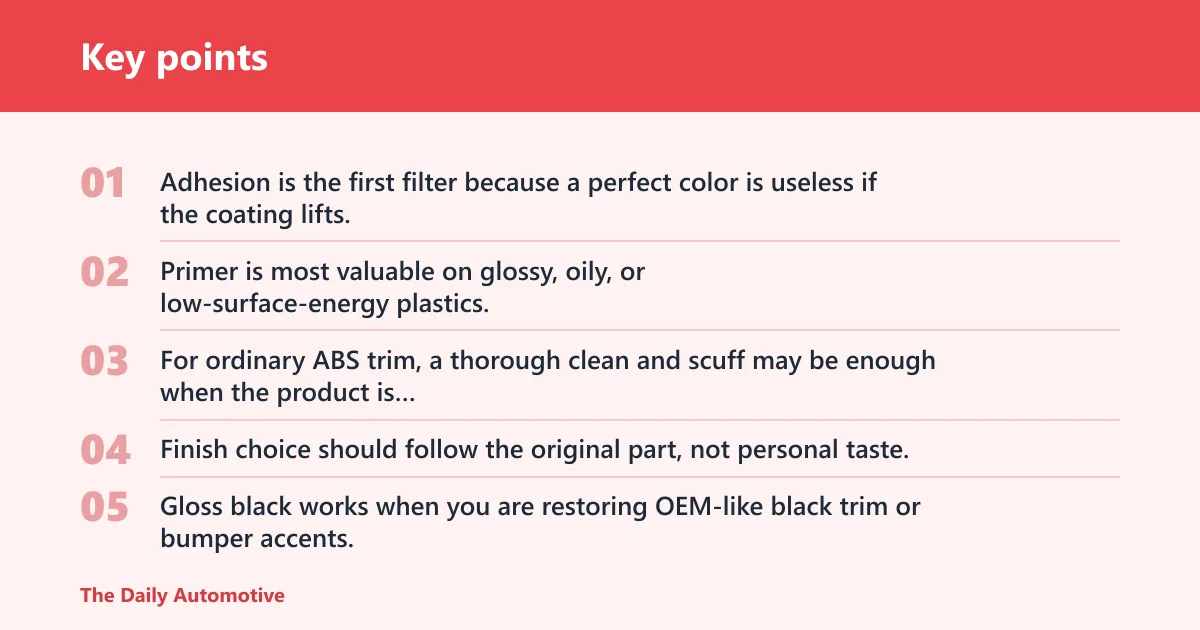
Adhesion is the first filter because a perfect color is useless if the coating lifts. Primer is most valuable on glossy, oily, or low-surface-energy plastics, especially PP and PE. For ordinary ABS trim, a thorough clean and scuff may be enough when the product is designed for exterior plastic.
Finish: gloss, satin, matte, or flat
Finish choice should follow the original part, not personal taste. Gloss black works when you are restoring OEM-like black trim or bumper accents. Satin is often better for older exterior plastics and many interior pieces because it hides slight texture differences. Matte and flat are niche choices unless the surrounding parts already use them.
Dry time, handling time, and cure window
Dry-to-touch time tells you when dust is less likely to imprint the surface. Handling time tells you when the part can usually be moved or reinstalled with less risk.
Do not confuse those windows with full cure. Reinstalling too early can leave fingerprints, clamp marks, or witness lines at mounting points.
Exterior UV and chemical resistance
Exterior parts need more than color. Sun exposure can fade weak coatings, and wash chemicals can dull or stain them. That is why UV resistance, chemical resistance, and weather resistance matter when the part sits outside, even if it looks fine indoors.
A common first-timer mistake is painting a black bumper cover with a general enamel because it says “for plastic” on the front of the can. The part may look acceptable for a day, then show edge lift around clips or mounting holes after the first heat cycle and wash.
Say the rear hatch trim on a daily driver has faded from deep black to gray-brown. If the part is ABS and the goal is visual restoration, a trim-and-bumper coating with gloss black is usually the simplest answer. If the same part is PP, the safer route is a plastics-specific formula plus promoter.
Frequently asked questions
What is the best spray paint for plastic on cars?
For most exterior plastic, Rust-Oleum 251574 Automotive Trim & Bumper Spray Paint is the best all-around choice because it is made for trim and bumpers, dries to the touch in about 20 minutes, and gives a gloss black finish. For difficult plastics like PP, move to a plastics-specific formula instead of forcing a generic trim paint.
Do I need primer before spray painting car plastic?
Not always, but primer or an adhesion promoter is smart on difficult plastics, glossy parts, and flexible surfaces that resist bonding. PP and PE are the biggest problem cases. On easier plastics such as many ABS pieces, a proper clean and scuff can be enough when the topcoat is made for automotive plastic.
Can I spray paint car bumpers and trim without peeling?
Yes, but only if the coating matches the substrate and the prep is careful. Clean off dressings and road film, scuff the surface lightly, and use a trim or bumper formula designed for plastic. For PP and PE, use adhesion promoter and a product intended for difficult plastics to reduce peel risk.
What paint sticks best to automotive plastic?
The best stick is usually from a coating designed for the exact substrate, not a generic enamel. Rust-Oleum 248649 is the more targeted choice for polypropylene, polystyrene, resin, and PVC. For standard trim and bumpers, Rust-Oleum 251574 is the cleaner match when the part is exterior plastic and black color is the goal.
What is the best black spray paint for plastic trim?
For black exterior trim, Rust-Oleum 251574 is the strongest general pick because it is aimed at trim and bumpers and leaves a gloss black finish. If you want a satin look with UV and chemical resistance, NADAMOO Automotive Black Trim Spray Paint is the better match for a more subdued restoration.
How long does automotive plastic spray paint take to dry?
Dry time depends on the product class. VHT High Temperature Plastic Paint dries to touch in about 30 minutes and can be handled in 1 hour. Dupli-Color Vinyl and Fabric Coating Spray also dries to touch in 30 minutes and can be handled in 1 hour.
Can you paint flexible plastic car parts?
Yes, but you need a coating that moves with the part. Flexible bumper coatings and vinyl coatings are the right categories here. Dupli-Color Vinyl and Fabric Coating Spray is built for that kind of job because it uses a flexible self-priming formula that helps resist cracking, peeling, or chipping on bend-prone parts.
Which spray paint works on polypropylene car plastic?
Rust-Oleum 248649 Automotive Paint For Plastics is the clear match in this group because it is designed for polypropylene, along with polystyrene, resin, and PVC. PP is one of the hardest plastics to coat, so pairing it with adhesion promoter and careful prep is more important than picking a random black aerosol.
Products related to this article
Sponsored / affiliate links. As an Amazon Associate I earn from qualifying purchases. I may earn additional commission from eligible campaigns.