Best Fuel Cleaner for Your Car: Lucas Oil vs. Techron
The right fuel cleaner for your car depends on the deposit chemistry it uses: Chevron Techron Concentrate Plus and Techron High Mileage both use PEA (polyetheramine), the detergent that actually strips carbon from injectors and intake valves, while Lucas Oil 10003 is a solvent-free lubricant that protects the fuel system without that stronger PEA action.
Below is what each product actually does, which one fits a high-mileage engine, and how often to use them so you don’t waste a bottle on the wrong problem.
PEA vs. Non-PEA Fuel Cleaners: What Actually Removes Carbon Deposits
Not every fuel cleaner works the same way. PEA (polyetheramine) is the detergent chemistry that independent testing consistently points to as the strongest at dissolving carbon buildup on fuel injectors, intake valves, and combustion chambers, mainly because it holds up at the high temperatures inside a running engine instead of breaking down the way some solvent-based additives do. That carbon buildup is also what can foul spark plugs over time and trigger a check engine light, which is worth ruling out during a spark plug check if your engine is already misfiring.
Both Chevron Techron Concentrate Plus and Techron High Mileage use PEA, which is why Chevron markets them around restoring lost power and quieting engine knock. Lucas Oil 10003 Fuel Treatment takes a different approach: it’s a solvent-free blend of upper-cylinder lubricant and detergent additives, but it does not contain PEA. That makes it a solid pick for lubricating injectors and stabilizing fuel in storage, but it’s not the product to reach for if heavy carbon buildup is the specific problem — that’s the job a PEA-based cleaner is built for.
Lucas Oil 10003 Fuel Treatment
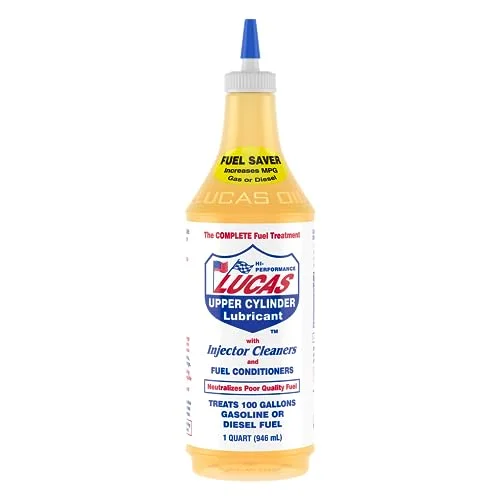
Reach for the Lucas Oil 10003 Fuel Treatment when you want a solvent-free lubricant that protects injectors and conditions fuel on long trips, in an older vehicle, or in a car that sits between fill-ups. It’s built for routine protection rather than for stripping out heavy carbon deposits.
Pros:
- Improves fuel economy by optimizing engine performance.
- Reduces engine wear through effective lubrication.
- Cleans and protects fuel systems from deposits.
- Compatible with all fuel types, including diesel and gasoline.
Cons:
- Price point may be higher than some alternative treatments.
- Requires consistent use to see maximum benefits.
- Does not contain PEA, so it won’t strip heavy carbon deposits as aggressively as a Techron product.
The Lucas Oil 10003 Fuel Treatment works as a comprehensive lubricant for engine components, smoothing operation and reducing wear. Its compatibility with all fuel types makes it versatile for both diesel and gasoline engines, and one quart treats up to 100 gallons of fuel. Because the formula skips PEA in favor of lubricating oils, it’s a better fit for ongoing protection and fuel stabilization than for a one-time deep clean.
To buy this product, click here.
Chevron Techron Concentrate Plus Fuel System Cleaner
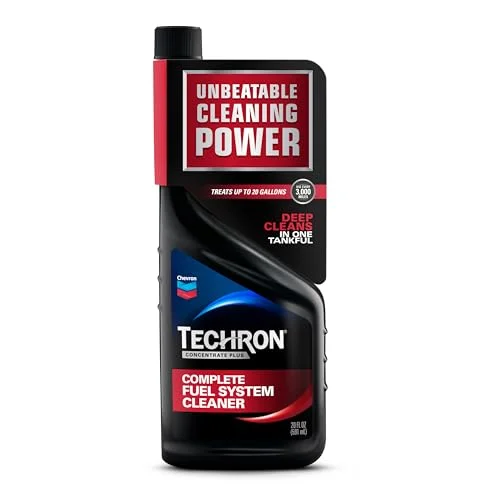
Pick the Chevron Techron Concentrate Plus Fuel System Cleaner when reduced fuel efficiency, rough idling, or engine hesitation point to actual carbon buildup rather than a lubrication gap. Its PEA formula is built to remove the deposits a non-PEA treatment can’t fully clear, which is what keeps the rest of the fuel system running clean over the long run.
Pros:
- Improves fuel efficiency by cleaning the fuel system thoroughly.
- Reduces engine knocking and pinging for a smoother drive.
- Helps restore lost power and acceleration.
- Compatible with all types of gasoline engines.
Cons:
- May require frequent use for optimal results in older vehicles.
- Not suitable for diesel engines.
This cleaner’s PEA formula targets the fuel injectors, intake valves, and combustion chambers directly, so the engine runs cleaner and more efficiently while cutting harmful emissions. Deposits that build up over time can rob an engine of its original power and responsiveness; regular use is meant to clear them out and bring back that lost acceleration. It’s compatible with all gasoline engines, which makes it a versatile option regardless of what you drive.
Ready to buy it? Click here for the current price.
Chevron Techron High Mileage Fuel System Cleaner
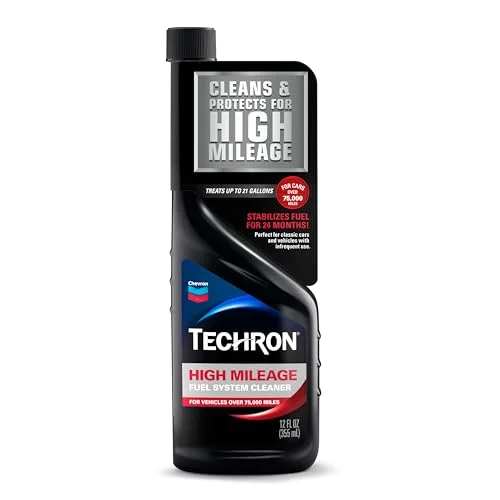
Choose the Chevron Techron High Mileage Fuel System Cleaner for a car with 75,000-plus miles on the odometer that’s showing power loss, rough idling, or rising emissions. It carries the same PEA chemistry as Techron Concentrate Plus, just formulated for the heavier deposit load that builds up in an older engine.
Pros:
- Improves fuel efficiency by cleaning the fuel system.
- Reduces engine knocking and enhances performance.
- Compatible with all gasoline engines, including turbocharged and direct-injected engines.
- Easy to use with a simple pour-in application.
Cons:
- Single pack may not be sufficient for multiple treatments.
- Not suitable for non-gasoline engines.
This formula is tuned specifically for high mileage vehicles, going after the carbon deposits that accumulate over years of driving. Clearing those deposits helps restore lost power and fuel economy, which matters more the longer an engine has been in service. It works with any gasoline engine, including turbocharged or direct-injected setups, and the application is a simple pour into the fuel tank.
See the current price by clicking here.
Frequently Asked Questions
What Does Lucas Oil Fuel Treatment Do?
Lucas Oil Fuel Treatment cleans and lubricates the fuel system. It improves engine performance and fuel efficiency. This treatment reduces emissions and eliminates deposits. It also stabilizes fuel during storage.
How Often Should You Use Chevron Techron?
Use Chevron Techron Concentrate Plus every 3,000 miles or with each oil change. Regular use ensures optimal engine performance. It helps maintain a clean fuel system, reducing engine knock and hesitation.
Is Techron Suitable for High-Mileage Vehicles?
Yes, Chevron Techron High Mileage Cleaner is ideal for high-mileage vehicles. It cleans carbon deposits and restores lost performance. This product helps maintain fuel economy and reduce emissions in older engines.
Can Fuel Cleaners Improve Engine Performance?
Yes, fuel cleaners like Lucas Oil and Techron enhance engine performance. They remove harmful deposits and improve combustion efficiency. Regular use can lead to smoother operation and reduced engine knock.
Are Fuel System Cleaners Safe for All Engines?
Most fuel system cleaners are safe for all gasoline engines. Lucas Oil and Techron are compatible with modern and classic engines. Always follow the manufacturer’s instructions for the best results.
What Is PEA in a Fuel Cleaner?
PEA stands for polyetheramine, a detergent that dissolves carbon deposits on fuel injectors, intake valves, and combustion chambers. It holds up at combustion temperatures better than many solvent-based additives. Chevron Techron Concentrate Plus and Techron High Mileage both use it; Lucas Oil 10003 does not.
Conclusion
Match the fuel cleaner to the actual problem. If you just want routine lubrication and fuel stabilization, the Lucas Oil 10003 Fuel Treatment covers that without PEA. If the goal is stripping out carbon deposits that are already hurting performance, the PEA-based Chevron Techron Concentrate Plus is the stronger tool, and Techron High Mileage is the version built for engines past 75,000 miles.
Whichever one fits your car, follow the bottle’s instructions and use it consistently rather than as a one-time fix — a fuel cleaner works by preventing deposits from rebuilding, not by undoing years of buildup in a single tank.
Products related to this article
Sponsored / affiliate links. As an Amazon Associate I earn from qualifying purchases. I may earn additional commission from eligible campaigns.