Car Paint for Plastic: 3 Picks and Buyer’s
Choose plastic-safe automotive paint by substrate: flexible interior trim needs an adhesion-promoter paint, rigid exterior pieces need a tougher urethane or trim coating, and the finish should match the part’s use. Wrong paint chips, peels, or stays tacky, which means wasted prep and a redo. This guide compares three picks by plastic type, location, finish, and durability.
Best car paint for plastic



SEM Color Coat is often a strong starting point for interior plastic trim because it is formulated for rigid and flexible plastics and is available in OEM-style finishes like Landau Black, which can help when sheen match matters as much as color. It is not a shortcut product. Prep decides whether it holds.
Quick picks
- Best for interior trim: SEM Color Coat, especially for dashboard trim, console pieces, and door pulls that need an OEM-style look.
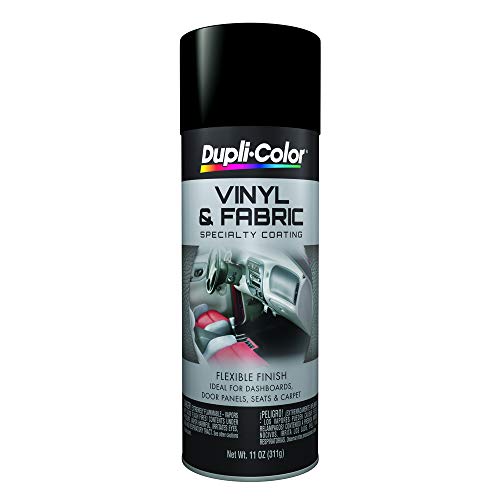
- Best for smaller flexible jobs: Dupli-Color Vinyl & Fabric Coating Spray Paint, because it includes built-in adhesion promoter and is aimed at interior plastic, vinyl, and smaller trim pieces.
- Best budget option: Rust-Oleum Fabric & Vinyl Spray Paint, a non-metal-surface choice with a matte finish for low-cost interior refresh work.
By surface type
Use SEM Color Coat when you need a factory-like interior result on rigid or flexible plastic. Use Dupli-Color when you want a flexible coating with adhesion help already in the can. Use Rust-Oleum Fabric & Vinyl when budget matters more than exact sheen control.
By finish goal
If the part should disappear into the cabin, start with matte or low-sheen trim paint. If you need a cleaner OEM look, satin is often closer than gloss. Gloss exposes texture loss, sanding marks, and patchy prep fast.
SEM color Coat
SEM Color Coat is the strongest fit for interior trim work where the goal is a believable OEM-style finish on rigid and flexible plastics. It is available in finishes like Landau Black, which can matter when trying to match original trim rather than simply recolor it.
Best use case
Use it on interior pieces such as bezels, console trim, speaker grilles, and other parts where the substrate may be ABS or another plastic that accepts coating after proper prep. It is also a sensible pick when the trim has mixed rigidity across the same panel.
Prep and adhesion needs
Because plastic varies, surface prep matters more than brand name alone. Raw plastic, especially low-surface-energy material, may need adhesion promoter. If the part still has factory coating, thorough cleaning and a light scuff are often enough for the coating to bite.
Finish and durability
SEM is a better choice when you care about sheen match and wear on interior trim. It is not a cure for bad surface prep, and it will not hide texture damage. Apply thin coats to avoid runs and to keep detail from filling in.
Dupli-Color vinyl & fabric Coating Spray Paint
Dupli-Color Vinyl & Fabric Coating Spray Paint fits smaller interior plastic jobs where flexibility matters and you want an adhesion-promoter step built into the product. It is aimed at interior plastic, vinyl, and similar trim surfaces, so it belongs in the cabin more than on exposed exterior pieces.
What the built-in adhesion promoter means
The built-in adhesion promoter helps simplify the process on plastic that is hard to bond. That does not make prep optional. You still need a clean, lightly scuffed surface, especially on raw plastic or parts that have been cleaned with dressings, silicone, or interior protectants.
Where it fits and where it does not
It fits best on smaller trim jobs, especially parts with curves or slight flex. It is less compelling for large, highly visible exterior trim where UV load, road grime, and tougher weather exposure make a dedicated exterior trim paint a better match.
Flexible trim and wear
For flexible interior parts, this class of coating is useful because it is meant to move with the substrate rather than sit as a brittle skin. That said, high-touch points such as door pulls and armrest edges still need careful prep and curing to avoid rub-off.
Rust-Oleum Fabric & vinyl Spray Paint
Rust-Oleum Fabric & Vinyl Spray Paint is the budget pick for non-metal surfaces when you want a matte interior refresh without paying for a more specialized trim coating. It is best for low-risk cosmetic updates, not for a perfect OEM match on a highly visible panel.
Budget tradeoffs
The lower price point usually means you give up some finish control and some of the margin for error that higher-end trim coatings offer. On a light-use panel, that may be fine. On a steering wheel surround or a door handle bezel, it can show wear sooner.
Finish and wear expectations
The matte finish helps hide minor texture mismatch and small prep flaws. It also avoids the fake shine that makes many repainted plastics look out of place. Still, matte coatings can scuff, so cleaning habits matter after cure.
Plastic paint decision matrix
Which paint for which plastic?
| Plastic type | Location | Prep level | Recommended product class | Expected finish | Common failure mode |
|---|---|---|---|---|---|
| ABS | Interior trim | Clean and light scuff | Interior trim coating, such as SEM Color Coat | OEM-like satin or matte | Gloss mismatch or visible sanding marks |
| TPO | Interior or exterior trim | Clean, scuff, adhesion promoter on raw plastic | Flexible trim coating with promoter support | Satin or matte | Peeling from low surface energy |
| Polypropylene | Interior high-touch parts | Thorough cleaning, promoter often mandatory | Adhesion-promoter paint or trim coating | Matte to satin | Rub-off, peeling, edge lift |
| Flexible vinyl | Interior panels, armrests | Clean and light scuff if allowed by surface | Vinyl and fabric coating, such as Dupli-Color | Matte or low satin | Cracking if the film is too thick |
| Rigid exterior trim | Bumper accents, exterior moldings | Clean, scuff, promoter as needed | Exterior trim paint, not interior vinyl coating | Satin or factory-matched low gloss | Film failure from flex, UV, or chemical exposure |
Cost per panel
| Panel size | Approx. surface area | Rust-Oleum 251574 cans needed | Dupli-Color cans needed | SEM Color Coat cans needed |
|---|---|---|---|---|
| Small trim piece | 1 sq ft | 0.07 to 0.10 can | 0.08 to 0.10 can | Estimate by similar coverage class |
| Door panel | 6 sq ft | 0.40 to 0.60 can | 0.50 to 0.60 can | Estimate by similar coverage class |
| Dash section | 4 sq ft | 0.27 to 0.40 can | 0.33 to 0.40 can | Estimate by similar coverage class |
These are coverage-based estimates, not price quotes. Rust-Oleum 251574 covers between 10 and 15 square feet per can. Dupli-Color is commonly treated as a similar small-job aerosol class, so the practical takeaway is the same: one can usually covers a trim piece, but larger panels can eat a full can quickly.
How do you prep plastic before painting it?
Prep plastic by cleaning it thoroughly, scuffing it lightly, choosing adhesion promoter when the substrate needs it, and spraying thin coats with enough flash time between passes. Heavy sanding, skipped cleaning, or one wet coat are the usual reasons plastic paint fails early.
Clean and degrease
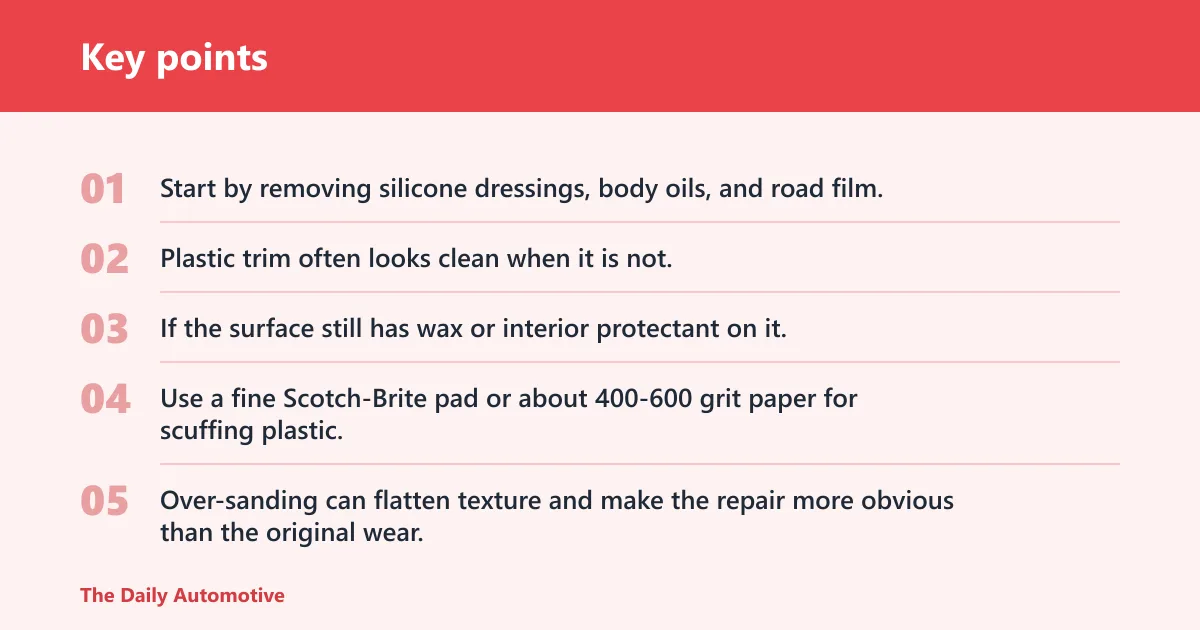
Start by removing silicone dressings, body oils, and road film. Plastic trim often looks clean when it is not. If the surface still has wax or interior protectant on it, paint can fish-eye or peel in sheets later.
Scuff lightly
Use a fine Scotch-Brite pad or about 400-600 grit paper for scuffing plastic. The goal is tooth, not reshaping. Over-sanding can flatten texture and make the repair more obvious than the original wear.
When to use adhesion promoter
Use adhesion promoter on raw plastic and on low-surface-energy plastics such as polypropylene and many TPO parts. It is especially important when the part is flexible or sees frequent handling. On already-coated interior trim, it may be optional if the existing finish is sound and well-scuffed.
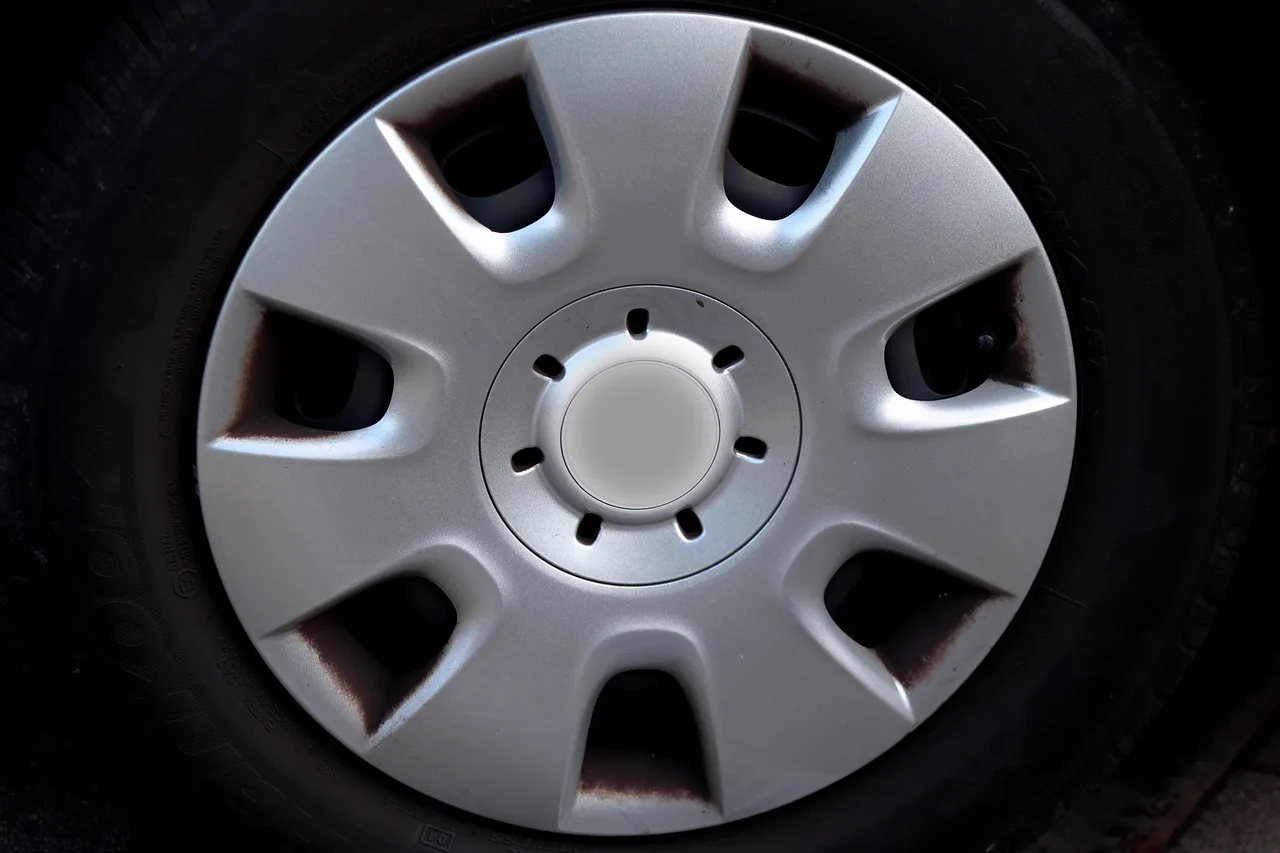
A common first-timer mistake is skipping promoter on a raw polypropylene door pull because the part looks “plastic enough.” The coating may look fine for a day, then lift on the edges after repeated grabbing and wiping.
Thin coats and curing
Apply multiple light coats instead of one heavy coat. Thin coats reduce runs, sagging, and solvent attack. They also help texture stay visible where you need it. Give the film time to flash and cure before heavy handling or reinstalling clips.
Suppose you spray a console bezel in three wet passes and reinstall it an hour later. The surface may still feel soft, and clip pressure can mark the film even if it no longer looks wet.
How do you choose the right finish?
Choose finish by matching the factory sheen and by thinking about how much the part gets touched. Matte hides flaws best. Satin is often the closest look for modern interior trim. Gloss should be a deliberate style choice, because it makes every sanding mark and texture loss easier to see.
Matte vs satin vs gloss
Matte is best for low-reflection pieces and budget interior refresh work. Satin is the safest compromise when you want a natural OEM look. Gloss can work on show-style projects, but it tends to reveal poor prep, dust nibs, and old grain texture more than the other finishes do.
Matching factory sheen
Color match is only part of the job. Texture and sheen are usually harder to match than the hue itself. If the original panel had a low-gloss grain, a shiny repaint will stand out even when the color is close.
High-touch surfaces and flaw visibility
On armrests, steering wheel surrounds, and door pulls, choose a finish that can take cleaning and friction without looking greasy or chalky. These parts fail differently from decorative trim. They show rub-off, edge wear, and polish spots first.
Picture a black door handle surround on a daily driver. A glossy repaint may look darker on day one, but every fingerprint, scuff, and wipe mark will stand out more than on a satin finish.
What is the best paint for car plastic trim?
SEM Color Coat is often a good overall choice for interior plastic trim because it is made for rigid and flexible plastics and is sold in trim-friendly sheens like Landau Black. For smaller flexible jobs, Dupli-Color is easier to use. For budget interior work, Rust-Oleum is the low-cost option.
Do I need primer or adhesion promoter for plastic car parts?
You need adhesion promoter on raw plastic and on low-surface-energy plastics where paint would otherwise struggle to bond. If the part is already coated and you have scuffed it lightly, promoter may be optional. On polypropylene and similar plastics, it is often the difference between lasting film and early peel.
What paint sticks best to interior car plastic?
Interior car plastic usually does best with a trim coating made for the cabin, not a general-purpose spray enamel. SEM Color Coat is the most direct fit for OEM-style interior results. Dupli-Color also works well for flexible interior pieces because its adhesion promoter is built in.
Can I use bumper paint on interior plastic?
You can sometimes, but it is usually the wrong category. Exterior trim paints may be more rigid than interior coatings, and that matters on flexible cabin parts. Bumper paint is better left for exterior plastic that faces UV, weather, and tougher abrasion.
Which spray paint works best on flexible plastic trim?
Dupli-Color Vinyl & Fabric Coating Spray Paint is a strong choice for flexible trim because it includes built-in adhesion promoter and is aimed at interior plastic and vinyl. SEM Color Coat also works well when the part needs a more OEM-style finish and the prep is thorough.
Will painted plastic trim crack or peel?
It can, if the plastic was not cleaned, scuffed, and promoted correctly or if the coating is too thick for the part’s flex. Cracking usually follows a brittle film on moving trim. Peeling usually points to poor adhesion, contamination, or a substrate that needed promoter.
What finish should I choose for car plastic paint?
Choose matte for low-reflection utility pieces, satin for the best factory-like balance, and gloss only when you want a deliberate custom look. Satin usually hides imperfections well while still looking close to OEM trim. Gloss is the least forgiving option on plastic.
Products related to this article
Sponsored / affiliate links. As an Amazon Associate I earn from qualifying purchases. I may earn additional commission from eligible campaigns.