Pueblo Thermostat Issue: Why Car Won’t Start
Sometimes your car just refuses to start, and that can be really frustrating. For many people, especially those new to car care, figuring out why a car won’t start can seem like a big puzzle. A common tricky spot is the Pueblo Thermostat Issue: Why Your Car Won’t Start, which sounds complicated but is actually quite straightforward once you know what to look for.
Don’t worry, we’re going to break down this common problem with easy-to-follow steps. Get ready to learn exactly what’s going on and how to fix it.
Understanding the Pueblo Thermostat Issue Why Your Car Won’t Start
This section will help you grasp the basic idea of why a thermostat problem can stop your car from turning over. We’ll look at what a thermostat does in your car’s cooling system and how its failure can affect the engine’s ability to start. This part is key to understanding the whole situation.
What a Car Thermostat Does
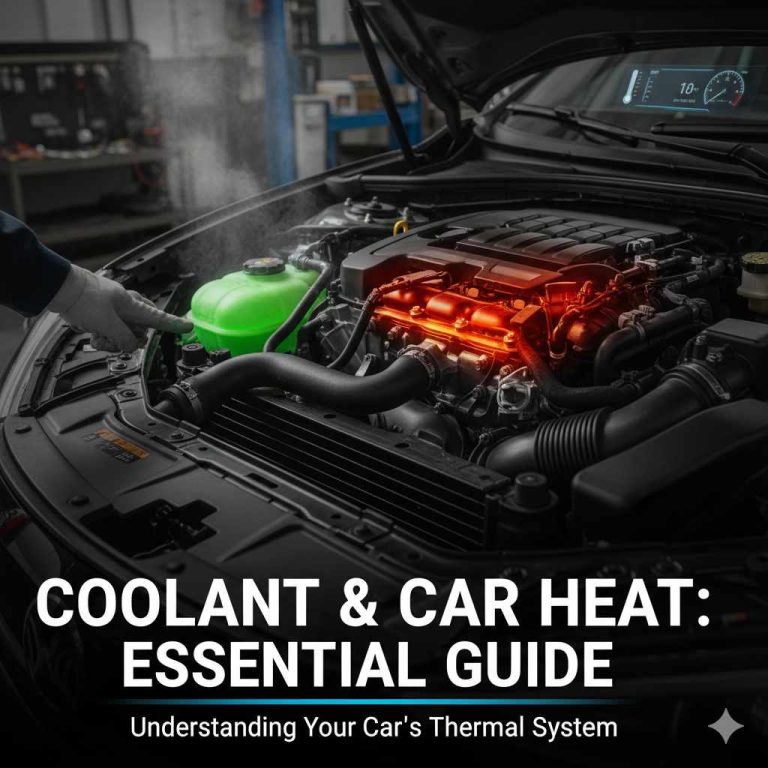
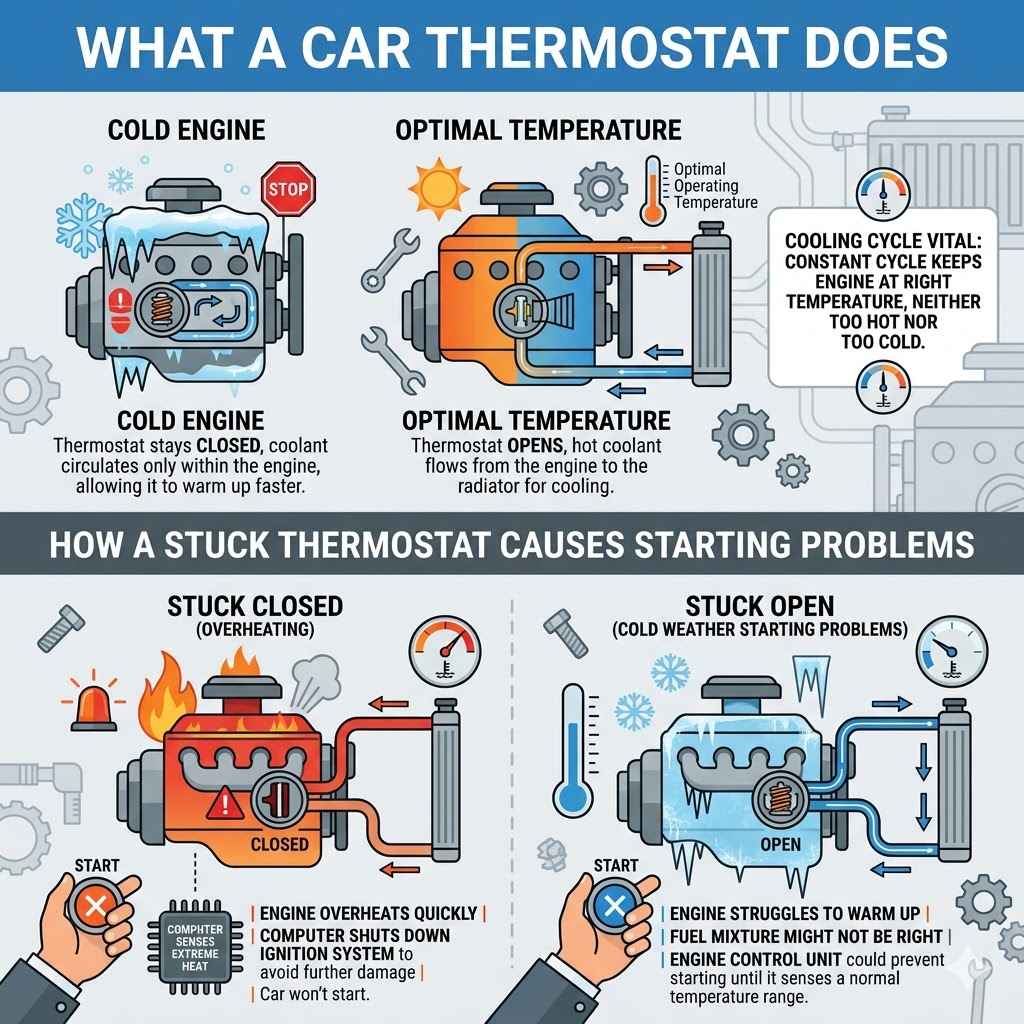
A car thermostat is a small but mighty part of your engine’s cooling system. It acts like a gatekeeper for coolant, which is the fluid that keeps your engine from overheating. When your engine is cold, the thermostat stays closed.
This keeps the coolant circulating only within the engine block, allowing it to warm up faster.
Once the engine reaches its optimal operating temperature, the thermostat opens up. This lets the hot coolant flow from the engine to the radiator. In the radiator, the coolant is cooled down by air passing through its fins.
The cooled coolant then returns to the engine, ready to absorb more heat. This constant cycle is vital for keeping your engine at the right temperature, neither too hot nor too cold.
How a Stuck Thermostat Causes Starting Problems
If your thermostat gets stuck in the closed position, the engine can’t get properly cooled. This leads to the engine overheating very quickly. An overheated engine often has safety features that prevent it from starting or running to avoid further damage.
The car’s computer might detect the extreme heat and shut down the engine’s ignition system.
Conversely, if the thermostat is stuck open, the engine takes a very long time to warm up. In very cold weather, an engine that can’t reach its proper operating temperature might struggle to start. The fuel mixture might not be right, and the engine control unit could prevent starting until it senses a more normal temperature range.
Common Signs of a Thermostat Issue
You might notice a few things if your thermostat is acting up. The temperature gauge on your dashboard is a good indicator. If it stays at the very low end for a long time, the thermostat might be stuck open.
If it quickly jumps to the hot zone, it could be stuck closed.
You might also hear unusual noises from the engine, like hissing or gurgling, which could mean coolant is not flowing correctly. Sometimes, you’ll see steam coming from under the hood, a clear sign of overheating. These are all signals that something isn’t right with the cooling system, and the thermostat is a prime suspect.
Dashboard Temperature Gauge
The temperature gauge is your car’s primary way of telling you how hot the engine is. It usually sits in the middle when the engine is running at its normal temperature. If the needle never moves from the bottom or stays cold for a very long time even after driving, the thermostat is likely stuck open.
This prevents hot coolant from reaching the sensor that tells the gauge what the temperature is.
On the flip side, if the temperature gauge rapidly climbs to the hot or “H” mark shortly after starting the car, it suggests the thermostat is stuck shut. This means coolant isn’t circulating to the radiator to be cooled, causing the engine temperature to spike. This rapid rise is a serious warning sign.
Engine Overheating or Not Warming Up
When a thermostat is stuck closed, the engine can’t dissipate heat effectively. The engine temperature will rise rapidly, often leading to the car overheating. You might see a warning light on the dashboard, or steam billowing from under the hood.
Driving an overheating car can cause severe and expensive engine damage, so it’s crucial to address this immediately.
If the thermostat is stuck open, the engine will struggle to reach its optimal operating temperature, especially in colder weather. This means the engine runs too cool. While not as immediately damaging as overheating, a consistently cool engine can lead to poorer fuel economy, increased wear on engine parts, and potential emissions issues because the engine isn’t running efficiently.
In severe cold, it could even prevent the car from starting reliably.
Why a Pueblo Thermostat Issue Prevents Starting
When your car won’t start, it’s easy to assume it’s the battery or the starter. But sometimes, the engine itself is preventing startup for its own protection. A malfunctioning thermostat can trigger these protective measures, making the car seem dead.
This is why recognizing the Pueblo Thermostat Issue: Why Your Car Won’t Start is so important for quick problem-solving.
The car’s computer system plays a big role here. It constantly monitors engine conditions, including temperature. If the computer detects that the engine is too hot or too cold to operate safely or efficiently, it can disable the starting system.
This prevents you from damaging the engine further by trying to start it when it’s not in a safe state.
Engine Control Unit (ECU) Safety Measures
The Engine Control Unit, or ECU, is like the car’s brain. It takes in information from various sensors around the engine and makes decisions about how the engine should run. One critical piece of information is the engine coolant temperature.
If the coolant temperature sensor sends readings that are outside the normal operating range, the ECU can take action to protect the engine. This action can include preventing the engine from starting or shutting it off if it’s already running. The ECU is programmed to avoid situations that could lead to catastrophic engine failure.
An extreme temperature reading from a faulty thermostat is one such situation it wants to prevent.
Fuel Delivery and Ignition Timing
Modern cars rely on precise fuel delivery and ignition timing to start and run smoothly. These parameters are adjusted based on the engine’s temperature. If the ECU thinks the engine is too hot or too cold due to a thermostat issue, it will adjust these settings accordingly.
In extreme cases, the ECU might decide that starting the engine under these conditions is too risky, thus preventing ignition altogether.
For example, if the engine is perceived as being extremely hot, the ECU might cut off fuel to prevent further combustion and heat buildup. If it’s too cold, it might try to inject more fuel, but if the temperature reading is wildly inaccurate, this can also lead to a no-start situation. The engine needs to be within a specific temperature band for the fuel and spark systems to work optimally for starting.
Troubleshooting the Pueblo Thermostat Issue Why Your Car Won’t Start
When you’re facing a car that won’t start, going through a logical troubleshooting process is key. Don’t jump to conclusions; instead, systematically check the most likely culprits. The thermostat, though often overlooked, is a significant one when it comes to starting problems, especially in certain climates or with specific vehicle models.
We’ll walk through how to check for signs of a thermostat problem and what steps to take next. This involves simple visual checks and understanding what your car’s dashboard is telling you. Getting a handle on these basics can save you time and money.
Visual Inspections Under the Hood
Open your car’s hood and take a good look around the engine. Check the coolant level in the reservoir. If it’s very low, you might have a leak, which can indirectly affect the thermostat’s function.
Look for any visible leaks around the hoses and the thermostat housing itself. Damp spots or puddles of coolant underneath the car are tell-tale signs.
Follow the large hoses that go from the engine to the radiator. One of these hoses will lead to the thermostat housing. If the engine has been running, carefully feel the upper radiator hose.
If the engine is hot, this hose should also be hot if the thermostat is working correctly and opening. If the engine is hot but the upper hose is cool, it suggests the thermostat is stuck closed.
Checking Coolant Level and Condition
The coolant in your car is essential for temperature regulation. Ensure the coolant reservoir is filled to the correct level, usually marked on the side of the tank. Never open a hot radiator cap, as the pressurized hot coolant can cause severe burns.
Wait for the engine to cool down completely before checking the radiator itself.
The condition of the coolant is also important. It should be a bright color (like green, orange, or pink, depending on the type) and free from rust, debris, or an oily film. Contaminated coolant can indicate internal engine issues, including problems with the water pump or head gasket, which can also affect the thermostat’s performance and lead to starting difficulties.
Radiator Fan Operation
The radiator fan is responsible for pulling air through the radiator when the car is moving slowly or stopped. This helps cool the coolant even when there isn’t much airflow from the car’s movement. If your car is overheating, and the fan isn’t turning on, this could be a related issue.
The fan might be controlled by the ECU or a separate temperature switch.
A non-functioning radiator fan can contribute to overheating, which, as we’ve discussed, can prevent your car from starting. Check to see if the fan activates when the engine reaches a high temperature. Sometimes, a faulty fan sensor or motor can cause this, or it might be a symptom of a larger cooling system problem that includes the thermostat.
Replacing a Faulty Thermostat
If you’ve determined that your thermostat is likely the cause of your car’s starting problem, replacing it is often a manageable DIY task for those with some mechanical inclination. However, if you’re not comfortable working on your car, it’s best to have a professional mechanic do the job.
This process involves draining some of the coolant, removing the old thermostat, installing a new one, and then refilling and bleeding the cooling system. It’s important to use the correct type of thermostat and coolant for your specific vehicle model.
Tools and Parts Needed
Before you start, gather your tools. You’ll typically need a socket set or wrenches to remove the thermostat housing bolts, a drain pan for the coolant, gloves, safety glasses, and a new thermostat with a new gasket. It’s also wise to have a new bottle of the correct coolant for your car on hand.
For some vehicles, you might need a specialized tool to remove the housing. Always consult your car’s repair manual for specific instructions and torque values for the housing bolts. Using the wrong parts or improper tools can lead to leaks or further damage.
Step-by-Step Replacement Process
First, ensure the engine is completely cool. Place a drain pan underneath the thermostat housing to catch any spilled coolant. You might need to drain some coolant from the radiator or a lower hose to lower the level below the thermostat housing.
Then, remove the bolts holding the thermostat housing in place.
Carefully remove the old thermostat and clean the mating surface of the housing and the engine block. Install the new thermostat with its new gasket, making sure it’s oriented correctly (there’s usually an arrow or a jiggle valve indicating the proper direction). Reattach the housing and tighten the bolts evenly to the specified torque.
Finally, refill the coolant and bleed the system according to your car’s manual.
Refilling and Bleeding the Cooling System
After the new thermostat is installed, you need to refill the cooling system with the correct type and amount of coolant. Pour coolant slowly into the radiator or overflow reservoir until it reaches the “cold fill” line. Then, you need to “bleed” the system.
This means removing any trapped air pockets, which can cause overheating or poor performance.
To bleed the system, you might need to run the engine with the radiator cap off (or with a special bleeding funnel attached) and the heater turned to full hot. As the engine warms up, air bubbles will escape. Continue adding coolant as needed until no more bubbles appear and the temperature gauge reaches its normal operating range.
This ensures the system is full and working efficiently.
When to Call a Professional Mechanic
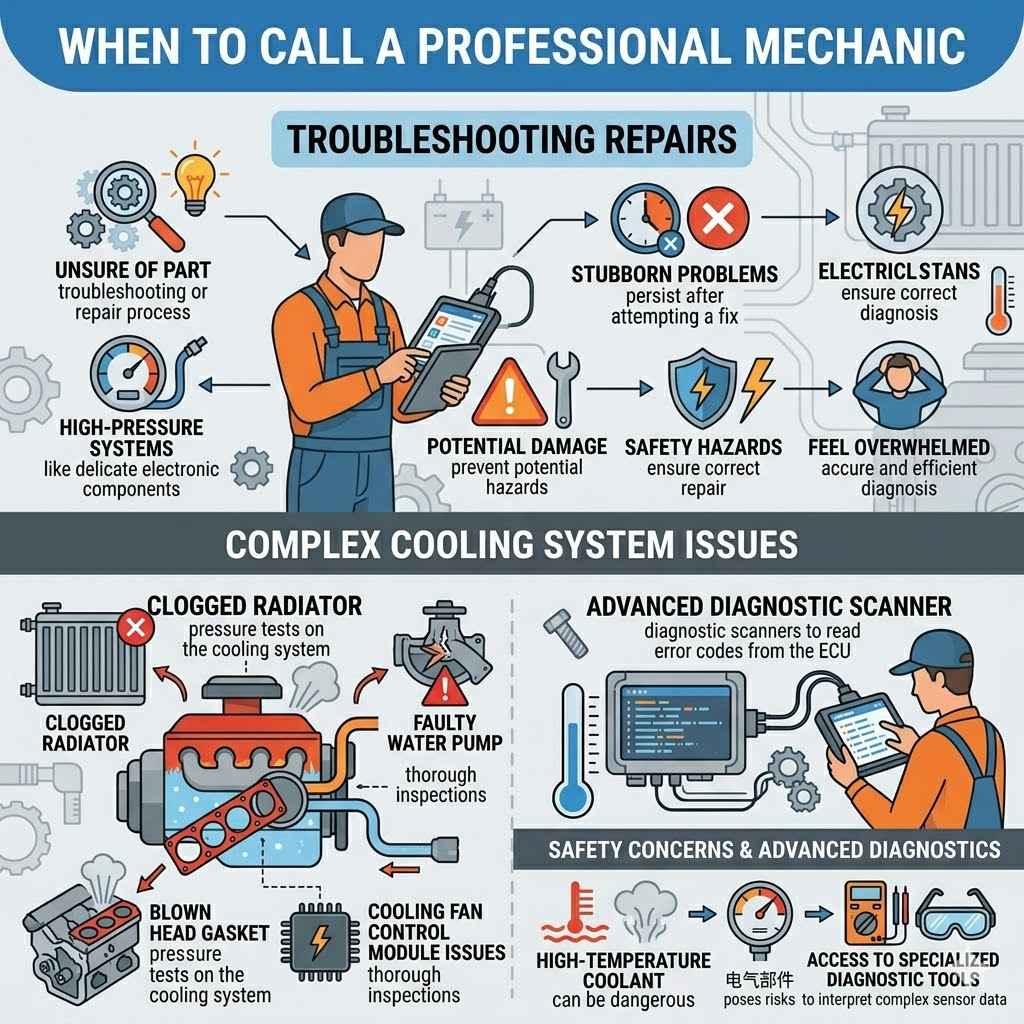
While many car issues can be tackled at home, some require the expertise of a trained mechanic. If you’re unsure about any part of the troubleshooting or repair process, or if the problem persists after attempting a fix, it’s always best to seek professional help. Some repairs involve working with high-pressure systems or delicate electronic components.
A mechanic has specialized tools and knowledge to diagnose complex problems accurately and efficiently. They can also ensure that the repair is done correctly, preventing potential damage or safety hazards. Don’t hesitate to call a professional if you feel overwhelmed or if your car’s starting problem is proving stubborn.
Complex Cooling System Issues
Sometimes, the symptoms might point to the thermostat, but the actual problem lies deeper within the cooling system. This could include a faulty water pump, a clogged radiator, a blown head gasket, or issues with the cooling fan control module. These problems can mimic thermostat failure but require more extensive repairs.
A mechanic can perform pressure tests on the cooling system, use diagnostic scanners to read error codes from the ECU, and perform thorough inspections to pinpoint the exact cause of the issue. They can also identify related problems that you might overlook, ensuring a complete and lasting repair.
Safety Concerns and Advanced Diagnostics
Working on car systems can be dangerous if you’re not properly trained. High-temperature coolant, pressurized systems, and electrical components all pose risks. If you’re not comfortable with these aspects or if your car is equipped with advanced electronic diagnostics that you can’t access, it’s safer to let a professional handle it.
Mechanics have the necessary safety equipment and training to perform diagnostics and repairs safely. They also have access to specialized diagnostic tools that can interpret complex sensor data and system performance. This ensures that the root cause of the problem is found and addressed correctly, preventing further issues.
Frequently Asked Questions
Question: How long does it typically take for a car to warm up if the thermostat is stuck open
Answer: If the thermostat is stuck open, your car might take a very long time to warm up. In cold weather, it could take 30 minutes or more of driving, or it might never reach its normal operating temperature. The temperature gauge on your dashboard will likely stay on the lower end.
Question: Can a bad thermostat cause a car to overheat and then refuse to start
Answer: Yes, absolutely. If the thermostat is stuck closed, it prevents coolant from circulating to the radiator. This causes the engine to overheat quickly.
Once the engine reaches a critically high temperature, the car’s computer may prevent it from starting to protect it from damage.
Question: What are the first signs I should look for if I suspect a thermostat issue
Answer: The most common signs are a dashboard temperature gauge that stays too low or rapidly climbs too high. You might also notice your car taking a very long time to warm up, or you could see steam coming from under the hood if it’s overheating.
Question: Is it expensive to replace a thermostat
Answer: The cost of replacing a thermostat can vary. The part itself is usually quite inexpensive, often costing between $20 and $60. However, the labor cost to have it replaced by a mechanic can range from $100 to $300 or more, depending on your location and vehicle model.
Question: Can I drive my car if I suspect the thermostat is bad
Answer: It’s not recommended to drive your car if you suspect a bad thermostat, especially if it seems to be causing overheating. Driving an overheating car can lead to severe engine damage, which will be much more expensive to repair than a thermostat replacement. It’s best to address the issue as soon as possible.
Conclusion
Addressing the Pueblo Thermostat Issue: Why Your Car Won’t Start requires understanding the cooling system’s role. A faulty thermostat can indeed prevent your car from starting by causing extreme temperatures the engine computer tries to avoid. By checking your temperature gauge and performing simple visual checks, you can often identify this problem.
Replacing the thermostat is a common repair that can get your car running smoothly again.