Rally Car vs Drift Car: Key Differences and Setup
Rally cars are built to regain speed on loose, changing grip; drift cars are built to hold high slip angle for style and control, so if the goal is fastest point-to-point time, rally wins. Mix them up and you get slow stage times, overheated tires, bent suspension, or a car that looks right but fights you every corner. I have watched that happen on real stages and at skidpad tests. This guide breaks down chassis, tires, drivetrain, setup, and driving technique so you can see why each platform behaves the way it does when traction breaks.
This guide is part of our Race car types and specs series.
Rally Car vs Drift Car: the core trade-off
Both disciplines use slides and precise car control, but they want different results. A World Rally Championship car is generally built to make time on a stage, recover quickly, and keep moving when grip is poor. A Formula Drift car is built to hold a long, smooth, uninterrupted drift that judges and spectators can read clearly.
The difference shows up the moment grip lets go. A rally driver wants the car rotated enough to point out of the corner, then straightened and back on throttle. A drift driver wants the car to stay sideways long enough for angle, speed, and line to look deliberate.
| Decision factor | Rally Car | Drift Car | Winner |
|---|---|---|---|
| Surface | Loose-surface stage use on gravel, snow, or broken road | Paved courses with predictable grip | Rally Car |
| Wheelbase | Short wheelbase for faster yaw response and quick rotation | Longer wheelbase for stability at high angle | Rally Car for rotation, Drift Car for stability |
| Tire width | Narrower fitment for loose-surface bite and rotation | Wider pro drift rubber for slip-angle control | Drift Car |
| Power band | Usable pull, with the rally Fiesta example around 375 hp | Very high horsepower, often four-digit power in pro drifting | Drift Car |
| Steering behavior | Quick corrective steering to recover speed | Held angle and smooth countersteer through the slide | Tie, by discipline goal |
| Ideal use case | Fastest time over a stage | Judged runs built around angle, line, and style | Depends on the job |
Why the table leans rally on surface and rotation
Loose gravel changes the job. A rally car can break traction, then use quick corrective steering to point the nose back toward acceleration. A drift car on the same surface often spends too much energy chasing a slide that never becomes clean or stable.
Why the table leans drift on tire and power
Pro drift cars use wider tires than rally cars, and that wider contact patch helps manage slip angle at the limit. Professional drifting also commonly uses very high horsepower, because sustained angle on pavement needs enough rear-wheel force to keep the car spinning wheels while still carrying speed.
According to This Incredible Rally Save Shows The Difference With Drifting — The rally example used about 375 horsepower.
Why do rally cars drift on loose stages?
Rally cars drift on loose stages because gravel, snow, and broken surfaces reduce grip enough that the rear of the car steps out under braking, turn-in, or power. The slide is usually a byproduct of making the corner faster, not the final goal.
Why a WRC car snaps back to work
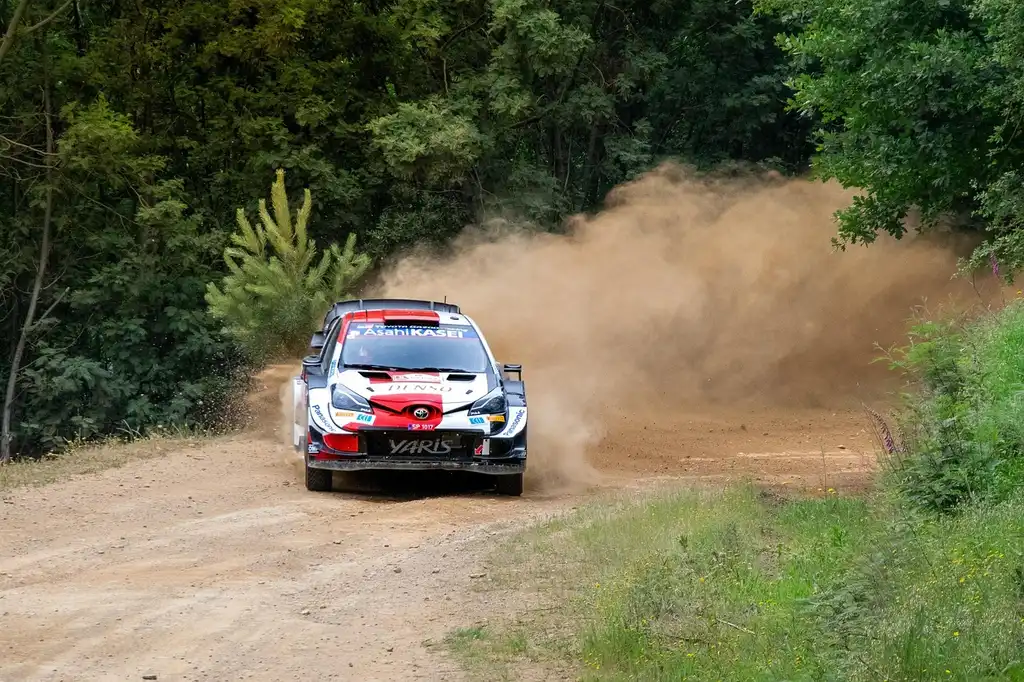
A World Rally Championship rally car, like the M-Sport Ford Fiesta example, is built for loose-surface stage use and quick corrective steering. The car is short and compact, so it rotates fast, but the driver does not try to hold a giant angle. The aim is to recover speed as soon as the nose points where acceleration matters.
Why the jump landing mattered
The example rally car used about 375 horsepower, and the cited moment was a jump landing correction. That matters because landings unsettle the chassis, especially when the car touches down slightly off line. The driver catches the slide, straightens the car, and goes back to stage pace instead of letting the rear hang out for style.
How are drift cars built for long slides?
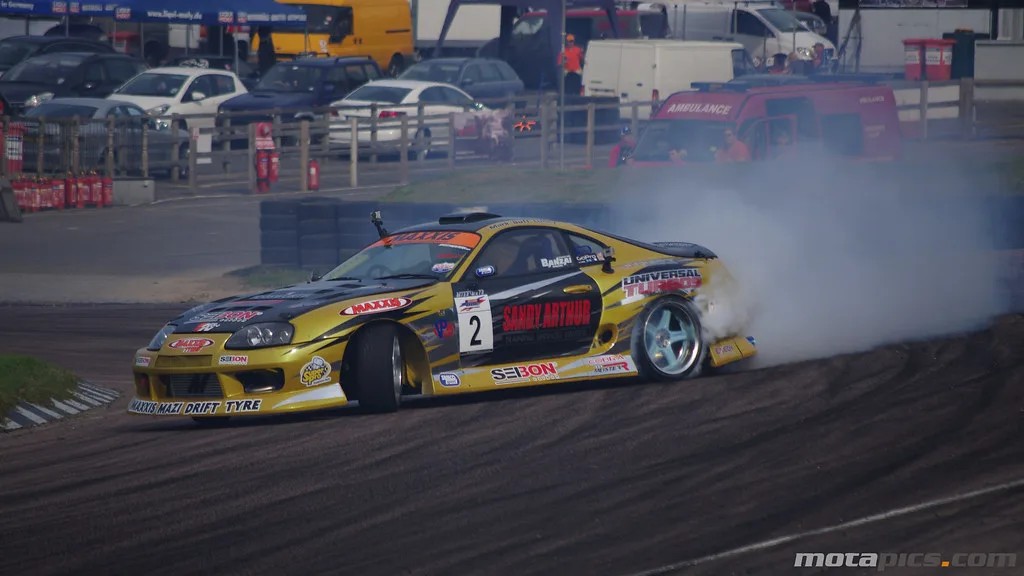
Formula Drift cars are built to hold a long, smooth, uninterrupted drift. That means the car must remain predictable at big slip angles, keep rear wheelspin under control, and give the driver enough steering authority to hold line while the body stays sideways.
Why longer chassis help drift
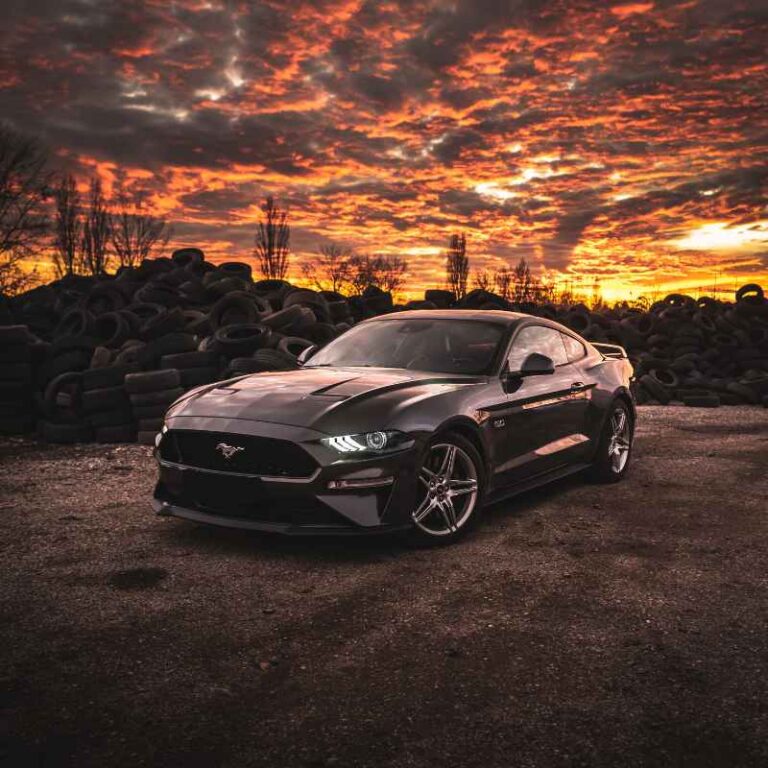
Formula Drift cars are described here as being longer than the rally Fiesta example. Vaughn Gittin Jr. and Chelsea DeNofa Mustangs are examples that put more chassis length between the axles, which makes the car calmer once it is already sideways. That extra length gives the driver more room to manage angle without the car snapping in and out of rotation too quickly.
Why width and horsepower matter more here
Wider tires help pro drift cars manage slip angle and traction balance. Add the high horsepower common in professional drifting, and the car can keep the rear tires spinning hard enough to stay in a controlled slide while the driver fine-tunes angle with throttle and steering.
What does wheelbase change in each discipline?
Wheelbase changes how quickly the car rotates and how stable it feels once rotation starts. A shorter wheelbase makes yaw build faster, so the car turns in and pivots quicker. A longer wheelbase calms the car once it is sideways, which helps a drift car settle into a held slide instead of darting around on entry.
Short wheelbase in rally
The short wheelbase of the WRC-style Fiesta means quick corrective steering can catch the car before the slide grows into wasted time. On a stage, that matters more than holding angle for its own sake. Fast recovery is worth more than a dramatic yaw angle that does not help acceleration.
Long wheelbase in drifting
The Vaughn Gittin Jr. and Chelsea DeNofa Mustangs need more room to rotate than a WRC Fiesta, and that is part of the point. Once the car is sideways, a longer wheelbase gives the driver a steadier platform for repeated transitions and sustained angle on asphalt. The car feels slower to initiate, but easier to hold once set.
What modifications make a drift car different from a rally car?
The biggest differences are surface-specific. Drift cars usually get wider rear tires, higher horsepower, steering changes for large angle, and suspension tuned to stay composed on pavement. Rally cars get suspension and driveline setup that can survive loose-surface hits, absorb bumps, and keep the car pointed at the next straight.
- Build for the surface first.
- Choose wheelbase behavior that matches the slide you want.
- Select tire width for grip balance, not appearance.
- Match power delivery to the job: recovery on stages, sustained wheelspin on drift courses.
- Tune steering for quick correction in rally or held angle in drifting.
The Scandinavian Flick is shared, but not identical
A Scandinavian Flick is referenced in both disciplines as a shared technique idea. In rally, it helps load and unload the chassis so the car can rotate for the next direction change on a loose stage. In drifting, the same idea may help initiate angle, but the car is then expected to stay sideways for much longer than a rally driver would normally allow.
What happens if you swap the disciplines?
Swap them, and the car usually becomes worse at the job it was not built to do. A drift setup on gravel loses bite, rotates erratically, and burns power trying to hold a slide that the surface will not support cleanly. A rally setup on a skid pad turns quickly, but it usually lacks the long, held angle judges expect from a drift run.
Drift setup on gravel
Wide tires and big power do not save a car if the surface cannot support them. Gravel gives inconsistent grip, so the car may snap from understeer to oversteer, then back again. Instead of one clean drift, you get messy rotation, wasted throttle, and poor drive out of the corner.
Rally setup on a skid pad
A rally car can slide on pavement, but it is not trying to paint a long sideways arc. Its short wheelbase and quick steering make it easy to rotate, yet the chassis and tire choice tend to favor recovery and direction change, not the long, uninterrupted angle that defines a drift score.
Choose Rally Car if… / Choose Drift Car if…
Choose a rally car if you care about loose-surface speed, stage time, and a car that can catch itself fast after the rear steps out. Choose a drift car if you care about prolonged angle, smoke, and a run that is judged on control and style more than raw point-to-point pace.
Choose a rally car if…
- You want the fastest route over gravel, snow, or broken pavement.
- You value quick corrective steering over holding angle.
- You want a car that recovers speed immediately after a slide.
- You care about stage time more than visual drama.
Choose a drift car if…
- You want long, smooth, uninterrupted drifts.
- You are tuning for wide tires and high horsepower.
- You want a chassis that stays stable at big slip angle.
- You are chasing judged runs, not stage splits.
Which is faster in a straight line, a rally car or a drift car
In a straight line, the answer depends on build, gearing, and surface, not the sport name alone. A rally car is usually optimized for stage acceleration and may be quicker in a usable, low-grip environment. A drift car can make more power, sometimes far more, but that does not automatically mean it is the better point-to-point machine.
Why the context matters
If the course is loose, the rally car often wins because it can put down usable speed without wasting motion. If the surface is paved and the goal is only straight-line power, a pro drift car’s horsepower may look impressive. But straight-line pace is not what drift cars are built to prove.
Frequently asked questions
race car vs drift car
A rally car is a race car built for time over a stage, while a drift car is built for judged sideways control. Both need precision, but the rally car is rewarded for recovering grip and driving forward hard, while the drift car is rewarded for holding angle and line for longer.
why do rally cars drift
Rally cars drift because loose surfaces reduce grip enough that the rear steps out under load, braking, or turn-in. The slide is useful when it helps the car point toward the exit sooner, but the driver usually corrects quickly rather than holding a big angle. Speed still comes first.
what makes a rally car different
A rally car is different because it is typically tuned for loose surfaces, fast yaw response, and quick recovery after grip breaks. Short wheelbase, quick steering, and a power band that works on gravel matter more than long, pretty slides. The car is built to keep moving, not to stay sideways.
how is a rally car different from a drift car
A rally car is built for stage time on changing surfaces, while a drift car is built for sustained angle on paved courses. Rally cars use quicker correction and tighter rotation. Drift cars use longer chassis behavior, wider tires, and much higher horsepower to keep the slide stable and visible.
can a rally car be used for drifting
A rally car can drift on gravel or even on pavement, but it is not optimized for the sustained angle that drift judging wants. It will rotate quickly and recover quickly, which is useful in rally and less useful in drifting. The car may slide well, yet still miss the drift objective.
what modifications make a drift car different from a rally car
Drift cars usually get wider tires, more power, and chassis tuning that supports long, smooth, uninterrupted slides. Rally cars usually get suspension, driveline, and steering behavior aimed at loose-surface control and quick correction. The same parts can overlap, but the setup targets are different from the start.
Products related to this article
Sponsored / affiliate links. As an Amazon Associate I earn from qualifying purchases. I may earn additional commission from eligible campaigns.