Rear Tint Only: The Genius, Essential Safety Reason
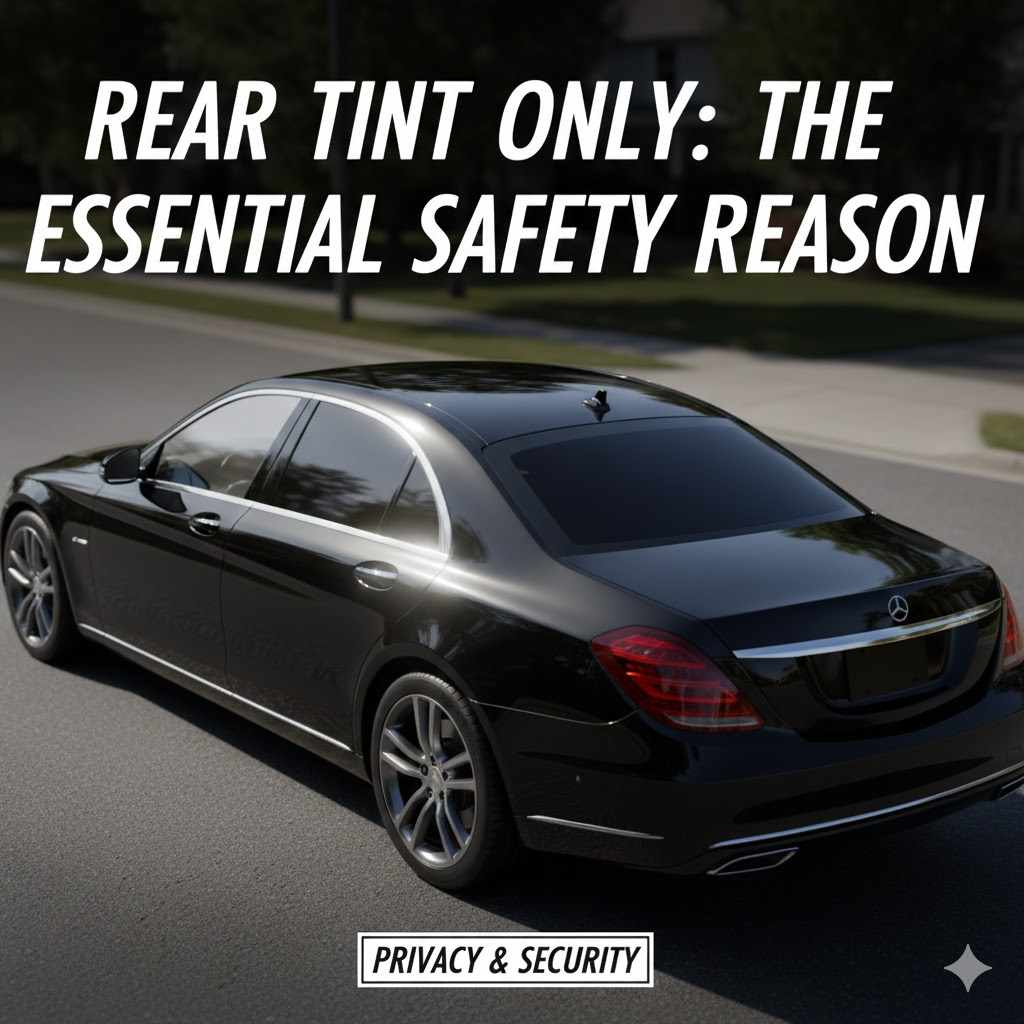
Many new cars come with only the rear windows tinted for a critical safety reason: driver visibility. State laws strictly regulate how dark front windows can be to ensure the driver has a clear, unobstructed view of the road, mirrors, and surroundings, especially at night. The darker rear tint provides passenger privacy and comfort without compromising this essential safety standard.
Have you ever looked at a new SUV or minivan and wondered, “Why are only the back windows dark?” It’s a common question! You see it everywhere—the front windows are clear, but the back half of the car looks like it’s wearing sunglasses. It can seem a bit strange, almost like the job was only half-finished.
But there’s a very smart and important reason for this. It’s not a mistake or a style choice by the car company. It’s a carefully planned design that balances safety, comfort, and the law. Don’t worry, this isn’t some complicated engineering secret. It’s actually quite simple when you break it down.
In this guide, I’ll walk you through exactly why your car has this two-tone look. We’ll uncover the genius safety reason behind it, explore the difference between factory “tint” and what you see at a tint shop, and help you understand the rules so you can make the best choices for your own car. Let’s get started!
The single most important reason new cars only have dark rear windows comes down to one thing: safety. Specifically, the driver’s ability to see everything around them clearly. Think about everything a driver needs to see from the front seat—other cars, pedestrians, cyclists, road signs, and what’s in their side mirrors. Anything that gets in the way of that view is a potential hazard.
Let’s dive into why clear front windows are non-negotiable for safety and how the dark rear windows play a different, but equally important, role.
First, What Is That “Factory Tint” Anyway?
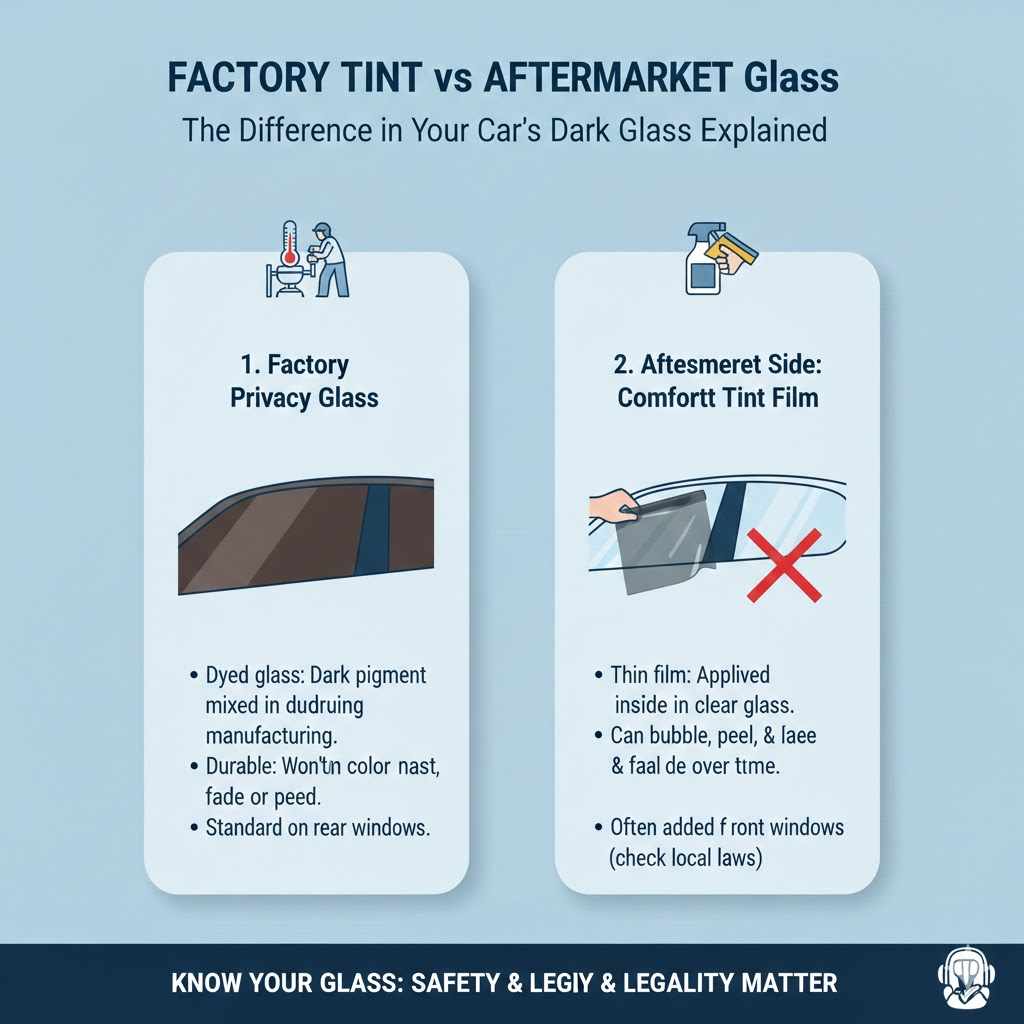
Before we go further, let’s clear up a common misconception. The dark glass on the back windows of a new car is usually not a tint film like you’d buy at an auto shop. It’s actually a special type of glass called “privacy glass.”
Here’s the difference:
- Aftermarket Tint: This is a thin sheet of film that is applied to the inside of a regular, clear window. It can be customized to different darkness levels.
- Factory Privacy Glass: This is glass that was dyed during the manufacturing process. The dark pigment is mixed right into the glass itself. It’s a permanent part of the window and cannot be peeled off.
This is a key point. Carmakers use privacy glass on the rear windows because it’s durable and provides a consistent level of darkness. The front windows are left as standard, clear glass to meet safety regulations across the country.
The #1 Reason: Uncompromising Driver Safety and Visibility
Your ability to see out of the front and side windows is the most critical safety feature of your car. It’s why traffic laws are so strict about what can and cannot be on your front windows. Dark tints can severely limit this visibility, especially in certain conditions.
Clear Line of Sight for the Driver
Imagine you’re trying to change lanes on the highway. You need a quick, clear glance into your side mirror and over your shoulder. A dark tint on your driver’s side window can make it much harder to spot a car in your blind spot, especially if it’s a dark-colored vehicle at dusk.
The same goes for making turns in a busy city. You need to be able to see pedestrians waiting to cross the street or a cyclist coming up alongside you. Clear front windows ensure your peripheral vision is as wide and unobstructed as possible. Tinting these windows is like putting blinders on a horse—it narrows your field of vision when you need it most.
Eye Contact and Communication on the Road
Have you ever made eye contact with another driver at a four-way stop to decide who goes first? Or with a pedestrian to signal that it’s safe for them to cross? This non-verbal communication is a huge part of safe driving.
Dark front window tint makes this impossible. Other drivers and pedestrians can’t see you, your intentions, or where you are looking. This uncertainty can lead to hesitation and accidents. Law enforcement officers also need to be able to see the driver during a traffic stop for their own safety. Clear front windows promote transparency and clear communication for everyone on or near the road.
The Dangers of Nighttime Driving
This is where dark front tint becomes truly dangerous. At night, your visibility is already reduced. Adding a dark film over your front windows makes it dramatically worse. It can become difficult to see road hazards, animals, or people walking on the side of a poorly lit road.
Think about it: sunglasses are great for a sunny day, but you’d never wear them to drive at night. A dark window tint has the same effect, permanently reducing the amount of light that reaches your eyes.
State and Local Tint Laws: The Legal Side of Things
Because driver visibility is so critical, every state has laws that regulate window tinting. These laws are very specific about how dark the tint on your front windows can be.
The darkness of a window tint is measured in Visible Light Transmission (VLT). VLT is the percentage of visible light that can pass through the window.
- A higher VLT % means the tint is lighter (more light passes through).
- A lower VLT % means the tint is darker (less light passes through).
For example, a 70% VLT tint is very light, while a 5% VLT tint (often called “limo tint”) is nearly black. State laws almost always require a very high VLT for the front driver and passenger windows—often 70% or higher. However, the laws for rear windows are usually much more relaxed, and in many states, you can go as dark as you want.
Carmakers know this. To sell their vehicles in all 50 states without issue, they keep the front windows clear to comply with the strictest laws. They then add privacy glass to the rear windows, where the rules are flexible.
You can check your state’s specific regulations through resources like the IIHS (Insurance Institute for Highway Safety) window tinting laws table. It’s always best to know your local laws before making any modifications.
Example of State Window Tint Laws (VLT %)
This table shows how different states regulate front versus rear window tint, which explains why automakers take a one-size-fits-all approach.
| Location on Vehicle | California | Texas | Florida | New York |
|---|---|---|---|---|
| Front Side Windows | 70% VLT | 25% VLT | 28% VLT | 70% VLT |
| Back Side Windows | Any Darkness | Any Darkness | 15% VLT | Any Darkness |
| Rear Windshield | Any Darkness | Any Darkness | 15% VLT | Any Darkness |
Note: These values are for passenger cars and can change. Always check your current local laws.
So, Why Are the Rear Windows Tinted? The Benefits for Passengers
While the front windows are all about the driver’s safety, the rear windows are all about passenger comfort, privacy, and protection. Here’s why that factory privacy glass is a fantastic feature.
Privacy and Security
This is the most obvious benefit. Privacy glass makes it difficult for people to see inside the back of your vehicle. This is great for:
- Keeping Valuables Hidden: Laptops, bags, or shopping left on the back seat are less visible to potential thieves.
- Passenger Privacy: It’s more comfortable for passengers, especially families with young children, to have some privacy from the outside world.
UV Ray Protection
Just like sunscreen protects your skin, privacy glass helps protect your car’s interior and passengers from the sun’s harmful ultraviolet (UV) rays. While it’s not a complete block, the pigment in the glass absorbs a significant portion of UV radiation. This helps prevent the upholstery in your back seats from fading and cracking over time and offers some protection to passengers on long, sunny road trips.
Reduced Heat and Glare
The dark color of privacy glass also absorbs sunlight, which helps keep the back of your car cooler on a hot day. This can make a huge difference for children or pets riding in the back. It also reduces glare, making it easier for passengers to read a book, look at a screen, or simply nap without the bright sun in their eyes.
Factory Privacy Glass vs. Aftermarket Tint Film: A Clear Comparison
It’s important to understand how the factory-installed privacy glass on your rear windows differs from the tint film you can have installed at a shop. They achieve a similar look but are fundamentally different products.
| Feature | Factory Privacy Glass | Aftermarket Tint Film |
|---|---|---|
| How It’s Made | Pigment is mixed into the glass during manufacturing. | A thin polymer film is applied to the surface of the glass. |
| Durability | Permanent. Cannot scratch, bubble, or peel. Lasts the life of the vehicle. | Can scratch, bubble, or peel over time. Lifespan depends on quality and installation. |
| UV Protection | Offers good UV protection. | Offers excellent UV protection (most films block 99%+). |
| Heat Rejection | Modest. The dark color absorbs heat, which can radiate into the cabin. | Can be excellent. High-quality ceramic films reject infrared heat without being very dark. |
| Cost | Included in the vehicle’s price from the factory. | An additional cost after purchasing the vehicle ($100 – $500+). |
One key takeaway here is about heat rejection. While privacy glass looks dark, it doesn’t always do the best job of blocking heat. High-quality aftermarket films, especially ceramic tints, are specifically designed to block infrared heat rays, which are responsible for the heat you feel from the sun.
Can You (and Should You) Tint Your Front Windows?
Yes, you absolutely can tint your front windows! You just have to do it legally. Millions of car owners add a light tint to their front windows to get the benefits of heat rejection and UV protection without compromising safety.
The goal isn’t to make your front windows as dark as the back, but to add a high-performance, legally compliant film.
How to Choose a Legal and Effective Front Window Tint
If you want to tint your front windows, follow these simple steps to do it right:
- Check Your State’s Tint Laws: This is the most important step. Look up the legal VLT percentage for front side windows in your state. Never go darker than what is legally allowed.
- Understand Your Goal: Are you looking for privacy or heat rejection? For front windows, the best goal is heat and UV rejection. You can achieve this with a very light, almost clear tint.
- Choose a High-Quality Film (Like Ceramic): Don’t opt for cheap, dark dyed films. Look for a modern ceramic tint. Ceramic tints are amazing because they are designed to block a huge amount of heat and UV rays without having to be dark. A 70% VLT ceramic tint can block more heat than a cheap 20% VLT dyed film.
- Go to a Professional Installer: Window tinting is a skill. A professional will ensure the film is applied perfectly, without bubbles, peels, or gaps. They will also know the local laws and can show you samples to help you choose a legal tint.
The Final Word: Safety First, Comfort Second
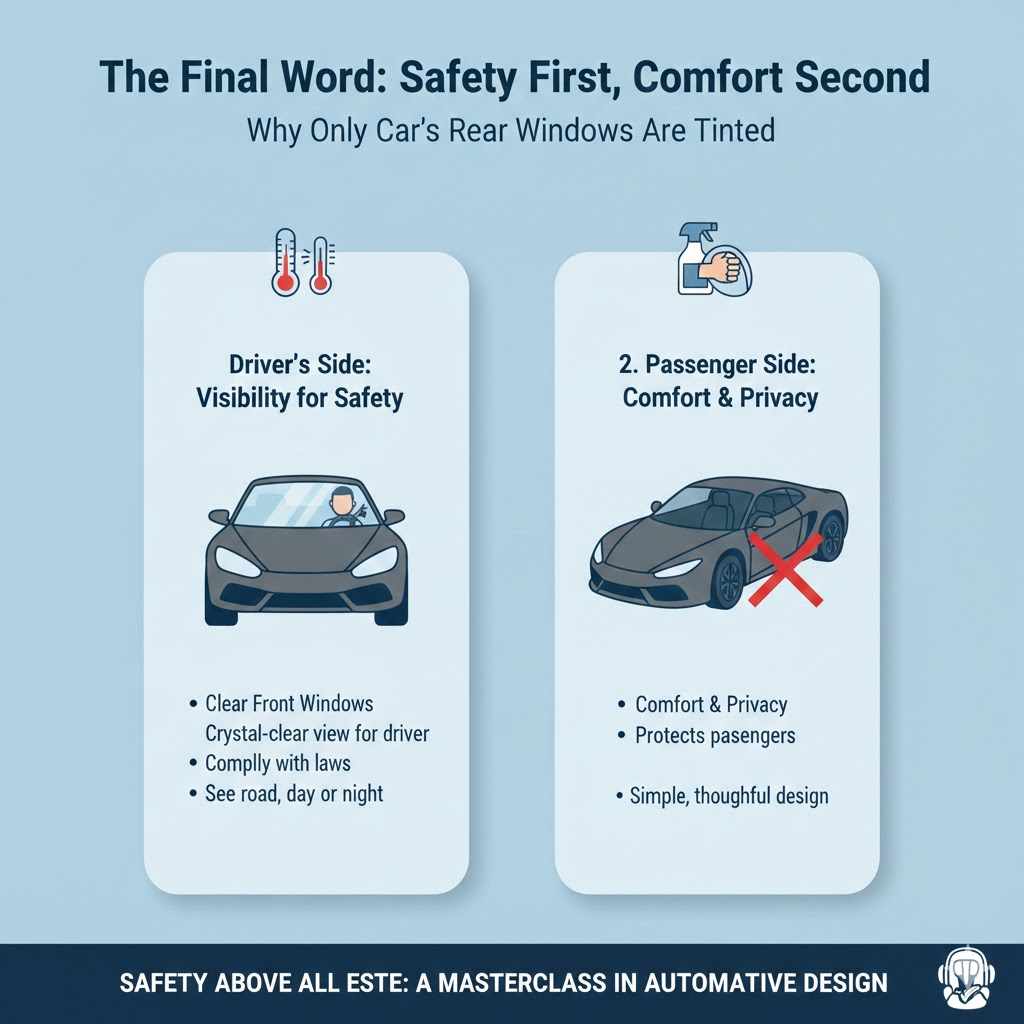
So, the next time you see a car with only its rear windows tinted, you’ll know it’s not a design flaw—it’s a masterclass in automotive safety design. Carmakers prioritize the driver’s crystal-clear view above all else, leaving the front windows clear to comply with laws and ensure you can see the road ahead, day or night.
The dark privacy glass in the back is the perfect compromise, offering your passengers the comfort, privacy, and protection they deserve without ever putting the driver’s safety at risk. It’s a simple solution to a complex problem, and it’s one of the many thoughtful details that make modern cars so safe and reliable.
Frequently Asked Questions (FAQ)
1. Is the factory “tint” on my rear windows a film I can remove?
No, in most new cars, the dark rear glass is “privacy glass.” This means the color is inside the glass itself and is permanent. It’s not a film and cannot be peeled off or removed.
2. Can I make my front windows match the dark rear windows?
In most states, it is illegal to tint your front side windows to be as dark as the typical rear privacy glass. Front windows must allow a much higher percentage of light through for driver safety and visibility. Always check your local laws for the legal limit.
3. Does rear privacy glass block much heat?
Privacy glass does reduce some glare and heat, but its primary benefit is privacy. It absorbs sunlight, which can still radiate heat into the car. For superior heat rejection, you can have a high-quality ceramic tint film applied over the privacy glass.
4. Will I get a ticket if my front window tint is too dark?
Yes. Police can and do issue tickets for illegal window tint. The fines can be expensive, and you may also be required to remove the illegal tint, which costs additional money. It’s always best to stick to your state’s legal VLT limits.
5. What is the best type of tint for my front windows?
A high-quality ceramic tint is the best choice for front windows. It provides excellent heat and UV rejection without having to be very dark, allowing you to stay comfortable while remaining fully compliant with the law and maintaining clear visibility.
6. Does factory privacy glass fade over time?
No, because the pigment is part of the glass itself, factory privacy glass will not fade, change color, or degrade over the life of your vehicle. It is much more durable than aftermarket tint films.
7. Why not just put a very light tint on all windows from the factory?
Automakers sell cars across many different states and countries, all with slightly different laws. By providing clear front glass, they guarantee the car is legal everywhere. This leaves the final decision to the owner, who can then apply a legal tint according to their local regulations.