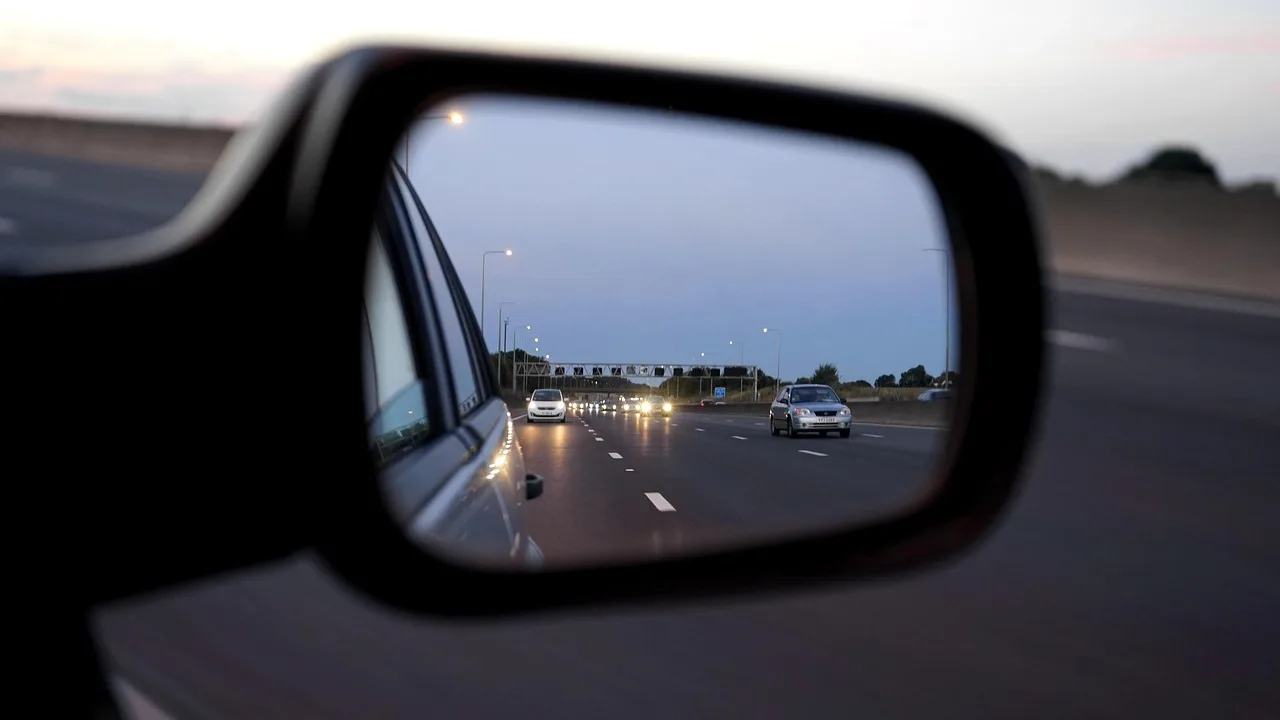
Rear View Mirror for Car: Choose the Right One
Choose a rear view mirror for car use by the problem you need to solve: flat mirrors keep distance judgment clear, clip-on panoramic mirrors widen rearward coverage, and auto-dimming mirrors cut headlight glare. Pick the wrong type or mount, and you can lose spacing cues, create blind spots, or end up with a mirror that slips on rough roads. This guide compares mirror types, mounting styles, and visibility trade-offs so you can buy the right fit for your vehicle and your routes.
Which rear-view mirror fits your driving?


The best rear-view mirror depends on what blocks your rear view and when you need help. Commuters usually want a flatter image and less glare. Night driving favors anti-glare or dimming glass. Towing and reversing need a wider view, but that wider view comes with less accurate distance judgment.
Use-case differences
For daily commuting, a standard flat mirror often works best because it keeps spacing easier to read in stop-and-go traffic. If headlights behind you feel harsh after dark, an anti-glare mirror or dimming glass is the better match. For backing out of a driveway or watching a trailer, a wider mirror can help you track more of what is behind the vehicle, though it will not remove the need to look around the car.
Blind spots matter most during lane changes, reversing, towing, and when you need to monitor children in the back seat. A wider mirror can reduce the amount of space hidden from view, but it cannot turn a rear window into a camera. If the rear glass is small, blocked, or tinted heavily, the mirror’s value drops quickly.
How vehicle type changes the choice
Sedan drivers often gain the most from a simple anti-glare or slightly wider mirror because rear visibility is usually decent but glare can be annoying. SUVs and vans often need a broader view because the cargo area or tall rear body can block parts of the rear window. Trucks and towing setups usually need the widest practical interior view, plus exterior towing mirrors if the trailer blocks the center line of sight.
Picture a sedan with a clear rear window and a driver bothered mainly by night glare. A flat or auto-dimming mirror is the cleaner answer than a large curved one, because the curved mirror can make the car behind look farther away than it really is. Suppose a van carries a child seat plus cargo stacked near the rear headrests. A panoramic mirror may help the driver watch more of the cabin and rear glass, but it still needs careful positioning to avoid a distorted central view.
📊 AAA says rear-view cameras increased rear blind-zone visibility by an average of 46 percent. Source: AAA.
Rear-view mirror selection matrix

Use this table to match mirror type, mount, and fit check to the driving situation. The goal is not the widest image possible. The goal is the clearest useful image for your vehicle and your routes.
| Driving scenario | Recommended mirror type | Mounting method | Visibility benefit | Downside | Fit check | Best-for use case |
|---|---|---|---|---|---|---|
| Commuting | Flat or anti-glare mirror | Clip-on mount | Clearer distance reading; less fatigue from headlights | Narrower field of view than a curved mirror | Measure OEM mirror width and clip grip depth | Sedans and SUVs on mixed city and highway routes |
| Night driving | Anti-glare or electrochromic mirror | Existing mirror replacement or clip-on | Reduces headlight glare behind you | May dim rear detail more than a clear mirror | Check whether the mirror dims manually or automatically | Drivers bothered by bright following traffic |
| Towing | Wide-angle or panoramic mirror | Clip-on or dedicated towing mirror | More of the trailer and adjacent lanes in view | Distance judgment becomes less precise | Confirm trailer width does not block center view | Cars, SUVs, and trucks pulling caravans or trailers |
| Reversing | Wide-angle mirror plus rear-view camera | Clip-on mirror with stable mount | Broader rear sweep for backing maneuvers | Does not show the area directly behind the bumper with certainty | Check rear window height and camera display angle | Driveways, parking lots, vans, and trucks |
| Child monitoring | Panoramic mirror | Clip-on mount | Lets the driver glance at rear seats more easily | Can distort the far edge of the rear view | Match mirror width to cabin width and headliner clearance | SUVs and vans with rear-seat passengers |
| SUV with tall cargo area | Panoramic or wide-angle mirror | Clip-on mount | Compensates for blocked rear glass | More curvature means more distance distortion | Confirm the mirror sits level with the driver’s eye line | Families and cargo-hauling drivers |
| Truck with trailer use | Wide-angle mirror | Clip-on or towing-specific mount | Expands the visible side-to-side area | Harder to judge gaps and closing speed | Check that the mount clears any factory housing | Lanes changes while towing, merging, and backing |
| Van with blocked rear glass | Panoramic mirror or camera-assisted setup | Clip-on mount | Improves what the driver can scan through the glass | Rear cargo can still hide traffic below the window line | Measure mirror width against the OEM mirror body | Delivery vans and passenger vans |
Flat, convex, or panoramic?
Flat mirrors are best when distance judgment matters most. Convex and panoramic mirrors are better when you need a broader sweep of the rear scene and can accept more distortion. The right choice is about what you want to see clearly, not just how much glass is covered.
Flat mirrors
A flat mirror gives a more accurate view of distance and closing speed, which is useful in traffic and during lane changes. Its trade-off is a narrower field of view, so more of the sides may fall outside the image. Amsons Recovery describes flat mirrors as giving a clear view behind you.
Convex and wide-angle mirrors
Convex mirrors broaden the field of view and can reduce the amount of space hidden in the standard mirror image. The trade-off is distance distortion. The same source notes that convex mirrors offer a wider view but make distance judgment difficult. That matters when a vehicle behind you is closing quickly and the image makes it seem farther away than it is.
Wide-angle mirrors are often curved or convex. They can help with blind spots during lane changes, reversing, and towing, but they are not ideal if you rely on the mirror to judge exact spacing. If you choose one, use the mirror for awareness and pair it with shoulder checks or a camera for closer maneuvers.
Panoramic mirrors
Panoramic mirrors stretch the visible area even farther, which can help in large cabins, vans, and vehicles with rear-seat monitoring needs. The downside is visual clutter. Too much sweep can make the center image feel small and make distance harder to read. That is why a panoramic mirror suits some drivers and frustrates others.
A common first-timer mistake is choosing the biggest curved mirror available because it looks safer. In practice, a mirror that is too wide can make a truck behind you seem far away when it is not, especially at night or in rain.
How do anti-glare mirrors work?
Anti-glare mirrors reduce the brightness of following headlights, especially after dark. That can make night driving less tiring and help you keep the mirror in view instead of tilting it away. The exact method varies: some mirrors use a prismatic day-night design, while others use tinted or electrochromic dimming glass.
Prismatic day-night mirrors
A prismatic mirror changes the reflected angle when you flip the day-night tab. In day mode it gives a normal bright image. In night mode it directs the reflected headlights away from your eyes. This is a mechanical solution, so it does not depend on electronics or a power connection.
Tinted or electrochromic options
Tinted mirrors lower brightness without a manual flip, while electrochromic mirrors dim automatically when sensors detect headlight glare. These are useful if you drive a lot after dark or share the vehicle with different drivers. The trade-off is cost and, in some setups, added wiring or vehicle-specific compatibility.
Anti-glare helps with light from behind. It does not fix a blocked rear window, a dirty mirror, or a camera view washed out by rain. It also cannot make a poorly adjusted mirror useful. If the angle is wrong, glare reduction only hides the symptom.
Mounting and fit checks
Mount choice affects stability as much as convenience. Suction cup mounts are quick to install, but they may fail on rough, dirty, or textured surfaces. Clip-on mounts are usually tool-free and easier to move between vehicles, but only if the OEM mirror shape and width match the clip design.
Suction cup mount limits
Suction cup mounts promise easy installation, but they need a clean, smooth surface and enough contact area to hold steady. If the windshield is dusty, curved sharply, or exposed to heat, the seal can weaken. That makes this style a poor choice for rough roads or vehicles with unusual glass angles.
Clip-on mount compatibility
Clip-on mirrors attach over the existing mirror and are often used for universal fit. They work best when the OEM mirror has a predictable rectangular body and enough depth for the grip arms. Before buying, measure the mirror width, check the clip opening, and confirm the mount does not press on integrated buttons or sensors.
360-degree adjustability and windshield angle
360 degrees adjustability helps you fine-tune the mirror for driver height and seat position. That matters because a mirror mounted too high or too low can force awkward head movement. Windshield angle also matters: a steep windshield may change the way the mirror sits, especially with suction mounting or tall clip-on hardware.
- Measure the existing mirror width and depth.
- Check whether the vehicle has an integrated OEM mirror housing.
- Note the windshield angle and how much space sits above the mirror.
- Choose clip-on for quick universal fit or suction cup for a smooth glass mount.
- Adjust the mirror so the rear window fills the center of the view without blocking your forward sightline.
Mirror use with cameras
A rear-view camera complements the mirror; it does not replace it. AAA says rear-view cameras increased rear blind-zone visibility by an average of 46 percent, based on testing 17 vehicles across 11 manufacturers. The improvement ranged from 36 percent in smaller sedans to up to 75 percent in hatchbacks. Even so, cameras still need mirror checks and shoulder checks.
That matters because cameras can be affected by rain, dirt, sun glare, and lens angle. Mirrors still give quick peripheral context, while cameras help with close-in backing. Used together, they cover more of the rear scene than either tool alone.
AAA also notes 210 fatalities annually due to back-over crashes and 15,000 injuries annually due to back-over crashes, with 31 percent of those fatalities involving children under 5. Those numbers are why a better mirror and a working camera should be treated as a pair, not a shopping choice between substitutes. (AAA)
When a camera helps more than a mirror upgrade
If the rear window is blocked by cargo, a spare tire, or tall headrests, a camera usually adds more value than a wider mirror alone. The mirror still helps with quick scanning and lane changes, but the camera is better for low-speed backing and parking. For towing, the camera may show the hitch area while the mirror helps watch traffic around the trailer.
Are rear view mirrors legal or compliant for towing?
Towing rules vary by region, but the general check is simple: your setup must give you an adequate rear view for the trailer or caravan you are pulling, and it must not block required sight lines. A wider mirror or towing-specific mirror often helps meet that need, but local rules can still require exterior towing mirrors or a certain rearward field of view.
Check three things before you buy for towing: whether your trailer blocks the center mirror view, whether your local code expects extended side mirrors, and whether the mirror mount stays secure at highway speed. A mirror that moves or vibrates on rough pavement is not a compliance solution.
Frequently asked questions
What type of rear view mirror is best for reducing blind spots?
A wide-angle or convex rear view mirror usually reduces blind spots the most because it shows more of the rear scene than a flat mirror. The trade-off is distance distortion, so it is best for awareness, lane changes, and towing rather than precise spacing. Many drivers prefer it as a supplement, not a full replacement.
Do wide-angle rear view mirrors really improve safety?
They can improve awareness by showing more traffic behind you, especially where standard mirrors miss part of the view. Safety depends on correct use. A wide-angle mirror can make vehicles seem farther away, so you still need shoulder checks, proper adjustment, and caution during merging, reversing, and parking.
How do I choose a rear view mirror for my car?
Start with your main problem: glare, blind spots, towing, or rear-seat monitoring. Then match the mirror type to that need, confirm the mount style fits your OEM mirror or windshield, and check the mirror width, depth, and adjustability. Flat for distance accuracy. Convex or panoramic for a wider sweep.
Are clip-on rear view mirrors easy to install?
Usually, yes. Clip-on rear view mirrors are often tool-free and made for quick universal fit, which makes them attractive for many cars, SUVs, trucks, and vans. The catch is compatibility: the clips must match the existing mirror shape and size, and the mount must stay steady without blocking controls.
What is the difference between flat and convex rear view mirrors?
A flat mirror gives a truer sense of distance and speed, but shows a narrower area. A convex mirror shows a wider field of view and can reduce blind spots, but it makes objects look smaller and farther away. Flat suits spacing. Convex suits awareness.
Can a rear view mirror help with towing or reversing?
Yes, especially if you choose a wide-angle or panoramic design. That broader view can help track a trailer, watch for traffic, and improve backing visibility. It will not eliminate blind spots or show everything behind the bumper, so use it with a rear-view camera and direct checks.
Products related to this article
Sponsored / affiliate links. As an Amazon Associate I earn from qualifying purchases. I may earn additional commission from eligible campaigns.