Best Rearview Mirror Extenders for Your Car (2026): We Compared
Choose a clip-on wide-angle mirror for quick blind-spot coverage, or a mirror relocation-style extender for taller seating and towing; the right choice depends on fit and how much stability you need. Pick the wrong one, and you can lose mirror coverage, pick up shake, or still miss traffic beside a trailer. This guide compares both styles by fit, stability, and real-world visibility so you can choose the one that suits your vehicle.
Quick comparison
| Product | Badge | Best for | Price | ||
|---|---|---|---|---|---|
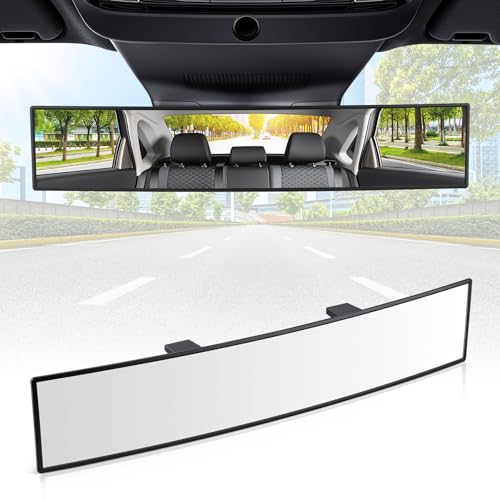 |
SINGARO Panoramic Car Rear View Mirrors, Universal ConvexSINGARO | Our pick | 16 inch · Chrome · Anti-glare | $15.99
Price as of 21 Oct 2026
|
View |
 |
JOYTUTUS 15” Panoramic Rear View Mirror, Clip-On LargeJOYTUTUS | Also great | 15 inch · Panoramic · Clip-on | $21.99
Price as of 21 Oct 2026
|
View |
The two styles solve different problems. Clip-on panoramic mirrors widen the center mirror’s field of view. Relocation-style extenders move the mirror’s position or angle to improve the rearward sight line.
Fit limits matter as much as the view. Measure the factory mirror housing first, then match the mount style to the mirror’s width, thickness, and edge clearance before you buy.
How we chose
We compared the two styles against the factors that decide whether they work in a car, SUV, truck, or RV: fit range, mounting security, vibration control, glare control, and usefulness for towing or taller seating positions.
We also weighed the failure points buyers usually meet after installation: slipping straps, clamp interference, partial obstruction, and shake at highway speed.
Finally, keep the comparison tied to published product details and common compatibility limits, not generic mirror claims.
What fits your mirror?
The safest answer starts with dimensions. Measure the factory rearview mirror housing width, thickness, and the amount of edge clearance around the mirror shell, because a universal fit still depends on those numbers and on the mirror’s mounting shape.
Most clip-on panoramic mirrors work best on standard interior mirrors with a flat or gently curved housing and enough bottom lip for the clip to grab. Strap-on or relocation styles are more forgiving on odd-shaped housings, but they still need room around the edges and a stable anchor point.
A common fit check is simple: if the extender’s clamp or strap would land on buttons, sensor bumps, or a thickened housing seam, stop there. That setup often leads to tilt drift, rattles, or a mirror that cannot sit square.
Say your factory mirror is about 10 inches wide with a thick plastic shell and a narrow lower edge. A clip that needs a clean bottom lip may hold poorly, while a strap style can spread pressure better if the housing allows full wraparound contact.
Measure these dimensions first
- Mirror width: the visible housing width from left edge to right edge.
- Mirror thickness: the front-to-back depth where the clip or strap will clamp.
- Edge clearance: room for the extender body without blocking sensors, buttons, or the auto-dimming area.
- Mounting shape: flat, rounded, tapered, or oversized housings usually fit differently.
Match the vehicle type
Passenger cars with slim OEM mirrors often suit clip-on panoramic mirrors because the housing is small and the center rearward view matters most. Trucks, tall SUVs, and tow vehicles may need a mount that tolerates thicker housings and a more upright seating position.
Factory rearview mirror design varies by vehicle. Some housings have generous edge clearance; others leave almost none, especially when the mirror is integrated with a camera, sensor, or rain hardware.
Clip-on extender: best for stable highway use
SINGARO Panoramic Car Rear View Mirrors suit drivers who want a wider center rear view with a fast, tool-free install. Based on the product details, the 16-inch panoramic shape and anti-glare chrome finish are aimed at blind-spot coverage and clearer day/night use in cars, trucks, SUVs, and RVs.
What stands out is the wide-angle convex glass and the clip-on mounting style. That combination usually favors quick installation and a steadier hold on standard factory mirror housings when the bottom edge is clean and the housing is not unusually thick.
The drawback is the same trade-off that helps it work: clip tension depends on the mirror shape. If the housing is shallow, rounded, or crowded by buttons, the mirror can sit slightly off-square or pick up shake over rough pavement.
Why it usually stays steadier
A clip-on design can hold the mirror close to the OEM housing, which reduces leverage and helps limit vibration. Anti-vibration performance still depends on how firmly the clip grips and whether the contact points sit on a smooth, non-marring surface.
For highway use, the goal is not only a wider view. It is a stable image that stays readable when larger vehicles pass or when the road surface sends a steady buzz through the cabin.
Where clamp pressure can fail
Clamp pressure can slip when the factory mirror is too thick, too rounded, or too narrow for the clip’s contact points. If the clamp grabs only one edge, the mirror can twist, rattle, or partially obstruct the original mirror.
That is the failure case to watch for. A mirror that moves a few millimeters after every door slam may still seem fine in the driveway, then blur on the freeway.
Strap-on extender: best for fast installs
JOYTUTUS 15” Panoramic Rear View Mirror is a good fit for drivers who want a quick clip-on setup with a slightly shorter body. The published details point to a wide-angle mirror with high-definition glass, anti-glare visibility, and a buckled clip that installs quickly on the bottom of the factory mirror.
What stands out is the shorter 15-inch format and a simple buckled mounting approach. That can help in vehicles where the mirror housing is not especially large and where fast setup matters more than maximum coverage length.
The drawback is that the shorter body may give a little less panoramic spread than a 16-inch option, and the same clip-on limits still apply. If the OEM housing is unusually thick or the edge clearance is poor, the mirror can still vibrate or sit too low.
How the straps or clip hold the OEM mirror
Strap-on or buckle-style mounts wrap around the factory mirror housing and hold by tension. When the contact points are rubberized or non-marring, they can reduce scuffs and help the mirror stay put without tools.
The benefit is speed. The downside is that strap tension can change with heat, cold, or repeated adjustment, which is why some cheap units loosen after a few days of driving.
Where vibration or slip can appear
Vibration usually shows up first at freeway speed, then becomes obvious at night when headlight glare makes shake easier to notice. Slip often appears when the strap lands on a curved corner instead of a flat section of the housing.
If the image looks stable in the driveway but bounces on expansion joints, the mount is not stable enough for long trips or towing duty.
Rearview mirror extender decision table
| Style | Mirror-width compatibility | Install method | Vibration risk | Glare control | Towing suitability | Best vehicle segment |
|---|---|---|---|---|---|---|
| Clip-on panoramic mirror | Best on standard interior mirrors with enough lower edge to clip; works best when the housing is flat or gently curved and not bulky | Tool-free clip or buckle mount with non-marring contact points | Lower when the clip seats squarely; higher if the housing is rounded, thick, or crowded by sensors | Usually better than bare OEM glass when the mirror has anti-glare coating or chrome tint | Good for wider rearward awareness, but it does not replace towing mirrors for trailer-side visibility | Cars, small SUVs, family vehicles |
| Strap-on or relocation-style extender | More forgiving on odd-shaped housings if the straps can wrap cleanly around the shell and maintain edge clearance | Tool-free strap or buckle mount, often with adjustable tension | Moderate if strap tension loosens or if the housing shape lets the mirror shift at speed | Depends on the mirror surface; some reduce glare, but lower-cost models can be less effective at night | Better match for taller seating positions and some towing setups, though dedicated tow mirrors still do more for trailer view | Pickup trucks, tow vehicles, tall-driver setups, some RVs |
This table shows the practical split: clip-on panoramic mirrors usually improve the central rear view and lane-change awareness, while strap-based styles are the better bet when the factory mirror housing or seating position needs more positional correction.
Visibility gains by use case
Blind-spot coverage improves most when the extender widens the center mirror enough to show the rear quarter of the vehicle and some adjacent lane space. That helps lane changes, backing into parking spaces, and watching traffic that approaches from behind.
For towing, the bigger question is what you need to see. A center-mirror extender can help you watch the trailer or what is directly behind it, but it does not create the same side-outboard view as tow mirrors or oversized towing mirrors.
Glare and day-night use
Anti-glare mirror surfaces matter at night, especially on long highway runs with constant headlight reflections. A chrome or anti-glare coating can reduce harsh brightness, but it also changes the look of the image slightly, so the driver needs a few minutes to adapt.
If a mirror extends visibility yet turns into a headlight flare at night, it has failed the main use case. The goal is a clearer image, not a brighter one.
Adjustability matters
An adjustable arm or swivel joint should allow enough tilt and rotation to center the rear window and keep the horizon level. The locking mechanism matters as much as the motion range, because a loose joint can drift after one pothole or one passenger door slam.
Good adjustability is not about endless movement. It is about holding the chosen angle without needing constant re-aiming.
How do you install one?
Set the mirror angle before tightening, then check for wobble after the first drive. Recheck clearance for the sun visors, auto-dimming sensors, and any overhead controls, because a mirror that fits physically can still block something important once it is aimed correctly.
Tool-free setup is common, but the final step is always the same: confirm the mirror stays level, does not touch the windshield, and does not obscure the original field of view.
- Measure the factory mirror width, thickness, and edge clearance.
- Position the extender so the clamp or strap lands on a flat, secure section.
- Set the rear view before fully tightening the mount.
- Check that the mirror does not block visors, sensors, or overhead buttons.
- Drive a short route, then look for shake, slip, or tilt drift.
- Re-tension the mount if the image moves after bumps or door closures.
Check for wobble after the first drive
A short test route is enough to reveal poor mounting. If the reflection trembles at idle, or the angle shifts after one turn, the mount is too loose for highway use.
Suppose a family SUV has a thick auto-dimming mirror housing and the extender sits 5 millimeters low on one side. That small misalignment can create a tilted horizon and make the rear view harder to trust at night.
Which one should you buy?
Choose the clip-on panoramic mirror if your vehicle has a normal-width factory mirror, you want fast installation, and your main goal is better blind-spot coverage for everyday driving. Choose the strap-style or relocation-leaning design if your mirror housing is awkwardly shaped, your seating position is taller, or you need more help with rearward sight lines while towing.
For towing, a dedicated tow mirror still wins for side trailer visibility. For tall drivers, the more adjustable mount usually matters more than the widest glass. For budget buyers, the cheaper option is only the better value if it fits without slipping or blocking the OEM mirror.
Best choice for towing
A strap-on or relocation-style extender is the better starting point when the vehicle is used with a trailer, because it can help correct the rearward sight line for taller seating positions. Even then, it should be treated as a support aid, not a substitute for tow mirrors when side trailer coverage is the priority.
Best choice for tall drivers
Tall drivers often sit higher and farther back, so the mirror angle needs more adjustment than the average compact-car setup. In that case, the mount that holds its angle better and lets the mirror sit where the driver actually looks is the safer pick.
Best choice for budget buyers
Pick the cheaper mirror only if the fit is right. A low price does not help if the clip slips on a thick OEM housing or if the image shakes so much that the wider field of view becomes hard to use.
Choose SINGARO if… / Choose JOYTUTUS if…
Choose SINGARO if you want the longer 16-inch panoramic format, your factory mirror has a standard clip-friendly edge, and you care most about stable day-to-day blind-spot coverage in a car, truck, or SUV.
Choose JOYTUTUS if you want a slightly shorter 15-inch mirror, prefer a straightforward buckle-style install, or need a universal option for a family vehicle where quick setup matters more than maximum width.
Choose SINGARO if anti-glare performance is a priority and the mirror housing has enough clearance for a secure clip.
Choose JOYTUTUS if you want an easier fit on a slightly tighter housing and can accept that the shorter body may offer a bit less panoramic spread.
Are rearview mirror extenders legal?
Usually, legality comes down to obstruction and field-of-view rules, not the product name. If the extender blocks too much of the windshield view, interferes with mandatory equipment, or violates a local mirror-coverage rule, it may fail an inspection or be treated differently by enforcement.
Rules vary by state and country, and inspection standards can differ from road-use rules. Before buying, check whether your area limits mirror obstruction, requires a minimum rearward field of view, or has specific rules for towing mirrors and interior accessories.
What obstruction rules usually matter
Most rules focus on what the driver can still see, how much of the windshield is blocked, and whether the mirror remains securely mounted. A mirror that hangs too low or crowds the wiper sweep may raise more issues than one that simply adds width.
Why inspection standards can differ
Inspection stations may apply stricter visual checks than everyday traffic enforcement. A design that passes on the road can still get flagged if it appears loose, obscures the original mirror, or interferes with another safety device.
Frequently asked questions
What is the best rearview mirror extender for my car?
The best choice depends on your mirror shape and your main use case. A clip-on panoramic mirror suits most standard factory housings and daily driving, while a strap-on or relocation-style design makes more sense when the OEM mirror is thicker, the seating position is taller, or towing visibility matters more.
Do rearview mirror extenders really work?
Yes, but only in the right use case. They can widen the center mirror’s rear view and reduce blind spots, especially for lane changes and parking, but they do not replace side mirrors or towing mirrors. If fit is poor, they can also shake, slip, or block part of the original view.
Will a mirror extender fit over my factory rearview mirror?
It may, but you need the exact mirror width, thickness, and edge clearance first. Universal fit usually means a range, not every vehicle. If the housing is thick, rounded, or crowded by sensors, the mount may not seat properly or may need a different style.
How do I install a rearview mirror extender?
Measure the mirror, center the extender, and tighten the clamp or strap only after the rear view is aimed correctly. Then drive a short route, look for wobble, and recheck clearance for visors, cameras, and sensors. A secure fit should hold its angle without constant readjustment.
What size rearview mirror extender do I need?
You need a size that matches the mirror’s width and the housing depth, not just the cabin size. A common wide mirror works on standard interior housings, while taller vehicles or towing setups may need a mount with a broader adjustment range. Always verify the manufacturer’s fit range first.
Products related to this article
Sponsored / affiliate links. As an Amazon Associate I earn from qualifying purchases. I may earn additional commission from eligible campaigns.