Best Red Paints for Cars (2026): We Compared
The best red paint for cars depends on the repair. Use a factory-match touch-up for chips, an aerosol refinisher for panels, and a high-heat red coating for engine or brake accents. Pick the wrong type, and the color can miss, the finish can peel, or heat can ruin it. This guide compares three red paints by finish, fit, drying time, and heat resistance so you can choose the repair that best fits your needs.
Quick comparison
| Product | Badge | Best for | Price | ||
|---|---|---|---|---|---|
 |
Krylon Fusion All-In-One Gloss Spray Paint & Primer, RedKrylon | Our pick | Single Can · Fusion Gloss · Red Pepper | $5.98
Price as of 25 Oct 2026
|
View |
 |
VHT High Temperature Plastic Paint, Matte, Red, 11 ozVHT | Also great | 11 oz · VHT High Temp · Matte Red | $16.99
Price as of 25 Oct 2026
|
View |
The right red paint starts with repair size, then finish and substrate. A touch-up product suits narrow damage. An aerosol can fits larger visible areas. A caliper coating belongs on hot parts, where heat and brake dust matter more than body-panel color match.
How we chose
These picks are separated by repair type, not brand loyalty. The comparison weighs color match risk, coverage, drying time, substrate compatibility, and whether the finish is meant for body panels, trim, or heat-exposed parts.
We also prioritized products with clearly stated use cases, because red paint fails in different ways. A factory code can be close enough for a chip and still miss on a whole panel. Metallic flake, gloss level, and prep quality all change the result.
OEM color code match: best for scratch repair
For small chips and scratches, an OEM color-code match is the best red paint choice because it cuts color-match risk on a limited repair area. PQ Race Red Touch Up is described as a Ford-specific color match, and Tesla red touch-up is positioned for Model Y, 3, X, and S, which shows how tightly some touch-up products are tied to factory colors.
Check the factory code on the vehicle’s door jamb, glove box, or build information before buying. “Red” is not one color. A general red spray may look close in the can and still read wrong next to adjacent paint, especially on a panel with sun fade or repair history.
Touch-up pen vs brush kit
A touch-up pen or brush kit works best on stone chips, key scratches, and small edge damage where control matters more than broad coverage. It gives you anti-rust protection on exposed metal and dries fast enough to cut dust pickup, but it is not a panel-refinishing tool.
The limit is match area. Exact OEM color can still miss if the surrounding panel has aged, if the clear coat has dulled, or if the original finish is metallic red and the flake orientation differs. On a chip, that mismatch is often acceptable. On a door skin, it is harder to hide.
Where exact match can still miss
Factory code match is best for scratch repair, not for disguising a large repaint. The closer the repair gets to a full panel or body line, the more panel blending risk matters. Even an accurate code can look different under shade, direct sun, or on a curved panel where the angle shifts the color.
Metallic reds add another complication. The flake can sit differently from one spray pass to the next, so the same formula may read darker or lighter depending on the coat, distance, and viewing angle. That is why exact-match touch-up is strongest on small damage and weakest where the repair grows.
Should I use spray paint or a touch-up pen for red paint?
Use a touch-up pen or brush kit for chips and scratches under a few inches long. Use aerosol spray paint when the repair is large enough that precise dotting would leave obvious texture or color islands. Spray paint gives better coverage on panels and trim, but it also raises overspray and blend risk.
Repair size should decide first. A pen is better for a door-edge nick. A can is better for a scuffed bumper insert or a larger accent panel. If the area is visible from several feet away, coverage consistency matters more than pinpoint control.
Aerosol spray paint for larger panels
Aerosol spray paint is the more practical DIY option for larger panels because it lays color evenly and can cover body panels and trim with fewer seams. Rust-Oleum 2X Custom is listed as a gloss red enamel in a 12 oz can, and it includes a 5-in-1 dial for spray patterns, which helps with pattern control on different shapes.
Its strength is coverage and pattern flexibility. Its drawback is that it is less forgiving around adjacent panels, masked edges, and wind. A can can solve a bigger job than a touch-up pen can, but it can also create visible overlap if the prep and masking are sloppy.
Drying time and recoat timing
Dry time matters because red shows defects quickly. Dupli-Color Metalcast dries to the touch in about 30 minutes, while Dupli-Color Molten Red Metallic dries to the touch in 1 hour. That difference can shape how quickly you can recoat, handle parts, or move to clear coat.
Touch-dry does not mean cured. Handling time, recoat timing, and full cure window are separate. If you rush the next layer, you can trap solvent, soften the finish, or change gloss. For a small touch-up, that often means waiting longer than the label’s “dry to touch” line suggests.
What’s the best metallic red car paint for a DIY project?
The best metallic red for a DIY project is one that takes clear coat cleanly and hides blend lines well enough for the repair size you are doing. Metallic red gives a deeper, multi-dimensional shine, but it is less forgiving than gloss solid red because flake direction and prep defects show more easily.
For a visible panel, metallic red is usually the better cosmetic choice if you can prep properly and clear coat it. For a chip, it may be too fussy. For a full accent piece, it can look better than a flat gloss red because the flake changes under light, but only when the coats are even.
Gloss solid red versus metallic red
Gloss solid red gives a bold, uniform appearance and is easier to keep visually consistent across a panel. Metallic red adds depth, but it also reveals sanding scratches, dust nibs, and uneven spray angles more readily. If prep is rough, gloss solid red is usually the safer DIY finish.
Clear coat compatibility matters for both, but especially for metallic systems. The clear coat adds gloss depth and protection, and it affects durability more than the color coat alone. A good red base without the right clear can still look thin, chalky, or short-lived.
Why prep defects show more on metallic red
Metallic flake behaves differently from solid pigment. The particles reflect light at different angles, so scratches, scuffs, and patch edges can become visible even when the color is close. That is why metallic red is often less forgiving on repaired body panels than gloss solid red.
Suppose you are repainting a small spoiler in metallic red. If the sanding marks are uneven, the final panel can look striped or blotchy in sunlight even when the color code is correct. With gloss solid red, that same surface defect is still a problem, but it is usually less obvious.
What red paint is best for brake calipers or hot parts?
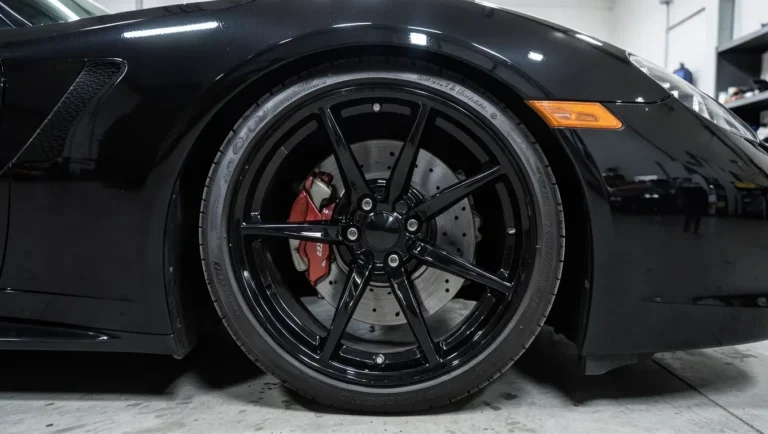
Brake caliper paint is the right choice for high-heat parts because it is built for temperature and brake dust resistance, not body-panel blending. Rust-Oleum Caliper Spray Paint is targeted to brake calipers and wheels, while SENVEN Red Caliper Paint is rated to 980 degrees. Neither belongs on exterior body panels.
Do not use caliper paint as a general red body refinisher. Its job is to handle heat cycling, grime, and constant contamination near the brakes. That is a different problem from color matching a fender or hiding a scratch on a door.
Heat resistance and brake dust resistance
High-heat red coatings matter where ordinary body paint would soften, discolor, or fail. Dupli-Color Metalcast resists heat up to 500°F intermittently, which suits chrome accents and some hot nearby components, but it is still an accent coating rather than a body-panel paint.
Brake dust resistance is part of the case for caliper paint. Calipers sit in a harsh environment. The coating should survive repeated heat cycles and road grime without flaking. That requirement is specific to the component, which is why the category should stay separate from touch-up and body refinishing.
Why it should stay off body panels
Caliper paint is not for body panels because the finish, film build, and color expectations are different. It may cure hard and resist heat, but it is not tuned for large visible panels, factory gloss levels, or exact red color matching on exterior sheet metal.
That separation prevents a common mistake: assuming a “red paint” is interchangeable across the car. It is not. A wheel well part, a bumper cover, and a chip on a hood each ask for a different product class.
Which red paint should you buy?
Choose by repair size first, then by substrate and finish. A factory-match touch-up is the safest pick for chips and scratches. A gloss aerosol is the better buy for a panel or trim repaint. A caliper coating is for hot parts only, where heat resistance matters more than body color accuracy.
| Question | OEM touch-up | Aerosol body/trim | Caliper/high-heat |
|---|---|---|---|
| Substrate | Metal, small plastic repairs, some composites with the right primer | Metal, plastic, chrome, composites with proper prep and adhesion promoter | Metal near brakes or engine-adjacent parts; not body panels |
| Finish | Exact-match color patch, usually small-area gloss blend | Gloss solid red or metallic red, depending on product | Heat-rated red coating, usually component-specific |
| Coverage | Best for chips and scratches | Best for larger panels and trim coverage | Best for calipers and hot hardware |
| Dry time | Often fastest for tiny repairs | Usually longer than touch-up, but easier to coat evenly | Varies by formula; cure time matters more than quick touch-dry |
| Heat resistance | Normal automotive exposure, not heat parts | Normal body-panel exposure, not brake heat | Designed for high heat; some formulas list 500°F or 980 degrees |
| Color-match risk | Low if the code is correct, but age and fade can still shift the result | Higher than OEM match because the finish is broader and the blend area is larger | High for body-panel color; low if you only need a caliper appearance |
| Prep level | Clean, degrease, light scuff or sanding, spot primer if needed | Clean, sand or scuff, degrease, mask, primer as needed | Thorough cleaning, rust removal, degreasing, and heat-safe prep |
| Best-use scenario | Stone chip on a hood or door edge | Scuffed bumper, trim insert, or accent panel | Brake caliper or other hot red accent part |
What is the best red paint for cars?
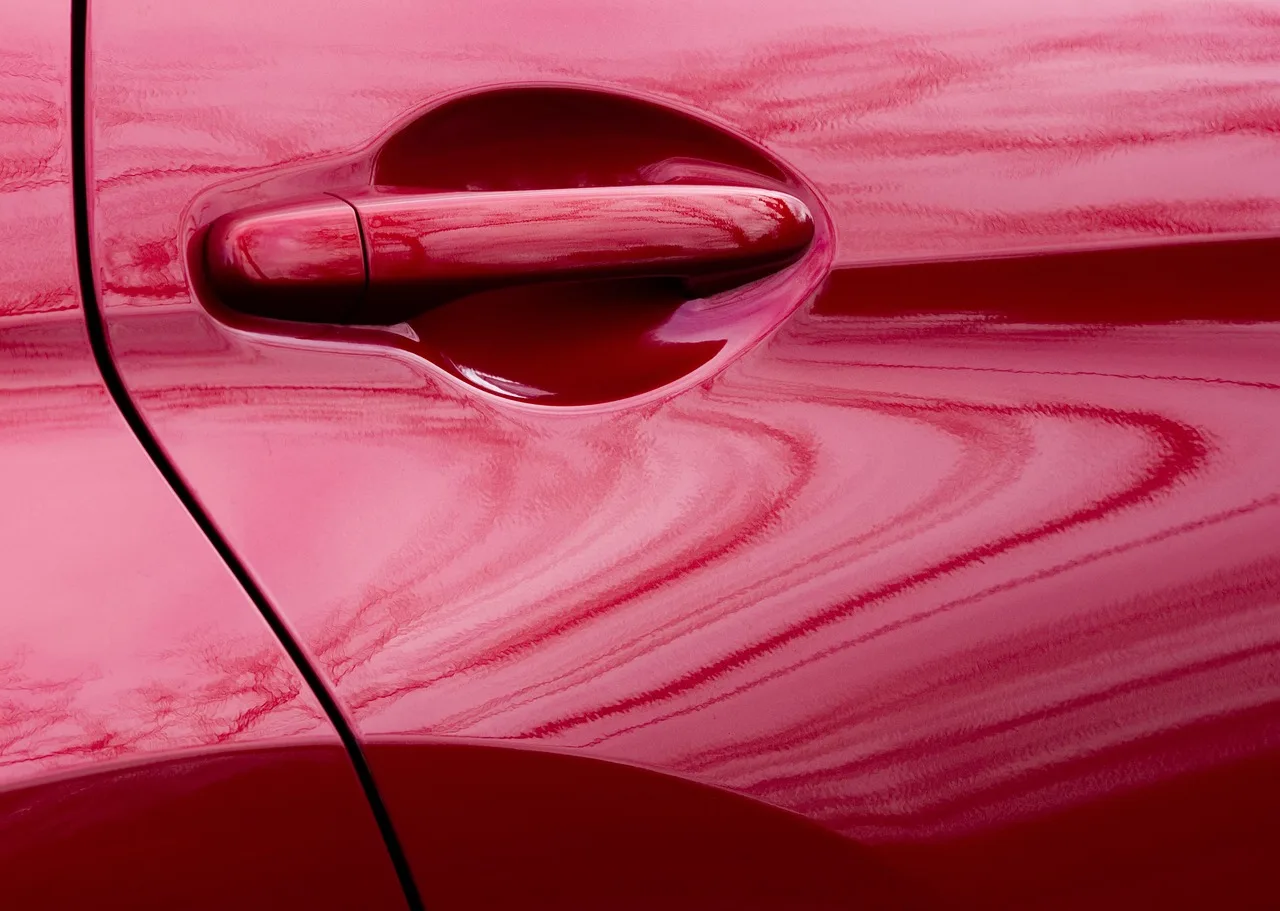
The best red paint for cars is the one that fits the repair size and substrate. For small chips, a factory-code touch-up is usually best because it limits color-match risk. For larger panels, an aerosol refinisher gives better coverage. For calipers, a high-heat coating is the right category.
That is the main buying rule. If the paint is for a visible body surface, focus on match and finish. If it is for a hot component, focus on heat and dust resistance. If the substrate changes, the prep changes too.
Choose by repair size
Small damage calls for control. Use a touch-up pen or brush kit when the defect is confined to a chip or scratch. Medium to large damage calls for a spray can because it can cover the area without obvious texture breaks. Very large repairs usually need more than one can and more careful blending.
A common first-timer mistake is buying a body-panel spray for a two-centimeter chip. That usually wastes paint and makes the repair harder to blend. The reverse is also true: a touch-up pen on a quarter-panel scuff can leave the fix looking dotted and uneven.
Choose by finish goal
If you want a factory-like result, start with the OEM code. If you want a bolder custom look, gloss solid red is the easier route. If you want a deeper, multi-angle shine, metallic red is the more dramatic finish, but it needs more careful prep and a compatible clear coat system.
For chrome accents, a specialty product like Dupli-Color MC200 Metalcast is the more relevant category because it is a metallic anodized red spray paint for chrome accents. That is a different job from a scratch repair on painted sheet metal.
Choose by substrate and prep time
Metal usually accepts the widest range of products, but only after cleaning, sanding, and degreasing. Plastic often needs adhesion help and a paint that is rated for plastic. Chrome and composites need even more care, because slick surfaces can cause adhesion failure if you skip the right prep.
Primer is not optional in many repairs. It fills the gap between raw substrate and color coat, especially on sanded metal or repaired plastic. Without it, the finish can flash unevenly or peel at the edge of the repair.
Choose by budget and cure time
If budget is tight and the repair is small, a touch-up kit is usually the lowest-cost path per repair. If the area is larger, a 12 oz aerosol can can be cheaper than buying multiple small bottles. Rust-Oleum 2X Custom, for example, comes in a 12 oz can size, which is practical for trim and panel work.
Drying and curing also affect cost in a less obvious way. Faster products can cut the time the car sits masked or disassembled, but they do not remove the need for full cure. A paint that dries in 30 minutes can still need much longer before it is safe to polish, handle, or reassemble.
Frequently asked questions
What red paint matches my car’s factory color code?
The closest match comes from an OEM color-code touch-up matched to the vehicle’s factory code. That is usually the best choice for chips and scratches because it limits color-match risk. It can still miss slightly if the panel has faded, if the finish is metallic, or if the repair area is large.
What’s the difference between a general red spray and OEM-matched red paint?
General red spray is built for broader coverage and a uniform red finish, while OEM-matched paint is built to match a specific factory code. The spray can be better for panels and trim. The OEM match is better for a small repair where color accuracy matters most.
Which red paint dries fastest for car touch-ups?
Among the products covered here, Dupli-Color Metalcast dries to the touch in about 30 minutes, and Dupli-Color Molten Red Metallic dries to the touch in 1 hour. For tiny touch-ups, the practical fastest choice is still the product that fits the repair size, because speed matters less than avoiding mismatch or overspray.
Products related to this article
Sponsored / affiliate links. As an Amazon Associate I earn from qualifying purchases. I may earn additional commission from eligible campaigns.