5 Best Paints for Cars (2026): Based on Specs and Reviews
Best paint for cars depends on the job: use aerosol touch-up paint for chips, 2K wheel paint for wheels, trim paint for plastics, and a full 2-stage basecoat/clearcoat system for body panels. Pick the wrong system and you get peeling, color mismatch, weak durability, or a repaint bill that climbs far above the original repair. This guide compares paint types, failure risks, prep needs, and the best use case for each so you can buy the right one the first time.
Quick comparison
| Product | Badge | Best for | Price | ||
|---|---|---|---|---|---|
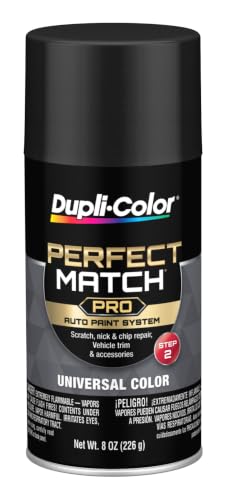 |
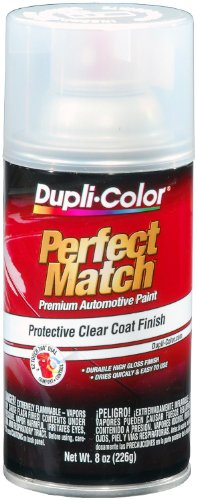
Dupli-Color Perfect Match Premium Automotive Paint, Gloss,Dupli-Color | Our pick | 8 oz · aerosol · Universal Black | $17.99
Price as of 28 Oct 2026
|
View |
 |
Restoration Shop Pure White Acrylic Urethane Auto Paint –Restoration Shop | Also great | 1 gal kit · single-stage · pure white | $224.99
Price as of 28 Oct 2026
|
View |
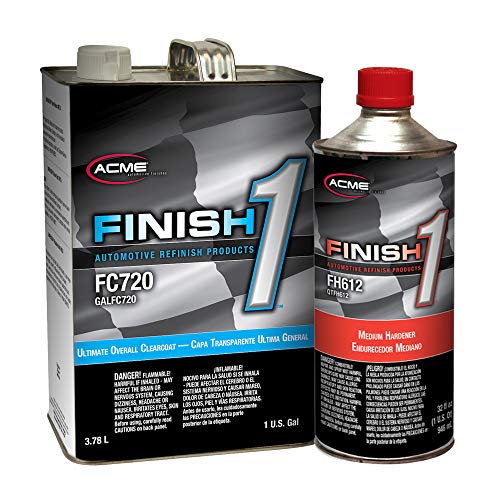 |
SHERWIN WILLIAMS Finish 1 Automotive Refinish UltimateSHERWIN WILLIAMS | Also great | 1 gal clearcoat · urethane · included hardener | $105.99
Price as of 28 Oct 2026
|
View |
 |
LiME LiNE Automotive Basecoats, 1k Urethane Base Coat ColorLiME LiNE | Pair with it | Quart · 1K basecoat · automotive grade | $81.02
Price as of 28 Oct 2026
|
View |
 |
House of Kolor Bc25 Black Solid 12-Ounce Aerosol Spray CanHouse of Kolor | Also great | 12 oz aerosol · black solid · Shimrin basecoat | View |
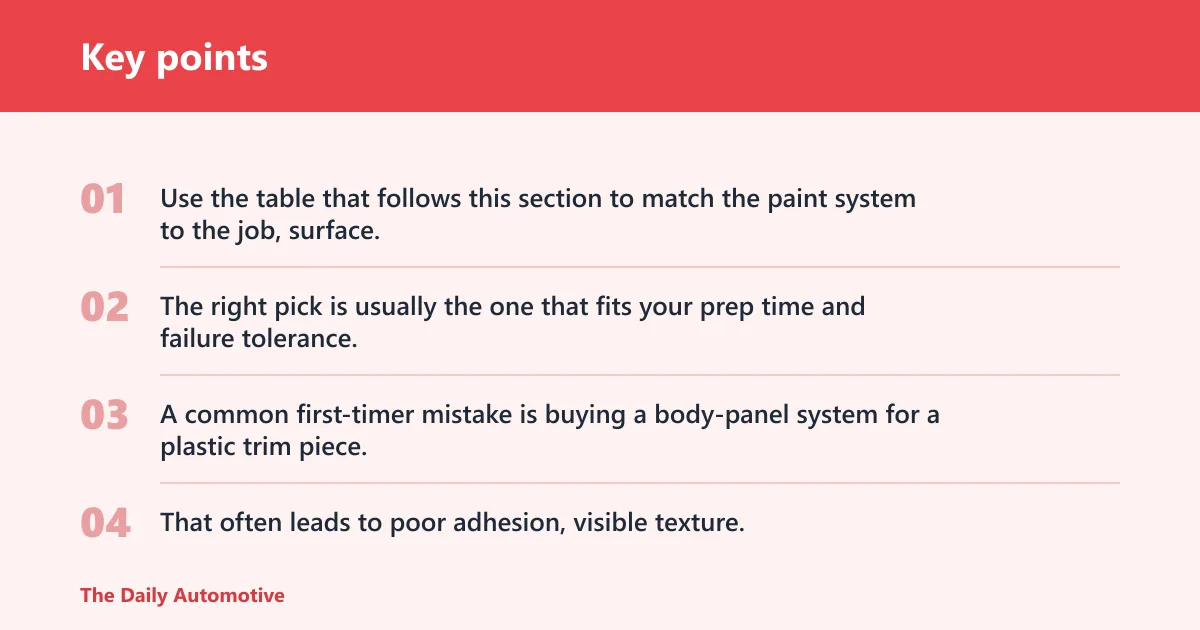
Use the table that follows this section to match the paint system to the job, surface, and skill level. The right pick is usually the one that fits your prep time and failure tolerance, not the gloss level on the label.
A common first-timer mistake is buying a body-panel system for a plastic trim piece. That often leads to poor adhesion, visible texture, or a finish that chips the first time it meets road debris.
How we chose
This guide is based on manufacturer specs, listing details, and published buyer feedback. The filters were job fit, durability claims, application method, and whether the product description clearly covered the target surface.
Preference went to systems with clear use cases, clear mixing or spray instructions, and known tradeoffs. Products that needed a primer, hardener, or clear coat were only recommended where that extra step makes sense.
Surface prep mattered as much as the coating itself because it controls adhesion, rust bleed-through, and final gloss. Cleaning, sanding, priming, and decontamination are part of the paint choice, not separate chores.
Which paint fits your project?
The best paint for your project depends on whether you are fixing a chip, refinishing trim, repainting wheels, or spraying a whole body. Small parts favor spray cans and targeted coatings; large panels usually need a spray-gun system, a stable substrate, and a finish stack that includes primer and often clear coat.
Touch-ups and trim
For chips, scratches, emblems, and small plastic trim pieces, spray can automotive paint is usually the simplest choice. It is convenient for DIY work, but it is not the best route for large panels because aerosol output is harder to blend and harder to lay down evenly over a big surface.
Wheels and bumpers
Wheels and bumper covers need a coating that stands up to heat, road grit, and repeated washing. A wheel-specific paint or a durable single-stage system is a better fit than a decorative body color that was never meant for curb rash or flexing plastics.
Full-body repaint
A full repaint needs a system that handles coverage, leveling, and long-term exterior durability. That commonly means a basecoat/clearcoat setup or an acrylic urethane single-stage system, with primer underneath and clear coat on top when the system calls for it.
Rust repair and exposed metal
Rust repair starts with corrosion control, not color. Exposed steel needs sanding, decontamination, and a rust-focused primer or encapsulator before color goes on, or rust bleed-through and peeling can return under the new finish.
Paint systems by job type
Paint choice changes appearance and protection at the same time. Gloss, matte, and metallic finishes alter the look, but durability outdoors depends on UV resistance, chip resistance, and how well the system bonds to the surface beneath it.
Acrylic enamel: best for simple DIY jobs
Acrylic enamel is a common DIY automotive paint type because it is durable and easier to apply than more demanding systems. PaintForCars says acrylic enamel provides a durable finish and is easy to apply, which makes it a practical fit for basic single-stage repairs and budget-conscious repaint work.
The tradeoff is less room for error on prep and spray technique than many beginners expect. If the surface is not cleaned and sanded properly, enamel can still peel, haze, or show sanding marks through the finish.
Acrylic urethane: best for long-lasting exterior work
Acrylic urethane is a strong choice when you want long-lasting exterior protection and a better shine. The same source says acrylic urethane offers excellent durability and shine, which is why it fits larger panels, more visible bodywork, and projects where the final result matters for years, not weeks.
This is the better answer for panels that live outside. It resists fading and weathering better than a quick cosmetic fix, but it asks more from the user in mixing, application control, and ventilation.
Basecoat/clearcoat: best for full repaints
Basecoat/clearcoat systems are built for body panels that need depth, gloss, and protection. The same source says basecoat/clearcoat systems require a base layer followed by a clear coat, and that extra layer structure is what makes them a standard choice for full repaint work.
This system gives you flexibility in finish and repair blending. It also adds another failure point if you skip prep, rush flash times, or leave the clear too thin, which can lead to orange peel, dullness, or early wear.
Spray can automotive paint: best for small repairs
Spray can automotive paint is best for small touch-ups, trim, and other spot repairs where convenience matters more than panel-scale finish quality. Dupli-Color Paint Shop Finish System is presented as ready-to-spray with no hardener, which lowers the setup barrier for simpler work.
The downside is coverage control. Aerosols can dry unevenly on larger surfaces, and the fan pattern is usually less consistent than a spray gun, so panel-sized work often looks patchy or textured.
2K clear coat: best for added protection
2K clear coat is the protection layer to choose when the top priority is durability. SprayMax 2K Glamour High Gloss Clear Coat is described as a 2K clear coat for professional finish and noted for UV, gasoline, and chemical resistance, which matters on exterior parts that see sun, fuel splash, or frequent cleaning.
It is not a substitute for color coat or primer. It is the final protective layer, so it works best over a sound basecoat or other compatible paint system rather than as a stand-alone fix.
Finish matters too
Gloss, matte, and metallic finishes change the final appearance and the maintenance burden. Gloss tends to show the most depth and shine, matte hides some reflections but can be harder to repair cleanly, and metallic helps add visual movement but can expose uneven spray technique if the coat is laid down badly.
Finish should follow the part, not the trend. A matte trim piece can look right on a bumper, while a full-body repair usually needs a finish that blends cleanly across large visible panels.
Do you need primer and clear coat?
Primer is often required, while clear coat is sometimes optional and sometimes mandatory. The deciding factors are the substrate, the paint system, and how much durability you want against UV, chips, and chemical exposure.
When primer is required
Use primer on bare metal, repaired rust areas, body filler, sand-through spots, and any surface that needs better adhesion. Primer fills small imperfections, sands more easily than color coat, and helps block corrosion before the top layer goes on.
Primer also helps when the old surface is uneven or when you need a uniform base under a bright color. Skipping it can lead to poor adhesion, rust bleed-through, and texture that shows through the topcoat.
When clear coat is optional
Clear coat is optional with some single-stage systems, including many enamel and urethane jobs, when the paint itself is designed to carry the color and final gloss. That can be enough for simpler DIY work on hidden or low-wear areas.
It is also common to skip clear on short-term fixes where the goal is color match and protection from the elements, not show-level gloss. Even then, the finish can wear faster than a protected basecoat system.
When clear coat is mandatory
Clear coat is mandatory when the paint system is built around a basecoat/clearcoat structure. It is also the safer choice for exterior work that needs UV protection, gasoline resistance, chemical resistance, and a finish that can be leveled or buffed after cure.
If you want a deeper shine on a full repaint, clear coat is part of the system, not an optional add-on. Leaving it out usually means less gloss, less protection, and a shorter service life.
Decision matrix for the right paint system
This matrix ties project type to surface, skill level, and durability target. Use it to avoid the common mismatch of buying a finish that looks good on paper but fails on the actual part.
| Project type | Surface material | Skill level | Durability target | Recommended paint system | Do not use |
|---|---|---|---|---|---|
| Chip touch-up | Painted metal or plastic | Beginner | Color match and spot protection | Spray can automotive paint, with primer if bare metal is exposed | Full basecoat/clearcoat; it is too much work and can leave a visible repair halo |
| Trim restoration | Plastic trim | Beginner to intermediate | Fade resistance and neat appearance | Trim-focused spray paint, often with adhesion-promoting prep and optional clear if compatible | Heavy body filler primers that can crack on flexible parts |
| Wheel refinishing | Aluminum or painted wheel | Intermediate | Brake dust resistance and wash durability | Wheel-specific paint or a durable urethane system; clear coat adds protection | Interior trim paint; it can chip or dull under wheel abuse |
| Bumper cover repaint | Flexible plastic | Intermediate | Chip resistance and adhesion | Flexible-prep primer plus a compatible single-stage or basecoat/clearcoat system | Rigid metal-only coatings without plastic prep |
| Rust repair | Bare steel | Intermediate to advanced | Corrosion resistance | Rust encapsulator or corrosion-focused primer, then color and clear if required | Color coat over active rust; rust bleed-through usually returns |
| Full repaint | Whole body panels | Advanced DIY | UV resistance and long wear | Basecoat/clearcoat or acrylic urethane system with full prep | Small-area aerosol paint; panel overlap and sheen mismatch become obvious |
Top pick: best for full repaints
For a full repaint, acrylic urethane is the strongest all-around choice because it balances durability, shine, and exterior weather resistance better than a quick cosmetic system. It is the best fit when the job is large enough to justify more prep, more control, and a longer cure path.
It also beats acrylic enamel when the vehicle lives outside. The downside is that it is less forgiving for beginners, especially on mix ratios, flash timing, and spray technique.
Dupli-Color Perfect Match: best for touch-ups
This aerosol is for small chips, scratches, and refinishing spots where a controlled spray pattern matters more than panel coverage. The listing says it is OEM-matched color for compatible vehicles, and the EZ Touch 360° nozzle is meant to help you direct paint into tight areas.
The clear drawback is scope. An 8 oz aerosol can be right for a mirror cap, a door-edge chip, or a bumper scuff, but it is not the right choice for a full panel if you want the repair to disappear in the surrounding finish.
Restoration Shop Pure White Acrylic Urethane: best for full bodies
This kit suits larger refinishing jobs where a single-stage urethane finish is the goal. The listing calls it a complete gallon kit with hardener and strainers, and it is positioned as fast-drying and durable for professional refinishing.
The main drawback is complexity. A gallon kit with a 4:1 mix ratio is not the easiest entry point for a first timer, and a white finish can make prep marks, dirt, and spray overlap easier to spot if the surface is not ready.
SHERWIN WILLIAMS Finish 1 clearcoat: best for added gloss
This clearcoat is for finishing basecoats on full refinishing jobs. The listing describes it as an overall refinishing clearcoat with hardener included, and it is built to provide gloss, leveling, blending, and buffing.
The drawback is that it is only one part of the system. It will not cover color mistakes, corrosion, or poor panel prep, and it makes the most sense only when the base layer underneath is already correct.
LiME LiNE Automotive Basecoats: best for base color
This basecoat is for refinish work where you want a separate color stage before clear. The listing says it is a 1K urethane base coat color and mixes 1:1 with urethane reducer, which places it in the category of system paint for more controlled repaints.
The drawback is that it is not a complete finish by itself. Without the right clear coat on top, you do not get the same protection or final depth that a full basecoat/clearcoat system provides.
House of Kolor Bc25: best for aerosol basecoat work
This aerosol basecoat is for smaller custom jobs where ready-to-spray convenience matters. The listing calls it a ready-to-spray basecoat format with high pigmentation, and it can be topcoated with lacquer or urethane.
The drawback is that aerosol basecoat still has the usual can limits. It is better suited to spot work and custom parts than to wide body panels, where a gun system usually lays down a more even coat.
Which one should you buy?
If you need a quick chip repair, start with Dupli-Color Perfect Match. If you are painting a full body or large exterior panels, choose a urethane system and plan on primer plus clear where the system calls for it.
If the project is trim or bumper-related, pick a coating made for plastic rather than a general body paint. If you are correcting rust, the first purchase should be a corrosion-control product or primer, not color paint.
Suppose a 3-inch scratch on a black door exposes primer but not bare metal. A touch-up aerosol is usually enough. If the scratch reaches steel and you can see rust staining, the job changes: clean, decontaminate, prime, then paint.
Picture a set of wheels that has curb rash on two spokes and old brake dust baked into the finish. A wheel paint system makes more sense than a body-panel enamel, because the finish has to survive heat, washing, and repeated grime removal.
Frequently asked questions
What is the best paint for cars for a DIY project?
The best paint for a DIY project depends on the size and the surface. For chips and trim, spray can automotive paint is the easiest starting point. For larger visible panels, acrylic urethane or a basecoat/clearcoat system gives better durability, better gloss, and a more professional-looking repair.
Should I use enamel, lacquer, or urethane paint on my car?
For most modern DIY work, urethane is the better all-around choice for exterior durability. Acrylic enamel is easier to apply and still durable, while acrylic lacquers dry quickly and are easy to work with for custom jobs. Lacquer is less suited to long-term exterior exposure than urethane.
Do I need primer and clear coat when painting a car?
Primer is required on bare metal, repaired rust, filler, and any surface that needs better adhesion or corrosion protection. Clear coat is mandatory for basecoat/clearcoat systems and optional for some single-stage paints. If the part lives outdoors, clear coat usually improves UV resistance and wear.
What type of paint is best for a full car repaint versus a touch-up?
A full repaint is usually best done with acrylic urethane or a basecoat/clearcoat system because those options handle larger panels and long-term exterior wear better. A touch-up is better handled with a color-matched aerosol or spot repair product, which is easier to control on a small area.
Can I use spray paint on car trim, bumpers, or wheels?
Yes, but only if the spray paint is made for that part. Rust-Oleum Automotive Trim & Bumper Spray Paint is described as matte spray paint and marked as suitable for trim restoration, while Dupli-Color High Performance Wheel Paint is listed for wheel customization. The wrong can often chips or peels early.
What safety gear do I need before painting a car?
You need respirator protection suited to the product, eye protection, gloves, and strong ventilation. Follow the vehicle and product manual. If you are working with fuels, coolants, or electrical systems nearby, keep the area ventilated, avoid sparks, and disconnect the battery when the manual calls for it.
Products related to this article
Sponsored / affiliate links. As an Amazon Associate I earn from qualifying purchases. I may earn additional commission from eligible campaigns.