Running E85 in a Carbureted Engine: A Beginner’s Guide
Thinking about Running E85 in a Carbureted Engine: What to Know might seem tricky at first. It can be a little confusing because E85 is different from regular gasoline, but don’t worry! This is a common topic for car enthusiasts, and with a few simple changes, you can start using E85 in your classic car or project. We’ll break down the process step-by-step so you’ll know exactly what to do. Let’s get started and explore what you need for this conversion.
What is E85 and Why Consider It?
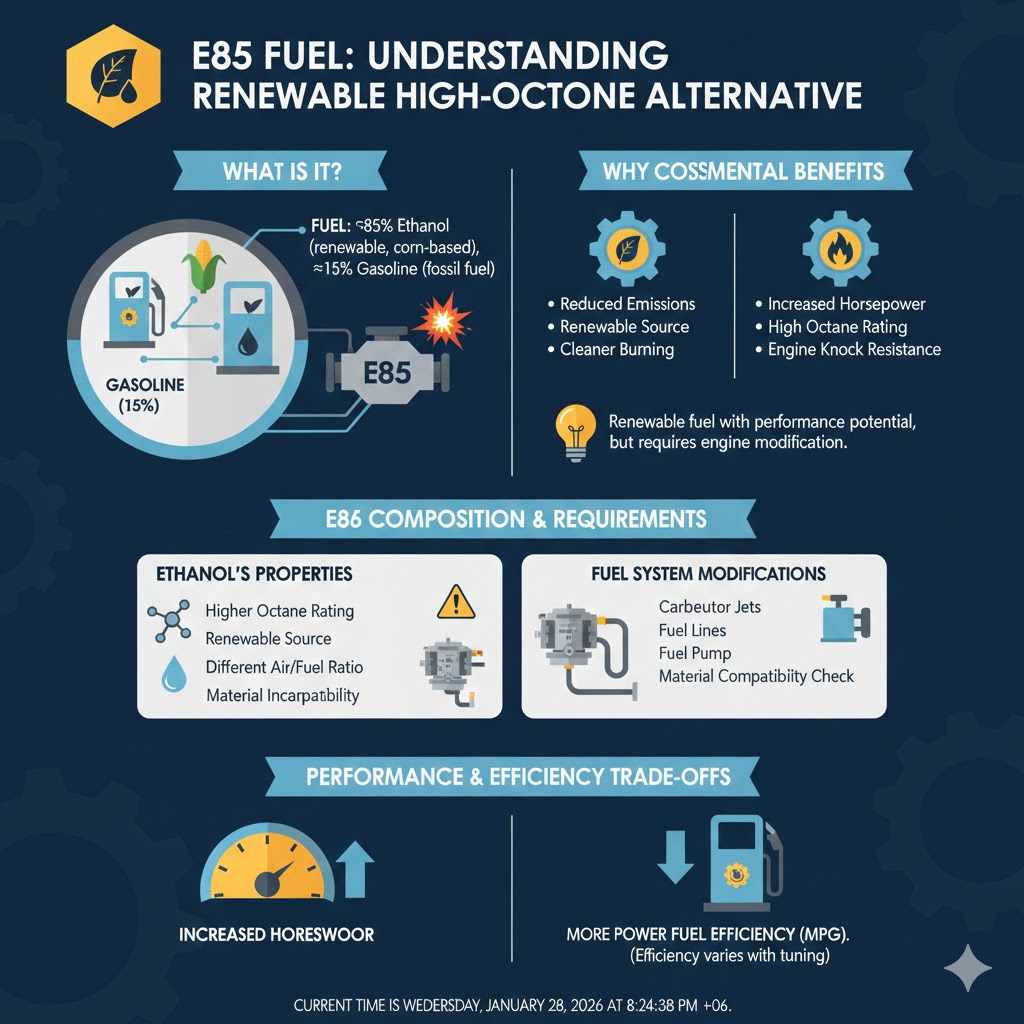
E85 is a fuel made up mostly of ethanol, a type of alcohol. It’s usually about 85% ethanol and 15% gasoline, though the exact mix can change depending on the season and location. People use E85 for a few reasons. First, it’s a renewable fuel, meaning it comes from sources that can be replaced, like corn. This makes it an attractive alternative to regular gasoline, which comes from fossil fuels. It also has a higher octane rating compared to many gasoline blends, which can allow for increased performance in certain engines. However, using E85 requires specific modifications to your carburetor and fuel system.
The Composition of E85
The primary ingredient in E85 is ethanol, an alcohol produced from plants like corn. This contrasts with regular gasoline, primarily made from crude oil. The percentage of ethanol in E85 is typically around 85%, although it can fluctuate. This variation is often adjusted seasonally to help with cold starting in colder climates. Ethanol has a higher octane rating than gasoline, contributing to improved performance. However, ethanol also has different properties, meaning it requires adjustments to the fuel system of a carbureted engine. This includes components like the fuel lines, carburetor jets, and fuel pump to function correctly and avoid damage.
- Ethanol’s High Octane: The higher octane rating of E85 resists pre-ignition (knocking), allowing for potentially more power.
- Renewable Source: Ethanol is produced from renewable resources, making E85 a more sustainable choice.
- Fuel Mixture Adjustment: E85 requires a richer fuel mixture due to ethanol’s different air/fuel ratio requirements compared to gasoline.
- Material Compatibility: Certain materials found in older fuel systems are not compatible with ethanol and may degrade over time.
Environmental and Performance Benefits
Switching to E85 offers some advantages. From an environmental standpoint, ethanol production can reduce greenhouse gas emissions because it comes from plants that absorb carbon dioxide from the atmosphere. Also, the ethanol burns cleaner than gasoline. Regarding performance, the higher octane rating allows engines to run at higher compression ratios or with more advanced timing, potentially increasing horsepower and torque. The increased octane rating also helps to prevent engine knock or pinging. Many people report noticeable improvements in their engine’s response and power when using E85.
- Reduced Emissions: E85 can lead to a reduction in certain emissions compared to gasoline.
- Increased Horsepower: A higher octane rating can allow for tuning to produce more power.
- Cleaner Burning: Ethanol helps to reduce the amount of soot and other pollutants produced by combustion.
- Fuel Efficiency: While E85 generally provides fewer miles per gallon (MPG), the power gains can be significant.
Preparing Your Carbureted Engine for E85
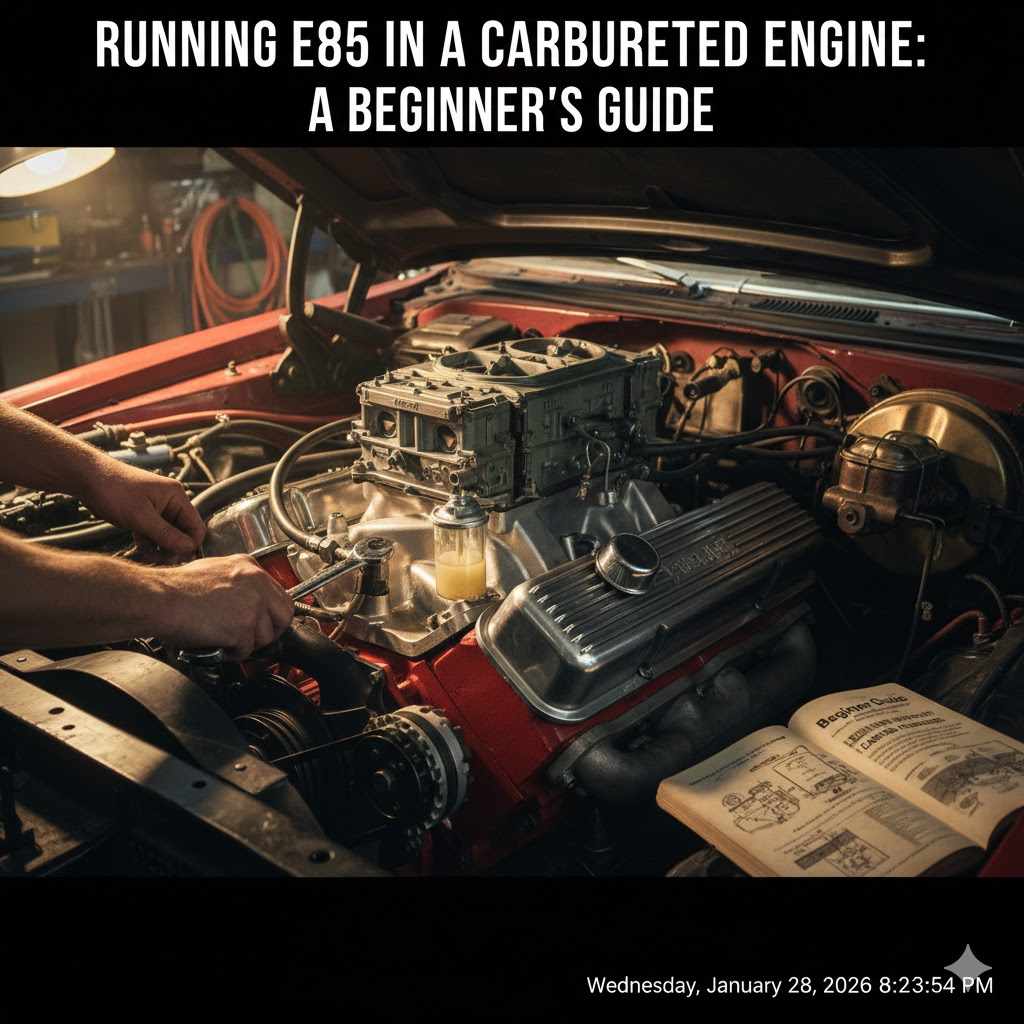
Before you start running E85, you’ll need to make some changes to your engine’s fuel system. Ethanol can cause damage to certain materials, and the engine needs to be adjusted to accommodate E85’s different properties. This involves looking at things like fuel lines, carburetor settings, and possibly other components. Making these adjustments ensures that the engine runs properly and doesn’t get damaged by the fuel. It’s a manageable process that anyone can do, but it is important to pay close attention to each step.
Fuel System Modifications
Ethanol can eat away at certain rubber and plastic parts found in older vehicles. That’s why you need to
- Replace Fuel Lines: Use ethanol-compatible fuel lines (Viton or similar) to prevent corrosion.
- Upgrade Carburetor Jets: Increase the jet sizes to deliver more fuel.
- Ethanol-Resistant Floats: Replace the floats to ensure they don’t dissolve.
- Compatible Fuel Pump: Check and replace the fuel pump if it’s not E85-compatible.
- Fuel Filter: Install or replace fuel filters to prevent debris.
Carburetor Tuning for E85
Tuning the carburetor is key to proper E85 operation. E85 needs a richer air/fuel mixture compared to gasoline. You’ll likely have to adjust the idle mixture screws, the main jets, and the accelerator pump. The goal is to get the engine running smoothly, without any hesitations or stumbles when you accelerate. Use a wideband air/fuel ratio (AFR) meter to monitor the mixture. This will tell you if the engine is getting the right amount of fuel. The ideal AFR for E85 is usually around 9.8:1 to 10.2:1 under load. This number will vary depending on the engine. Don’t be afraid to experiment until you get the engine running perfectly.
- Idle Mixture Adjustment: Set the idle mixture to compensate for the richer fuel requirements.
- Main Jet Sizing: Increase main jet sizes to provide the necessary fuel flow at higher speeds.
- Accelerator Pump Adjustment: Fine-tune the accelerator pump to prevent hesitation when accelerating.
- Air/Fuel Ratio Monitoring: Use an AFR gauge to monitor and verify the correct air/fuel ratio.
Operating Your E85-Fueled Carbureted Engine
Once you’ve made the necessary changes, it’s time to start the engine and see how it runs. Be prepared to make adjustments and keep a close eye on your engine’s performance. You might notice some differences in how the engine starts and runs, especially at first. Pay attention to things like fuel consumption and engine behavior, and make sure to use high-quality E85 to avoid problems. This step is where all the prep work comes together, and it’s essential for getting the engine running at its best with E85. Take your time, make gradual adjustments, and enjoy the experience!
Monitoring Engine Performance
After switching to E85, monitor your engine’s performance closely. Look for any signs of problems, like rough idling, hesitation, or poor fuel economy. Keep an eye on your spark plugs; they can tell you a lot about how your engine is running. Black, sooty plugs could mean the engine is running too rich, while white plugs can indicate a lean condition. Also, be aware that you might notice lower fuel economy. Since E85 has less energy per gallon than gasoline, you may have to fill up more often. Regular checks and adjustments are essential to make sure the engine stays in good shape.
- Spark Plug Inspection: Check spark plugs for signs of rich or lean conditions.
- Listen for Knocking: Ensure the engine isn’t knocking or pinging, which can damage it.
- Fuel Economy Tracking: Monitor fuel consumption to assess efficiency.
- Performance Evaluation: Evaluate acceleration and overall engine behavior.
Long-Term Maintenance and Care
Consistent maintenance is important to keep your E85 setup running well for a long time. Regularly check your fuel system components, such as the fuel lines, for any signs of wear or degradation. Keep your fuel filter clean and change it as needed, because E85 can sometimes loosen deposits in the fuel tank. Add fuel stabilizers designed for E85, especially if you plan to store the car for any length of time. This will help to prevent fuel degradation and keep the fuel system clean. With regular attention, you can make sure your E85 setup delivers good performance and lasts for many years.
- Fuel Line Inspection: Check fuel lines for leaks or degradation.
- Fuel Filter Maintenance: Change the fuel filter regularly.
- Fuel Stabilizer Use: Add a fuel stabilizer if the car will sit unused for long periods.
- Regular Fuel System Checks: Inspect the fuel system components for any signs of wear.
Potential Issues and Troubleshooting
Sometimes, things don’t go perfectly right away when you start Running E85 in a Carbureted Engine: What to Know. There might be a few hiccups along the way. Your engine may have trouble starting, or the idle might be rough, or there may be other issues. Learning how to identify and solve these problems is an important part of the conversion process. With a bit of patience and some basic troubleshooting skills, you can usually fix any issues and get your engine running smoothly with E85.
Common Problems and Solutions
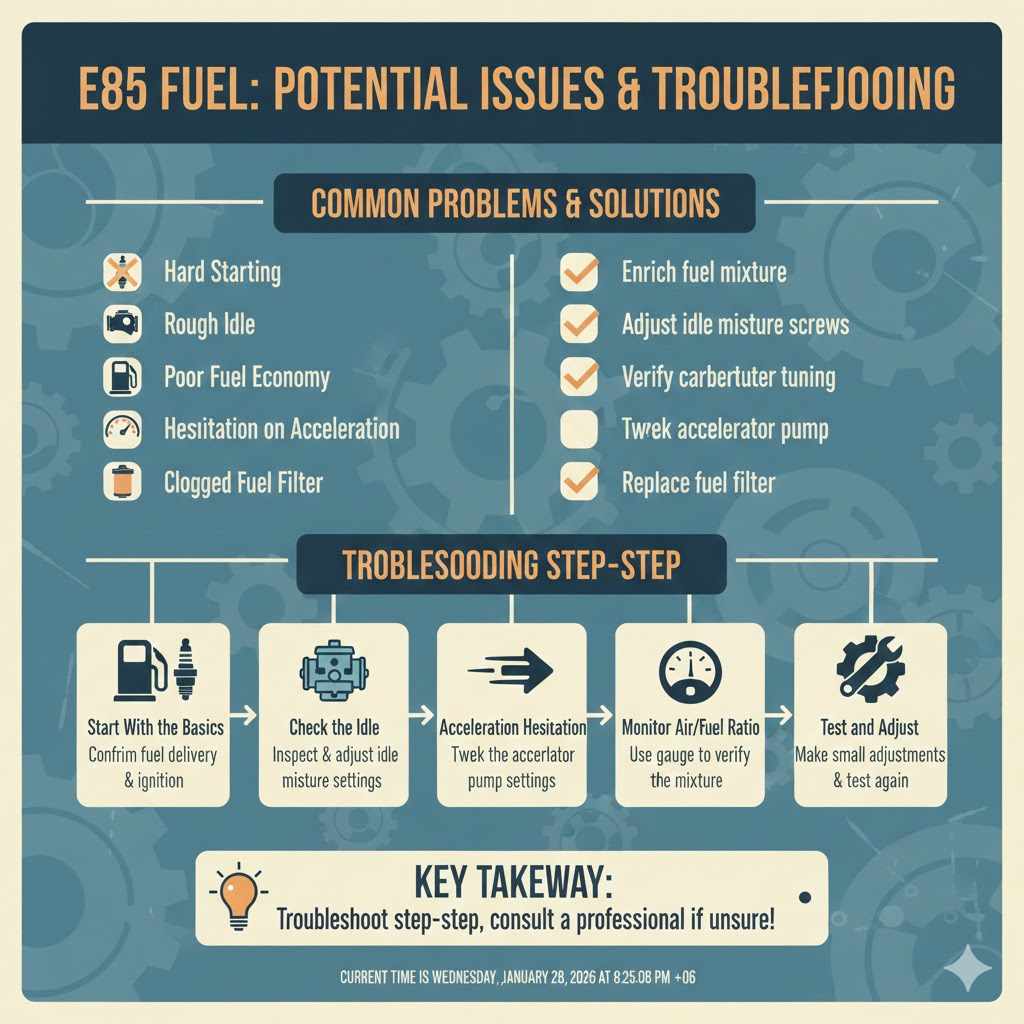
One common problem is a difficult start. This can be caused by the engine getting too little fuel, which can be fixed by enriching the fuel mixture. Another issue is rough idling, which can often be solved by adjusting the idle mixture screws on the carburetor. Poor fuel economy is also common, especially at first. Make sure your carburetor is properly tuned. If you experience hesitation during acceleration, that may suggest that the accelerator pump is not delivering enough fuel. Also, ethanol can sometimes dissolve old deposits in the fuel tank, so you may need to replace the fuel filter if it gets clogged.
- Hard Starting: Likely needs richer fuel mixture; adjust the idle mixture screws.
- Rough Idle: Fine-tune the idle mixture screws on the carburetor.
- Poor Fuel Economy: Verify carburetor tuning and driving habits.
- Hesitation on Acceleration: Adjust accelerator pump for more fuel.
- Clogged Fuel Filter: Replace fuel filter if it gets plugged by deposits.
Troubleshooting Step-by-Step
Let’s look at some common issues and how to approach them step-by-step. If your engine won’t start, first check the fuel supply. Make sure fuel is getting to the carburetor. Then, enrich the idle mixture slightly. If the engine idles roughly, check for vacuum leaks, and then adjust the idle mixture screws. If you notice hesitation, carefully adjust the accelerator pump. Always make one adjustment at a time and then test to see if it makes a difference. Also, remember to consult a professional mechanic if you are uncertain of any step.
- Start With the Basics: Confirm fuel delivery and ignition.
- Check the Idle: Inspect and adjust the idle mixture settings.
- Acceleration Hesitation: Tweak the accelerator pump settings.
- Monitor Air/Fuel Ratio: Use a gauge to verify the mixture.
- Test and Adjust: Make small adjustments and then test again.
Frequently Asked Questions
Question: Is it safe to run E85 in my carbureted engine?
Answer: It can be safe, but only if you make the right adjustments. This means using ethanol-compatible parts and making sure the carburetor is tuned correctly.
Question: Do I need to modify my engine to run E85?
Answer: Yes, you will need to modify your engine. The primary modifications are replacing fuel lines and jets and tuning the carburetor.
Question: Will running E85 hurt my engine?
Answer: If you don’t make the necessary changes, E85 could damage your engine. However, by preparing your engine properly, you can avoid these problems.
Question: Can I switch back to gasoline after running E85?
Answer: Yes, in most cases. You may need to readjust the carburetor settings and you should replace any fuel lines that are not compatible.
Question: Where can I get E85?
Answer: E85 is available at select gas stations. You can often find stations near you by checking online or using fuel finder apps.
Final Thoughts
Running E85 in a Carbureted Engine: What to Know requires a bit of work, but it’s totally achievable. It involves some important steps. First, prepare your engine by using ethanol-compatible components. Then, change the jets and tune your carburetor. Make adjustments as needed, monitor performance, and keep up with regular maintenance. By taking these steps, you can successfully use E85. Don’t hesitate to explore and experiment, and your engine will be running E85 in no time. You can save money and improve the environment with this fuel. Enjoy the process and the benefits of a fuel-efficient engine!