Should The Car Seat Be In The Middle? The Proven Safest Spot
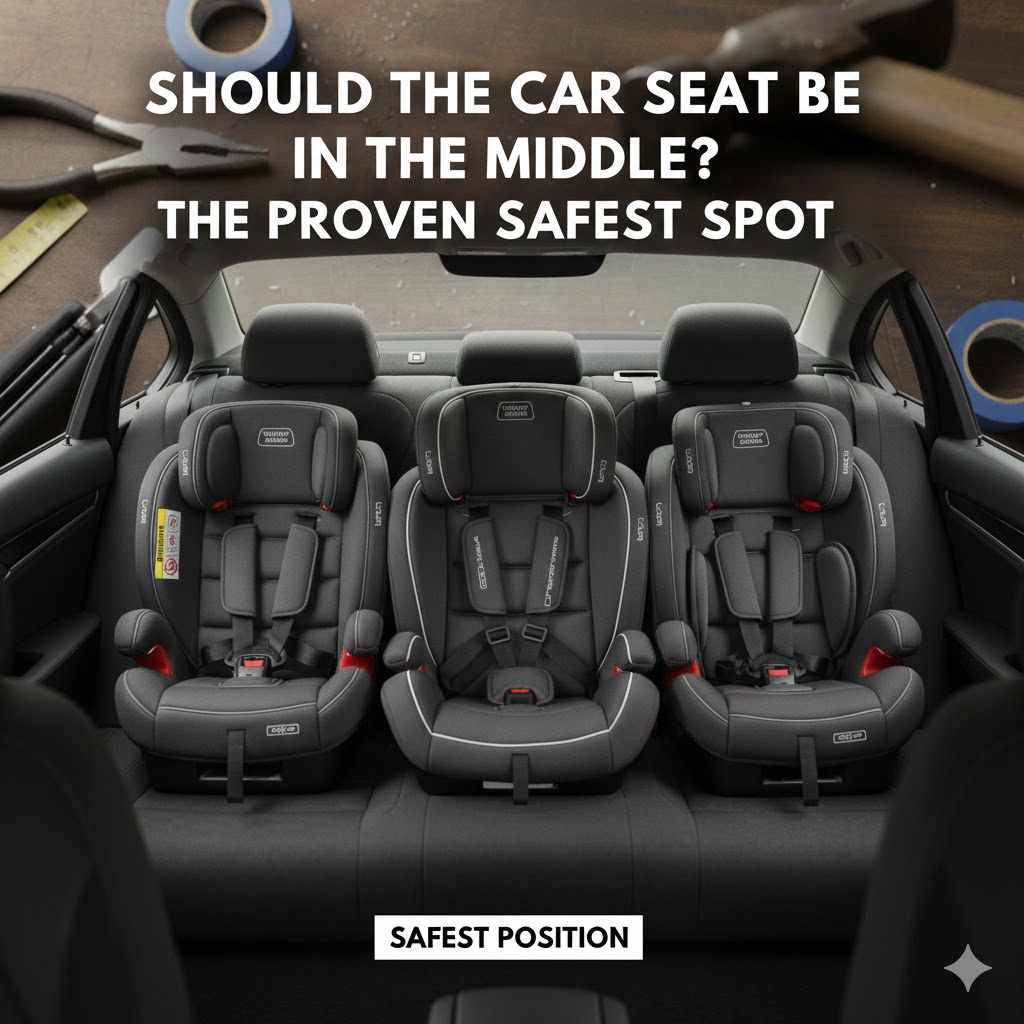
Yes, the middle back seat is statistically the safest place for a car seat. Studies show it can be over 40% safer than a side position in a crash because it’s the furthest point from any potential side impact. However, this is only true if you can install the car seat correctly and securely in that spot.
Hey there, I’m Md Meraj. As a new parent, you have a million things to worry about. Figuring out where to put the car seat shouldn’t be one of them. You’ve probably heard people say the middle seat is the safest, but then you look at your car’s back seat and it seems complicated. Is it really the best spot? What about those LATCH anchors? It’s a common and totally valid question.
Don’t worry, you’re in the right place. We’re going to break this down together, step-by-step, without any confusing jargon. I’ll help you understand why the middle seat is recommended, when it might not be the right choice, and exactly how to make sure your child is as safe as possible. Let’s get you feeling confident about your car seat setup.
Why the Middle Seat Is Called the “Safest Spot”
When you hear that the middle of the back seat is the safest place for a child, it’s not just an old wives’ tale. This advice is backed by solid research and simple physics. The core reason is all about distance.
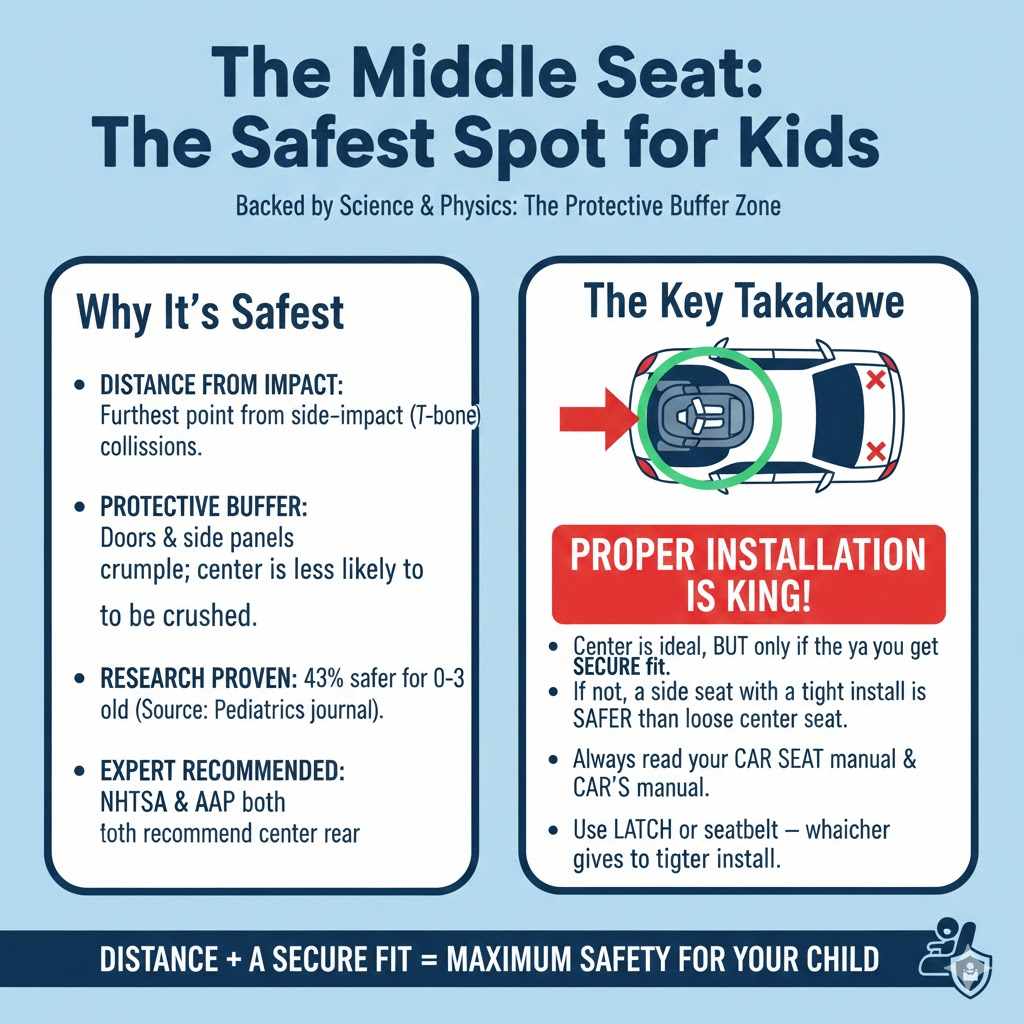
Imagine your car is in a collision from the side—a T-bone accident, which is one of the most dangerous types of crashes. A car seat placed in the middle is the furthest possible point from the impact. This space acts as a protective buffer zone, shielding the child from the direct force of the crash. The doors and side panels of a car can crumple inwards, but the center of the car is much less likely to be crushed.
A landmark study published in the journal Pediatrics found that children aged newborn to 3 years old were 43% safer when placed in the center rear seat compared to a side position. This is a significant number that highlights just how much protection that middle spot can offer. The National Highway Traffic Safety Administration (NHTSA) and the American Academy of Pediatrics (AAP) both recommend the center rear as the optimal location, provided you can achieve a proper installation.
The Key Takeaway on Safety
In a perfect world, every car seat would be in the middle. The extra distance from the doors provides a life-saving cushion in the event of a side-impact crash. But as we all know, cars and car seats aren’t always perfect. The phrase “provided you can achieve a proper installation” is the most important part of this rule.
When the Middle Seat Isn’t the Best Choice
So, if the middle is statistically the safest, why doesn’t everyone use it? The reality is that the “safest spot” is only safe if the car seat is installed correctly. A securely installed car seat on the side is far safer than a wobbly, poorly installed one in the middle. Here are the most common reasons why the middle seat might not work for you.
Common Middle Seat Installation Problems:
- No LATCH Anchors: LATCH (Lower Anchors and Tethers for Children) is a system designed to make car seat installation easier. However, most vehicles do not have dedicated LATCH anchors for the middle seat. You’ll typically find them only on the two outer (outboard) seats.
- An Uneven Seat Surface: Many back seats have a “hump” in the middle. This raised, often narrow, surface can make it impossible to get the car seat base to sit flat and stable. A car seat needs a flat, firm foundation to be installed securely.
- Lack of a Proper Seat Belt: While less common in modern cars, some older vehicles might only have a lap belt in the middle, which may not be compatible with your car seat. Or, the seat belt buckle might be positioned in a way that interferes with the car seat’s belt path.
- Multiple Car Seats: If you have two or more children in car seats, fitting one in the middle can be a game of “car seat Tetris.” Often, it’s just not possible to fit multiple seats side-by-side and install them all correctly.
The golden rule of car seat safety is this: The safest position is the one where you can install the car seat correctly, according to the manufacturer’s instructions, every single time.
Middle Seat vs. Side Seat: A Quick Comparison
Let’s look at a simple breakdown to help you decide what’s best for your car and your family.
| Feature | Middle Seat Position | Side Seat Position (Outboard) |
|---|---|---|
| Pros | – Farthest from side impacts, offering the most protection. – Equal protection from both driver-side and passenger-side collisions. |
– Almost always has dedicated LATCH anchors for easier installation. – Typically has a flatter, wider seat, making a secure fit easier to achieve. – Easier to get your child in and out of the car. |
| Cons | – Rarely has LATCH anchors. – Often has an uneven or narrow “hump.” – Can be difficult to install a seat tightly with a seat belt. – Harder to reach and buckle your child in. |
– Closer to the point of impact in a side collision. – You have to choose a side (driver or passenger), though neither is proven safer than the other. |
LATCH vs. Seat Belt: What You Need to Know for the Middle Seat
This is where a lot of parents get confused. You see those metal LATCH anchors in your car and think that’s the only way to go. Let’s clear this up.
What is LATCH?
LATCH stands for Lower Anchors and Tethers for Children. It’s a system of built-in anchors in your vehicle and corresponding attachments on your car seat. It was designed to provide a universal, and hopefully simpler, way to install a car seat without using the vehicle’s seat belt.
The Middle Seat LATCH Trap
Here’s the catch: most vehicles do NOT have a dedicated set of lower anchors for the middle seat. You’ll see two anchors for the driver’s side seat and two for the passenger’s side seat. A common mistake is to “borrow” the innermost anchor from each side to install the seat in the middle.
Do NOT do this unless both your vehicle owner’s manual AND your car seat manual specifically state that it is allowed. Most of the time, it is prohibited. The spacing of those anchors is not designed for a middle seat installation, and using them this way can cause the car seat to fail in a crash.
The Seat Belt Is Your Best Friend
When installed correctly, a seat belt installation is just as safe as a LATCH installation. In fact, for the middle seat, it’s almost always the correct and only method. Every car seat sold in the U.S. is designed to be safely installed with a seat belt. You just need to know how to do it right.
Step-by-Step: How to Install a Car Seat in the Middle Using a Seat Belt
Feeling a little nervous about using the seat belt? That’s okay! We’ll walk through it. This process will give you the tight, secure fit you need for peace of mind.
Read Your Manuals First!
This is the most important step. Before you do anything, grab the owner’s manual for your car AND the manual for your car seat. The car’s manual will tell you about its specific seat belts and seating positions. The car seat manual will show you exactly where to route the seat belt through the seat (this is called the “belt path”).
Position the Car Seat
Place the car seat base (for infant seats) or the convertible car seat in the middle of the back seat. Make sure it’s sitting flat against the vehicle seat cushion and back. For rear-facing seats, check the recline angle indicator on the side of the seat to ensure it’s at the correct level for your child’s age and weight.
Route the Seat Belt
Pull out a good length of the seat belt. Carefully thread it through the correct belt path on the car seat. For rear-facing seats, this path is usually under your baby’s legs. For forward-facing seats, it’s behind their back. Your car seat will have clear labels or color-coded guides showing you where the belt goes. Buckle it in.
Lock the Seat Belt
This is the magic trick. To get a tight fit, you must lock the seat belt. In most modern cars, you do this by slowly pulling the shoulder belt all the way out until it stops. Then, when you let it retract back in, you’ll hear a clicking or ratcheting sound. This means the retractor is now locked, and it will only get tighter, not looser. Check your vehicle manual for specifics on how your belts lock.
Tighten and Test for Movement
Now, put your weight into the car seat. Use your body weight to press down firmly into the car seat while pulling the shoulder belt to remove all the slack. Feed the extra belt back into the retractor until it is rock-solid tight.
Once it feels tight, perform the “one-inch test.” Grab the car seat at the belt path (where you routed the seat belt) and try to move it side-to-side and front-to-back. It should not move more than one inch in any direction. If it does, you need to tighten it more.
Attach the Top Tether (for Forward-Facing Seats)
If you are installing a forward-facing car seat, you must use the top tether. This is a strap at the top of the car seat that hooks to a dedicated tether anchor in your vehicle. Your car’s manual will show you where these anchors are located (often on the back of the vehicle seat, the rear shelf, or the ceiling). The top tether is a critical safety feature that dramatically reduces head movement in a crash.
What If I Have More Than One Child?
Life gets more complicated with more kids! When you need to fit two, three, or even more car seats in your vehicle, the “middle is safest” rule needs to be adapted. The new rule becomes: put the most vulnerable child in the safest available position.
Generally, the most vulnerable child is the youngest one, especially those in a rear-facing car seat. Here are some common scenarios:
| Scenario | Recommended Seating Arrangement | Key Considerations |
|---|---|---|
| One Infant (Rear-Facing) and One Toddler (Forward-Facing) | Place the infant in the middle seat and the toddler on a side seat. | The rear-facing infant is the most vulnerable and benefits most from the center position. Ensure both seats can be installed tightly without interfering with each other. |
| Two Toddlers (Both Forward-Facing) | If they fit, one can go in the middle and one on the side. If they don’t fit well, place them on the two outer seats. | Focus on getting two independent, secure installations. If putting one in the middle causes the other seat to be improperly installed, it’s safer to use the two side positions. |
| Three Children in Car Seats | This is known as “3-across” and is a major challenge. It often requires specific, narrow car seats. | You may need to experiment. Sometimes a combination of rear-facing and forward-facing seats works. This is an excellent time to consult a professional. |
When in Doubt, Get an Expert’s Help
You are not alone in this! Car seat installation can be tricky, and it’s perfectly normal to want a second opinion. The best thing you can do for your peace of mind is to have your installation checked by a certified Child Passenger Safety Technician (CPST).
These are highly trained experts who can teach you how to install your specific car seat in your specific vehicle, and they can spot issues you might have missed. Most of their services are free.
You can find a certified technician or a car seat check event near you through organizations like Safe Kids Worldwide. A 15-minute visit with a CPST can provide you with the confidence that your child is as safe as they can possibly be.

Frequently Asked Questions (FAQ)
1. Is the middle seat really that much safer than the side?
Yes, statistically it is. A key study showed it’s over 40% safer for young children because it’s the furthest point from a side impact. However, this is only true if you can get a tight, correct installation. A secure seat on the side is always safer than a loose seat in the middle.
2. What if my car doesn’t have a seat belt in the middle?
If your car has no seat belt in the middle position (common in some older cars or trucks), then you cannot install a car seat there. In this case, you must use one of the side seating positions with a proper seat belt or LATCH anchors.
3. Can I use the LATCH system to install a car seat in the middle?
Almost always, the answer is no. Most cars do not have dedicated LATCH anchors for the middle seat. You should never “borrow” the inner anchors from the side seats unless both your car’s manual and the car seat’s manual explicitly say it’s okay, which is very rare.
4. Which side is safer: behind the driver or behind the passenger?
There is no conclusive data proving one side is safer than the other. The most common type of crash is a frontal collision, and in that case, both side positions are equally safe. The most important factor is choosing the side where you can consistently achieve the best installation.
5. My car seat feels wobbly in the middle. What should I do?
A wobbly seat is an unsafe seat. First, try reinstalling it, making sure to use your body weight to push down on the seat while you tighten the seat belt. Ensure the seat belt is locked. If it’s still moving more than one inch at the belt path, the middle position may not be compatible with your seat. Move it to a side position where you can get a secure fit.
6. Does the “middle is safest” rule apply to booster seats too?
Yes, the safety principle of being furthest from a side impact still applies. However, booster seats require a shoulder belt to work correctly. If your vehicle’s middle seat only has a lap belt, you cannot use a booster seat there. The child must sit in a position with both a lap and shoulder belt.
7. Where can I get my car seat installation checked for free?
You can find a certified Child Passenger Safety Technician (CPST) through organizations like Safe Kids Worldwide. They host free car seat check-up events or can schedule individual appointments to teach you how to install your seat correctly and ensure it’s safe.
Conclusion: Your Child’s Safety Comes First
So, should the car seat be in the middle? The simple answer is yes, the middle is the safest location—but with a very important “if.” It is only the safest spot if you can get a rock-solid, correct installation there.
Never sacrifice a secure installation for a theoretically safer position. Your number one priority is making sure that car seat doesn’t move more than one inch in any direction. Whether that perfect fit is in the middle or on the side, a correctly installed car seat is a safe car seat. Read your manuals, test your work, and when in doubt, ask a professional for help. Doing that gives you the best gift of all: the confidence of knowing you’ve done everything you can to protect your little one on the road.