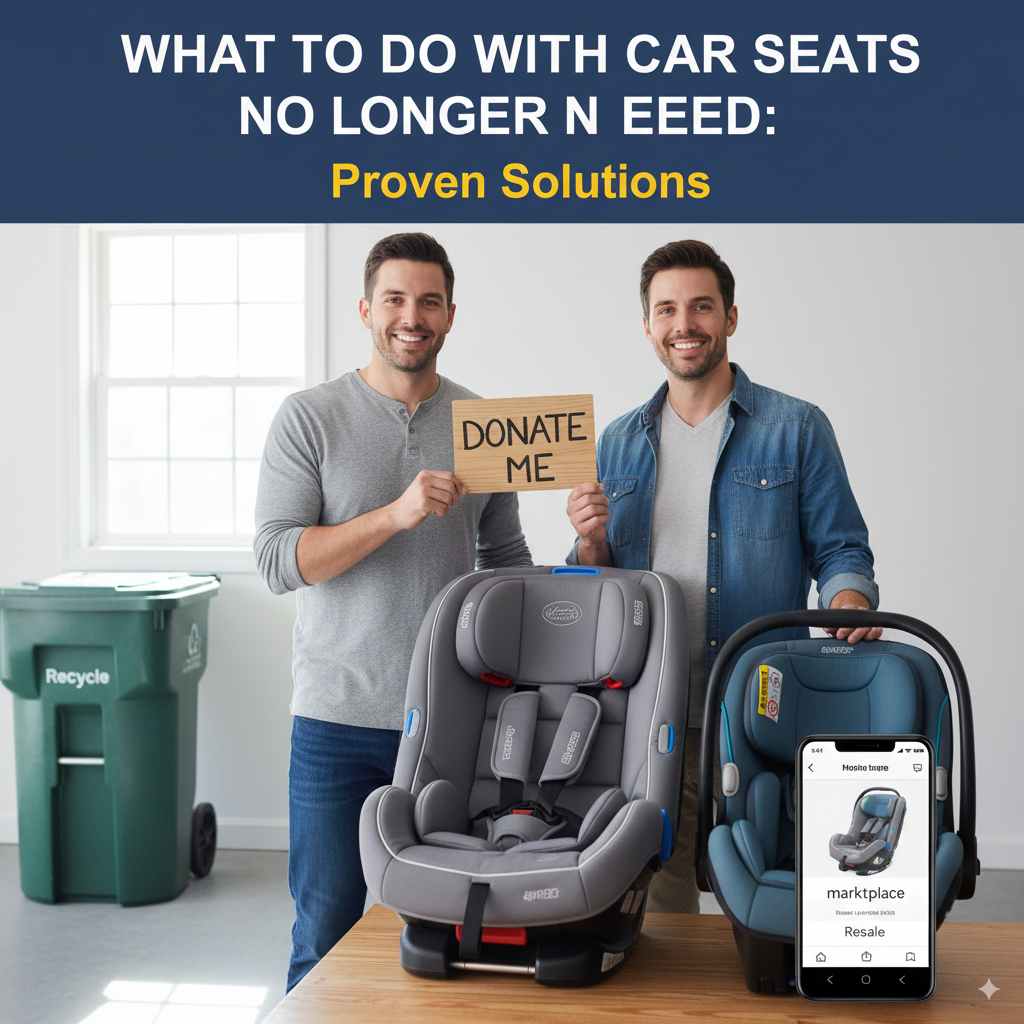
What to Do With Car Seats No Longer Needed (Donate, Trade-In, Recycle or Toss)
A car seat your child has outgrown can usually be donated, traded in, or recycled — but only if it’s unexpired, has never been in a crash, and isn’t under recall. Passing on a damaged or expired seat risks a child’s safety in a future crash. This guide covers Target’s twice-yearly trade-in event, safe donation rules, recycling options, and how to destroy a seat that can’t be reused.
Quick Answer
If your seat is unexpired, crash-free, and undamaged: donate it to a shelter or certified program, or trade it in at Target (usually April and September) for 20% off new gear. If it’s expired, recalled, or was in any crash: cut the harness straps, crack the shell, then recycle through a program like TerraCycle or a manufacturer take-back, or trash it once destroyed.
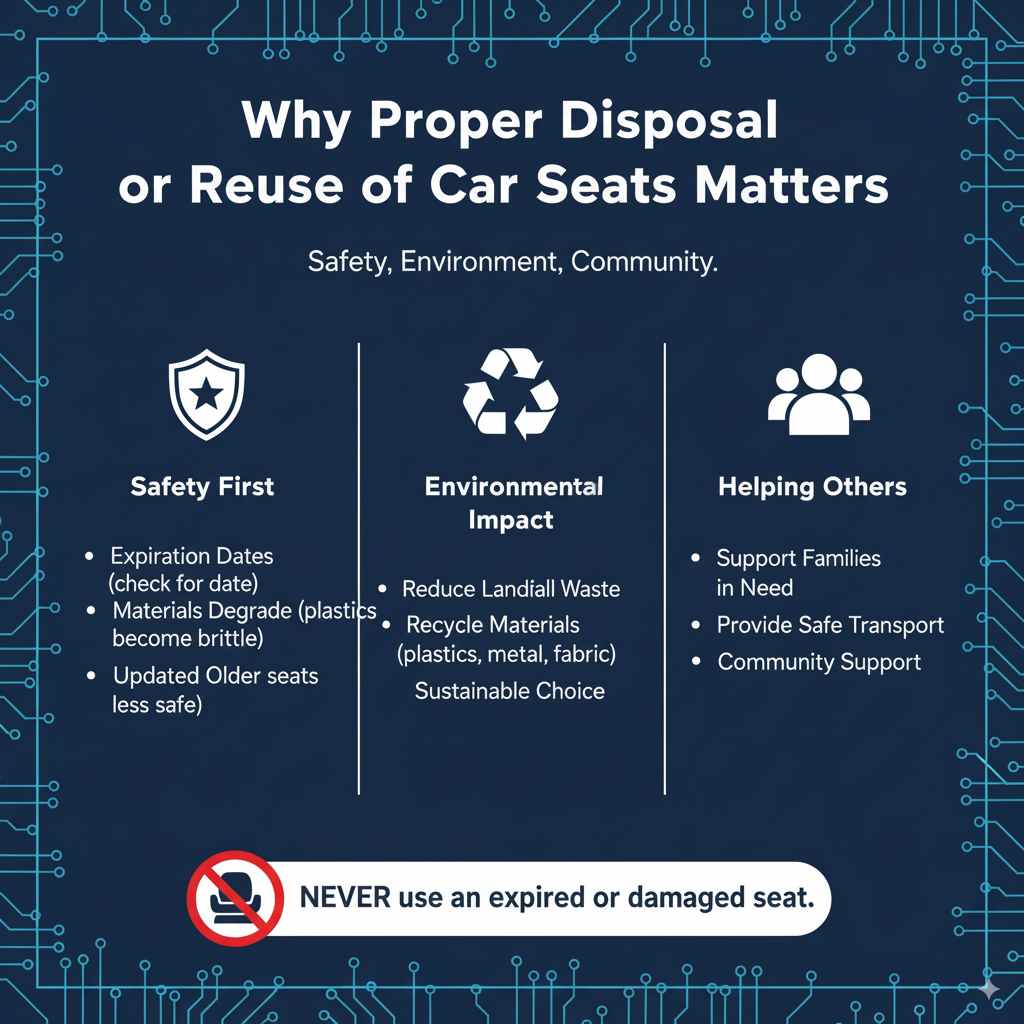
Why Proper Disposal or Reuse of Car Seats Matters
Before we dive into the “how-to,” it’s good to understand why simply throwing an old car seat away isn’t the best idea. These seats are designed with specific safety features and expire. Reusing or disposing of them incorrectly can pose risks or harm the environment.
- Safety First: Car seats have expiration dates, usually printed on the seat itself. After this date, the plastics can become brittle, and safety standards might have changed, compromising their effectiveness in a crash. Using an expired seat is dangerous.
- Environmental Impact: Car seats are made of various materials, including plastics, metal, and fabric. Many of these can be recycled, diverting waste from landfills.
- Helping Others: Gently used, unexpired car seats in good condition can be a lifeline for families struggling to afford them.
Understanding Car Seat Expiration and Recalls
This is the most crucial step before deciding what to do with your car seat. You need to know if it’s still safe to use or pass on.
Check the Expiration Date
Most car seats have an expiration date stamped on them. This is often found on a sticker on the base, the back of the seat, or on the sides. Look for phrases like “Date of Manufacture” and “Expiration Date” or a date that indicates when the seat should no longer be used. Manufacturers set these dates because the materials (especially plastics) degrade over time due to exposure to sunlight, temperature fluctuations, and general wear and tear. A common timeframe is 6 to 10 years from the date of manufacture, but always check your specific seat’s label.
Investigate Recalls
Even if your car seat is not expired, it might be part of a safety recall. You can check for recalls on the National Highway Traffic Safety Administration (NHTSA) website. This is essential for your own children’s safety and for anyone you might pass the seat to.
If a car seat is expired, has been in a crash (even a minor one), or is subject to a recall where the remedy is not complete, it should never be donated or resold for safety reasons. These seats should be rendered unusable to prevent accidental use.
Proven Solutions for Unneeded Car Seats
So, your car seat is expired, damaged, or simply no longer fits your child’s needs. What are your best options?
Option 1: Donation to Charities (with conditions!)
This is a wonderful way to help other families, but it comes with strict requirements. Only donate car seats that are:
- Not expired: Check the date — and ideally has at least one year left before it expires.
- Never in a crash: Even a fender bender can compromise the structural integrity.
- Free from damage: No cracked plastic, frayed straps, or missing parts.
- Clean: Thoroughly washed and free of mold or stains.
- Accompanied by all original parts: Including the manual, if possible.
Who accepts them?
- Local Shelters and Women’s Shelters: Many actively look for donations for families in need. Always call ahead to confirm they accept car seats and what their specific requirements are.
- Certified Training Centers and Hospitals: Many hospitals and certified child-passenger-safety programs accept donated seats they can inspect and pass on directly.
- Non-profit Organizations: Organizations that support new mothers or low-income families might have programs for car seat donations.
Important Note: Some organizations may not accept car seats due to liability or the difficulty of verifying their safety history. Always call and ask first!
“Only donate a seat if it has at least one year left before expiration, a known crash-free history, all of its original parts, and the instruction manual.”
Best Next-Stage Car Seat Pick
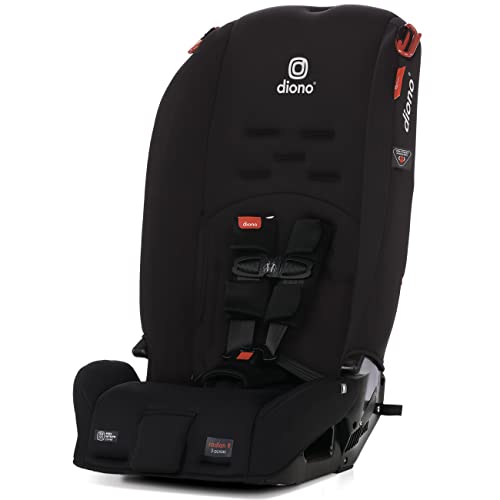
Graco Extend2Fit 3-in-1 Convertible Car Seat
If your child outgrew their old seat, this is a common next step — it converts from rear-facing to forward-facing to belt-positioning booster, so it’s the last seat you’ll need to buy for years.
- Best for: Families upgrading from an infant seat who want one seat that lasts through the booster stage
- Why we picked it: Extends rear-facing up to 50 lbs, which meets the longer rear-facing guidance most pediatric safety groups now recommend
- Main drawback: Bulkier than a basic convertible seat, so it needs a wider back seat
Compare more next-stage car seat options
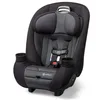 Option 1 Safety 1st Ellaris 3-in-1
|
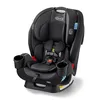 Option 2 Graco TriRide 3-in-1
|
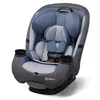 Option 3 Safety 1st Grow and Go
|
As an Amazon Associate we earn from qualifying purchases.
Option 2: Car Seat Recycling Programs
This is often the most responsible choice for expired or damaged car seats because it keeps them out of landfills and allows valuable materials to be repurposed.
Retailer Take-Back Programs
Several major retailers have partnered with recycling companies to offer car seat recycling events or drop-off points. The most reliable and widely available of these is Target’s Car Seat Trade-In event.
How Target’s Car Seat Trade-In Event Works
Target runs this event twice a year, typically in April and September — any car seat, base, or booster is accepted, regardless of brand, age, or condition, including expired or damaged ones.
- Sign up for Target Circle: It’s free, and you need an account to claim the coupon.
- Drop off your old seat: Bring it to a participating store and place it in the collection box near Guest Services during the event window.
- Scan the QR code: Use the Target app to scan the code on the collection box.
- Claim your coupon: Find the 20% off coupon under “baby” in Target Circle Deals — it’s valid twice, in-store or online, on a new car seat, stroller, or other qualifying baby gear.
📊 Target has recycled more than 3.5 million car seats and kept over 58 million pounds of material out of landfills since launching the trade-in program in 2016 — Source: Target Corporate, 2026
Other retailers occasionally run similar programs but are less consistent than Target’s twice-yearly event:
- Graco: Often partners with local recycling centers or has specific events. Keep an eye on their website for announcements.
- Britax: Has had recycling programs in the past, sometimes in conjunction with specific retailers.
- Buy Buy Baby: Has been known to participate in recycling initiatives.
How to find them: Check the websites of major baby gear brands and large retailers in your area. Search online for “car seat recycling near me” or “baby gear recycling events.”
Specialized Recycling Centers
Some local recycling facilities or hazardous waste collection sites accept car seats. They might partner with specific recycling companies that can break them down.
A fantastic resource is TerraCycle, which often partners with various brands and retailers for recycling difficult-to-recycle items, including car seats. You can sometimes find drop-off locations through their site or participate in mail-in programs.
Manufacturer Recycling Initiatives
Some car seat manufacturers have their own recycling programs. You might need to mail the seat back to them, sometimes for a fee or in exchange for a discount on a new product. Check the “support” or “recycling” section of your car seat brand’s official website.
Option 3: Sell It (Only in Pristine Condition)
If your car seat is relatively new, in excellent condition, has never been in an accident, and is well before its expiration date, you might consider selling it. However, this option requires extreme caution and honesty.
- Know the Risks: Buyers may not always be aware of expiration dates or the importance of a crash-free history. You have a responsibility to be fully transparent.
- Where to Sell: Online marketplaces like Facebook Marketplace, eBay (state the expiration date and crash history clearly), local parenting groups, or baby consignment shops with strict inspection rules.
- Be Honest and Clear: In your listing, prominently state the “Date of Manufacture” and the “Expiration Date.” Explicitly mention if the seat has “never been in a crash.” Failure to do so is not only unethical but can be dangerous.
- Set a Fair Price: Given the short lifespan of a car seat’s usability, don’t expect to get much. The focus should be on recouping a small amount of your original investment and ensuring it has a short, safe remaining life with a new family.
Disclaimer: Selling or giving away an expired or crash-affected car seat is extremely dangerous and should be avoided at all costs. Your primary concern should always be safety.
Option 4: Render It Unusable – The Last Resort
If your car seat cannot be donated, sold, or recycled through available programs, the safest final step is to render it completely unusable. This prevents anyone from picking it out of the trash and using it, potentially endangering a child.
How to make it unusable:
- Cut the Harness Straps: Use a sharp utility knife or strong scissors to cut through all of the internal harness straps. Make multiple cuts so they are in numerous small pieces.
- Destroy the Shell: If possible, break the plastic shell of the car seat. You can use a hammer or other tools to crack it in several places.
- Remove or Damage Labels: Obscure or remove any labels indicating safety standards or identifying the seat.
Once you’ve properly “destroyed” the car seat, you can then place it in your regular household trash. While not ideal from a recycling perspective, safety is paramount, and this ensures it won’t be used by someone who might not know its history.
What to Do With the Fabric and Foam After You Destroy the Seat
Once the harness and shell are cut up and unusable as a restraint, the fabric cover and foam padding don’t have to go straight in the trash. A few second-life ideas:
- Pet bed padding: The foam inserts can be repurposed as stuffing for a homemade dog or cat bed.
- Garden kneeling pad: A section of the foam base makes a cushioned pad for gardening.
- Craft and sewing donations: Some local sewing or craft groups will take fabric covers for scrap projects — ask a community Facebook group or local maker space before assuming it’s trash.
Only reuse the fabric and foam this way — never repurpose the harness, buckle, or shell as a restraint device in any form, even for a doll or pet carrier that involves transport safety.
Step-by-Step Guide: Preparing Your Car Seat for its Next Life (or Disposal)
No matter which option you choose, preparing the car seat correctly is essential.
Step 1: Gather Information
- Locate the car seat.
- Find the manufacturer’s label.
- Note the “Date of Manufacture” and “Expiration Date.”
- Check for any safety recall notices on the NHTSA website using the seat’s model number.
- Assess its condition: any damage, missing parts, or visible wear and tear?
Step 2: Clean the Car Seat Thoroughly
If you plan to donate or sell, cleaning is vital. Even for recycling, a clean seat is often preferred.
Cleaning Supplies You Might Need:
- Mild, baby-safe soap or detergent
- Warm water
- Soft cloths or sponges
- Stiff brush (for stubborn spots)
- Vacuum cleaner with hose attachment
- Possibly a baking soda/water paste for tough stains
Cleaning Process:
- Remove Fabric Coverings: Check your car seat manual for instructions on how to detach the fabric cover and harness pads.
- Wash Fabric: Most fabric covers can be hand-washed or machine-washed on a gentle cycle with mild soap and cold water. Always air dry completely to prevent shrinkage or damage. Never use a dryer unless the manual specifically allows it.
- Clean Plastic and Metal Parts: Wipe down the entire plastic shell, base, and buckle mechanisms with a damp cloth and mild soap. Use a soft brush for crevices. Rinse with a clean, damp cloth and allow to air dry completely.
- Vacuum: Use a vacuum with a crevice tool to remove any crumbs or debris from hard-to-reach areas.
- Straps: Harness straps are trickier. If heavily soiled, check your manual. Often, spot cleaning with a damp cloth and mild soap is recommended. Again, air dry thoroughly. Never use bleach or harsh chemicals.
Step 3: Decide on the Best Option
Based on the expiration date, condition, and recall status from Step 1, choose the most appropriate solution:
- Excellent Condition, Not Expired: Consider donation, a Target trade-in, or possibly selling.
- Expired/Damaged/Recalled: Prioritize recycling or rendering unusable.
Step 4: Execute Your Chosen Solution
- For Donation: Contact the charity/shelter to confirm drop-off details and requirements.
- For Recycling or Trade-In: Find a local program or Target’s current trade-in window. Follow their instructions for drop-off or mail-in.
- For Selling: List your item with full transparency and safety details.
- To Render Unusable: Carefully follow the steps to cut straps and damage the shell before discarding in your regular trash.
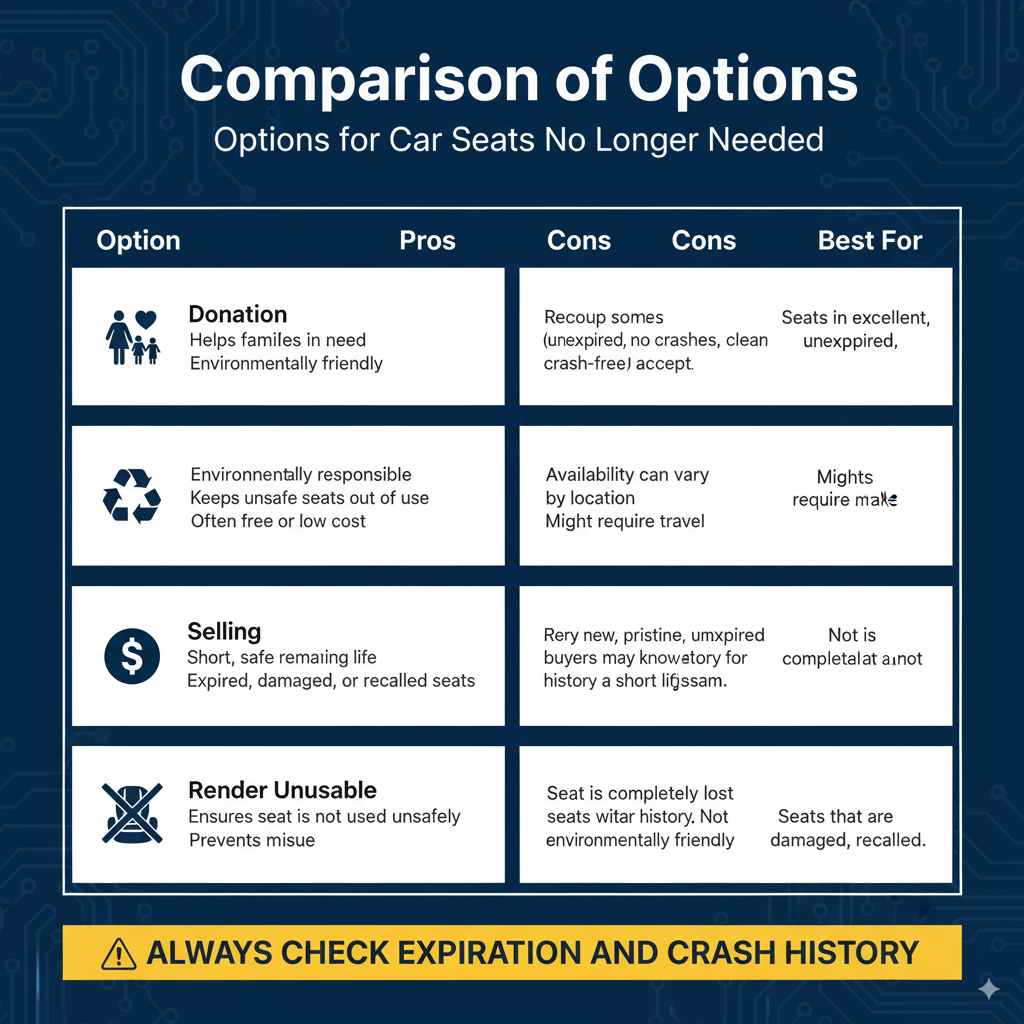
Comparison of Options
Here’s a quick look at the pros and cons of each major option.
| Option | Pros | Cons | Best For |
|---|---|---|---|
| Donation | Helps families in need, environmentally friendly if seat is safe. | Strict requirements (unexpired, no crashes, clean); many places don’t accept them. | Seats in excellent, unexpired, crash-free condition. |
| Target Trade-In | Accepts any seat, any condition, twice a year — 20% off coupon usable twice. | Only during the event window (usually April and September); coupon has category limits. | Any seat, expired or not, when you’re buying new gear anyway. |
| Recycling Programs | Environmentally responsible, keeps unsafe seats out of use, often free or low cost. | Availability can vary by location and time; might require travel. | Expired, damaged, or recalled seats; seats that cannot be donated. |
| Selling | Recoup some costs, gives the seat a short, safe remaining life. | Requires honesty; buyers may not know risks; limited market for used seats. | Very new, pristine, unexpired seats with clear history for a short remaining lifespan. |
| Render Unusable | Ensures seat is not used unsafely, prevents misuse from trash. | Seat is completely lost; not environmentally friendly. | Seats that are expired, damaged, recalled, or cannot be donated/recycled. |
Frequently Asked Questions (FAQ)
Can I put an expired car seat in my regular trash?
Yes, if you render it unusable first. This means cutting the harness straps and damaging the shell to prevent anyone from taking it and using it unsafely. After that, it can go in your household waste.
How do I find out if a car seat has been recalled?
The best place to check for recalls is the National Highway Traffic Safety Administration (NHTSA) website. You’ll need your car seat’s make, model, and potentially its serial number.
What if my car seat is expired but still looks new?
Even if it looks new, expired car seats are unsafe. The plastic can degrade over time, making them less effective in a crash. It should not be used by children. Your best options are recycling, Target’s trade-in event, or rendering it unusable.
Is it safe to take a car seat from a stranger or a yard sale?
It’s generally not recommended unless you know the person well and they can provide a complete, honest history of the seat: its expiration date, and that it’s never been in a crash. Without this information, the risk is too high.
Where can I find local car seat recycling near me?
You can often find local recycling options by searching online for “car seat recycling [your city/state]” or by checking Target’s trade-in event dates, since it’s the most consistently available nationwide option. TerraCycle is also a great resource for finding specialized recycling points.
My car seat was in a minor fender bender. Can I still donate or sell it?
No, even minor crashes can compromise the integrity of a car seat’s structure. For safety reasons, seats that have been in any accident should not be donated or sold and should be recycled, traded in, or rendered unusable.
Does Target’s car seat trade-in event really work?
Yes. It runs about twice a year, typically April and September, at participating Target stores. You need a free Target Circle account, drop the seat in the collection box near Guest Services, scan the QR code, and a 20% off coupon (usable twice) appears in your Target Circle Deals under “baby.” Target has recycled over 3.5 million seats through this program since 2016.
Can I upcycle an old car seat instead of throwing it away?
Yes, but only after you’ve rendered the seat unusable as a restraint (cut the harness, cracked the shell). The fabric cover and foam padding can be repurposed as pet bed stuffing, a garden kneeling pad, or donated to a local craft or sewing group — never reuse the harness, buckle, or shell for anything involving transport safety.
Conclusion
Dealing with an unneeded car seat comes down to one question first: is it unexpired, crash-free, and undamaged? If yes, donate it or trade it in at Target for 20% off new gear. If no, recycle it through a program like TerraCycle or a manufacturer take-back, or cut the straps and crack the shell before it goes in the trash. Either way, checking the expiration date and NHTSA recall status first is what keeps the next child who uses it safe.
Products related to this article
Sponsored / affiliate links. As an Amazon Associate I earn from qualifying purchases. I may earn additional commission from eligible campaigns.