Service Your Car by Mileage or Time? Whichever Comes First
Service your car by whichever comes first, mileage or time – most factory schedules pair a distance figure with a 6-12 month cap, since oil, brake fluid, and rubber seals age even if the car barely moves. Skipping the time limit risks the same costly repairs AAA links to deferred maintenance. This guide covers how the two limits interact, how your oil life monitor really calculates its percentage, and how far you can safely stretch either one.
Quick Answer
Service your car by whichever comes first: the mileage figure or the time interval. Most schedules pair a mileage number (often 8,000-16,000 km / 5,000-10,000 miles) with a 6-12 month cap, because oil, brake fluid, and rubber seals age from time and humidity even on a car that barely gets driven. If your car has an oil life monitor, follow that percentage for oil changes specifically.
Servicing Dilemma: Kilometers Vs. Time
When deciding whether to service your car based on kilometers or time, weigh the factors influencing service intervals: driving conditions, climate, and vehicle age all shift the optimal schedule. Distance-based servicing gives flexibility for high-mileage drivers, but on its own it can miss what time does to oil and rubber. Time-based servicing guarantees regular attention, but alone it can mean unnecessary visits for a car that is barely driven. Most factory schedules solve this by listing both numbers side by side and telling you to use whichever one you hit first.
Technological Advances In Maintenance Reminders
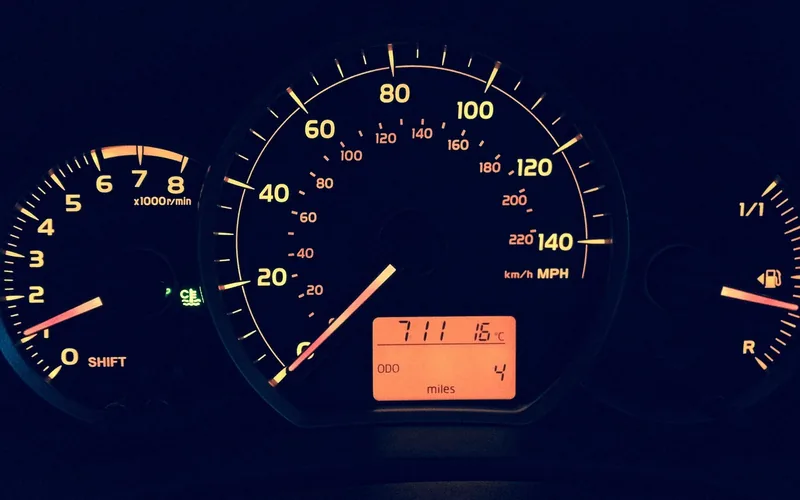
Modern cars track more than just the odometer. Onboard computers and companion apps now combine mileage, elapsed time, and how hard you actually drive to flag maintenance – and the most visible version of this is the oil life monitor built into most GM, Ford, and other late-model vehicles.
How Does an Oil Life Monitor Actually Calculate Its Percentage?
An oil life monitor (OLM) is an onboard software system that estimates remaining oil life from how the engine has actually been used, not from a fixed mileage number. It does not sample or test the oil itself. Instead it tracks engine revolutions, oil and coolant temperature, cold-start frequency, and load, then assigns penalty points for harsher conditions – a sub-zero cold start or a long towing trip subtracts more life than a level highway drive on a mild day. Those penalty points reduce a running percentage that resets to 100% once the oil is changed and the system is cleared.
📊 About one-third of U.S. drivers skip or delay recommended vehicle maintenance, and AAA links deferred maintenance to emergency repair bills of $2,000-$4,000 once problems compound — Source: AAA, 2026
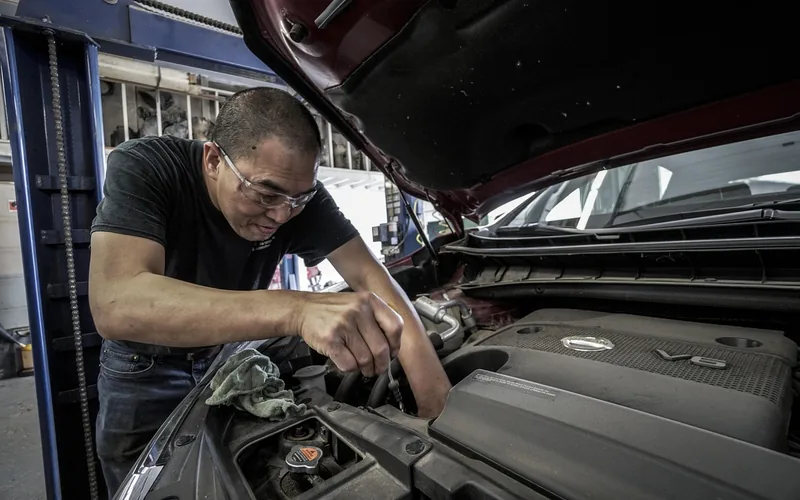
Best Oil Life Reset Scanner Pick
Innova 5210 OBD2 Scanner & Engine Code Reader with Oil Reset
Reads fault codes, tests your battery, and resets the oil life monitor from one handheld tool.
- Best for: drivers who want to read codes and reset the oil life monitor with one tool
- Why we picked it: it matches the exact oil-life-reset job this article covers, plus live data and a battery test
- Main drawback: Bluetooth pairing to the companion app can be finicky on older phones
Compare more service-reminder scanner options
 Option 1 ANCEL AD410 Enhanced OBD2 Scanner
|
 Option 2 FOXWELL NT301 OBD2 Scanner
|
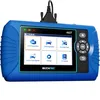 Option 3 BLCKTEC 460T OBD2 Scanner (12 Reset Services)
|
As an Amazon Associate we earn from qualifying purchases.
The video below compares engine oil condition at 5,000 km, 10,000 km, and 20,000 km, which is a useful visual for why the interval you pick actually matters.
Understanding Your Car’s Needs
Start by assessing your own usage pattern – regular car service protects more than the engine, it protects resale value and safety too. If you drive long distances often, prioritize servicing based on mileage. If your car sits idle for extended periods, time-based servicing matters more, since inactivity causes its own problems – flat-spotted tires, a drained battery, and stale fuel among them. Your owner’s manual, not a generic rule of thumb, has the exact mileage and time figures for your specific model, since they vary by engine, transmission, and even trim level – the same dual-threshold logic applies to smaller items like your cabin air filter.
The Mileage Approach To Car Service
Most modern vehicles fall into a service band of roughly 8,000-16,000 km (about 5,000-10,000 miles) between major services, though the exact figure depends on the manufacturer and the specific item – some synthetic-oil schedules stretch to 15,000 km (roughly 10,000 miles), while a severe-service schedule for towing, short trips, or extreme heat can cut that in half. High-mileage vehicles – even those approaching 300,000 miles – need special attention too, since the odometer alone does not tell you the condition of belts, hoses, or suspension bushings that wear from vibration and heat cycles as much as from distance.
If you exceed your mileage figure before your next scheduled visit, treat it as a buffer rather than a routine plan. Many mechanics consider 500 to 1,000 miles past a synthetic oil interval acceptable under normal driving, but recommend an even smaller margin on conventional oil or in severe conditions, since regularly running 2,000 miles or more past due lets oil lose its ability to lubricate and cool the engine.
The Temporal Aspect Of Vehicle Maintenance
Time-based service schedules matter even for cars that are barely used. A neglected car risks battery drain, tire flat spots, and brake problems, so getting it serviced at regular intervals regardless of kilometers driven protects components that fail from age rather than distance.
Brake fluid is the clearest example: it absorbs moisture from the surrounding air and typically needs replacing every 2 to 3 years no matter how few kilometers you’ve driven, since that moisture lowers its boiling point and can lead to spongy brakes or corrosion inside the lines. Rubber seals and hoses dry out and crack from age and heat cycling, and coolant loses its anti-corrosive additives over time even if it never circulates far. Older cars and vehicles in extreme climates typically need these time-based services more often than the standard interval suggests.
Mileage-Based vs. Time-Based Servicing: Quick Comparison
Rather than treating these as competing systems, most factory maintenance schedules use both at once. Here’s how each one is actually suited to different problems:
| Factor | Mileage-Based Servicing | Time-Based Servicing |
|---|---|---|
| Best for | Frequent or high-mileage drivers | Low-mileage, seasonal, or infrequent drivers |
| What it catches | Wear items: brake pads, tires, spark plugs, belts | Age-related decay: oil oxidation, brake fluid moisture, rubber seals |
| Resale value | Documents actual usage and wear history | Documents consistent care regardless of miles driven |
| Main downside | Can under-service a low-mileage car with aging fluids | Can over-service a high-mileage car on items that still have life left |
Expert Opinions On Car Servicing
Experts are divided on whether car servicing should be based on kilometers or time. Some advise sticking to the suggested mileage, while others emphasize regular time-based maintenance. It’s worth consulting a qualified mechanic to determine the right approach for your specific vehicle and driving habits.
According to most manufacturer guidance, service your car based on whichever comes first: time or mileage. Generally, it’s best to follow the oil life indicator on your vehicle’s onboard computer for oil changes specifically. If your car doesn’t have an oil life monitor, the mileage figure in your owner’s manual is a reliable fallback.
“In real-world oil testing, the GM Oil Life Monitor tends to call for a change before the oil is actually exhausted — the algorithm runs a bit conservative on purpose, more like a fuel gauge’s reserve than a precise measurement of the exact moment the oil fails.”
Practical Tips For Car Owners
The question of whether to base service on kilometers driven or time elapsed comes down to one rule: whichever comes first. Use this five-step process to actually apply it:
- Check your owner’s manual: Look up both the mileage figure and the time interval your manufacturer lists for each maintenance item – most schedules list both side by side.
- Track your last service date and mileage: Note the odometer reading and the date on a windshield sticker, an app, or a paper logbook so you always know your starting point.
- Compare both clocks: Whichever threshold arrives first – the mileage figure or the time interval – is the one that applies to that service item.
- Watch the oil life monitor if equipped: Treat the percentage readout as the deciding factor for oil changes specifically, since it accounts for your real driving conditions.
- Reset and log after service: Record the new mileage and date, and reset the oil life monitor yourself with a code reader if your shop didn’t already clear it.
Beyond the manual, a few preventive habits stretch either schedule further: keep your tires properly inflated, change your oil on schedule, and check your brakes and other key components for wear. Regular maintenance like this helps prevent the costly repairs described above and keeps your car safe and reliable between visits.
Frequently Asked Questions
Should I Service My Car Based on Time or Mileage?
Service your car based on whichever comes first: time or mileage. Most factory maintenance schedules list both a mileage figure and a matching time interval (often 6 or 12 months) for the same job, and reaching either one means the service is due, regardless of what the other number says.
Is It Better to Change Oil by Date or Mileage?
Follow your vehicle’s oil life monitor if it has one, since it factors in real driving conditions rather than a flat number. If your car has no oil life monitor, use the mileage figure in the owner’s manual, but never let the oil go longer than 12 months even if the mileage hasn’t been reached, since oil oxidizes and loses lubricating properties with age.
How Many Km Should You Get a Service?
Most modern cars are due for a full service between 8,000 km and 16,000 km (roughly 5,000 to 10,000 miles), though the exact figure depends on the manufacturer, the specific service item, and whether the car qualifies for a normal or severe driving schedule. Check your owner’s manual for the exact number for your model.
How Many Km Is Average Service?
Across most manufacturer schedules, the average interval works out to about 12,000 km (roughly 7,500 miles) or 12 months, whichever comes first. Severe-service conditions – short trips, extreme heat or cold, towing, or heavy stop-and-go traffic – typically cut that interval roughly in half.
How Does the Oil Life Monitor Know When to Reset?
The onboard computer tracks engine revolutions, oil and coolant temperature, cold-start frequency, and load, then assigns penalty points for harsher conditions like sub-zero cold starts or towing. Those penalty points reduce a running oil life percentage, and the system resets to 100% once a technician or the driver clears it after an oil change.
How Far Can You Go Over a Service Interval?
Many mechanics treat 500 to 1,000 miles past a synthetic oil interval as a safety buffer, not a routine plan, and recommend an even smaller margin – just a few hundred miles – on conventional oil or in severe conditions. Regularly pushing 2,000 miles or more past due lets oil lose its ability to lubricate and cool the engine.
Do Low-Mileage Cars Still Need Regular Service?
Yes. Brake fluid absorbs moisture from the air and typically needs replacing every 2 to 3 years regardless of mileage, and rubber seals, coolant, and engine oil all degrade from age and humidity even if the car rarely leaves the garage. A low-mileage car still needs its time-based services on schedule.
Conclusion
Service your car based on whichever comes first – time or mileage – rather than picking one system and ignoring the other. If you drive long distances often, watch the odometer and your oil life monitor. If you drive less, don’t skip the calendar-based services just because the mileage figure hasn’t been reached; oil, brake fluid, and rubber components age whether or not the car moves. Track both, and you’ll avoid the deferred-maintenance repair bills that catch up with cars serviced on only one clock.
Products related to this article
Sponsored / affiliate links. As an Amazon Associate I earn from qualifying purchases. I may earn additional commission from eligible campaigns.
 FOXWELL NT301 OBD2 Scanner Live Data Professional Mechanic OBDII Diagnostic Code Reader Tool for Check Engine Light
 BLCKTEC 460T OBD2 Scanner Car Code Reader Engine ABS SRS Transmission Diagnostic Tool, 12 Reset Services, Oil/TPMS/EPB/BMS/SAS/DPF/Throttle Reset, ABS Bleeding, Battery Test, Auto VIN, Free Update