Steam Cleaner vs Extractor for Car Interior
Use a steam cleaner on hard surfaces and light grime, and use it for odors only after the contamination source has been removed. Use an extractor on wet fabric, spills, and carpets that need moisture pulled out fast. Pick the wrong tool and you can leave padding damp, smear soil deeper, or miss the source of musty smells. This guide compares both tools by stain type, material, drying time, and the jobs each one handles best.
| Factor | Steam Cleaner | Extractor for Car Interior | Winner |
|---|---|---|---|
| Best use case | Sanitizing and loosening grime on hard interior surfaces | Pulling wet contamination out of fabric and carpet | Extractor for Car Interior |
| Moisture control | Adds heat and moisture, then needs wiping | Vacuum suction removes moisture from the material | Extractor for Car Interior |
| Drying speed | Slower if you leave excess moisture behind | Faster drying than steam alone | Extractor for Car Interior |
| Hard-surface reach | Strong for vents, seams, cup holders, and trim | Not the right tool for most hard surfaces | Steam Cleaner |
| Soaked fabric cleanup | Poor fit when padding is already wet | Built for seats, carpet, and spills | Extractor for Car Interior |
Steam cleaner vs extractor: which fits the mess?
Steam cleaners and extractors solve different problems. Steam uses high heat, with some units heating water to over 200°F, to loosen grime and help sanitize surfaces when dwell time, temperature at the surface, and material compatibility are right. An extractor uses suction to pull moisture out of fabric, so it is the better tool when the job is wet contamination instead of surface soil.
What steam does to grime and bacteria
Steam works well on stuck-on dirt, greasy touchpoints, and small crevices because heat helps break the bond between the soil and the surface. That makes it a good fit for vents, cup holders, door pulls, and trim where grime sits on top rather than soaking in.
What extraction does to soaked fabric
An extractor is built for carpet, cloth seats, and spill cleanup because suction removes liquid from the material. That matters when the contamination has spread into fibers or padding. If the source is a coffee spill, pet urine, or a soda soak, extraction is usually the better first move.
A quick side-by-side
Match the tool to the material first, then to the stain. Steam is best for cleaning the surface and loosening debris; extraction is best for pulling out moisture and reducing dry time on fabric. Say your cloth seat has a fresh coffee spill and the cushion feels damp two inches beyond the spot. Steam alone can spread the problem. Extraction is the safer choice.
📊 The Drive says the McCulloch Heavy-Duty Steam Cleaner has up to 45 minutes of continuous cleaning. Source: Thedrive.
When is steam the better choice?
Steam is the better fit when the problem sits on the surface, the area is hard, or you want to lift grime from seams and textured plastic. It is a strong option for sanitizing touchpoints and cleaning areas where a wet fabric tool would be awkward or unnecessary.
Greasy touchpoints, vents, and cup holders
Use steam on greasy steering-wheel spots, console buttons, vent slats, and cup holders. Handheld steam cleaners can be especially useful here because they are smaller, lighter, and tend to heat up quickly. Their short runtime is less of a problem for spot work than for a full seat job.
Leather, plastic trim, and seams
Steam can work on leather, plastic trim, and stitching if you keep the nozzle moving and wipe immediately with microfiber. Test first on coated, dyed, or delicate leather finishes, because heat and moisture can damage some surfaces. The cloth matters because steam loosens dirt, but the towel removes the lifted soil and excess moisture before it settles back into the grain or seam.
Handheld vs canister steam cleaners for cabin work
Canister steam cleaners often provide a larger tank, more accessories, and longer hose reach, which can help when moving around the cabin without constant refilling. They are also more awkward in tight interiors. Handheld units are easier to swing into cup holders and vents, but they give up runtime and capacity. The McCulloch Heavy-Duty Steam Cleaner is listed with up to 45 minutes of continuous cleaning, while the Bissell Steam Shot OmniReach is reported at 3 min 26 sec heating time, 2.8 lb, and a 10 oz capacity. (Caranddriver)
Picture a dusty SUV with sticky air-vent fins, grime on the shifter, and a leather armrest that only needs a light clean. Steam fits that mix. The same tool would be a poor match for a soaked rear seat after a tipped drink bottle.
When is an extractor the better choice?
An extractor is the better choice when liquid has soaked into fabric or carpet, or when the cleanup has to remove moisture as well as soil. That includes coffee, soda, pet urine, muddy water, and other contamination that can linger in padding and leave odor behind.
Coffee, soda, pet urine, and other wet spills
Wet spills call for suction. Steam can loosen the top layer of residue, but it does not pull liquid out of the seat foam or carpet backing the way an extractor does. For urine or any spill with a strong odor, extraction helps remove the contamination source instead of just warming it.
Seats and carpet that need faster drying
Drying speed is one of the clearest dividing lines between the two tools. Fortador says using an extractor with the steamer makes for quicker drying time, and that lines up with the basic job each tool performs. Steam leaves moisture behind that you must ventilate away; extraction removes much of that moisture during cleaning.
Why soaked fabric is a poor steam-only job
Steam-only work on wet fabric can push dirt deeper, soak the cushion more, and stretch the dry time. A common first-timer mistake is steaming a carpet stain before removing loose grit and liquid first. The result is a muddy slurry that has to be cleaned twice. Salt stains on carpet may also respond better to a dedicated salt remover plus extraction than to steam alone.
How do you prep the interior before cleaning?
Prepping matters as much as the tool. Vacuum first, choose the right attachment for the material, and keep microfiber towels close so loosened dirt and extra moisture do not sit on the surface. That order reduces residue and lowers the chance of over-wetting.
Pre-vacuuming so grit does not turn to mud
Vacuum the interior before you steam seats or carpet. Loose grit becomes muddy when steam hits it, and that makes the job slower and messier. This step is especially important on floor mats, fabric seats, and any high-traffic area with sand or crumbs.
Choosing the right attachment for the surface
Triangle brush attachments, jet nozzles, crevice tools, squeegees, and scrubbing brushes each have a narrow use. Crevice tools help with seams and rails. Jet nozzles target tight spots. Triangle brushes and scrubbing brushes work better on upholstery and carpet fibers. Squeegees help where you need to move moisture off a surface.
Microfiber towels and ventilation after cleaning
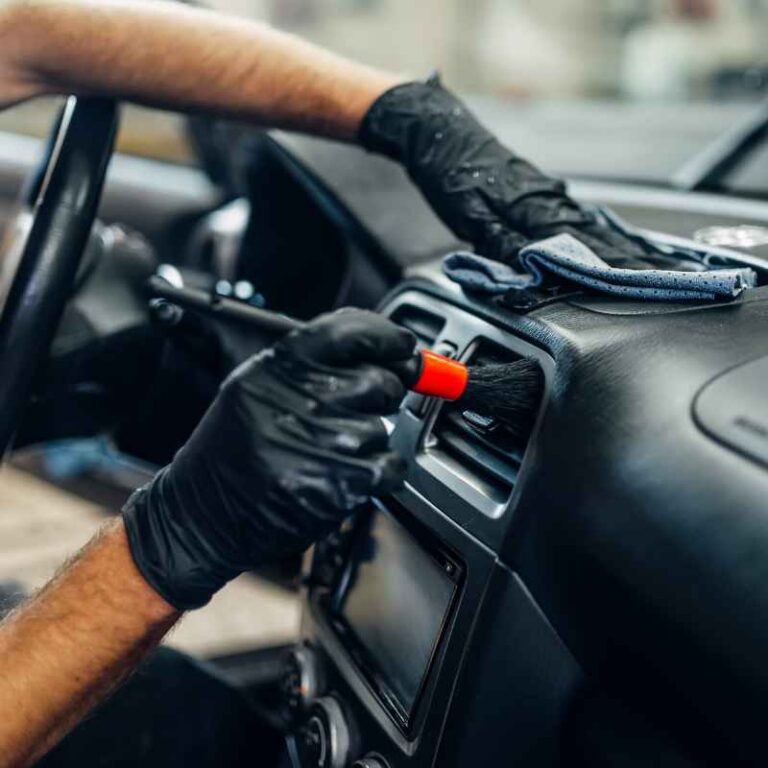
Microfiber cloths are not optional with steam. They wipe away lifted soil and excess moisture after each pass. After the cleaning is done, open doors and windows. A fan can speed drying, which matters because moisture left inside the cabin can settle into padding or leave a stale smell.
- Vacuum loose grit from seats, carpet, seams, and mats.
- Pick the attachment that matches the surface.
- Steam in short passes, then wipe with microfiber.
- Use extraction when the material is wet through or smells like trapped liquid.
- Ventilate the cabin until the surfaces are dry to the touch.
Steam extractor matrix
The right choice depends on stain type, material, moisture level, and how fast the interior needs to dry. Use this matrix as a quick decision table before you start. It keeps the tool choice tied to the mess instead of to a brand or a guess.
| Stain type | Material | Moisture level | Drying priority | Recommended tool | Do-not-use warning |
|---|---|---|---|---|---|
| Coffee spill on cloth seat | Fabric upholstery | Wet | High | Extractor for Car Interior | Do not steam first; it can spread the stain and push liquid deeper. |
| Pet urine | Seat cushion and carpet | Wet through | Very high | Extractor for Car Interior | Do not rely on steam alone; odor and moisture can remain in the padding. |
| Sticky cup holder residue | Plastic trim | Light | Low | Steam Cleaner | Do not saturate the cup holder; wipe immediately with microfiber. |
| Salt stains on carpet | Carpet | Dry to slightly damp | Medium | Steam Cleaner | Do not use heavy steam on already damp carpet without vacuuming first. |
| Greasy touchpoints | Leather or plastic | Light | Low | Steam Cleaner | Do not leave moisture pooled in seams or stitching. |
| Moldy smell from a wet floor mat | Carpet or mat backing | Wet | Very high | Extractor for Car Interior | Do not use steam as the only step; trapped moisture keeps the smell alive. |
| Dust in vents | Plastic vents | Dry | Low | Steam Cleaner | Do not force water into the ductwork. |
| Road grime on door seams | Leather or painted trim | Light | Low | Steam Cleaner | Do not scrub so hard that the finish scuffs. |
| Soda spill on cloth seat | Fabric upholstery | Wet | High | Extractor for Car Interior | Do not wait for it to dry before cleaning; the residue will set. |
| Loose crumbs and grit | Any interior surface | Dry | Low | Vacuum first, then Steam Cleaner only if needed | Do not steam loose grit; it becomes slurry. |
Choose Steam Cleaner if… / Choose Extractor for Car Interior if…
Choose Steam Cleaner if the mess is on the surface, the target is a hard interior part, or you need to clean vents, seams, cup holders, or greasy touchpoints. It also makes sense when you want a smaller tool for quick spot work and are willing to wipe and dry afterward.
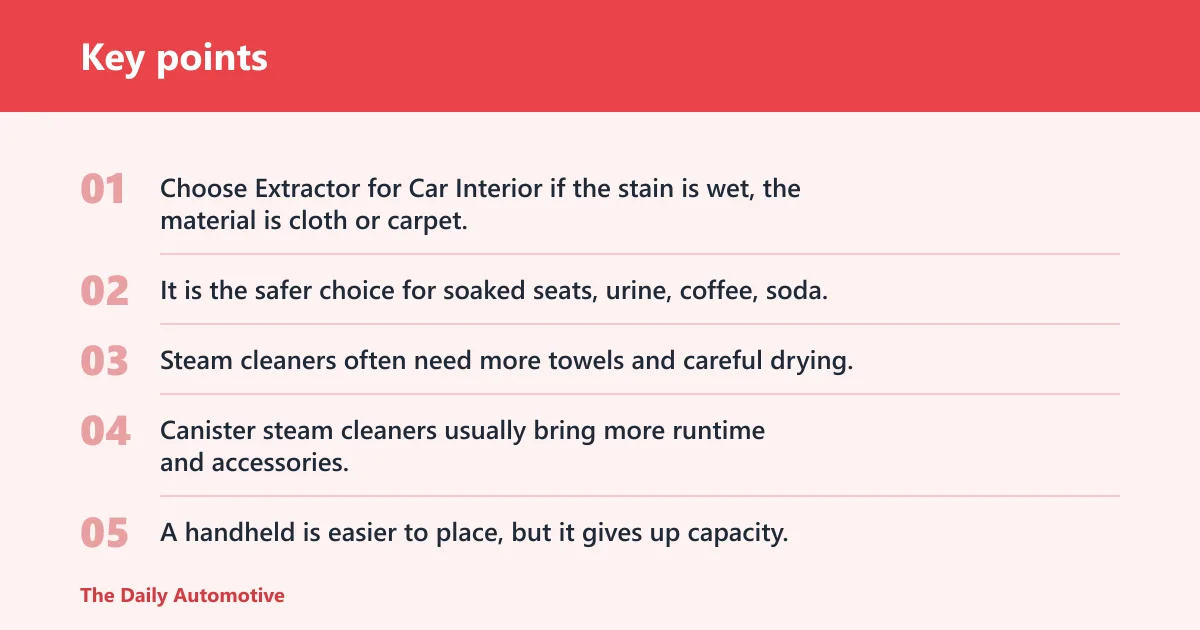
Choose Extractor for Car Interior if the stain is wet, the material is cloth or carpet, or dry time matters more than surface sanitizing. It is the safer choice for soaked seats, urine, coffee, soda, and any spill that has reached the padding or backing.
Cost-of-ownership and setup trade-offs
Steam cleaners often need more towels and careful drying, while extractors often need more setup for water recovery and more time spent on carpet and upholstery. Canister steam cleaners usually bring more runtime and accessories, but they are more awkward to move inside a tight cabin. A handheld is easier to place, but it gives up capacity. Oh So Spotless lists the Dupray Neat as its best overall steam cleaner for cars, and it says the McCulloch MC1275 has 18 accessories, which shows how accessory count can matter more than raw size for interior work.
The practical trade-off is simple: steam is a cleaner for surfaces, while extraction is a cleaner for wet fabric. If the contamination is minor and the material is hard, steam is efficient. If the contamination is soaked in, extraction saves time later by cutting the dry-down problem at the source.


What are the drying and damage risks?
Drying and heat control are the main risks with steam. Too much moisture can linger in seats or carpet, and too much heat can be hard on delicate surfaces. Good ventilation, short passes, and immediate wiping keep those risks down.
How much ventilation matters after steam cleaning
Open doors and windows after steaming, then move air through the cabin with a fan if needed. That matters because steam leaves moisture on the surface and sometimes in seams. If you shut the car right away, the humidity can sit inside and extend dry time.
When heat or over-wetting becomes a problem
Heat can help loosen dirt, but it is not a reason to linger in one spot. Keep the nozzle moving and avoid soaking one panel. If a seat is already damp, steam can make it wetter instead of cleaner. That is the point where extraction is the better tool.
Dry-time habits that keep residue from settling back
Wipe after every steam pass. Use clean microfiber towels, swap them when they pick up soil, and do not let loosened dirt dry back onto the material. A canister model with better hose reach can make this easier in a full cabin, while a handheld can be faster for isolated spots like vents or a cup holder.
Frequently asked questions
Extractor carpet cleaner vs steam cleaner
An extractor carpet cleaner is better when the carpet is wet, stained through, or needs faster drying. A steam cleaner is better for surface grime, odors on hard parts, and spot cleaning where you can wipe immediately. For carpet, the deciding factor is moisture removal, not heat alone.
Is a steam cleaner or extractor better for car upholstery?
For cloth upholstery with a spill, the extractor is usually better because it pulls liquid out of the fibers. For light grime on upholstery that is not soaked, steam can work if you vacuum first and wipe with microfiber right away. Material condition matters more than the tool label.
Can you use a steamer to clean car interior?
Yes, but only where the surface can handle heat and light moisture. Steam is useful on plastic trim, vents, seams, cup holders, and some upholstery spots. It is the wrong choice for soaked carpet, urine, or any area where pulling moisture out matters more than loosening dirt.
Does steam cleaning leave car seats too wet?
It can, especially if you hold the nozzle in one place or use too much steam on fabric. Steam leaves moisture that must be wiped and dried with air movement. If the seat is already damp, extraction is the better option because it removes moisture instead of adding more.
What is the best tool for fabric seats and carpets?
For dry grime on fabric seats and carpet, start with vacuuming and then use steam for surface cleaning. For wet spills, pet urine, or stains that have soaked into padding, use an extractor. The best tool depends on how deep the contamination goes and how fast it needs to dry.
Should I pre-vacuum before using a steam cleaner on car seats?
Yes. Vacuuming first removes loose grit so steam does not turn it into mud. That matters on seats, carpet, and floor mats where sand, crumbs, and dust can sit in the fibers. Pre-vacuuming also makes microfiber wiping more effective because there is less loose debris to spread around.
Products related to this article
Sponsored / affiliate links. As an Amazon Associate I earn from qualifying purchases. I may earn additional commission from eligible campaigns.