Car Steam Cleaner vs. Upholstery Extractor: Which to Buy
Use steam on vents, crevices, sticky trim, and light surface grime. Use an upholstery extractor for deep seat and carpet soil, spills, and odors. Use both when you need soil removal and sanitizing. Pick the wrong tool and you can soak foam, leave residue, or miss contamination below the fibers. This guide compares surface type, contamination depth, and drying risk so you can choose the right machine.
This guide is part of our Car cleaning and detailing guide series.
| Decision factor | Car Steam Cleaner | Upholstery Extractor | Winner |
|---|---|---|---|
| Best surface type | Hard and semi-hard surfaces such as vents, buttons, cup holders, plastic trim, seams | Fabric surfaces such as cloth seats, carpets, floor mats | Tie |
| Soil depth | Best for light surface soil and residue on top of materials | Best for soil embedded in fibers and foam-backed contamination | Upholstery Extractor |
| Moisture sensitivity | Low water output | Adds solution and leaves fabric damp | Car Steam Cleaner |
| Odor risk control | Helps on odor-prone touch points and seams, but does not pull contamination out of fabric | Removes contaminated liquid and soil from fabric, which lowers odor risk better | Upholstery Extractor |
| Dry-time tolerance | Usually dries in minutes on suitable surfaces | Often needs several hours to a day or so, depending on airflow, humidity, and the liquid used | Car Steam Cleaner |
| Sanitizing need | Heat helps sanitize touch points, seams, and crevices | Mainly removes contamination; cleaning power comes from solution and suction | Car Steam Cleaner |
| Risk on delicate materials | Can stress adhesives, vinyl wraps, some headliners, and electronics if aimed carelessly | Can over-wet foam, padding, and seams if used heavily | Tie |
Car steam cleaner vs. upholstery extractor: the real difference


A car steam cleaner uses heated vapor and very little water, so it fits hard and semi-hard surfaces where you want quick drying and some sanitizing effect. An upholstery extractor sprays cleaning solution into fabric, then vacuums it back out, which can help when soil, liquid, or residue sits below the surface. Moisture control decides the winner. (en.wikipedia.org)
What a car steam cleaner does on interior surfaces
Steam can work well on vents, cup holders, shift boots, buttons, door handles, and plastic trim because it uses relatively little moisture and the heat helps loosen grime. It is also useful on seams and other narrow spots where a wipe cannot reach. On delicate adhesive-backed trim, though, too much heat can cause lifting.
What an upholstery extractor does on fabric
An extractor is generally suited to cloth seats, carpets, and mats. It mixes cleaning solution with water, pushes that liquid through the fibers, and pulls much of it back out along with loosened dirt. That makes it stronger for spilled drinks, ground-in soil, and stains that sit in the pile or foam backing.
Why moisture control decides the winner
The wrong amount of water creates more problems than it solves. Steam usually dries fast, which lowers the chance of odor or mildew, but it can leave loosened grime behind if the material needs real flushing. Extraction cleans deeper, but over-wetting a seat or carpet can turn a small spill into a long dry-out problem.
Which tool is better for your interior mess?
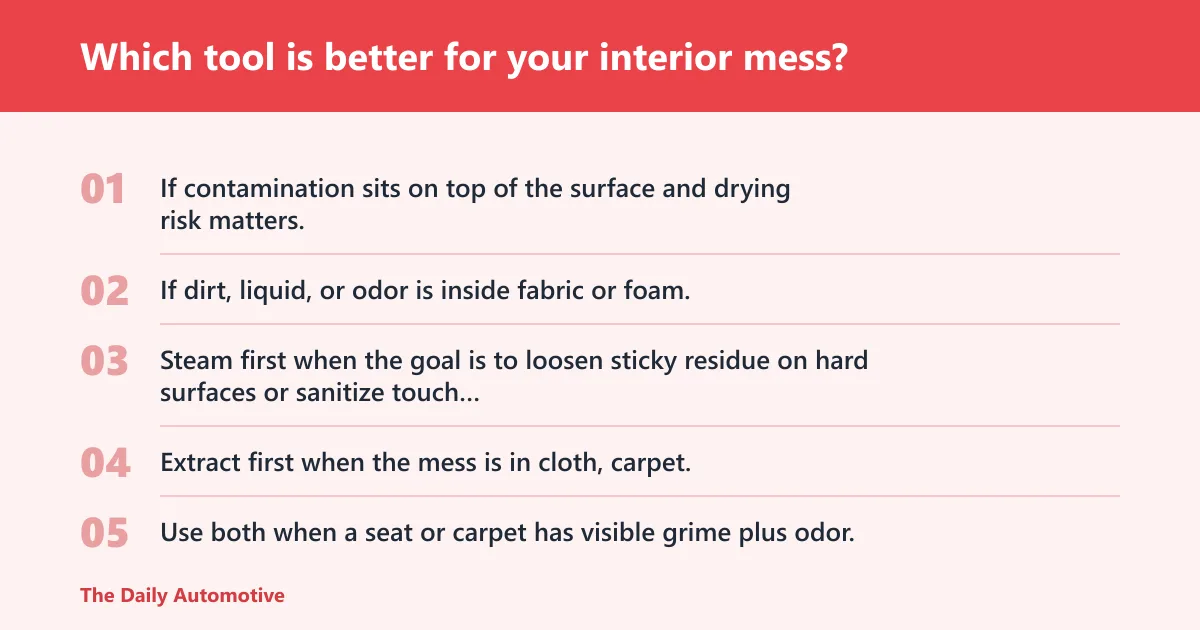
Use the tool that matches the mess. If contamination sits on top of the surface and drying risk matters, steam usually works better. If dirt, liquid, or odor is inside fabric or foam, extraction is the safer pick because it removes contamination instead of moving it around.
| Interior mess or material | Soil depth | Moisture sensitivity | Odor severity | Sanitizing need | Dry-time tolerance | Recommendation |
|---|---|---|---|---|---|---|
| Dusty cup holders and vent slats | Low | Medium | Low | Medium | Low | Steam first |
| Sticky center console and door handles | Low to medium | Medium | Low | Medium | Low | Steam first |
| Cloth seat with coffee spill that soaked in | High | Medium | Medium to high | Low | Medium | Extract first |
| Carpet with tracked-in mud | High | Low to medium | Medium | Low | Medium to high | Extract first |
| Pet urine on floor mat | High | Low to medium | High | Low | Low to medium | Extract first |
| Smoked-in headliner with surface residue | Low | High | High | Medium | Low | Steam first, then use extreme caution |
| Older minivan with mixed snack grime, juice, and seat stains | Medium to high | Medium | Medium | Medium | Medium | Use both |
Steam first, extract first, or use both
Steam first when the goal is to loosen sticky residue on hard surfaces or sanitize touch points before a wipe-down. Extract first when the mess is in cloth, carpet, or mat fibers and the liquid needs to come back out. Use both when a seat or carpet has visible grime plus odor, because cleaning the surface alone often leaves the deeper contamination behind.
How to read the matrix for family cars, pet messes, and older smoked-in interiors
Family cars often pick up juice, crumbs, and hand grime, so a steam cleaner can handle high-touch plastics while an extractor can deal with seats and floor mats. Pet messes and smoked-in interiors are different: odor often sits in fabric, foam, or seams, which makes extraction more important, with steam used afterward on nearby trim and contact points.
What works best on cloth seats and carpet?
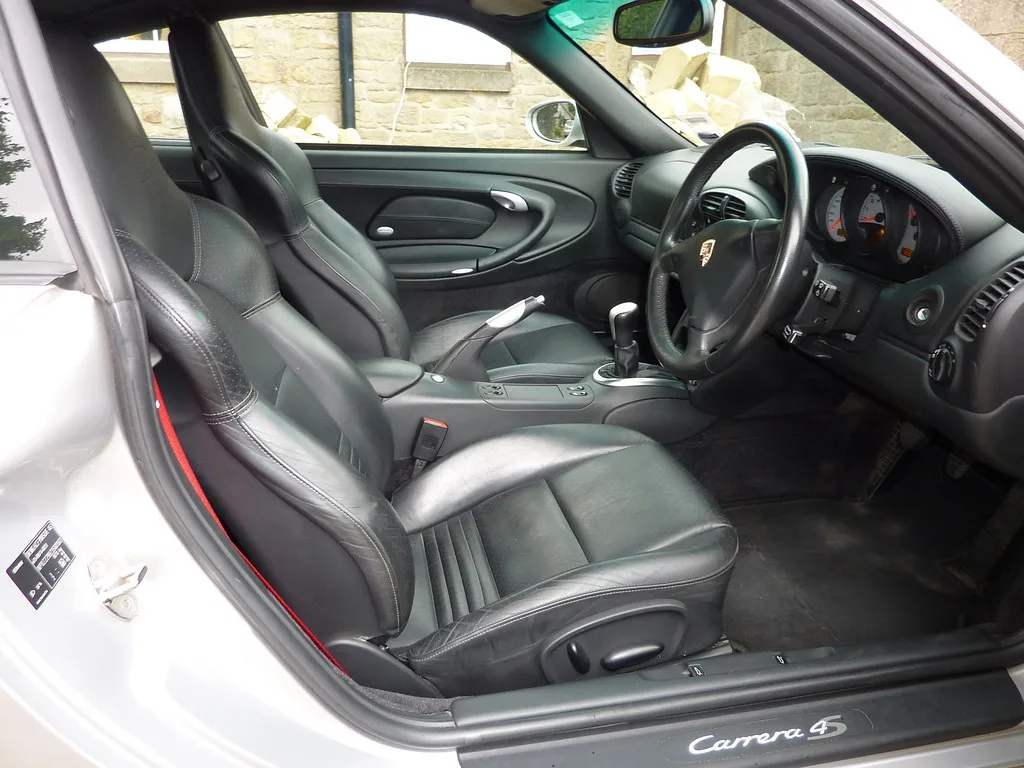
Extraction is the better call for cloth seats and carpet when the stain is deep, the area is wet, or the contamination has reached the backing. Steam can clean light surface soil, but it does not flush fibers the way a spray-and-vac process does, so it is a weaker choice for serious seat or carpet messes.
When extraction is the better call for deep stains and soaked foam
Cloth seats are porous, and carpet fibers can hold liquid in the pile and backing. If the stain came from coffee, soda, milk, mud, or pet urine, extraction gives you a better shot at pulling out the liquid before it sets and starts to smell. That is especially important when the foam under the fabric is involved.
When steam is enough for light surface soil
Steam can be enough when the seat only has dust, body oils, or a small patch of dry grime on top of the fabric. In those cases, low moisture and heat help clean without a long dry period. It is a surface tool here, not a deep-clean replacement.
Why residue and drying time matter on fabric
Fabric cleaning is not only about appearance. If shampoo or loosened soil stays in the weave, the seat can feel tacky and attract dirt again. If the seat stays wet too long, odor and mildew risk rises. Extraction reduces both risks better than steam alone.
Is steam safe for leather, electronics, and trim?
Steam is useful on some hard interior surfaces, but it is not a universal interior tool. It can help on plastic trim and seams when used carefully, yet it may damage adhesives, vinyl wraps, screens, buttons, and delicate headliners if heat or moisture reaches areas that should stay dry. Low moisture helps only when the material can handle heat.
Hard and semi-hard surfaces that respond well to steam
Vents, cup holders, shift boots, door handles, and textured plastic trim usually handle steam well. The low water output helps reduce runoff into crevices, and the heat can help lift greasy residue from touch points. That makes it a practical choice for the surfaces you touch most often.
No-go and caution list for adhesives, vinyl wraps, buttons, screens, and some headliners
Steam can loosen adhesive-backed trim, wrinkle vinyl wraps, and force moisture into buttons or screens. Some headliners use adhesive layers that do not like heat or wetting, so direct steam is risky there. A delicate surface that already feels loose, thin, or poorly bonded should not be treated with aggressive heat.
Where low moisture is an advantage
Low moisture matters most where liquid would be trapped or where dry time is a concern. That is why steam is often a better pick for quick interior refreshes, especially on dash plastics and touch points. It cleans without turning a small job into a long drying project.
Which tool handles pet accidents and odors better?
An upholstery extractor usually wins for pet accidents and odors because it removes the contaminated liquid and soil from the fabric instead of leaving them in place. Steam can help sanitize surrounding touch points and seams, but it does not pull urine, spilled drinks, or muddy residue out of the seat foam as well as extraction does.
Why extraction usually wins for urine, spilled drinks, and mud
Odors often come from what remains inside the material. If a spill or accident soaked into a seat, carpet, or mat, extraction gives you a better chance of removing the source before it dries in place. That matters with urine especially, because leftover moisture can become a smell problem later.
Where steam helps with touch points and odor-prone seams
Steam is useful around the edges of the problem. It can clean latch areas, seat seams, plastic trim, and nearby hard surfaces where contamination may have spread. In a mixed cleanup, steam is often the finishing step after extraction has removed the wet contamination from the fabric.
Why trapped moisture can create odor problems later
If a fabric surface stays damp in foam or underlay, odor risk rises even after the visible stain looks better. That is why over-wetting with either tool is a mistake. Extraction is better than steam for odor control only when it removes more liquid than it adds.
How long do seats and carpets take to dry?
Dry time depends on how much liquid reached the material, but extraction often leaves fabric damp for several hours, and sometimes longer. Steam often dries in minutes on suitable surfaces because it uses relatively little water. Airflow, humidity, fabric thickness, and how much solution was used all change the result.
Typical dry-time ranges after extraction
A lightly treated seat may be ready much sooner than a soaked carpet or a thick floor mat. A common rule of thumb is that thin fabric with strong airflow dries faster, while foam-backed materials and humid conditions dry more slowly. Heavy saturation can push the timeline toward the high end of the range.
Why steam usually dries faster
Steam deposits far less liquid than a spray-and-vac process. That gives it an advantage when you need the car back quickly or when the material underneath is moisture-sensitive. Fast drying does not make it better for every stain, but it does reduce the risk of lingering dampness.
What affects dry time: humidity, airflow, fabric thickness, and how much liquid you used
Humidity slows evaporation. Closed windows slow it further. Thick seat foam and dense carpet trap more moisture than smooth plastic or thin weave. If you use too much cleaning solution during extraction, the fabric will stay wet longer and odor risk climbs with it.
Choose Car Steam Cleaner if…
Choose a car steam cleaner if your main jobs are vents, cup holders, buttons, seams, dash plastics, and other hard or semi-hard surfaces. It also makes sense if you need quick drying, light sanitizing, and low moisture around areas where liquid would be a problem. It is the safer first buy for touch-point cleaning.
Choose Upholstery Extractor if…
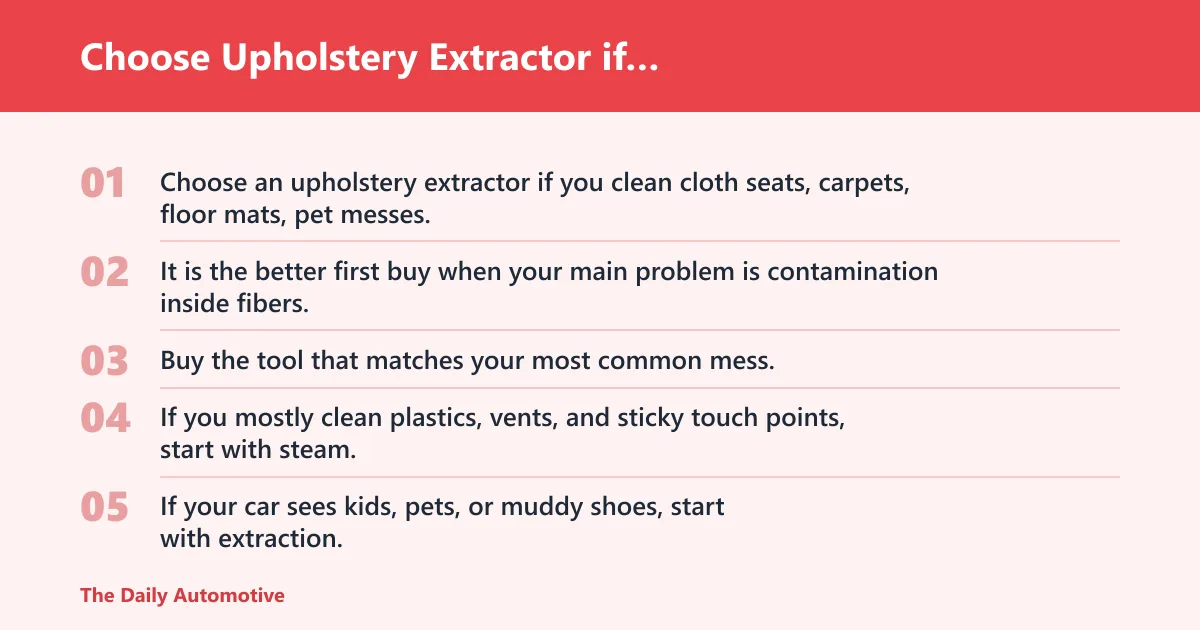
Choose an upholstery extractor if you clean cloth seats, carpets, floor mats, pet messes, old spills, or smoked-in fabric more often than dashboards and trim. It is the better first buy when your main problem is contamination inside fibers, especially if odor control and deep stain removal matter more than fast dry time.
What should I buy first for interior cleaning on a budget?
Buy the tool that matches your most common mess. If you mostly clean plastics, vents, and sticky touch points, start with steam. If your car sees kids, pets, or muddy shoes, start with extraction. On a tight budget, the right first tool fails less often than the more expensive one that is wrong for the job.
Do I need both a steam cleaner and an extractor for detailing?
Many DIY owners eventually benefit from both, but you do not need both on day one. A mixed interior often needs steam for trim and an extractor for fabric. If your vehicle only has one problem type, buy the tool that fits that problem first, then add the second only when your cleaning jobs expand.
What should I do first on a mixed interior?
Start with the tool that removes the worst contamination from the most vulnerable material. For cloth seats or carpets with spills, extract first so the liquid comes out before it spreads. For hard trim and vents, steam first so loosened grime is wiped away before you move to the fabric sections.
Frequently asked questions
Is a car steam cleaner better than an upholstery extractor?
Neither is better in every case. Steam is better for hard and semi-hard surfaces where you want low moisture and some sanitizing effect. An extractor is better for cloth seats, carpets, and mats when dirt, liquid, or odor sits inside the fibers. The mess in front of you decides the tool.
Can a steam cleaner replace an extractor for car seats?
Not for deep seat stains, soaked foam, or spills that have set into cloth. Steam can handle light surface soil on seats, but it does not pull contamination back out the way extraction does. If the seat smells, feels damp, or shows a ring stain, extraction is the safer choice.
What is the best tool for cloth seats and carpet stains?
An upholstery extractor is usually the better tool for cloth seats and carpet stains because it sprays cleaning solution into the material and removes dirty liquid at the same time. That matters for ground-in dirt, mud, coffee, and pet accidents. Steam is more of a surface cleaner for these materials.
Is steam cleaning safe for leather seats and electronics?
Leather and electronics need caution. Light steam on leather may be acceptable only with care and limited heat, but excess moisture can be a problem. Electronics, buttons, screens, adhesives, wrapped trim, and some headliners are higher-risk surfaces, so direct steam should be used sparingly or avoided.
How long does upholstery take to dry after extraction?
Dry time is often 4 to 24 hours, depending on airflow, humidity, fabric thickness, and how much liquid was used. A light pass on a thin seat may dry faster, while a soaked floor mat or dense foam-backed carpet can take much longer. Good ventilation shortens the wait.
Which tool is better for pet accidents and odors?
An upholstery extractor is usually better for pet accidents and odors because it removes the source material from the fabric instead of leaving it behind. Steam can help with nearby seams, trim, and touch points, but it does not remove urine or muddy residue as well as extraction does.
Products related to this article
Sponsored / affiliate links. As an Amazon Associate I earn from qualifying purchases. I may earn additional commission from eligible campaigns.
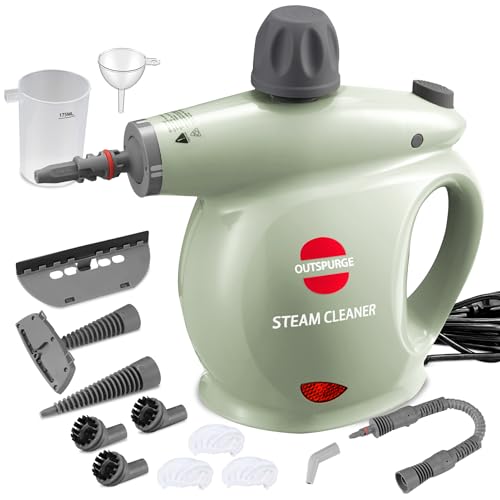
 1.8L Handheld Steam Cleaner for Home & Car with 18 Accessories, 80-Min Runtime, Portable Steamer for Cleaning, 10S-Heat Up, 221℉/ 4Bar High Pressure Steam, 6 Steam Levels, Handle & Unit Dual Controls
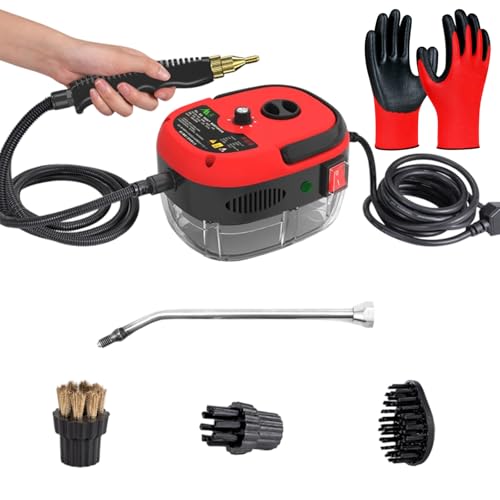 2026 New Portable Handheld Steam Cleaner, 2500w Handheld High-Temperature Pressurized Steam Cleaner, Multi Purpose Cleaner for Car Engine Furniture, Kitchen, Bathroom (Mechanical Red)