3 Best Tint Films for Car Lights (2026): We Compared
The best tinting film for car lights depends on lens shape: use a pre-cut vinyl sheet for flat lenses, a heat-formable cast film for curved lenses, and a wide roll film for multiple lights. Poor fit can wrinkle, lift, block too much light, or fail inspection. This comparison ranks three tint films by real install scenario so you can match the film to headlights, taillights, or fog lights.
Best tinting film for car lights
The top pick here is the VViViD Air-Tint, because its air-release membrane and heat conformability make it the safest choice for curved lenses where bubbles and edge lift cause the most trouble. The other two picks matter when you want easier beginner handling or broader coverage across several lamps.
Quick comparison
| Product | Badge | Best for | Price | ||
|---|---|---|---|---|---|
 |
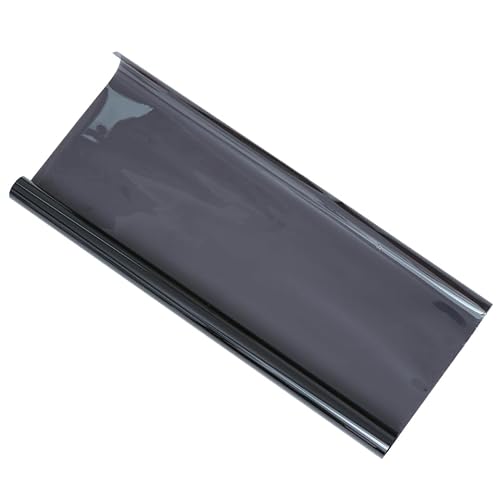
VViViD Air-Tint Dark Black Headlight Taillight TintVViViD | Our pick | 17.75" x 5ft · Air-Tint · Dark Black | $14.48
Price as of 23 Oct 2026
|
View |
 |
Arayker 28 Pcs Car Window Tint Tools Kit Vinyl Wrap ToolArayker | Pair with it | 28 Pcs · Tools · Tinting Kit | $24.99
Price as of 23 Oct 2026
|
View |
 |
1797 Car Light Tint Film Headlight Fog Light Taillight Red1797 | Budget pick | 48” x 12” · Red Chameleon · Self-Adhesive | $7.98
Price as of 23 Oct 2026
|
View |
 |
KOMAS 12” X 48” Tint Vinyl Film Sticker Sheet Roll for CarKOMAS | Also great | 12" x 48" · Light Black · Squeegee + Cutter | $7.55
Price as of 23 Oct 2026
|
View |
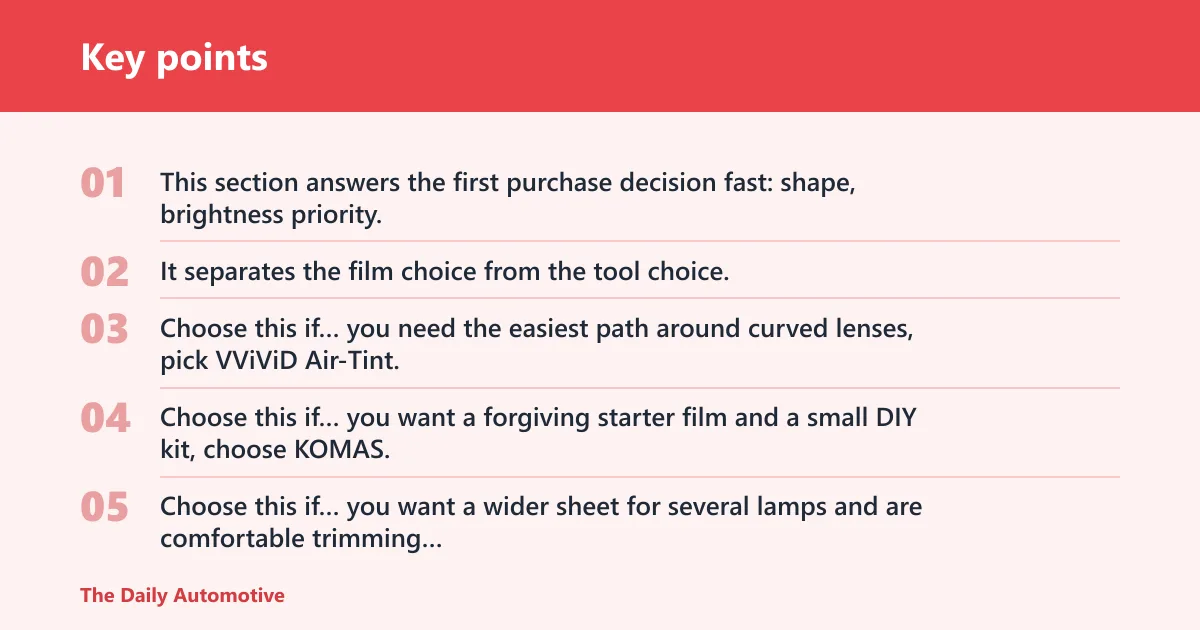
This section answers the first purchase decision fast: shape, brightness priority, and failure risk. It separates the film choice from the tool choice, since a good kit cannot fix the wrong film on a deep lens.
| lens shape | install difficulty | light transmission priority | best film type | risk of failure |
|---|---|---|---|---|
| Deep curves, tight corners, compound headlight or taillight lenses | Higher; needs stretch control and repeatable repositioning | High, especially for front lights | VViViD Air-Tint Headlight/Tail Light Window Tint | Bubble trapping and edge lift if the film is forced cold |
| Flatter covers, simple shapes, first-time installs | Lower; easier to align and correct | Moderate to high, depending on shade | KOMAS 12” X 48” Tint Vinyl Film Sticker Sheet Roll | Misalignment and trapped dust if prep is rushed |
| Multiple lights, mixed front and rear coverage, larger cut area | Moderate; more material means more trimming decisions | Moderate, with more room for shade choice | 1797 Car Light Tint Film | Waste from bad cuts and edge lift on uneven edges |
Choose this if… you need the easiest path around curved lenses, pick VViViD Air-Tint. Choose this if… you want a forgiving starter film and a small DIY kit, choose KOMAS. Choose this if… you want a wider sheet for several lamps and are comfortable trimming carefully, choose 1797.
How we chose
These three picks are ranked by install outcome, not by brand reputation alone. The main filters were lens geometry, film format, light transmission, and the chance of common install mistakes such as trapped dust, over-stretching, and edge lift.
Front lighting gets stricter treatment than rear styling. Laws vary by jurisdiction, but headlights usually face the tightest visibility rules, while taillights often allow more cosmetic latitude. Fog lights sit in between and should stay visible in poor weather, not merely match the rest of the car.
Film format matters because size changes waste. A sheet can be right for one lamp and awkward for another. A roll can cover more, but it also raises the chance of cutting errors if you measure loosely or trim before the film is fully settled.
Heat response and release technology decide whether a beginner gets a clean edge or a wrinkled corner. Air-release membranes help push out trapped air. Self-adhesive sheets can still work well, but they depend more on careful cleaning, alignment, and a gentle hand with heat.
VViViD Air-Tint: best for curved lenses
VViViD Air-Tint is the safest choice for complex headlight and taillight shapes because it uses an air-release membrane for dry installation. The film is described as highly conformable with heat, and its self-healing surface helps limit the small scratches that can happen during squeegeeing and trimming.
This is the best fit when the lens has deep curvature, a sharp shoulder, or a compound surface that wants to pull a flat film back off the edge. Buyers who want a higher-confidence install on tricky housings will usually get more value from the better fit than from a cheaper sheet with less control.
The drawback is straightforward: dry-install, high-conformability film still asks for patience. If you rush the laydown or stretch too aggressively around a corner, you can still trap a bubble or thin the edge too far. That risk is lower than with a basic self-adhesive sheet, but it is not zero.
KOMAS 12” X 48” tint vinyl film sticker sheet roll: best for beginners
KOMAS is the easier starter pick because it comes as a 12” X 48” sheet and includes a squeegee and cutter. That makes it a practical choice for flatter light covers, smaller taillight sections, and buyers who want one package with the basic install tools already in hand.
Its forgiving wet-apply approach is the main advantage for a first install. Wet positioning gives you more time to slide the film into place before committing to the edge, which can help when the goal is a neat, centered finish rather than a complex wrap around a deep lens.
The tradeoff is fit control. On tighter curvature, a starter-friendly sheet can be less cooperative than VViViD Air-Tint, and the included tools do not remove the need for careful prep. Dust, over-wet application, and rushed squeegee passes can still leave marks or bubbles behind.
1797 car light tint film: best for larger coverage
1797 is the most flexible choice for bigger DIY coverage because it is a 48” x 12” self-adhesive sheet with a three-layer protective film system. The listing also claims high 90% light transmittance, which points to a visibility-first approach for buyers who want styling without a heavy brightness penalty.
This pick works well when you need to cover more than one lamp type or want extra material for repeat cuts. The wider sheet can be useful for headlights, taillights, and fog lights in one project, especially if the shapes are similar enough that you can nest your cuts efficiently.
The honest drawback is waste risk. A larger sheet magnifies measurement mistakes, and a careless first cut can leave you short on the second lamp. If the lens is deeply curved, you also need more attention to heat and edge pressure so the film does not pull back after trimming.
Which one should you buy?
Choose by lens geometry first. If the housing has deep curves or sharp transitions, the VViViD Air-Tint is the best match because fit quality matters more than raw sheet size. If the light cover is flatter and you want a calmer first install, KOMAS is the cleaner beginner buy. If you are covering several lights and want a broader sheet, 1797 gives you more material to work with.
Choose by brightness priority next. For front lighting, keep the film as light as your style goals allow, because the legal and safety margin is usually tighter than it is at the rear of the car. For taillights, moderate tint can make sense when the lamps stay clearly visible in daylight and dusk. For fog lights, stay conservative; the whole point is visibility in poor weather.
Choose by total purchase cost, not sticker price alone. A small sheet can be cheapest up front but leave you short on material. A roll can waste more if your measuring is weak. A kit can save a beginner from buying tools separately, but only if the film type itself matches the lens shape.
Say your car has a pair of rounded projector headlights and a tight taillight edge. A flat, dry sheet may look fine on paper, then wrinkle at the bend and lift a week later. The better move is a conformable air-release film that can settle into the curve before you trim the edge.
Suppose you are tinting two taillights and a pair of fog lights from one purchase. A single 12 x 48 sheet may force awkward joins or reuse from the wrong cut path. A wider sheet or roll gives you cleaner layout options, but it also demands more careful marking before any cut is made.
The safest decision process is simple. Start with lens shape, then decide how much brightness you can give up, then pick the format that wastes the least material for your project. Finish by checking whether the film is designed for dry installation, wet positioning, or heat stretching.
- Measure the lens face and note every curve, ridge, and edge break.
- Decide whether the light is front, rear, or fog-related, since legal and visibility needs differ.
- Choose a film that matches the shape: air-release for curves, easier sheet film for flatter covers, wider material for multi-light jobs.
- Plan for failure points: dust, edge lift, wrinkles, and overstretching at corners.
- Keep your trim line a little generous until the film has settled, then finish the edge cleanly.
A common first-timer mistake is cutting the headlight film before it has fully conformed to the lens. If the film is cut flush before it settles, a slight shift can expose the edge or make a corner lift. Leaving a small allowance until the last pass gives you a safer finish, especially on curved taillights.
Another common mistake is choosing a dark shade because it looks dramatic in a product photo. On a front lamp, that can work against nighttime use. On a rear lamp, it can still be too much if your jurisdiction is strict or the lamp already starts with low output.
What the ratings and formats mean for real installs
Do not treat film type, size, and accessories as separate buying decisions. They all affect the final result. A self-adhesive sheet can be ideal for a straight lens but annoying on a bulbous one, while a better-conforming air-release film can save time even if it costs more.
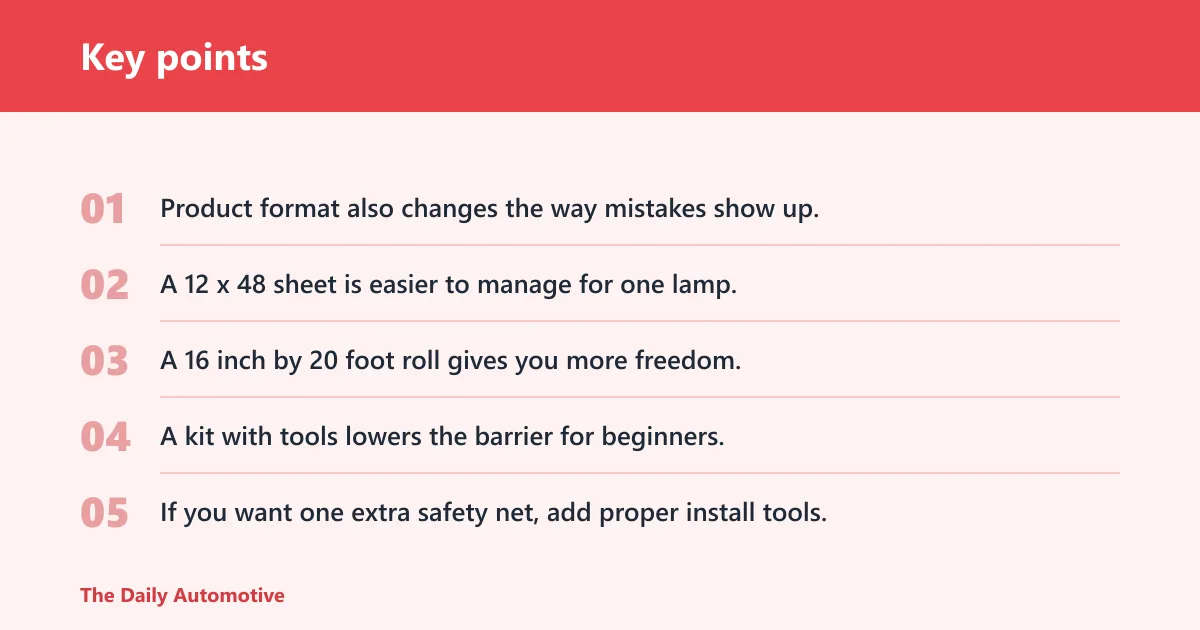
Product format also changes the way mistakes show up. A 12 x 48 sheet is easier to manage for one lamp. A 16 inch by 20 foot roll gives you more freedom, but the measurement stage becomes the critical step. A kit with tools lowers the barrier for beginners, but it does not automatically improve the film itself.
If you want one extra safety net, add proper install tools. A magnetic LED tinting light can help when you need hands-free illumination and precise cutting around the lens edge. A kit like HTVRONT’s felt squeegee, detachable knife, extra blades, and 100 ml spray bottle is useful gear, but it should support the film choice rather than replace it.
Frequently asked questions
What is the best tinting film for car lights?
The best overall choice is the film that fits the lens with the fewest bubbles and the least edge lift. For curved headlights and taillights, that usually means a conformable air-release film such as VViViD Air-Tint. For flatter lenses, a simpler starter sheet can be easier to manage and still look clean.
Will tint film reduce headlight brightness?
Yes, any tint can reduce headlight output to some degree, and that matters more on the front of the car than on the rear. The safer approach is to keep front lamps as light as possible and reserve darker shades for places where local rules and visibility still allow them. Never assume a dark film is acceptable just because it installs cleanly.
Is air-release tint better than self-adhesive film?
Air-release tint is usually better on curved or complex lenses because it gives trapped air more room to escape during application. Self-adhesive film can still work well, especially on flatter surfaces, but it depends more on careful alignment and clean technique. The better choice is the one that matches the lens shape.
What size tint film do I need for headlights or taillights?
For a single light or a compact pair, a 12 x 48-inch sheet is often enough to work with, assuming the lens is not unusually large. Larger jobs or multiple lamps are better served by a wider sheet or a roll. Measure the full face first, then add a little margin for trimming and mistakes.
How do I avoid bubbles when tinting car lights?
Clean the lens carefully, work on a dry or properly wet-prepped surface as the film requires, and use gentle pressure from the center outward. Bubbles usually come from dust, rushed placement, or forcing the film around a curve too quickly. Heat helps, but too much heat can create new problems at the edge.
Can I use tint film on fog lights too?
Yes, fog lights can be tinted, but they deserve a conservative approach because their job is visibility in poor weather. Keep the shade light enough that the lamp still does its work, and check local rules before installing. A film that looks fine on a taillight may be too dark for fog use.
Which tint film is best for beginners?
KOMAS is the easiest beginner-friendly choice in this comparison because it comes as a 12” X 48” sheet and includes a squeegee and cutter. That makes the first install simpler, especially on flatter lenses. Beginners should still prep the surface carefully, because tools do not fix dust or a poor cut line.
How dark can I tint my car lights and stay safe?
The safe answer depends on jurisdiction, light type, and how much output the lamp starts with. Front lighting should stay the lightest of the three use cases, while rear lights allow a bit more styling room in some places. If you are unsure, stay closer to high-transmission film and avoid dark smoke on anything critical.
Products related to this article
Sponsored / affiliate links. As an Amazon Associate I earn from qualifying purchases. I may earn additional commission from eligible campaigns.