Touch-Up Paint for Car: How to Match, Apply, and Make It Last
Touch-up paint for a car is a small, color-matched paint — sold as a pen, brush-cap bottle, or aerosol spray — that fills a chip, scratch, or scuff before rust has a chance to start.
Left alone, a coin-sized chip that reaches bare metal can turn into $150 to $800 or more of rust repair per panel at a body shop within a year or two in a wet or salted-road climate. A touch-up kit that costs $6 to $25 fixes the same spot in about 20 minutes of actual working time, spread across a few short sessions while coats cure.
This guide covers how to find your car’s exact paint code, which type of touch-up paint to buy for the damage you have, how to prep the spot correctly, the step-by-step application process, realistic cure times, and the mistakes that make a touch-up job look worse than the original chip.
What Touch-Up Paint For A Car Actually Is
Factory car paint is built in layers: primer on bare metal, a base coat that carries the color, and a clear coat on top that adds gloss and UV protection. Touch-up paint is a miniature version of that system, sold in a size meant for a spot the size of a fingernail up to about a quarter, not a whole panel.
It’s the right tool for rock chips from highway driving, shallow key scratches, door dings from a parking lot cart, and small scuffs that have broken through the clear coat into the color layer or down to bare metal. It is not the right tool for a dent with bent metal underneath, damage larger than a coin, or a panel where the whole clear coat has gone dull and chalky from age — those need bodywork or a full respray, not a pen. If you’re dealing with a cluster of rock chips across a hood rather than one isolated spot, our guide on repairing rock chips in car paint walks through the wider repair in more depth.
2-IN-1 PEN AND BRUSH FORMAT
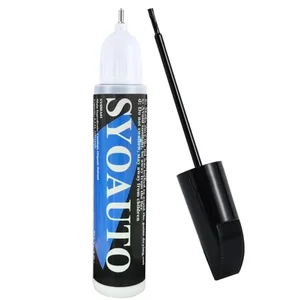 |
SYOAUTO Black Touch-Up Paint Pen (2-in-1) – $9.99 Black is the most common factory color on U.S. roads, and this pen gives you the fine tip and wide brush cap format described in the application steps below in one 0.4 oz unit.
|
How To Find Your Car’s Exact Paint Code
Buying paint by color name alone — “white,” “silver,” “red” — is the most common reason a touch-up repair ends up visibly mismatched. Manufacturers assign every color a specific alphanumeric paint code, and several different factory colors can share the same everyday name. Your car’s code is printed on the vehicle itself, usually on a small metal or paper plate, not in your registration or insurance paperwork.
| Where To Look | Common On |
|---|---|
| Driver’s door jamb sticker (open the door, look at the frame) | Most domestic, Japanese, and Korean brands |
| Trunk lid, spare tire well, or engine bay firewall | Many European brands, including several BMW, Mercedes-Benz, and Volkswagen models |
| Glove box interior or inside a fuse box cover | Some Toyota, Honda, and Nissan models |
| Owner’s manual, in a paint or color-code section | Backup source for most brands if the sticker is worn off |
The code is usually a mix of letters and numbers, such as WA131C or NH-830M, sometimes followed by a color name in parentheses. If the sticker has faded past reading, a dealership parts counter can look up the code from your VIN, and several online VIN-decoder tools do the same thing for a small fee.
Bottle, Pen, Or Spray: Which Type Of Touch-Up Paint To Buy
The three common formats aren’t interchangeable for every job. Picking based on the size and shape of the damage, not just whichever bottle is cheapest, is what actually determines how the repair looks when it’s done.
| Format | Best For | Typical Cost |
|---|---|---|
| Brush-cap bottle | Pinpoint chips and small scratches where you want full control over how much paint goes on | $6 – $18 |
| 2-in-1 pen (fine tip plus brush) | A mix of small chips and longer thin scratches on the same panel | $9 – $20 |
| Aerosol spray can | A cluster of chips across a wider area, or a full bumper corner, where dabbing individually would take too long | $15 – $35 |
Most kits marketed as “complete” also bundle a clear coat pen or spray and sometimes a primer stick, which is worth paying a little extra for rather than buying color coat alone and hoping the clear coat step isn’t necessary — on any vehicle with a factory clear finish, it is.
How To Prep The Damaged Spot Before You Paint
Skipping prep is the single biggest reason a touch-up repair fails to bond or ends up looking like a smear instead of a fix. None of these steps take more than a few minutes.
- Wash the immediate area with soap and water and let it dry completely.
- Wipe the spot with isopropyl alcohol on a clean cloth to strip wax, grease, and road grime the wash didn’t remove — paint will not bond well over either.
- Run a fingernail lightly over the chip to check its depth. If it feels smooth and shallow, it likely stopped at the clear coat. If you can feel bare metal or see a dull gray color, plan to use a rust converter or primer first.
- If the edges of the chip are rough or jagged, lightly wet-sand them with 2000 to 3000 grit sandpaper to smooth the transition — this alone makes a huge difference in how invisible the final repair looks.
- Mask off the surrounding paint with painter’s tape if you’re using a brush or spray rather than a precision pen, so stray paint doesn’t land on undamaged clear coat.
Step-By-Step: How To Apply Touch-Up Paint
Work in a shaded, dry spot, ideally between 50°F and 90°F — most touch-up paints won’t cure properly outside that range.
- Shake or stir the paint thoroughly. Pigment settles fast in small bottles, and skipping this step is a common cause of a chalky or off-color first coat.
- Test a small dot on a hidden area, such as inside the door jamb, and let it dry to confirm the color match before touching the visible damage.
- If the chip goes down to bare metal, apply a thin layer of primer first and let it dry fully — usually 15 to 30 minutes — before adding any color.
- Apply the color coat in thin layers, letting each one dry for about 20 minutes before adding the next. Building up two or three thin coats always looks better than one thick coat, which shrinks as it dries and leaves a sunken, shiny blob.
- Stop adding coats once the color sits level with, or very slightly above, the surrounding paint. It’s easier to level a slightly proud repair later than to build up a sunken one.
- Once the color coat has fully dried — check the product label, but plan on at least a few hours — apply a thin clear coat over the spot to seal it and match the gloss of the rest of the panel.
- Let the full repair cure for at least 24 to 48 hours before washing, waxing, or wet-sanding it level.
How Long Touch-Up Paint Takes To Cure (And When You Can Wash The Car)
Cure time happens in stages, and rushing any of them is what causes fingerprints, water spots, or wash-brush drag marks in a fresh repair.
| Stage | Typical Time |
|---|---|
| Touch-dry (safe to avoid touching) | 20 – 30 minutes |
| Safe to drive in light rain | A few hours |
| Safe to wash by hand, gently | At least 1 week |
| Safe for an automatic car wash with brushes | About 30 days |
| Full hardness and UV resistance | 2 – 4 weeks |
Waxing or polishing the spot before it’s fully cured can smear the still-soft clear coat, so hold off on both until the full cure window has passed, even if the repair feels dry to the touch well before then.
Common Mistakes That Make A Touch-Up Job Look Worse
- Applying one thick coat instead of several thin ones — it shrinks as it dries into a shiny, sunken dot that catches the light differently than the surrounding paint.
- Skipping the degreasing wipe-down — paint applied over invisible wax or road film peels or flakes off within weeks.
- Painting straight over active rust — it seals in moisture and the rust keeps eating the metal underneath the new paint.
- Leaving off the clear coat — the repair stays flat and dull next to the glossy factory finish, and fades faster.
- Buying by color name instead of paint code — “silver” and “white” both cover dozens of factory formulas that don’t match each other.
- Working in direct sun or cold weather — paint that dries too fast in the sun or won’t cure in the cold rarely levels out smoothly.
Frequently Asked Questions
How Much Does Touch-Up Paint For A Car Cost?
A basic single-color pen or brush-cap bottle runs about $6 to $15. A 2-in-1 pen with both a fine tip and a brush costs closer to $9 to $20, and an aerosol touch-up can that covers a whole panel costs $15 to $35. Compare that to a professional mobile touch-up service at $150 to $300 per chip, or a full body-shop repair that can reach $250 to $800 or more per panel once rust is involved, and a DIY kit is the cheapest way to stop the damage from spreading.
Will Touch-Up Paint Match My Car’s Color Exactly?
It will if you buy paint keyed to your specific factory paint code, not just a generic color name like “silver” or “red.” Manufacturers use codes such as WA131C or NH-830M because two cars that both look “white” or “silver” from across a parking lot often use different formulas. Even with the correct code, a small dab can look slightly off until it cures and the surrounding paint’s UV fade is accounted for, so test on a hidden spot first.
Can You Put Touch-Up Paint Over Rust?
Not directly. Painting over active rust just traps moisture under the new paint and the rust keeps spreading underneath. Sand or scrape the rust down to clean metal first, treat the bare metal with a rust converter or self-etching primer, let that cure, and only then apply the color coat. If the rust has already eaten through the metal or created a hole, that spot needs a body shop, not a touch-up pen.
How Long Does A Touch-Up Paint Repair Last?
Done correctly, with primer where needed and a clear coat sealing it, a touch-up repair on a small chip can last for years and hold up about as well as the surrounding factory paint. Skipping the clear coat, applying one thick coat instead of several thin ones, or painting over a poorly prepped surface all shorten that significantly, sometimes to just a few months before the spot dulls, cracks, or lifts.
Does Touch-Up Paint Need A Clear Coat?
Yes, on any modern vehicle with a factory clear coat finish, which covers the vast majority of cars built since the 1990s. The clear coat is what gives the paint its gloss and UV protection. Without a matching clear coat over the repair, the touched-up spot will look flat and dull next to the rest of the panel, and it will fade and chip faster than the paint around it.
Can I Use Nail Polish Or A Paint Marker Instead Of Automotive Touch-Up Paint?
You can as a very short-term seal to keep moisture out before you get real touch-up paint, but it is not a lasting fix. Nail polish and general-purpose paint markers are not formulated to bond to automotive base coat or clear coat, are not UV-stable outdoors, and will not match your factory color code. They tend to yellow, crack, or peel within weeks of exposure to sun and washing.
Conclusion
Touch-up paint for a car is cheap insurance against a small chip turning into an expensive rust repair. The whole outcome comes down to three things: buying paint matched to your actual factory paint code instead of a generic color name, prepping the spot properly before any paint goes on, and building up thin coats with a clear coat on top rather than one thick blob.
Get those three right and a $10 to $20 pen can keep a rock chip invisible for years. Skip any of them, and even the correct color code will look patched rather than repaired.
Products related to this article
Sponsored / affiliate links. As an Amazon Associate I earn from qualifying purchases. I may earn additional commission from eligible campaigns.