Unknown Car Parked in Front of Your House: Helpful Next Steps
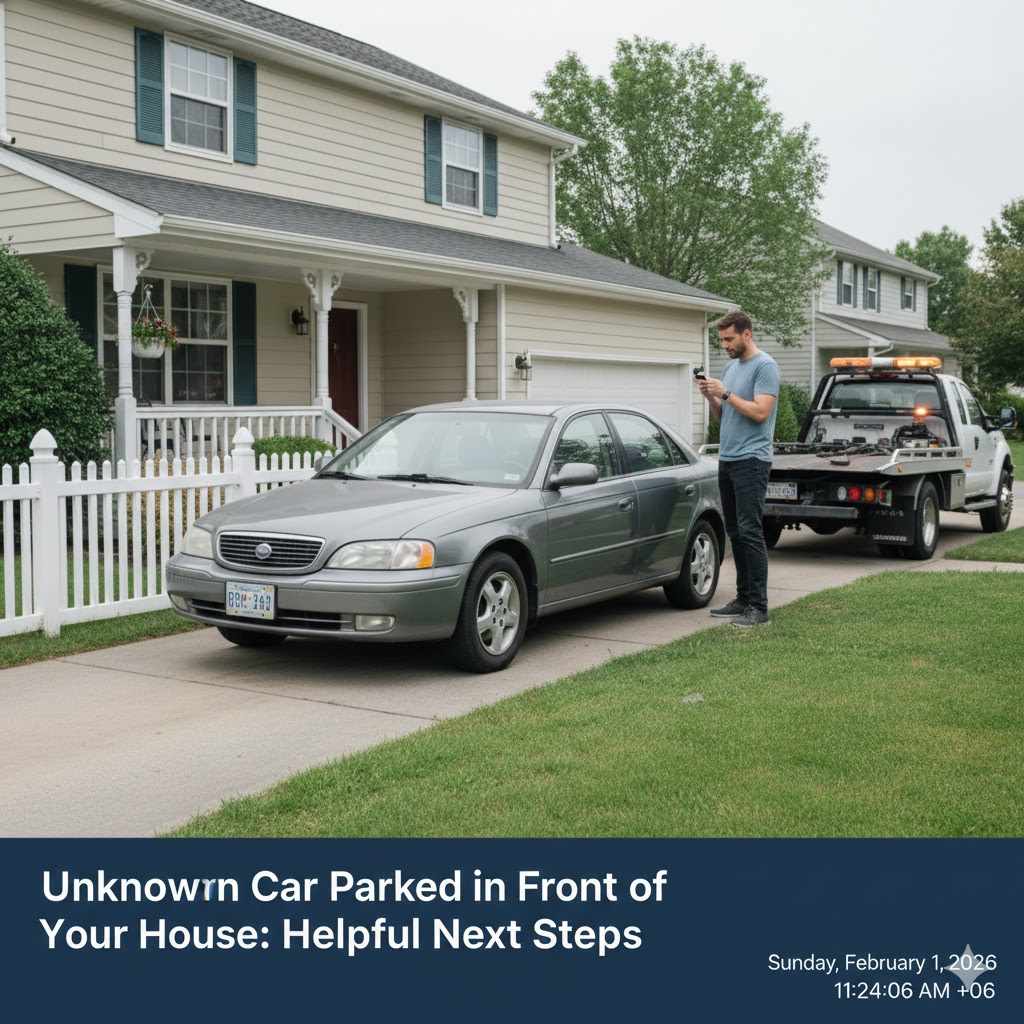
Finding an Unknown Car Parked in Front of My House: What to Do can be tricky. It’s a common problem for anyone with a driveway or street parking. You might be unsure where to start, worried about the rules, or just frustrated. But don’t worry! This guide breaks down the steps you can take to deal with the situation, making it easy to know what to do next. We’ll show you exactly how to handle it so you can get things sorted out without stress.
Checking Local Parking Rules
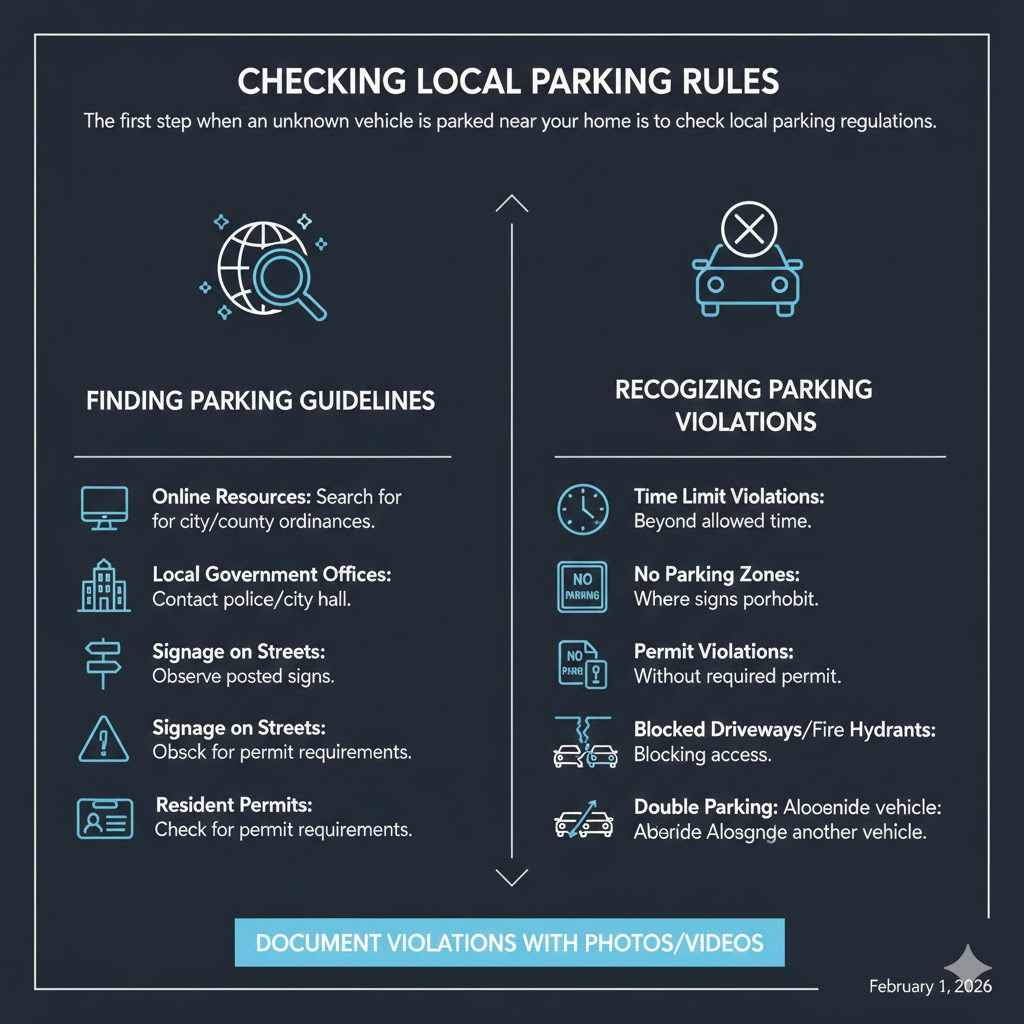
The first step when an unknown vehicle is parked near your home is to check local parking regulations. Rules vary depending on where you live, and what is allowed is often very specific. Some areas may allow parking on streets for a limited time, while others have strict no-parking zones. Understanding the local laws is important before you take any action. This avoids unintended problems. Doing this helps clarify whether a violation has occurred. Remember, even if the car is blocking your driveway, it still needs to be in violation of parking laws before anything can be done.
Finding Parking Guidelines
To start, find your city or county’s website. They usually have a section dedicated to parking regulations. Look for information about street parking, time limits, permit requirements, and restrictions near intersections or fire hydrants. You can often find a detailed breakdown of the rules, including maps of restricted areas and the penalties for breaking the regulations. These rules are put in place for safety, and for efficient usage of the available space, so checking them should be your first step.
- Online Resources: Search online for your city or county’s parking ordinances. Many municipalities provide this information on their official websites.
- Local Government Offices: Contact your local police department or city hall. They can provide specific details about parking rules in your area.
- Signage on Streets: Observe signs posted on the streets near your home, as they will indicate any parking restrictions.
- Resident Permits: Check if your area requires parking permits for residents. If so, make sure the car doesn’t violate those rules.
Once you are equipped with this knowledge, you will be much better informed for the following steps. Some areas also have regulations for vehicles that are left unattended for prolonged periods, which could be something to consider. Knowing this will help you respond appropriately. These rules are put in place to maintain order and fairness.
Recognizing Parking Violations
Identifying a parking violation means the vehicle is parked where it is not allowed. This could be due to time limits, permit requirements, or restricted zones, or even if a vehicle is parked in a way that blocks access. Common violations include exceeding time limits, parking in no-parking zones, or failing to display a valid parking permit if one is needed.
Understanding these common violations can assist you in determining if the car in front of your house is in violation. Knowing the specific laws of your area is important here; in some locations, parking on the sidewalk or too close to a driveway is prohibited.
- Time Limit Violations: Parking beyond the allowed time limit.
- No Parking Zones: Parking where signs clearly indicate “No Parking.”
- Permit Violations: Parking without a required permit.
- Blocked Driveways/Fire Hydrants: Parking in a way that blocks access or endangers public safety.
- Double Parking: Parking alongside another parked vehicle, blocking traffic.
If you confirm that the vehicle is in violation of any parking rules, you are on the right track to deal with the situation. Documenting these violations with photos or videos will be useful if you need to take further steps.
Documenting the Unknown Car
Carefully documenting details about the vehicle can be really useful. This record can prove beneficial if there are issues later on. Start by collecting information about the car. Take pictures and record the car’s presence to help in later actions. Gathering facts now, is crucial. If the situation escalates, having proof can streamline things.
Gathering Vehicle Details
Start by collecting basic information about the car. Carefully note the make, model, color, and any unique features. The license plate is the most important information, so be extra careful when recording it. You may also want to note any damage or unusual markings. All of this information could become relevant if you need to report the vehicle to the authorities or contact the owner. Make sure you are in a safe location while doing this, and don’t approach the vehicle.
- License Plate: Write down the license plate number clearly and accurately.
- Vehicle Make and Model: Note the brand and the specific model of the vehicle.
- Color and Features: Describe the color and any distinctive features.
- Photographs: Take pictures of the vehicle from different angles, including the license plate.
- Record the Date and Time: Write down when you first noticed the car.
This is all essential data for any follow-up actions. Taking good photos is very useful if you need to show where the car is parked or if there are any visual problems. Ensure your records are neat and accurate.
Taking Photos and Videos
Visual records can be useful. The best method is taking clear photographs or videos of the vehicle. These should show the car’s location relative to your property and any potential obstructions. Take photos of the license plate from different angles. This makes the information easy to review later on. Also, try to capture the surroundings to show the location of the car.
Make sure the date and time settings are correct on your camera so you can tell when the photos were taken. This helps when you review the documentation. Make sure to keep these records safe.
- Clear License Plate Shots: Take several photos to ensure the plate is readable.
- Location Shots: Include images showing the car’s position in relation to your home.
- Obstruction Documentation: If the car blocks something, such as a driveway, capture it in pictures or video.
- Multiple Angles: Photograph the vehicle from various angles.
- Keep the Originals: Always keep original, unaltered files.
Good visual records can be important. They will show exactly how the vehicle is parked. These records can also be helpful for authorities if you report the issue. They can offer an excellent record of the situation if anything changes.
Finding the Car’s Owner
Contacting the vehicle’s owner is a common solution. If the car’s owner is not known to you, it may be possible to find their details, or, at least, to locate them. This process can be straightforward, or it can be time-consuming. You can attempt to communicate with the driver directly. You can try leaving a note on the windshield. There are resources to look up vehicle ownership, if necessary.
Leaving a Note
If you choose to leave a note, this can be a simple way to contact the owner. Make sure the note is polite and clear. State your issue with the car, for example, a blocked driveway. Be sure to include your contact information so they can reach you. The note should be waterproof and easy to see on the windshield. Try to make the note look neat and professional. You can even include your phone number in the note. This can be the simplest way to solve the problem, and may work if the owner is nearby.
- Polite Language: Start with a friendly greeting.
- Clear Explanation: State the issue.
- Contact Information: Include your phone number or email address.
- Vehicle Details: Mention the make, model, and license plate.
- Date and Time: Note the date and time you left the message.
The note should solve the problem immediately, by allowing the owner to move their car. Be prepared to wait a while before the owner replies. This is a very simple step. If it does not work, there are other choices.
Vehicle Lookup Options
Vehicle lookup choices are available if you cannot find the owner immediately. This method allows you to discover the registered owner. You can then contact them. The DMV (Department of Motor Vehicles) is the main source of this information. There are also third-party services that may offer this option, but they can be costly. When accessing information like this, be sure to take into account privacy laws and use the information properly. Ensure any information obtained is used ethically. Never use the information in a way that could cause harm.
- DMV Inquiry: Contact your local DMV for information.
- Third-Party Services: Research and evaluate services.
- Legal Compliance: Ensure all actions are in line with laws.
- Privacy Rules: Respect and follow privacy rules.
- Verify Information: Confirm all details are correct.
When using these methods, keep in mind that you may not always be able to get this information. The laws in your area will also dictate what is allowed. Always abide by privacy rules. Be cautious when sharing details, and make sure that any information you share is accurate.
Informing Authorities and Next Steps
When the vehicle’s presence causes a problem and other methods have failed, reporting to the proper authorities becomes the next step. Police, traffic control, or parking authorities may assist. Knowing how to report it is very important. This involves collecting details and knowing the local process. Following the proper steps can lead to a quick resolution.
Contacting Local Law Enforcement
Contacting law enforcement is a crucial step when the car is causing problems. You can contact your local police department to report the issue. Make sure to clearly explain the situation. Share the details you have collected, such as the vehicle’s make, model, license plate, and location. Also, explain any problems the car is causing, such as blocking your driveway. Provide the photos and any other related documents. Law enforcement will then assess the situation. They will decide on any required action. Be patient, as it may take some time. They will decide what is best.
- Emergency vs. Non-Emergency: Know when to call 911 vs. the non-emergency line.
- Provide Details: Clearly describe the vehicle and its location.
- Describe the Obstruction: Explain how the car is causing a problem.
- Follow Instructions: Adhere to any instructions given by the police.
- Keep Records: Note the date and time of your report and any reference numbers.
The police will assess whether the vehicle violates parking laws. If it does, they may issue a warning or a citation. They could also have it towed. Be sure to follow their directions. This will help them resolve the problem effectively. The police may also be able to search for the car owner.
Towing and Impounding Regulations
Towing the vehicle may be an option, but this usually comes as a last resort. This decision is subject to local rules. Parking and traffic authorities typically handle towing. They may be authorized to do so if the vehicle is violating local regulations. This can be the case if the car blocks a driveway or causes a safety problem. The police will usually need to authorize a tow. It is your responsibility to pay any related costs, so you should understand any financial implications before proceeding. The car’s owner will also need to deal with any costs for its return.
- Authority Authorization: Only authorized entities can order a tow.
- Violation Confirmation: A violation of parking rules is usually needed.
- Towing Costs: Be aware of costs, as they are likely your responsibility.
- Impound Lot: The vehicle will be taken to a vehicle storage area.
- Owner’s Responsibilities: The owner must pay to get the car back.
When you take these steps, be sure to keep the required paperwork and receipts. These records will be helpful, especially if you have to sort out any issues later on.
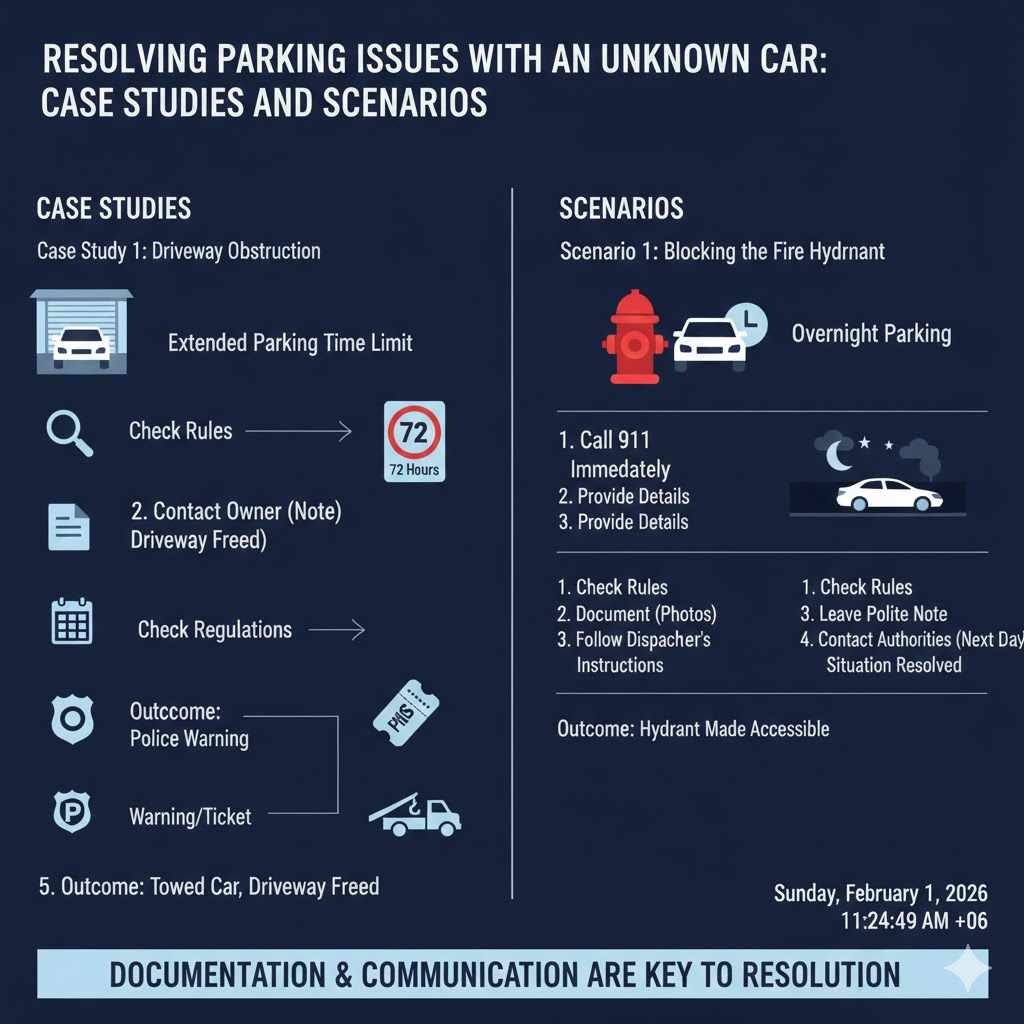
Resolving Parking Issues with an Unknown Car: Case Studies and Scenarios
Understanding real-life examples can help you deal with the situation. Examining different scenarios helps. Learn from real case studies, and see how others have solved similar problems. Discover how to apply the steps in various situations.
Case Study 1: Driveway Obstruction
In this example, a car parks in front of a homeowner’s driveway. They are blocked from accessing the driveway. The homeowner follows all the usual steps. They start by checking local rules, then document the vehicle with photos. Then they try to contact the owner, by leaving a note on the windshield with contact details.
The homeowner also reports the car to the police, explaining the blockage. The police issue a warning to the car’s owner. Because the car stays there, blocking access, they have it towed. The homeowner gets their driveway back, and the vehicle owner faces penalties. This real-life case highlights the importance of keeping detailed records. It also shows the actions that may have to be taken if the problem continues. This can be a practical guide for people in a similar situation.
Case Study 2: Extended Parking Time Limit
This situation involves a car that is parked for a longer period than allowed. A local resident notices a car parked on their street for a week. They are concerned that it may be abandoned, or that the owner is violating local parking rules. The resident checks local regulations and finds that vehicles are only allowed to park for a maximum of 72 hours. The resident documents the car’s presence. They take photos of the car and license plate.
The resident reports the car to the parking authority. The parking authority places a warning on the vehicle. The owner does not respond, and the car stays there for more than the 72 hours. The parking authority issues a parking ticket. After more time, the car is towed, and the owner has to pay the fine. This case underlines the significance of time limits and compliance with rules. It shows the consequences of ignoring parking rules.
Scenario 1: Blocking the Fire Hydrant
- You discover an unknown car parked in front of your house, and it is blocking a fire hydrant.
- Your first step is to call 911 immediately.
- Provide the details of the vehicle.
- Stay on the line, and follow all instructions from the emergency dispatcher.
This is a safety issue. It requires an immediate response.
Scenario 2: Overnight Parking
- You notice an unknown car parked in front of your house overnight.
- Start by checking any parking rules, such as time limits.
- Take photos of the vehicle and note the license plate.
- Check to see if a note has been left.
- Leave a polite note on the windshield.
- If the car is still there the next day, contact the local authorities.
This example is about taking time to resolve the situation, while ensuring it is in line with the rules.
| Scenario | Problem | Action | Outcome |
|---|---|---|---|
| Driveway Blockage | Car blocks driveway | Note, Police Report, Tow | Driveway freed |
| Time Limit Exceeded | Car parked too long | Documentation, Warning, Tow | Parking violation penalties |
| Fire Hydrant Blocked | Emergency obstruction | Emergency report | Hydrant made accessible |
Frequently Asked Questions
Question: What should I do if the car is blocking my driveway?
Answer: Start by checking if you have any local ordinances related to driveway obstructions. If it is, attempt to find the owner. If not, contact the authorities.
Question: Can I have the car towed immediately?
Answer: It depends on the local rules. If the car violates parking rules, such as blocking a driveway or fire hydrant, it may be towed, but only with the proper permission.
Question: What information should I give to the police when reporting the issue?
Answer: Provide the vehicle’s make, model, color, license plate, and the precise location. Also explain what problem the car is causing.
Question: How do I find the owner of the car?
Answer: You can try leaving a note. The police may be able to help. You can also explore options to use a vehicle lookup service, if permitted in your area.
Question: What if the car is parked on the street for several days?
Answer: Check local ordinances for rules on parking time limits. If the time limit has been exceeded, report the car to the authorities.
Final Thoughts
Finding an Unknown Car Parked in Front of Your House: What to Do doesn’t have to be a source of stress. Start by exploring the local rules. Documenting the vehicle and then looking for the owner are vital first steps. Should those steps not be enough, then contacting local authorities, or the police, can ensure the situation is resolved. Each step plays a specific role. From knowing the rules to the authorities, this guide is designed to make sure the process is clear and straightforward.
By keeping accurate records, using the right resources, and being polite, you can effectively manage the issue. Take action when you need to, and use these steps. This is about being informed, and knowing what to do in order to get the problem solved. With this method, you can restore peace and order in your neighborhood.