Upholstery Paint for Cars: Best Fabric, Carpet and Vinyl Dye Sprays
Upholstery paint (also sold as vinyl and fabric spray dye) restores faded, cracked, or sun-bleached car seats, carpet, door panels, and dashboards without the cost of reupholstering. A single can runs $15–$21 and covers roughly one bucket seat or a similar-sized panel, versus several hundred dollars for a shop to replace a seat cover or refinish a whole interior.
This guide compares three specialty spray dyes built specifically for automotive fabric, carpet, vinyl, and hard plastic — not the harder trim-and-dashboard-only vinyl paints covered in our vinyl paint for car interior roundup. If your seats, carpet, or headliner fabric has faded, stained, or worn thin, the products below are the ones formulated to bond with soft, flexible material without cracking.
How to Apply Upholstery Paint (Prep, Application & Cure Time)
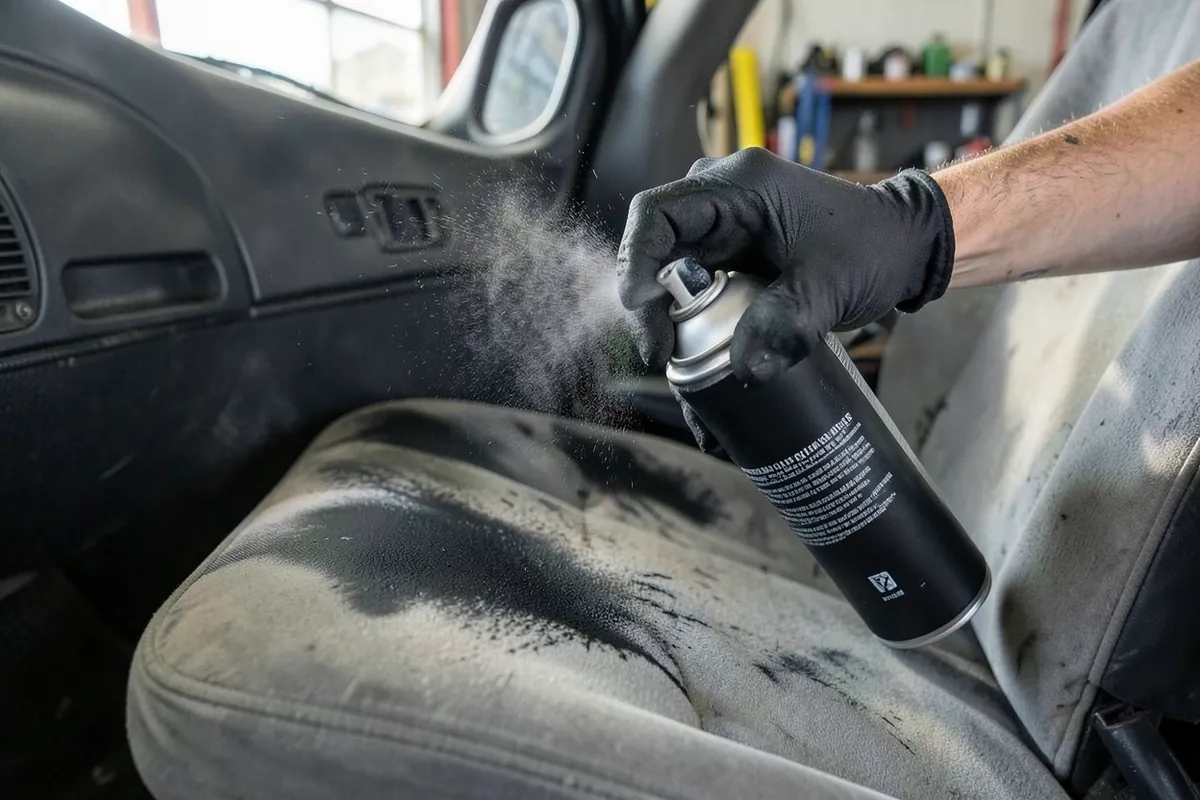
Most upholstery-paint failures — peeling, flaking, or a splotchy finish — come down to skipped prep, not a bad product. Here is the process that actually works:
- Deep clean first. Vacuum and shampoo the surface, then let it dry completely. Any trapped oil, silicone conditioner, or dirt under the paint will cause it to lift.
- Wipe down with isopropyl alcohol. A final pass with 90%+ isopropyl alcohol on a microfiber cloth strips leftover conditioners and factory finish, leaving the surface dull and matte — that dull, slightly rough texture is what the paint actually grips onto.
- Scuff hard vinyl or plastic. On smooth vinyl or plastic (not needed on porous fabric), lightly scuff with a gray scuffing pad so the surface isn’t glossy, then wipe away any residue with a damp cloth.
- Mask off anything you are not painting. Tape the edges of surrounding trim, seams, and any stitching you want to keep its original color.
- Spray thin, even coats. Hold the can upright, 8–10 inches from the surface, and use steady, sweeping passes. One heavy coat causes drips and an uneven, blotchy finish.
- Wait between coats. Let each coat sit 5–10 minutes before the next one. Two to four light coats typically give full, even coverage.
- Give it real cure time. The surface feels dry to the touch within about an hour, but the coating needs 24–48 hours to fully cure before you sit on it, buckle a seatbelt across it, or let kids and pets back in the vehicle.
Work in a well-ventilated space or outdoors — these are solvent-based aerosols, and the fumes build up quickly in a closed garage or a car with the doors shut.
Upholstery Paint Comparison
| Product | Size | Best For | Color Options |
|---|---|---|---|
| Dupli-Color HVP106 | 11 oz | Dashboards, door panels, seats, small vinyl/fabric touch-ups | Flat Black only |
| HI-TECH Big Can Spray Dye | 15 oz | Larger jobs — full seat, full carpet section, or headliner | Black (largest coverage per can) |
| S.M. Arnold Refinisher | 11 oz | Leather seats, carpet, vinyl, and hard plastic in one product | Black only |
Dupli-Color HVP106 Vinyl and Fabric Coating Spray Paint
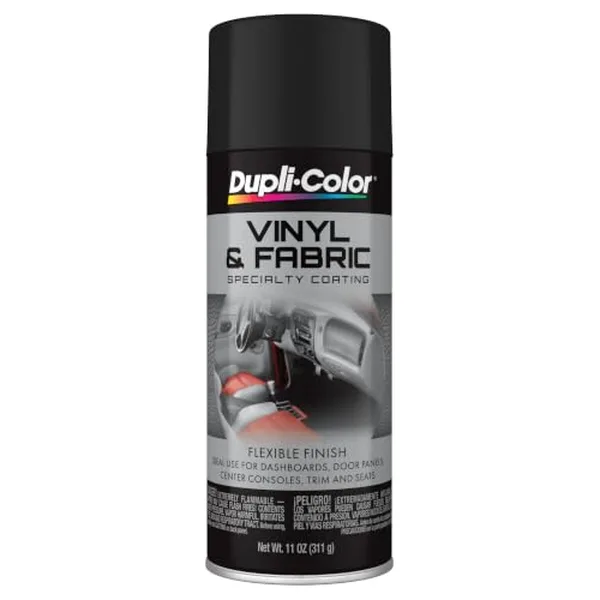
The Dupli-Color HVP106 is the smallest and most widely available option here, which makes it a solid pick for a single seat, a dashboard, or a set of door panels rather than a whole interior. It bonds to both vinyl and fabric, so you can carry it across dissimilar surfaces in the same job without switching products.
Pros
- Flexible finish that resists cracking on surfaces that bend, like seat bolsters and door panel arm rests
- Bonds to both vinyl and fabric with one product
- Small 11 oz can is easy to control on detail work
Cons
- Only sold in flat black
- 11 oz covers less area than the two larger cans below — you may need two cans for a full bench seat or large carpet section
- Not rated for continuous outdoor UV exposure (convertible tops, outdoor cushions)
Because it is formulated for both vinyl and fabric, this is a practical choice when a single panel has both material types — a dashboard with a vinyl top and fabric-wrapped speaker grilles, for example. Follow the prep steps above; skipping the isopropyl alcohol wipe-down is the most common reason this product peels prematurely.
To buy this product, click here.
HI-TECH Big Can Vinyl, Plastic, Fabric and Carpet Spray Dye, Black, 15oz
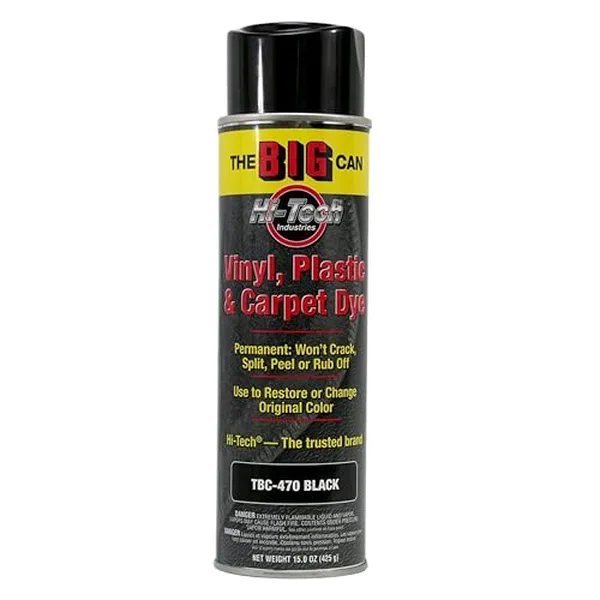
At 15 oz, the HI-TECH Big Can holds the most product of the three, which matters if you are covering a full carpet section, a whole bench seat, or a headliner rather than a single panel. It is also the most surface-versatile of the group, formulated for carpet, vinyl, plastic, and fabric alike.
Pros
- Largest can of the three, best price-per-ounce for bigger jobs
- Works across carpet, vinyl, plastic, and fabric
- Marketed as a permanent color change, not a temporary coating
Cons
- Black only
- Strong solvent odor — requires real ventilation, not just a cracked window
- The larger can is harder to control for small detail spots than the smaller Dupli-Color can
Because it covers more square footage per can, this is the more economical pick if you are dyeing an entire carpet or a full row of seating rather than touching up one worn spot. Give it the full 24–48 hour cure window before regular use — on a job this size, that patience is what keeps the finish from rubbing off onto clothing in the first week.
To buy this product, click here.
S.M. Arnold Leather, Carpet, Vinyl and Hard Plastic Refinisher - Black
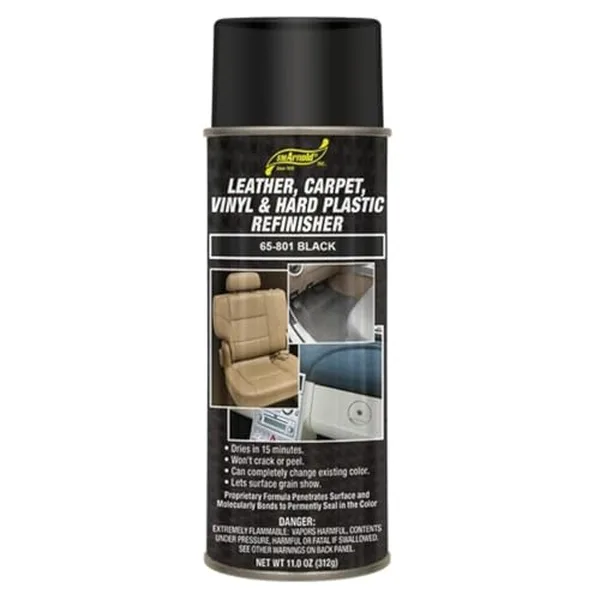
The S.M. Arnold Refinisher is the only product of the three explicitly formulated for leather, which makes it the pick if your interior mixes leather seats with a vinyl dash and carpet floor. Per the manufacturer, it dries in about 15 minutes and is designed to penetrate the surface and bond into the material rather than sit on top as a coating.
Pros
- Rated for leather in addition to carpet, vinyl, and hard plastic
- Fast surface dry time (about 15 minutes per manufacturer specs)
- One product covers mismatched material types in the same interior
Cons
- Black only
- Smallest can (11 oz) of the two black-only options for the price
- Leather grain and texture need to be reasonably intact — this is a color refinisher, not a repair compound for cracked or torn leather
If a leather seat is cracked or torn rather than just faded, refinish paint alone will not fix the structural damage — you would need a leather repair compound first, then a color coat on top. For color fading alone on otherwise intact leather, this is a straightforward, single-can fix.
To buy this product, click here.
Frequently Asked Questions
What Is Upholstery Paint For Cars?
Upholstery paint for cars is a specialized spray dye designed to refresh and restore vehicle interior surfaces, including vinyl, fabric, carpet, and leather. Unlike ordinary spray paint, it is formulated to flex with the material instead of cracking, so it holds up on seats, door panels, and dashboards that get sat on, leaned against, and stretched daily.
How Do You Use Upholstery Paint Effectively?
Clean the surface thoroughly, wipe it down with isopropyl alcohol to remove residual oils and conditioners, mask off anything you are not painting, then apply two to four thin, even coats 5–10 minutes apart. See the full step-by-step process above for the details that most determine whether the finish holds up.
Is Upholstery Paint Permanent?
It is designed to be a long-term, durable finish rather than a temporary coating, and a properly prepped surface can hold up for years of normal use. That durability depends heavily on prep, though — skipping the isopropyl alcohol wipe-down or scuffing step is the most common reason these products peel, crack, or rub off well before their potential lifespan.
Can Upholstery Paint Restore Faded Interiors?
Yes. Upholstery paint is specifically effective on sun-faded or worn color, restoring an even, uniform finish on surfaces that have lightened or discolored over time. It is a fraction of the cost of reupholstering, though it works best on color loss and light surface wear — it will not repair rips, tears, or structural damage underneath.
Does Upholstery Paint Work On Leather Seats?
Yes, but leather needs a leather-rated refinisher (like the S.M. Arnold product above), not a plain vinyl-and-fabric spray. It works well for color restoration on leather that is faded but structurally sound. Cracked, torn, or peeling leather needs a repair compound applied first, with the color refinisher going on afterward as a topcoat.
What Surfaces Can Be Painted With These Products?
Between the three products above, you can cover vinyl, fabric, carpet, hard plastic, and (with the S.M. Arnold refinisher specifically) leather. Always check the individual product’s label for surface compatibility before buying, since not every spray dye covers every material. These paints work well alongside a good car interior protectant to help the new finish last longer.
How Much Does Upholstery Paint Cost Compared To Reupholstering?
A single can runs roughly $15–$21 and typically covers one seat or a comparable panel. Professional reupholstering or seat replacement generally runs from a few hundred dollars per seat up to well over $1,000 for a full interior, depending on material and labor rates in your area. Upholstery paint will not match a full material replacement for texture or wear repair, but for color restoration alone, it is a substantially cheaper first step.
Conclusion
All three products here restore faded car interiors without the cost of reupholstering, and each fits a slightly different job. The Dupli-Color HVP106 is the easiest to control for a single seat or panel spanning both vinyl and fabric. The HI-TECH Big Can holds the most product, making it the better value for a full carpet section or row of seating. The S.M. Arnold Refinisher is the only one rated for leather, so it is the pick for a mixed-material interior.
Whichever you choose, the prep steps above matter more than the product itself — a thorough clean, an isopropyl alcohol wipe-down, and thin, patient coats are what separate a finish that lasts for years from one that peels within weeks.
Products related to this article
Sponsored / affiliate links. As an Amazon Associate I earn from qualifying purchases. I may earn additional commission from eligible campaigns.