Spray Paint for Car Carpet: Best Dyes That Resist Cracking
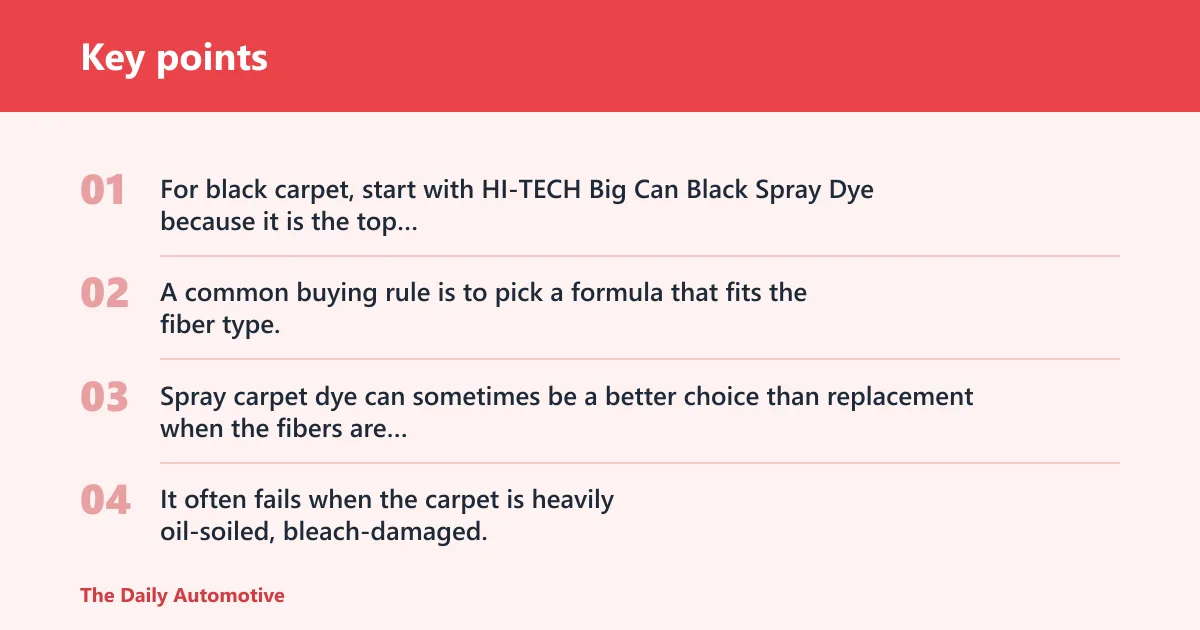
For black carpet, start with HI-TECH Big Can Black Spray Dye because it is the top overall pick, comes in a 15oz can, and the listing says it will not crack or peel. A common buying rule is to pick a formula that fits the fiber type, the depth of color change, and how hard the area gets worn, then skip anything that dries hard or glossy in bendy spots.
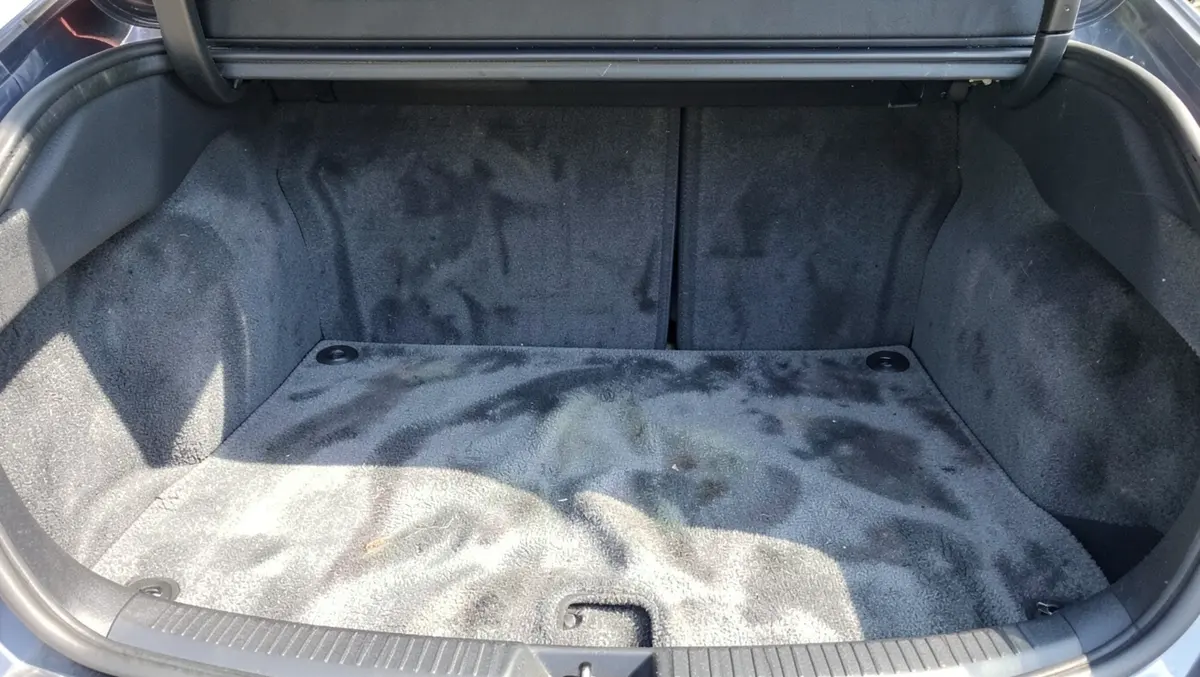
Spray carpet dye can sometimes be a better choice than replacement when the fibers are still intact and the issue is fading, staining, or a color mismatch. It often fails when the carpet is heavily oil-soiled, bleach-damaged, or crushed so hard that the pile no longer takes an even coat.
Top spray dye picks for car carpet

Quick picks
| Best for | Product | Key detail from the listing | One honest drawback |
|---|---|---|---|
| Deep black full refresh | HI-TECH Big Can Black Spray Dye | 15oz can, 33% more dye, adjustable fan tip, deep black finish, not cracking or peeling | Black-only use limits color matching |
| Budget mixed-material repair | Hi-Tech Gray Vinyl & Carpet Dye | Gray dye for vinyl, carpet, and plastic; low odor; dries to the touch in under two minutes | Limited coverage and limited UV resistance |
| Light beige color-match jobs | S.M. Arnold refinishing spray | Light beige variant with multi-surface use for color-specific refinishing | Best when the target color is already close |
| Faded black carpet reset | Detail King Automotive Carpet Dye | Black dye positioned for faded carpet and professional-grade restoration | Black reset is not a true color match for every interior |
HI-TECH big can black Spray dye
HI-TECH Big Can Black Spray Dye is the top overall pick for a black-carpet refresh because the listing combines a 15oz can, 33% more dye, an adjustable fan tip, and a deep black finish. It is also described as not cracking or peeling, which matters most on carpet that bends at seams, footwells, and entry points.
15oz can with 33% more dye
The larger can matters when you need more than a spot repair. A deeper color reset on floor carpet usually takes multiple light passes, and more dye per can reduces the chance of running out mid-panel while the finish still looks uneven.
Adjustable fan tip for wider passes
An adjustable fan tip helps you control overspray on broad carpet sections and work more evenly along a seam or under-seat area. Narrow fan settings help on edges and corners. Wider settings suit open floor sections where streaks show fast.
Why this listing fits deep-black refresh jobs
This product fits jobs where the goal is to make faded black carpet read as black again, not to shift a tan or gray interior into a different tone. If the carpet is heavily sun-bleached or stained through the pile, the limiting factor is usually substrate condition, not color strength.
Hi-Tech gray vinyl & carpet Dye
Hi-Tech Gray Vinyl & Carpet Dye is the budget pick for mixed surfaces because it is listed for vinyl, carpet, and plastic, and the gray finish makes it useful on interiors where one can covers more than one material. The tradeoff is clear: it has limited coverage, limited UV resistance, and it can fade in cabins that see strong sun.
Gray color for budget repairs
Gray works best when you are not chasing an exact factory shade and need a practical repair for scuffed trim, carpet edges, or trunk trim that already sits near gray. It is a better budget choice for mixed surfaces than for a full, color-critical carpet recolor.
Vinyl, carpet, and plastic compatibility
That compatibility makes it more flexible for jobs that move across material changes, such as a mat edge that meets plastic trim. It does not remove the need to verify the exact substrate, because carpet fiber and smooth plastic accept dye differently.
Where limited UV resistance matters most
Limited UV resistance matters on cabins with bright sun through the windshield, side glass, or hatch glass, especially on upper kick panels and any vertical surface that catches light. In those areas, fade shows sooner than on low, shaded floor sections.
S.M. Arnold refinishing spray
S.M. Arnold refinishing spray is the light beige option for color-specific work when the goal is to bring a pale interior part back toward its original tone. It is listed for multi-surface use, which makes it more practical for refinishing nearby interior pieces that need the same color family.
Light beige color match jobs
Light beige is a narrow-use choice. It fits interiors where the carpet is already close to beige and the problem is fading, staining, or a mismatched repaired spot. It is not the right answer for a dark-to-light color change on worn carpet with uneven pile.
Multi-surface use on interior parts
Multi-surface use helps when the repair crosses carpet, vinyl, and plastic in one area. That does not mean one spray behaves the same on all three substrates. Carpet needs fiber penetration; plastic needs adhesion to a hard surface.
Best for color-specific refinishing
This is the better pick when you want the repaired area to look like the rest of a beige interior rather than repaint the cabin in a different shade. For a full black-out or a major color shift, a dedicated carpet dye is the safer route.
Detail King Automotive carpet Dye
Detail King Automotive Carpet Dye is the black option positioned for faded carpet and professional-grade restoration. It fits the use case where the carpet is still structurally sound but has lost color across the high-traffic zones that show first at the driver’s heel, door sill, and rear footwells.
Black dye for faded carpet
Black dye works best when you want to pull faded dark carpet back into a uniform shade. It is not a cure for crushed pile, oil saturation, or bleach damage that has already changed the fiber chemistry.
Professional-grade restoration positioning
That positioning matters because the buyer is usually chasing a more even, less patchy result than a cheap general-purpose spray can delivers. The practical question is whether the fibers can still take color evenly without turning stiff.
Where a darker reset makes sense
A darker reset makes sense when the carpet is too worn to match perfectly and a clean, darker finish is the better visual outcome. It is most useful on black or charcoal interiors where the repaired area can blend without drawing attention.
What spray dye resists cracking?
The sprays that resist cracking are the ones that stay flexible after curing and are made to sink into carpet fibers rather than sit as a hard shell on top. Nylon and polyester do not behave the same, and high-flex areas like pedal boxes, seams, and kick panels punish rigid coatings fast.
Nylon and polyester behave differently
Nylon carpet usually accepts restoration dye well when it is clean and not oil-soaked. Polyester can be more stubborn in some interiors because surface contamination and pile condition make even coverage harder. In both cases, the finish must stay flexible after drying.
Short-pile versus high-loop carpet
Short-pile carpet often takes dye more evenly because the fibers stand tighter and the color change tends to read cleaner. High-loop carpet can blotch if the spray lands too wet or if the pile has different wear patterns across the same panel.
Why flexible aerosol dyes fail on high-flex zones
Cracking usually comes from a hard film, heavy coats, or poor prep, not from the carpet itself. Shoe traffic, heat, and repeated flexing at seams or pedals will split a brittle finish, then the surface starts to powder or peel at the edges.
Carpet dye decision table
Use this table to match the carpet condition, pile type, and color-change depth to the right dye format. It is also the fastest way to spot when the better fix is replacement, not another coat.
| Carpet condition | Pile type | Color-change severity | Right dye format | Watch for this failure mode |
|---|---|---|---|---|
| Light fade with intact fibers | Short-pile nylon | Small color correction | Flexible automotive carpet dye aerosol | Blotching from heavy passes |
| Even fade across a full floor section | Short-pile polyester | Moderate reset to darker shade | Black carpet dye with flexible finish | Patchy coverage if the carpet is not pre-cleaned |
| Mixed carpet and trim repair | Low-loop or trim-adjacent carpet | Color touch-up on nearby surfaces | Vinyl/carpet/plastic compatible dye | UV fade on sun-exposed surfaces |
| Beige interior color match | Medium-pile carpet | Small to moderate repair | Color-specific refinishing spray | Mismatched tone if the original color is heavily aged |
| Heavy oil contamination or bleach spots | Any pile | Large visible damage | Replacement is usually the better call | Cracking, poor adhesion, or a stain halo |
Spray paint checklist
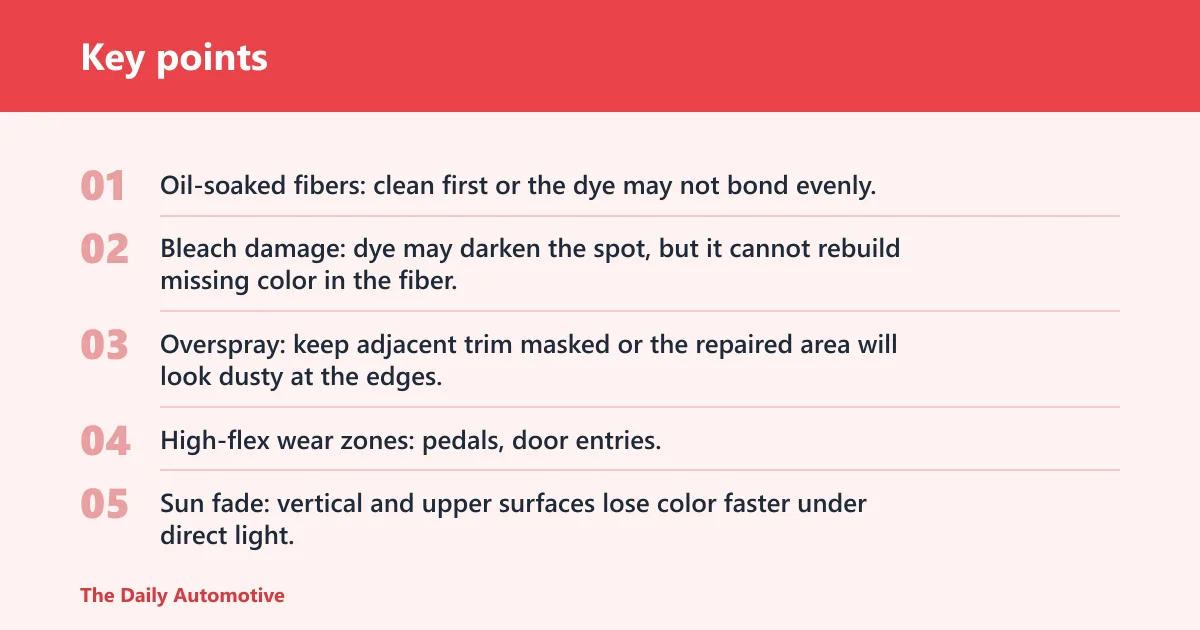
- Oil-soaked fibers: clean first or the dye may not bond evenly.
- Bleach damage: dye may darken the spot, but it cannot rebuild missing color in the fiber.
- Overspray: keep adjacent trim masked or the repaired area will look dusty at the edges.
- High-flex wear zones: pedals, door entries, and seam edges crack first if the finish hardens.
- Sun fade: vertical and upper surfaces lose color faster under direct light.
Say your driver-side footwell has a black carpet section with visible heel wear and the rest of the cabin is still close to factory black. A flexible black aerosol is the right direction. If the same panel is soaked with old oil or greasy cleaner residue, prep matters more than the brand on the can.
Suppose the trunk carpet is a short-pile gray and the goal is to hide a faded patch near the latch opening. A gray vinyl/carpet/plastic dye can work there, but the coat needs to be light and even. If the trunk sees full sun through the rear glass, limited UV resistance becomes a real drawback.
How do you prep car carpet before spraying?
Prep starts with removing dirt, grease, and loose debris, then using a dye prep solution before color so the fibers are ready to take the finish. Clean carpet bonds better, masks cleaner, and is far less likely to blotch. Ventilation matters, and the vehicle should sit long enough for the finish to cure before heavy foot traffic returns.
Clean oil and road grime first
Oil contamination is a common reason dye fails. If the carpet feels slick, dark, or stained from a drip, use a cleaner that removes residue before you spray. A prep solution helps adhesion, but it cannot rescue a surface that still has heavy contamination.
Use dye prep solution before color
Pre-cleaning is only the first step. A dye prep solution helps open the surface for better adhesion so the color lays more evenly instead of beading on top of dirty fibers. That is especially useful on old carpet that has had years of dressing, dust, and road film.
Mask seams, pedals, and adjacent trim
Masking keeps overspray off kick panels, threshold trim, seat tracks, and pedals. Leave a clean edge around seams and fabric transitions so the dye does not feather into a line that looks darker at one side and dusty at the other.
Ventilation and cure-time basics
Work in a well-ventilated area and follow the vehicle and product manual for cure time. The listing may say a product dries to the touch in under two minutes and fully adheres within 10, but that does not mean the carpet is ready for heavy use that fast. Give it time before shoes, mats, or cargo go back in.
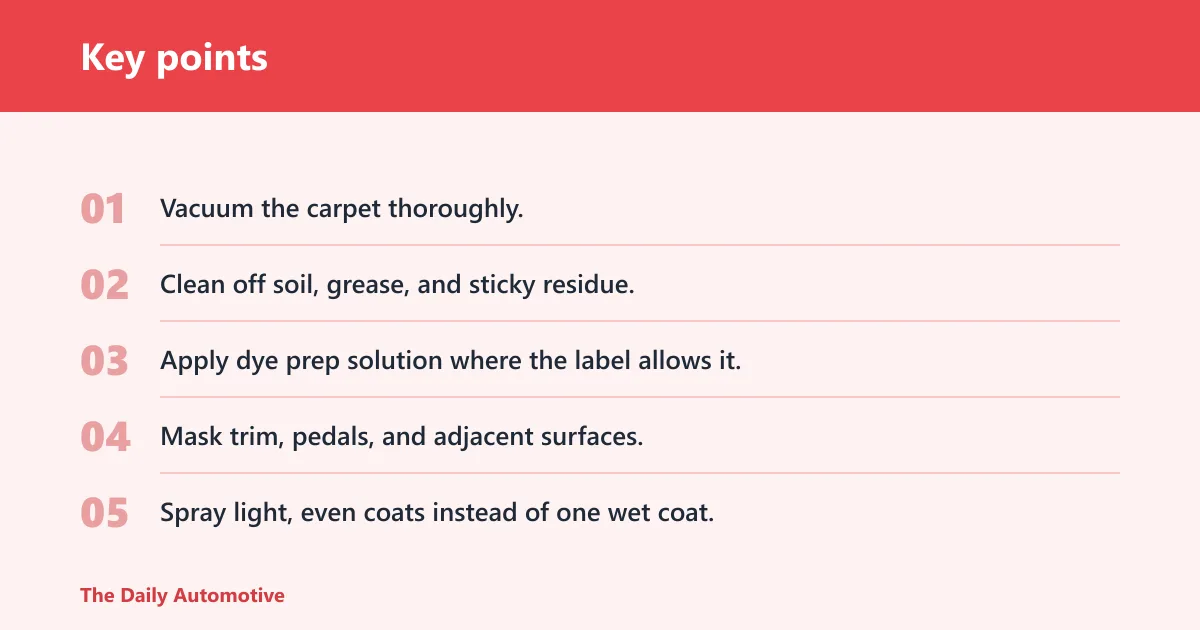
- Vacuum the carpet thoroughly.
- Clean off soil, grease, and sticky residue.
- Apply dye prep solution where the label allows it.
- Mask trim, pedals, and adjacent surfaces.
- Spray light, even coats instead of one wet coat.
- Let each pass flash off before the next coat.
- Allow full cure before reinstalling mats or cargo.
Frequently asked questions
What spray paint works best for car carpet that won’t crack?
Choose a flexible automotive carpet dye aerosol made for nylon or similar automotive fibers, and look for a listing that says the finish stays flexible. The best fit is usually a spray that penetrates fibers rather than forming a hard skin, because hard films crack first in footwells and at seams.
Can you dye car carpet with spray paint instead of replacing it?
Yes, if the carpet is faded, stained, or mismatched but the fibers are still intact. Spray dye is a repair tool, not a rebuild. If the pile is missing, oil-soaked, bleach-damaged, or heavily crushed, replacement is often the cleaner fix.
How many cans of carpet dye do I need for a full interior?
It depends on color depth, carpet type, and how much of the cabin you are covering. A spot repair can use far less than a full floor set. Because coverage per can can vary and some budget options have limited coverage, plan for about 2–3 light coats and buy extra for larger areas.
What is the difference between vinyl dye and carpet dye?
Vinyl dye is aimed at hard, smooth surfaces such as plastic and vinyl trim. Carpet dye is built to soak into fibers and survive flexing. Some products are listed for both, but carpet and plastic do not absorb finish the same way, so the right surface still matters.
How long does spray dye take to dry on car carpet?
Some formulas are said to dry to the touch in under two minutes and fully adhere within 10. That is not the same as full service readiness. Let the carpet cure before you put mats, shoes, or cargo back on it, especially in high-flex areas.
Does automotive carpet dye fade in direct sunlight?
It can, especially on upper or vertical surfaces that get steady sun through glass. UV exposure is a bigger issue for some formulas, including budget gray dye that is described as having limited UV resistance. Black and beige finishes can fade too if the vehicle sits in harsh light.
Can spray dye fix bleach spots in car carpet?
It can reduce the visual contrast, but bleach damage is a problem of lost color, not just surface staining. Dye may help if the fibers are otherwise sound and the spot is small. If the bleach mark is large or the pile is weakened, replacement is usually the better answer.
Products related to this article
Sponsored / affiliate links. As an Amazon Associate I earn from qualifying purchases. I may earn additional commission from eligible campaigns.