What Are the Handles in Cars For? Types, Uses & Safety
Car handles serve three jobs: door handles latch and release the doors, grab handles (assist handles) support entry, exit, and stability, and trunk releases pop the cargo hatch. None brace you in a crash, that job belongs to the seatbelt and airbags, and NHTSA has recalled vehicles over grab handle brackets interfering with side-curtain airbags. This guide covers every handle type, their materials, and the habit safety engineers warn against.
Insert your Affiliate Disclosure reusable block here
Quick Answer
Car handles fall into three types: door handles for opening and closing, grab handles (assist handles) above the rear doors for entry support and stability, and trunk handles for cargo access. Grab handles are not crash-safety devices. Gripping one during side-curtain airbag deployment can cause injury, which is why NHTSA has recalled vehicles over faulty grab handle brackets.
Types of Car Handles at a Glance
Before getting into how each one works, here’s how the main handle types compare by location, mechanism, and what they’re actually for.
| Handle Type | Location | How It Works | Best For |
|---|---|---|---|
| Interior door handle | Inside door panel | Pulls a cable/rod connected to the latch | Opening the door from inside |
| Exterior pull handle | Outside door surface | Mechanical lever releases the latch | Most gas-powered cars |
| Push-button handle | Outside door surface | Button releases the latch directly | Trucks and older vehicles |
| Flush (hidden) handle | Flush with door panel | Pops out via sensor or button press | EVs and luxury models |
| Grab / assist handle | Above rear side windows | Fixed molded grip, no moving parts | Entry, exit, and stability support |
| Trunk handle | Rear of vehicle | Manual pull, button, or foot sensor | Accessing the cargo area |
Interior Car Handles: Door Pulls and Grab Handles
Interior door handles sit on the door panel within easy reach of the driver or passenger. Pulling the handle tugs a cable or rod connected to the door latch, releasing it so the door swings open. Most cars link the interior handle to the central locking system, so a single pull can also disengage the lock.
What Is a Grab Handle (Assist Handle) Used For?
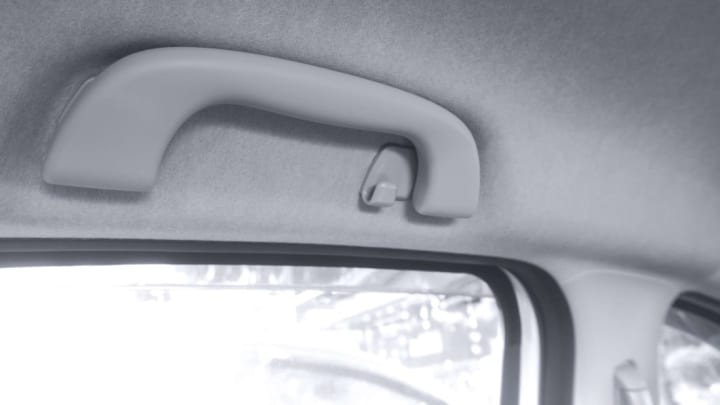
A grab handle is a fixed, non-moving grip mounted above the rear side windows, and occasionally the front passenger side, that gives you something to hold onto while climbing in or out of a tall vehicle. Automakers officially call it an assist handle, though some drivers nickname it the “oh-no handle.” It’s added mainly for ingress and egress, not for bracing during a crash. It also helps steady passengers on rough roads, off-road trails, or during sharp turns, but that’s a secondary benefit, not the reason it exists.
Why Isn’t There a Grab Handle on the Driver’s Side?
Most cars skip the grab handle above the driver’s seat for two reasons: it could distract the driver while steering, and that space above the door is usually reserved for the side-curtain airbag module. Mounting a handle too close to the airbag risks becoming an obstruction the moment it deploys, which is also why no grab handle, on either side, should be treated as a crash-bracing point.
Exterior Car Handles: Pull, Push-Button & Flush Designs
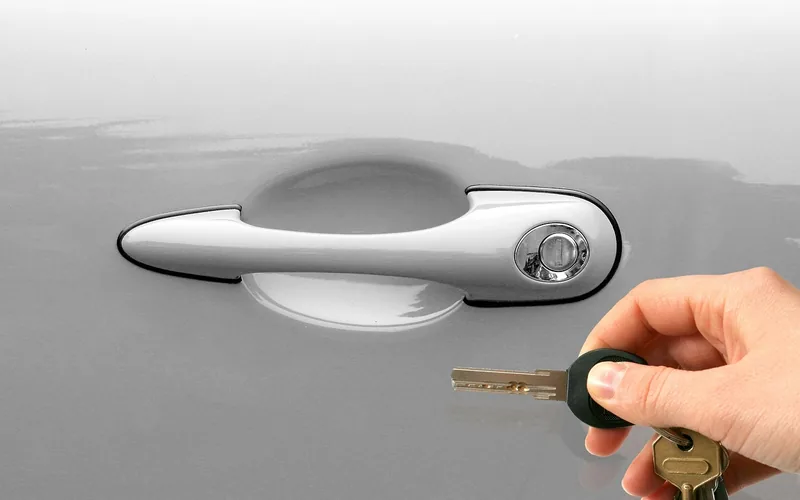
Exterior door handles come in a few common styles. Pull handles are the simplest: grip and pull, and a rod or cable releases the latch. Push-button handles, common on trucks and older cars, release the latch when you press a button built into the handle itself. Both styles are often paired with keyless entry, where a proximity sensor detects the key fob and unlocks the door as you approach or touch the handle.
Are Flush (Hidden) Door Handles Safe?
Flush handles sit level with the door and pop out when you approach or press a button, mainly found on EVs and luxury models, where automakers use them to trim aerodynamic drag by roughly 0.3% to 1.5%. The design has drawn real safety scrutiny, though: China’s Ministry of Industry and Information Technology is banning fully electronic door handles in new vehicles starting January 1, 2027, requiring a mechanical backup release that works on both the inside and outside even if the car loses power, following a string of crashes where doors reportedly wouldn’t open after a power failure. Existing models get until 2029 to comply.
Source: CBS News, February 2026.
Best Door Handle Protector Pick
3M Door Handle Cup Protector Film (6-Pack)
Self-healing 3M paint protection film that shields the scratch-prone recess behind exterior door handles from fingernails and rings.
- Best for: Protecting the handle cup area where scratches show up first
- Why we picked it: Real 3M-made film with self-healing scratch resistance, matches the material section’s advice to protect finish from wear
- Main drawback: Covers only the central cup area, not the full handle, and installation needs a steady hand
Compare more handle care options
 Option 1 LHDOS Grab Handle Cover (2-Pack)
|
 Option 2 GRTHTATI Clear Scratch Protector (10-Pack)
|
 Option 3 Interior Pull Strap Repair Kit (2-Door)
|
As an Amazon Associate we earn from qualifying purchases.
Trunk Handles and Release Mechanisms
Trunk handles work similarly to door handles but sit at the rear of the vehicle. Manual trunk handles require a pull or push to release the latch, while electronic versions use a button, often built into the badge or license plate trim, to pop the trunk. Many newer SUVs and minivans add a foot-sensor release so you can open the trunk hands-free by waving a foot under the rear bumper, useful when your arms are full.
Are Grab Handles Safe to Hold Onto During a Crash? (Safety Features)
No. Grab handles are not designed to protect you during a crash, that job belongs to your seatbelt and airbags. Bracing against a grab handle in a wreck can put your hand or arm directly in the path of a deploying side-curtain airbag, risking a broken wrist or worse. Handles do still play a real safety role elsewhere: bright interior handles are easier to find in the dark for a quick exit, and most cars fit child safety locks into the rear door handles so kids can’t open the door from inside while the car is moving.
📊 In 2015, Honda voluntarily recalled roughly 25,367 model-year 2015-2016 Fit LX vehicles (NHTSA Campaign 15V697000) because the rear grab handle brackets were not manufactured to spec and could interfere with side-curtain airbag deployment, raising injury risk for outboard passengers. Honda found the defect during internal testing, before any real-world incidents were reported. — Source: NHTSA Recall Notification 15V697, 2015
What Are Car Handles Made Of?
Most car handles use plastic, metal, or a composite blend. Plastic keeps handles lightweight and cost-effective but can crack under extreme temperature swings. Metal handles, like aluminum or steel, hold up better over time but can rust without regular care. Composite materials mix plastic and fiber for a balance of strength and weight, common on higher-trim exterior handles.
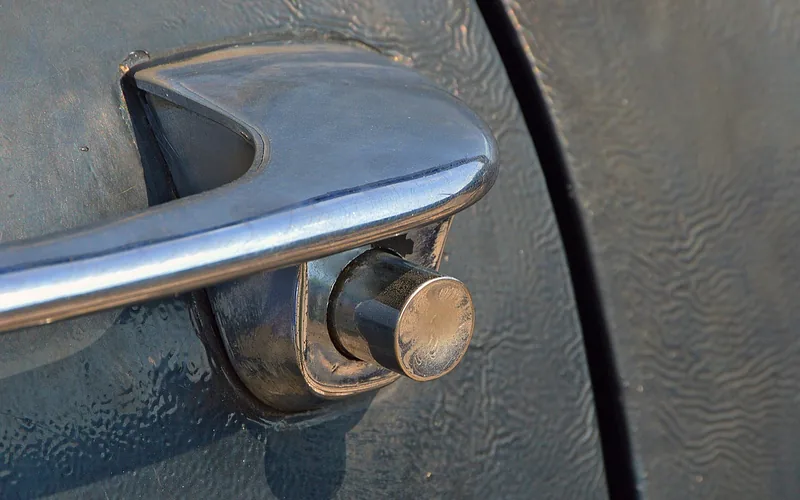
Regular checks help any handle type last longer. Wipe handles down periodically, keep moving parts lightly lubricated, and inspect for cracks before winter, when cold plastic is most likely to snap.
Design, Comfort, and Accessibility
Beyond function, handle shape and placement affect who can use a car comfortably. A well-designed grip reduces strain for people with limited mobility, older adults, and children, since it gives a stable point of leverage instead of relying on arm strength alone. Styling still matters too: automakers offer handles in chrome, matte, body-color, and illuminated finishes, but the underlying grip geometry, not the finish, is what actually determines how comfortable and safe a handle is to use.
Smart and Keyless Car Handle Technology
Keyless entry systems let you unlock a car by pressing a button on the handle, or in newer designs, simply touching it, while the key fob stays in your pocket or bag. The car only unlocks when the fob is within range, which adds a layer of theft resistance since the door won’t open without it nearby. Some handles also add ambient lighting so you can find the car in the dark, or touch sensors that pop a flush handle out automatically as you approach.
Frequently Asked Questions
What is the handle above the car door called?
It’s called a grab handle or assist handle, and some drivers nickname it the “oh-no handle.” It’s a fixed grip mounted above the rear side windows, and occasionally the front passenger side, that helps you climb in and out and stay steady. It is not meant to brace you during a crash.
Are grab handles safe to hold onto during a crash?
No. Grab handles are not crash-safety equipment, that job belongs to your seatbelt and airbags. Gripping a grab handle when a side-curtain airbag deploys can put your hand or arm in its path, and NHTSA has recorded a real recall over grab handle brackets that could interfere with airbag deployment.
Why isn’t there a grab handle on the driver’s side?
Most automakers skip it above the driver’s seat to avoid distracting the driver while steering, and because that space is typically reserved for the side-curtain airbag module. Placing a handle too close to the airbag risks obstructing it when it deploys.
What is the interior door handle called, and how does it work?
It’s simply called the interior door handle, or door pull. Pulling it tugs a cable or rod connected to the latch mechanism, which releases the door so it can swing open. On most cars, the same handle also disengages the central lock.
Why do some cars have hidden (flush) door handles?
Flush handles sit level with the door and pop out when needed, mainly to reduce aerodynamic drag on EVs by roughly 0.3% to 1.5%. China’s Ministry of Industry and Information Technology is banning fully electronic handles in new vehicles from 2027, requiring a mechanical backup that works even without power.
What are car handles made of?
Most car handles use plastic, metal, or a composite blend. Plastic keeps costs and weight down but can crack in extreme cold or heat. Metal handles, like aluminum or steel, resist wear better but can rust without care. Composite blends mix plastic and fiber for a balance of strength and weight.
Conclusion
Car handles do more than open doors. Door handles latch and lock, grab handles support entry and stability without acting as crash protection, and trunk releases give quick access to cargo. Knowing the difference, especially the fact that grab handles aren’t a bracing point near an airbag, is worth the thirty seconds it takes to read.
Related reading: if a handle itself is broken rather than just misunderstood, see our guides on how to fix a broken car door handle and what to do when a car door is stuck closed.
Products related to this article
Sponsored / affiliate links. As an Amazon Associate I earn from qualifying purchases. I may earn additional commission from eligible campaigns.